
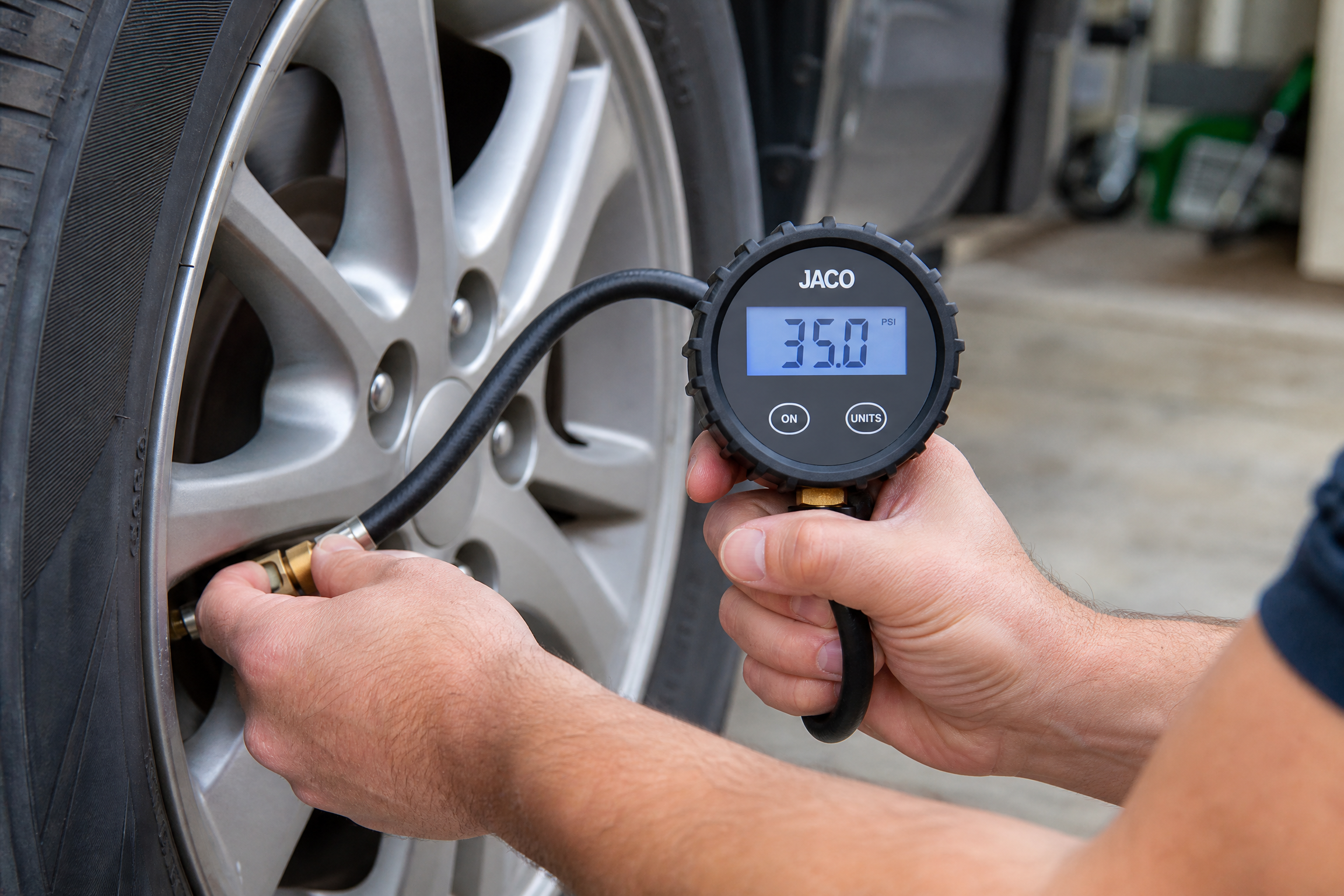
The first cold snap every fall, my phone blows up with the same text from friends: “tire light came on, is it broken?” It’s not broken. It’s physics.
Cold air shrinks. Overnight temps drop twenty degrees and every tire in the country wakes up three psi low, and every TPMS light in the country wakes up with them.
Tire pressure is the cheapest safety system on your car, and the most ignored until a light yells about it. Here’s how I check, what numbers I trust, and how to fill them right.
Why the Number Matters So Much
An underinflated tire flexes its sidewalls more than it was designed to. Flex makes heat, and heat is what blows tires apart on the interstate at 70 mph. The NHTSA ties thousands of crashes a year to underinflation.
It also wrecks your wallet quietly. A tire running 6 psi low scrubs its shoulders, shaving thousands of miles off its life. Fuel economy drops roughly 0.2 percent for every psi under, across all four tires that’s a real tank of gas per year.
Overinflation is its own problem: the center rib carries all the load, wears fast, and the tire transmits every pebble into the cab. The sweet spot is the number on the sticker, not a vibe.
The Number Lives on the Door, Not the Tire
Open the driver’s door and look at the tire placard on the jamb. It lists the pressure the car’s engineers chose for weight, braking, and ride — usually 32 to 36 psi for passenger cars, higher for trucks.
The number molded on the tire sidewall is the maximum the tire can hold, not the target. Filling to the sidewall number is like redlining your engine because the tach has numbers on it.
The placard also tells you if front and rear differ, and what the spare wants. Some spares run 60 psi. A soft space-saver is a flat you haven’t met yet.
Check Cold, Check Monthly
Cold means the car has sat for three hours or driven less than a mile. Driving heats tires and adds 4–6 psi to the reading, which lies to you.
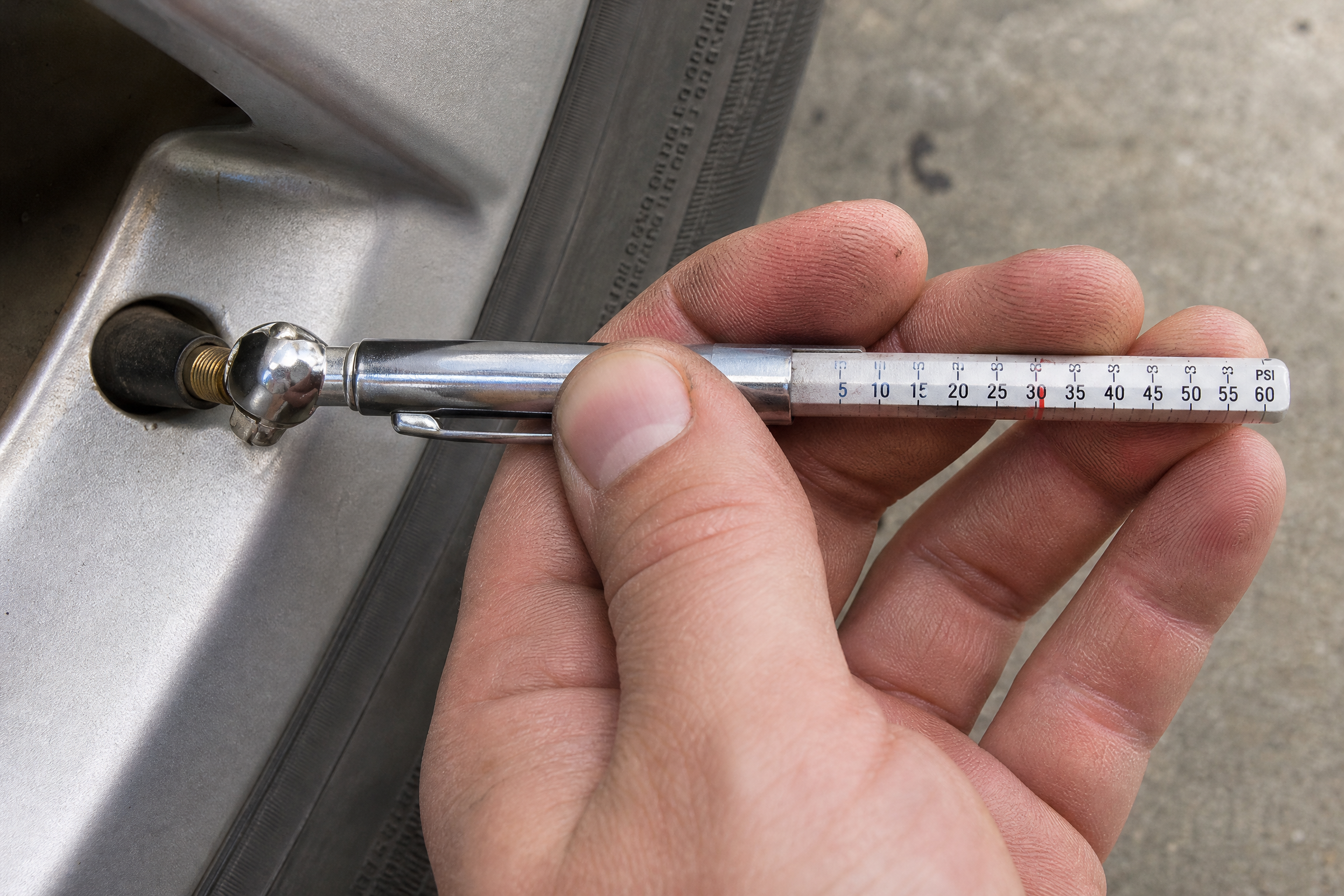
I check mine on the first Saturday of every month and before any road trip or heavy load. A $10 digital gauge in the glovebox beats the guess-and-kick method by a country mile. Pencil gauges work too if you read them straight, not at an angle.
Don’t trust your eyes. Modern radials look perfectly normal at 25 psi. By the time one looks soft, it’s dangerously soft.
The Temperature Math
Air pressure moves about 1 psi for every 10°F. A tire set to 35 psi in July heat reads near 31 on a 30°F January morning. That’s why the lights all come on together every fall, and why they go out after a sunny afternoon.
It’s also why you re-check after a big weather swing instead of assuming the tires “fixed themselves.” They didn’t. The air just warmed up.
Filling Them Right
1. Read the placard and write the numbers down, front and rear.
2. Use a compressor with a gauge, or the pump at the station. Set the target if it’s an automatic pump.
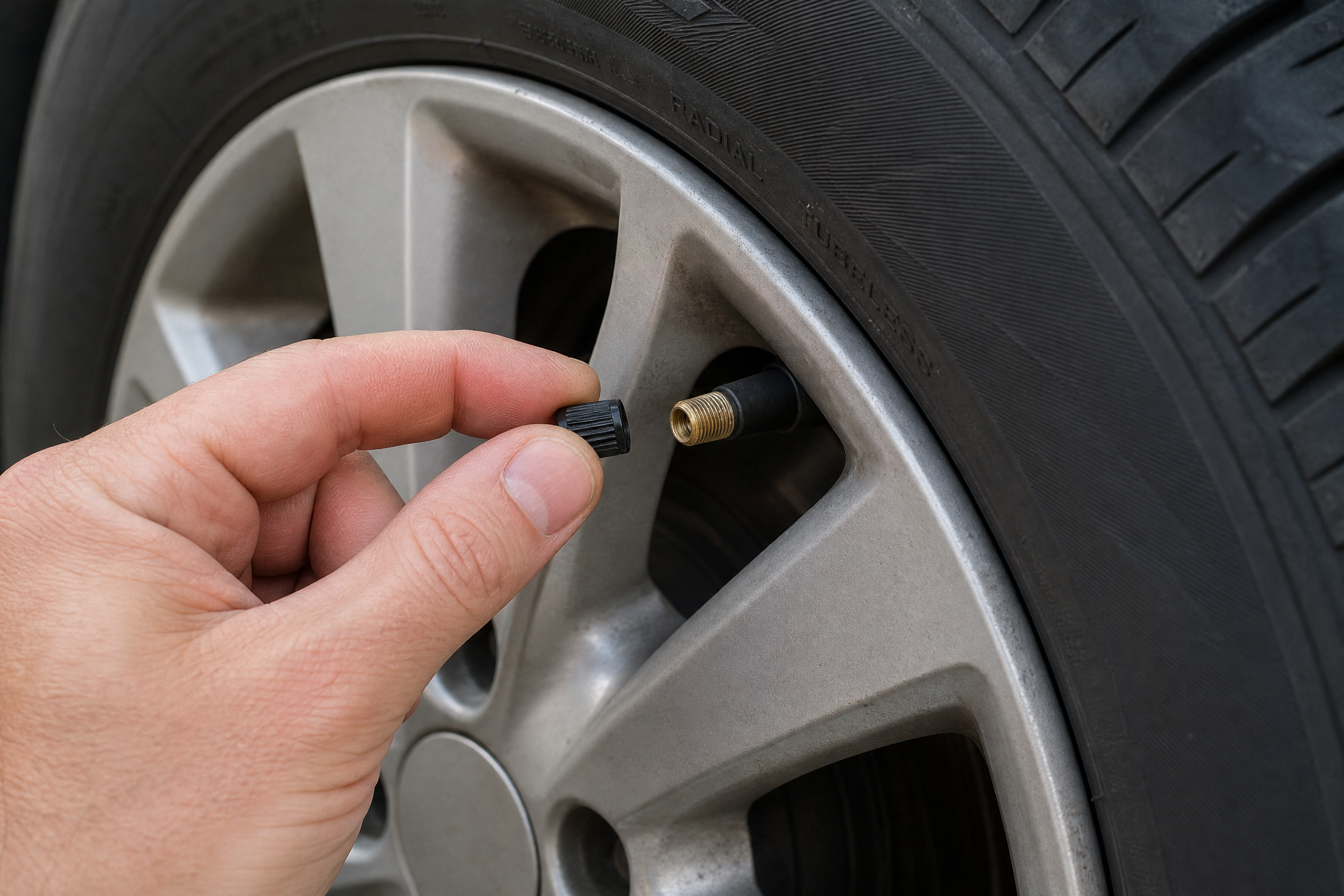
3. Unscrew the valve cap, press the chuck on straight until the hiss stops, and fill.
4. Check with your own gauge afterward. Station gauges lie more than mine do.
5. Adjust in small hits. Bleed air by pressing the center pin in the valve with the gauge’s edge.
6. Screw the caps back on. They keep dirt and moisture out of the valve core, and a gritty valve core is a slow leak factory.
7. Do the spare while you’re at it. It loses pressure too, just more slowly and with less attention.
TPMS: Steady Light vs. Flashing Light
The tire pressure monitoring system light is a floor, not a target. It usually trips around 25 percent under, which means by the time it glows, you’ve been driving on soft tires for a while.
A steady light means at least one tire is low. Check all four and the spare, fill to the placard, and the light goes out after a minute of driving. Some cars need a reset button press, usually under the dash or in a menu.
A flashing light for a minute at startup means the system itself has a fault — often a dead sensor battery inside a valve stem. Sensors last 7–10 years. When one dies, the whole light flashes to tell you it can’t watch anymore.
Nitrogen, and Other Honest Notes
Shops will sell you nitrogen fills because nitrogen holds pressure more steadily and doesn’t carry moisture. On race cars and aircraft that matters a lot.
On a daily driver? Free air checked monthly gets you 95 percent of the benefit. Nitrogen is fine, just not a reason to skip the habit.
And if one tire keeps reading low while its neighbors hold, you don’t have a weather problem. You have a nail, a gritty valve core, or a bead leak. Soap water on the valve and bead will bubble at the leak.
Mistakes I Keep Seeing
Filling to the sidewall max. Harsh ride, center wear, and a tire that skates on wet pavement.
Checking hot and “fixing” it. You’ll bleed air out of a correctly inflated tire and drive away underinflated.
Ignoring the flashing TPMS. That’s the watchdog telling you it’s blind, not a glitch to clear.
Forgetting the spare. The day you need it is the day you discover it’s at 20 psi.
Try It: Temperature Pressure Calculator
Punch in when you last set them and what the thermometer says now, and see what your gauge should read today.
What should the gauge say?
Wrap-Up
Tire pressure is a monthly thirty-second habit that buys braking distance, tire life, fuel, and the interstate blowout you never have.
Trust the door sticker, check them cold, own a gauge, and do the spare. When the fall light comes on, you'll be the only driver in the parking lot who already knew why.
One tire always soft, or a light that won't go out after filling? Comment with the car and the readings, and I'll help you hunt it.
Related: Check out our guide on Upgrading Your Car Sound System: Speakers, Subwoofers & Amps Buying Guide.


Leave a Reply