
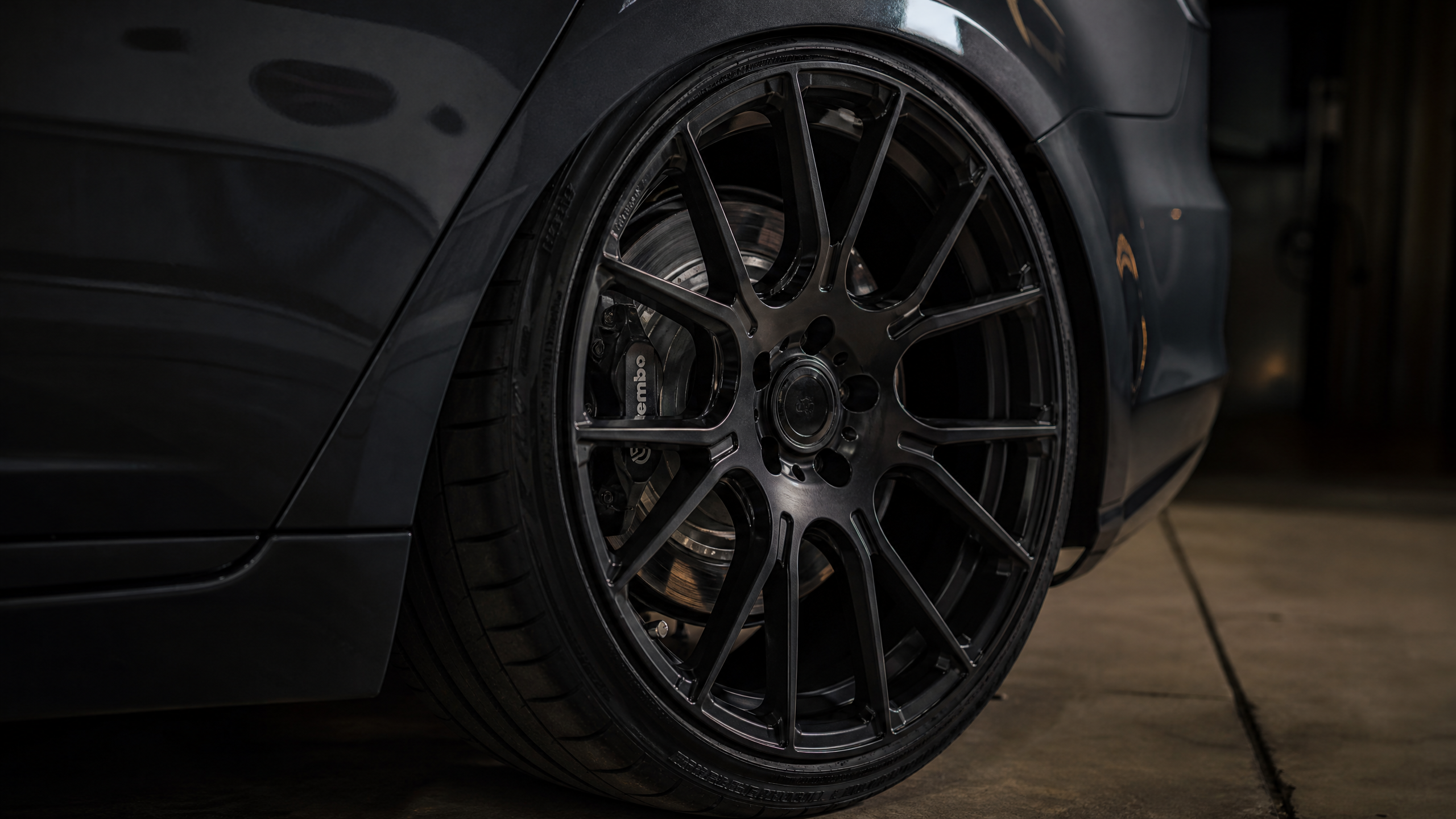
I bought my first “good” set of wheels off a guy on a forum who said they came off a Civic and would fit mine, which was also a Civic. He wasn’t lying about the bolt pattern. They bolted on fine. The problem was the offset, which I didn’t understand at the time and honestly hadn’t even heard of. The front tires sat so far inboard that they rubbed the strut the second I turned the wheel more than half a turn. The car looked fine parked. It was undrivable.
I ended up buying spacers, longer lugs, and a beer for a buddy who helped me figure out what I’d done wrong. The whole thing cost me more than just buying the right wheels in the first place. So let me save you that weekend, because wheel shopping is easy once you understand four or five numbers, and miserable if you just eyeball it.
The Two Numbers on Every Wheel
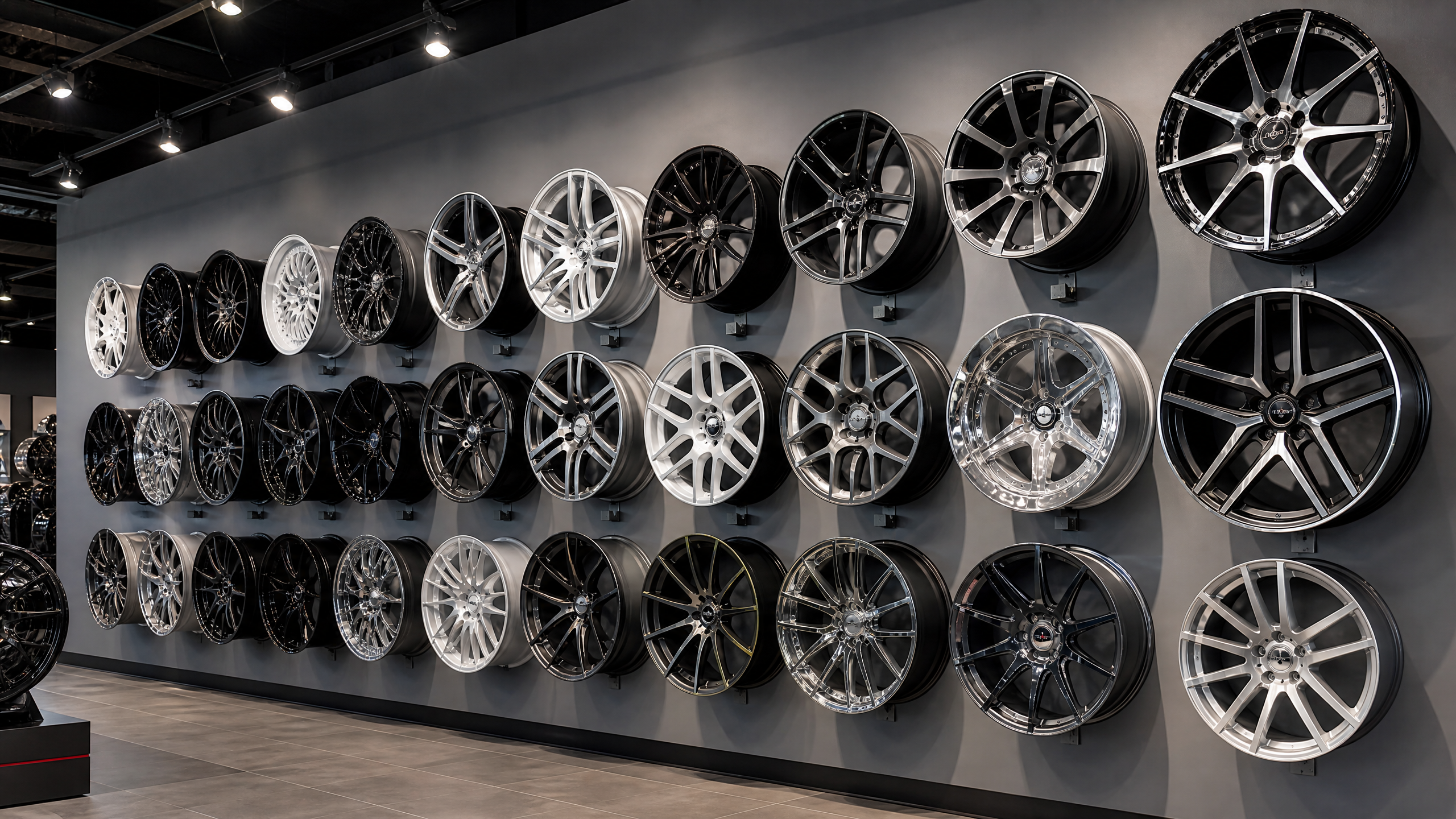
Flip a wheel over and look at the back of a spoke. Somewhere in there it’ll say something like 17×8.5. That’s it. That’s the size. The 17 is the diameter in inches, and it has to match your tire. The 8.5 is the width in inches, and it’s the one people ignore when they shouldn’t.
Width decides what tire you can run. An 8.5-inch wheel is happy with something around a 235 or 245 tire. Put a 205 on there and it stretches and wears funny. Put a 275 on there and the sidewall balloons out past the fender. I learned to match the wheel width to a sensible tire before I worried about anything else, and it saves a lot of headaches.
Reading a Tire Sidewall Without a Headache
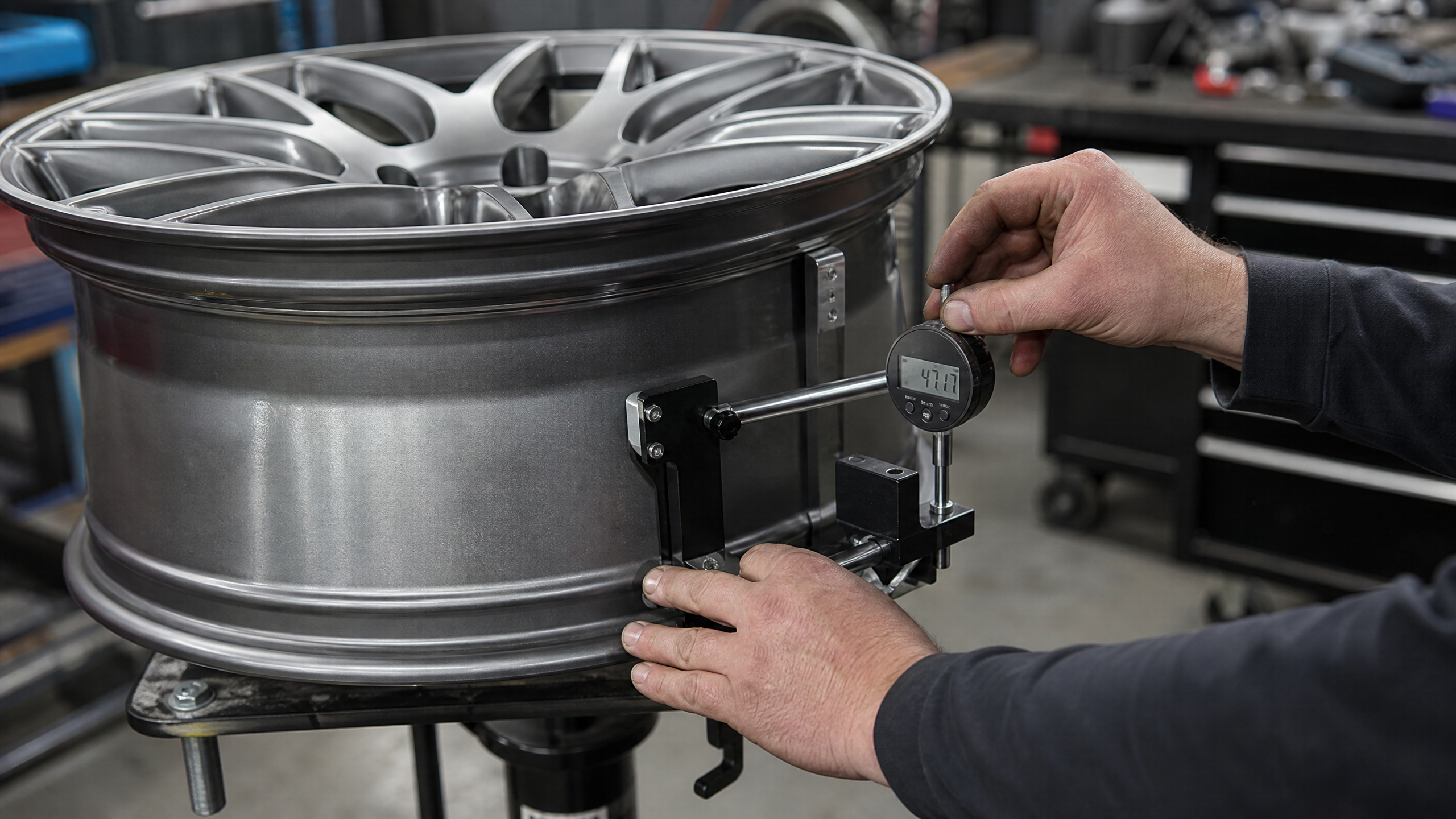
Take a common size like 245/40R17. Read it left to right and it’s not that bad.
The 245 is how wide the tire is in millimeters. The 40 is the aspect ratio, which just means the sidewall is 40 percent of the width. So the sidewall here is 98mm tall. The R means radial, which is every tire you’ll ever buy. And the 17 is the wheel diameter it fits.
After that you’ll see a number and a letter, maybe 94Y. The 94 is the load rating, which is just how much weight each tire can carry. The Y is the speed rating. You’ll never hit 187 mph, and I don’t care how fast you think you drive. But don’t drop below what the car calls for, because it affects how the tire is built and how it handles heat.
Check the date code before you buy tires. It’s the four-digit number in an oval on the sidewall, like 2425, which means the 24th week of 2025. I once got a great deal on “new” tires that turned out to be four years old and already getting hard. Rubber ages even sitting still. Anything more than a year or two old, negotiate the price down or walk.
Offset Is the Part That Ruins Weekends
Okay, this is the section I wish someone had sat me down for. Offset is written as ET followed by a number, like ET45, and it’s measured in millimeters. It describes where the mounting pad sits relative to the middle of the wheel. That sounds boring. It’s actually the whole game.
A higher number, say ET50, pushes the wheel inward toward the suspension. Too high, and the inside edge of the tire kisses your strut or inner fender, which is exactly what happened to me. A lower number, like ET25, pushes the wheel outward toward the fender. That’s how you get the flush, planted look people chase. Go too low and the tire pokes out past the fender and you rub on every decent bump.
Most front-drive cars leave the factory somewhere around +40 to +50. Rear-drive and performance cars run a bit lower, maybe +20 to +40. The smart move is to find your stock offset, then decide how many millimeters outward you want to go. Each 10mm of lower offset moves the wheel roughly 10mm toward the fender. That’s your whole cheat sheet.
If you take nothing else from this page, take this: before you buy anything, search your exact car plus the exact wheel size and offset you’re considering. Someone has run that setup and posted pictures of it. Their thread answers the question in five minutes and costs you nothing.
The Other Three Things That Have to Line Up
Offset gets the blame, but a few other specs will stop a wheel from fitting at all.
- The bolt pattern has to match exactly. It’s written like 5×114.3, meaning five lugs on a 114.3mm circle. Honda, Toyota, Nissan, and Mazda share 5×114.3. VW and Audi use 5×112. BMW uses 5×120. Most trucks are 6×139.7. There’s no fudging this one.
- The hub bore is the hole in the center. If the wheel’s hole is bigger than your hub, you slip in cheap plastic rings called hub-centric rings so the wheel centers on the hub instead of hanging on the lug nuts. Skip the rings and you’ll get a vibration at highway speed that no amount of balancing fixes. I know because I did it once.
- The lug seat has to match. Aftermarket wheels usually want a 60-degree cone-shaped nut. A lot of factory wheels use a round ball seat. Mix them up and the nuts loosen over time, which is about as bad as it sounds.
Going a Size Bigger Without Making It Weird
Most people go up an inch in wheel diameter and call it a day, which is the right instinct. But when the wheel gets bigger, the tire sidewall has to get shorter, or the whole tire gets taller and you throw off the speedometer, the ABS, and the stability control.
The rule is to keep the overall diameter within about 3 percent of stock. A stock 205/55R16 usually becomes a 215/45R17 or 225/45R17. Bigger wheel, shorter sidewall, same overall height. There’s a calculator below that does the math for you, so use it before you click buy.
One honest warning about going much bigger than an inch: the ride gets harsher because there’s less sidewall to absorb bumps, and on a small car a huge wheel can make it look like a roller skate. One inch is the sweet spot for most of us.
Why Two Identical-Looking Wheels Cost Completely Different Money
You’ll see two wheels that look the same, and one is $150 and the other is $600. The difference is how they’re made, and whether that matters depends on what you want.
The cheap ones are cast, where aluminum is poured into a mold. Totally fine for a street car, just the heaviest. Flow-formed wheels take that a step further by spinning and compressing the barrel, which makes it lighter and stronger without a crazy price jump. That’s where I tell most people to shop. At the top you’ve got forged wheels, pressed from a solid chunk of aluminum, which are the lightest and strongest and priced like jewelry.
Here’s why weight back here matters more than it sounds: wheels and tires are unsprung weight, meaning the suspension has to control them. Shedding weight here improves ride and handling more than losing the same weight almost anywhere else. That’s the real reason people pay for forged, not just bragging rights.
Style Stuff That Actually Looks Good
Taste is yours, but a few things separate a build that looks intentional from one that looks like a parts bin.
Match the wheel color to the car instead of fighting it. Dark cars wear dark gray, gunmetal, or bronze really well. Light cars pop with silver or a contrasting bronze. Gloss black looks amazing in photos and then shows every speck of brake dust by Tuesday.
Aim for flush, not poking. A wheel that lines up with the fender looks expensive. One that sticks out past it reads as a mistake, throws rocks at your own door panels, and usually rubs. And be careful with extreme stance, the tuck-and-camber look. It turns heads at a meet, but it chews through tires and makes the car drive worse. Build the car for how you’ll actually drive it, because you’ll be driving it a lot more than you’ll be showing it.
Fitting Them Without Surprises
Before you commit to a full set, mount one wheel and actually check it. Turn the steering all the way both directions and push the suspension up by hand or bounce it, and look at where the tire gets close to things. You’re looking at the strut, the inner fender liner, and the fender lip.
If you’re a few millimeters too far inboard, a spacer can push the wheel out. Just use hub-centric spacers and the right longer lugs or studs, and don’t stack them super thick. If you need more room at the fender, a little camber tucks the top of the wheel in, and on lowered cars people often roll the fenders to fold the inner lip flat. A little of any of this is fine. A lot of it means you picked the wrong wheel.
Bolting Them On the Right Way
The install is where good intentions go to die, so slow down here.
- Clean the hub face with a wire brush. Rust buildup there keeps the wheel from sitting flat and causes a vibration people swear is a bad balance.
- Slip the hub-centric rings on if you’re using them.
- Thread the lug nuts by hand first so you don’t cross-thread, then snug them in a star pattern.
- Torque them with a torque wrench, not the impact gun. Most cars want around 80 ft-lbs. Trucks want more, sometimes 100 to 140. Check the manual instead of guessing.
- Re-torque after about 50 miles. Wheels settle, especially on painted or freshly cleaned hubs, and this catches anything that backed off.
The Mistakes I Keep Watching People Make
Most of these I’ve either done or watched a friend do, so this is affectionate. Buying the wheels before understanding offset is the big one. Plus-sizing two inches when one would’ve looked better and ridden nicer is the second. Running tires way too wide, which makes the car wander and follow every groove in the highway, is third. And the sneaky one is buying nice wheels and then wrapping them in the cheapest tires you can find, which is like putting great running shoes on and tying them with duct tape. The tire is the part touching the road. Spend there.
What It Costs, Roughly
| Item | What You’ll Pay |
|---|---|
| Cast alloy wheel, each | $120 – $250 |
| Flow-formed wheel, each | $200 – $400 |
| Forged wheel, each | $400 – $900 and up |
| Decent tire, each | $120 – $300 |
| Hub-centric rings | $10 – $25 |
| TPMS sensors, set of 4 | $80 – $200 |
| Mount, balance, install | $80 – $160 |
Tool: Tire Size & Plus-Sizing Calculator
Type in your current tire and the one you’re thinking about. This compares overall diameter and tells you if your speedometer will be off by too much.
Your current tire
The one you’re considering
Quiz: What Kind of Wheel Setup Fits You?
1. How do you actually use the car?
2. What’s the budget like?
3. How much do you care about ride comfort?
Related: Check out our guide on Best Dash Cams of 2025: Tested & Reviewed for Every Budget.




Leave a Reply