The Highway Drift: What a Pulling Steering Wheel Is Trying to Tell You
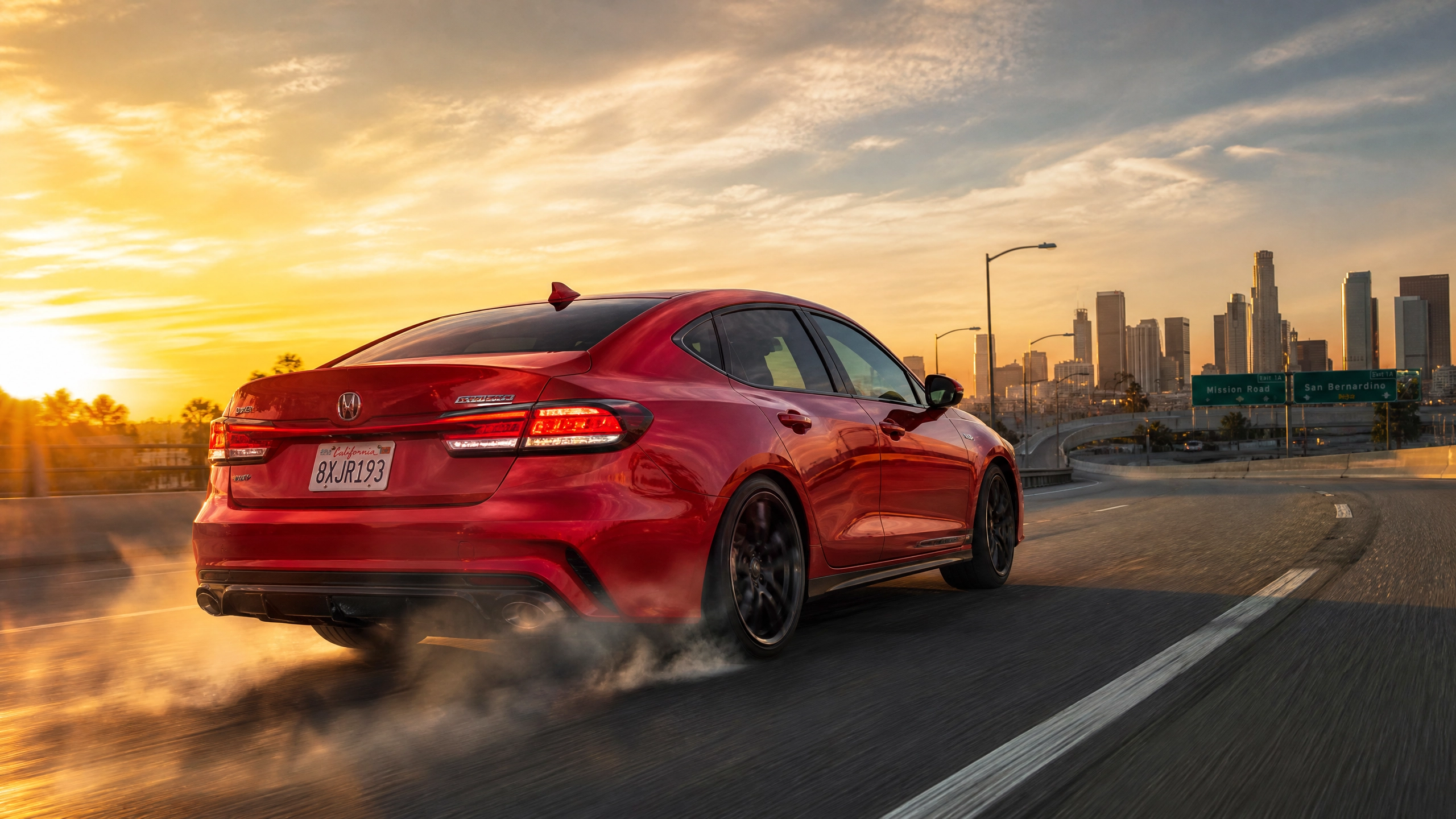
You’re cruising down the highway, hands light on the wheel, radio on. You ease your grip for a second to grab your coffee, and the car instantly darts toward the right-hand shoulder. Or maybe it drifts left, right into the next lane. Your heart jumps and you yank it back straight.
I’ve had customers describe that exact moment to me more times than I can count. Fighting a car that refuses to drive straight is exhausting, and after twenty minutes on the highway your shoulders and forearms are tired in a way they shouldn’t be.
Here’s the thing:a car that pulls isn’t just annoying. It’s a warning light you can feel instead of see. Somewhere between your tires, brakes, and suspension, two systems are fighting each other instead of working together.
I’ve spent years with my hands inside wheel wells chasing this exact complaint, and almost every pull traces back to one of four causes. Catch it early and you save your tires from wearing out before their time, save yourself a white-knuckle drive, and keep the car safe. Let’s go through them in the order I actually check them in my own garage.
Culprit 1: Unequal Tire Pressure (The 2-Minute Free Fix)
This is the very first thing I check when a car rolls into my shop pulling to one side. No tools, no lift, no diagnostic scanner. Just a tire gauge and two minutes.
It sounds too simple to matter, but tire pressure is the most common cause of a mild pull, and it costs you nothing to rule out.
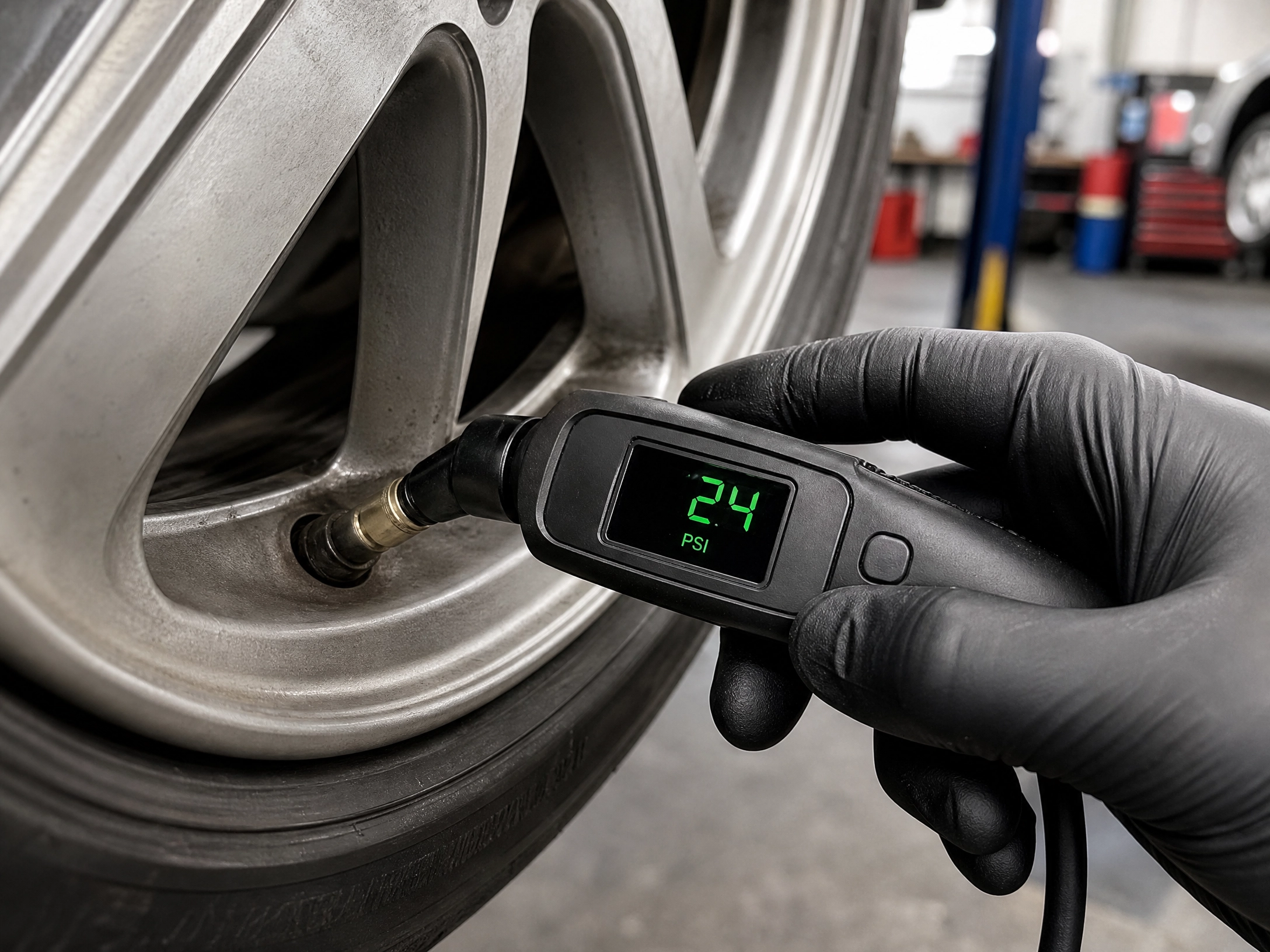
Always check pressure cold, before the car has been driven, for an accurate reading.
| Alex’s Shop Note: If your front-left tire is sitting soft at 24 PSI while the front-right is correctly inflated at 32 PSI, that low tire has a bigger contact patch on the road. More rubber touching asphalt means more rolling resistance, and the car will naturally drag itself toward that soft side. Grab a digital gauge and check all four corners cold, meaning before you’ve driven more than a mile or two, since heat builds pressure and skews the number. Do this before you pay anyone for a mechanical diagnosis. |
- Check pressure cold, first thing in the morning if you can.
- Compare all four tires against the number on the door jamb sticker, not the tire sidewall.
- A pull that’s mild and shows up right after you start driving often points here.
Culprit 2: Bad Wheel Alignment (The True Steering Drift)
Wheel alignment is just the angles your tires sit at relative to each other and to the road. Mechanics talk about three angles: camber, caster, and toe.
- Camber — how much the tire leans in or out at the top when you look at it head-on.
- Caster — the forward or backward tilt of the steering axis, which affects stability.
- Toe — whether the tires point slightly inward or outward compared to straight ahead.
Potholes, curb strikes, and worn suspension bushings all push these angles out of spec over time. You don’t need to hit anything dramatic. A few years of regular potholes will do it gradually.
| Alex’s Shop Note: A classic alignment pull is constant. Whether you’re accelerating, coasting, or holding a steady speed, the car drifts toward one side the moment you take your hands off the wheel. Check your tread closely. If the inside edge of the rubber is worn smooth like a racing slick while the outside edge still looks thick and fresh, your alignment is badly out of spec and chewing through that tire. |
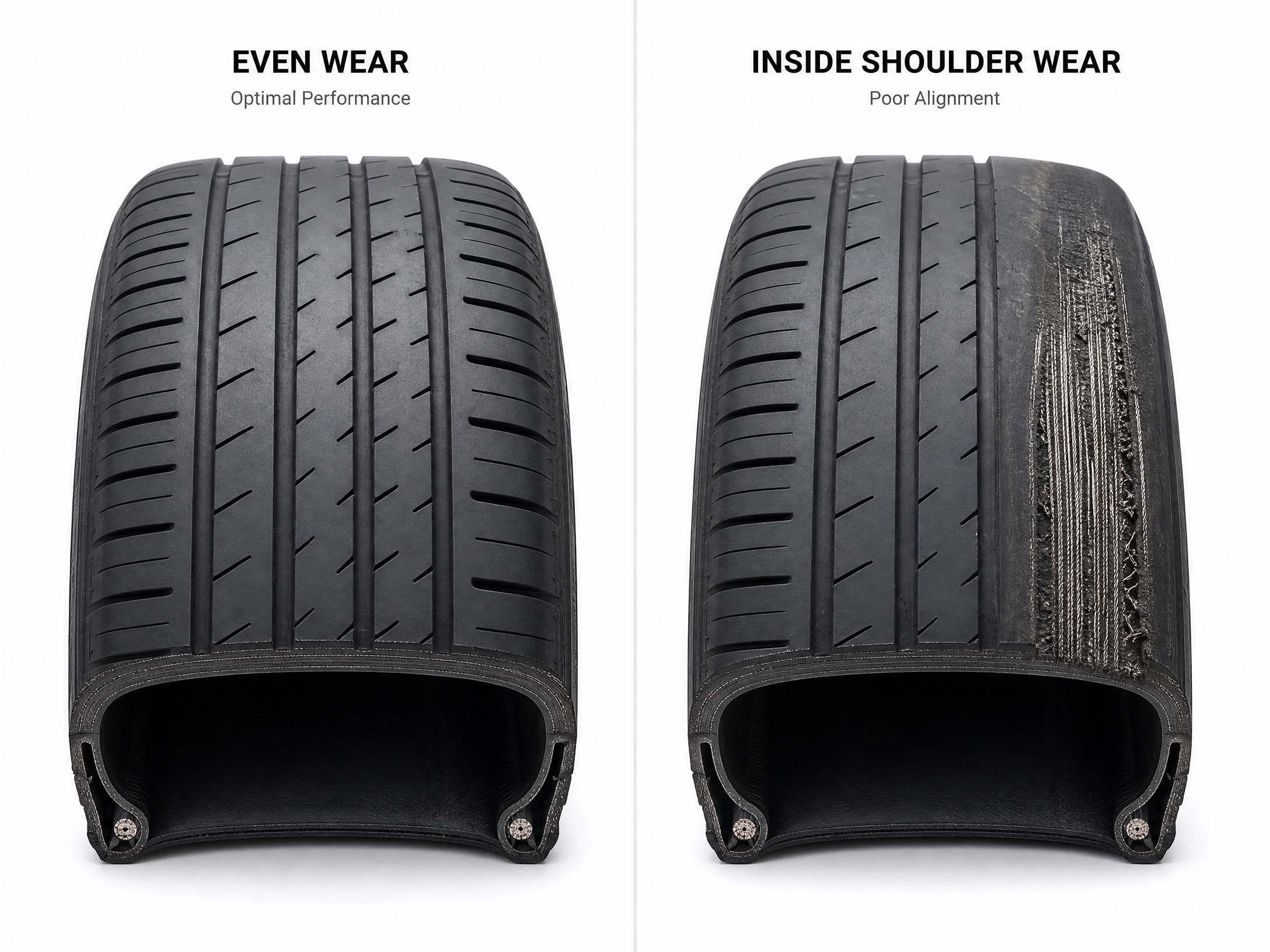
Run your hand across the tread — feathered or scalloped wear is your alignment shop calling.
A quick at-home check
- Park on level ground and turn the wheel fully to one side so you can see the inner tread face.
- Run your bare hand across the tread, side to side, not front to back.
- If it feels smooth one direction and rough the other, that feathered edge is a toe problem talking to you.
- Book an alignment before you put new tires on, or you’ll wear out the new set just as fast.
Culprit 3: A Stuck Brake Caliper (The Friction Drag)
If the car only lunges to one side the instant you touch the brake pedal, you’re not looking at an alignment issue. You’re looking at a brake hydraulic problem.
Sometimes it’s worse than that.A caliper can seize while you’re just driving along, with your foot nowhere near the pedal, and that’s the scarier version of this problem.
| Alex’s Shop Note: Inside the wheel, a caliper slider pin can rust solid, or a piston can cock sideways in its bore. Either way, the brake pad stays clamped against the rotor even with your foot completely off the pedal. That’s constant mechanical drag on one wheel and nothing on the other three. Use your senses here. Walk around the car right after a drive and feel for heat radiating off the wheel — don’t touch the rotor itself, it can be hot enough to burn skin. A stuck caliper throws off a sharp, acrid, burnt-metal smell, almost like a burning clutch. The car will pull hard toward that hot, dragging wheel. |
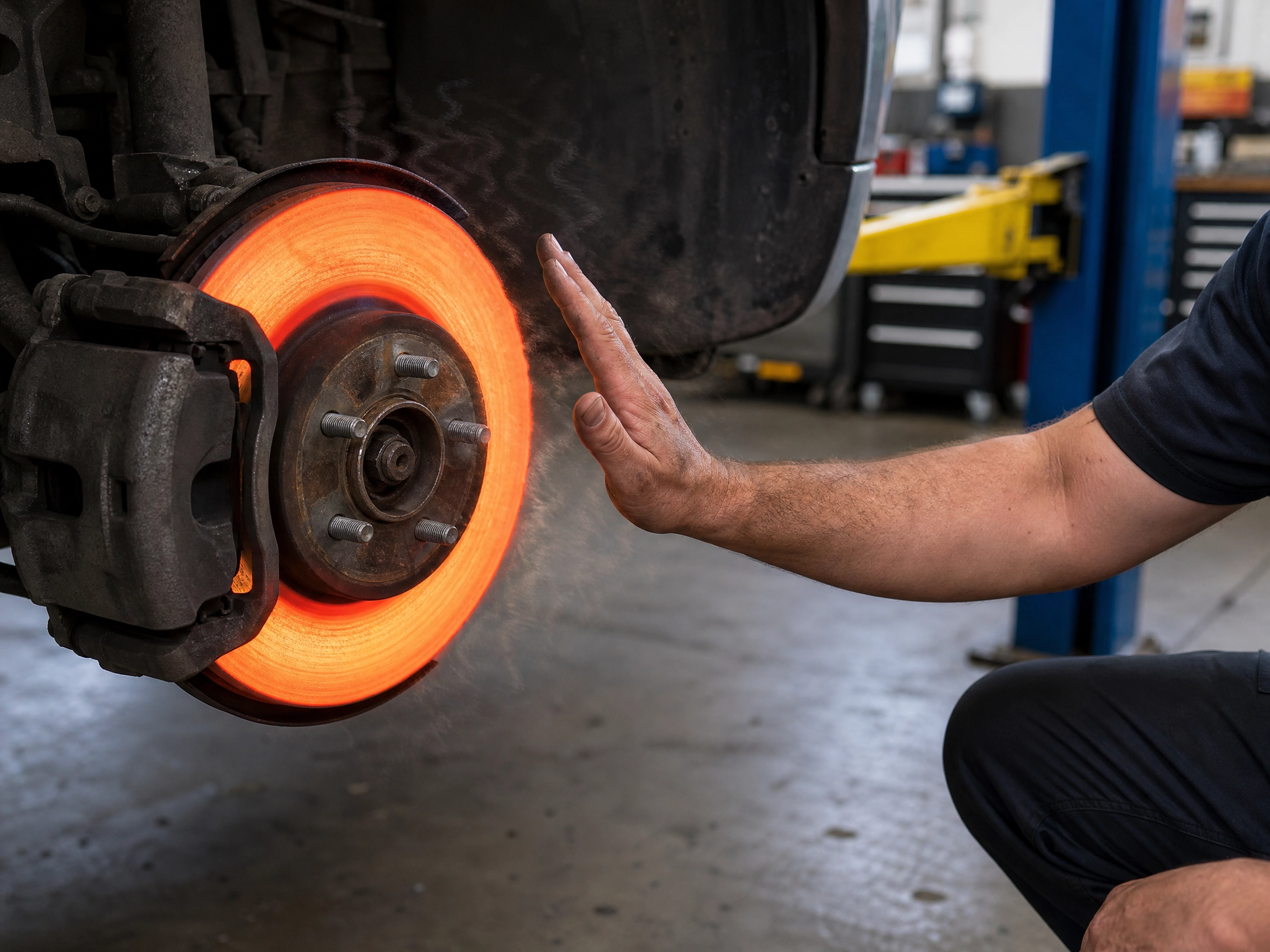
Hold your hand a few inches away from the wheel — you’ll feel the heat before you ever need to touch anything.
Warning signs of a stuck caliper
- A sharp pull only when you brake, that straightens out once you let off.
- One wheel noticeably hotter than the other three after a short drive.
- A burnt, metallic smell that wasn’t there before.
- Visible blue or discolored heat marks on the rotor of one wheel.
Don’t drive on a seized caliper longer than you have to. It overheats the brake fluid, can warp the rotor, and eats through pads in a fraction of their normal life.
Culprit 4: Worn Suspension Components (The Loose Front End)
Worn control arm bushings, failing ball joints, or loose tie rod ends let the wheel assembly shift slightly under load instead of holding its position. That tiny bit of play is enough to steer the car on its own.
| Alex’s Shop Note: I call this a memory steer pull, and it’s the one that should get your attention fastest. Hit the gas and the car pulls left, then hit the brakes and it suddenly darts back to the right. That back-and-forth is the load shifting through loose joints, physically changing the angle of the tire inside the wheel well depending on which direction force is being applied. This is not something to put off. A snapped tie rod end means a complete and sudden loss of steering control, full stop. |
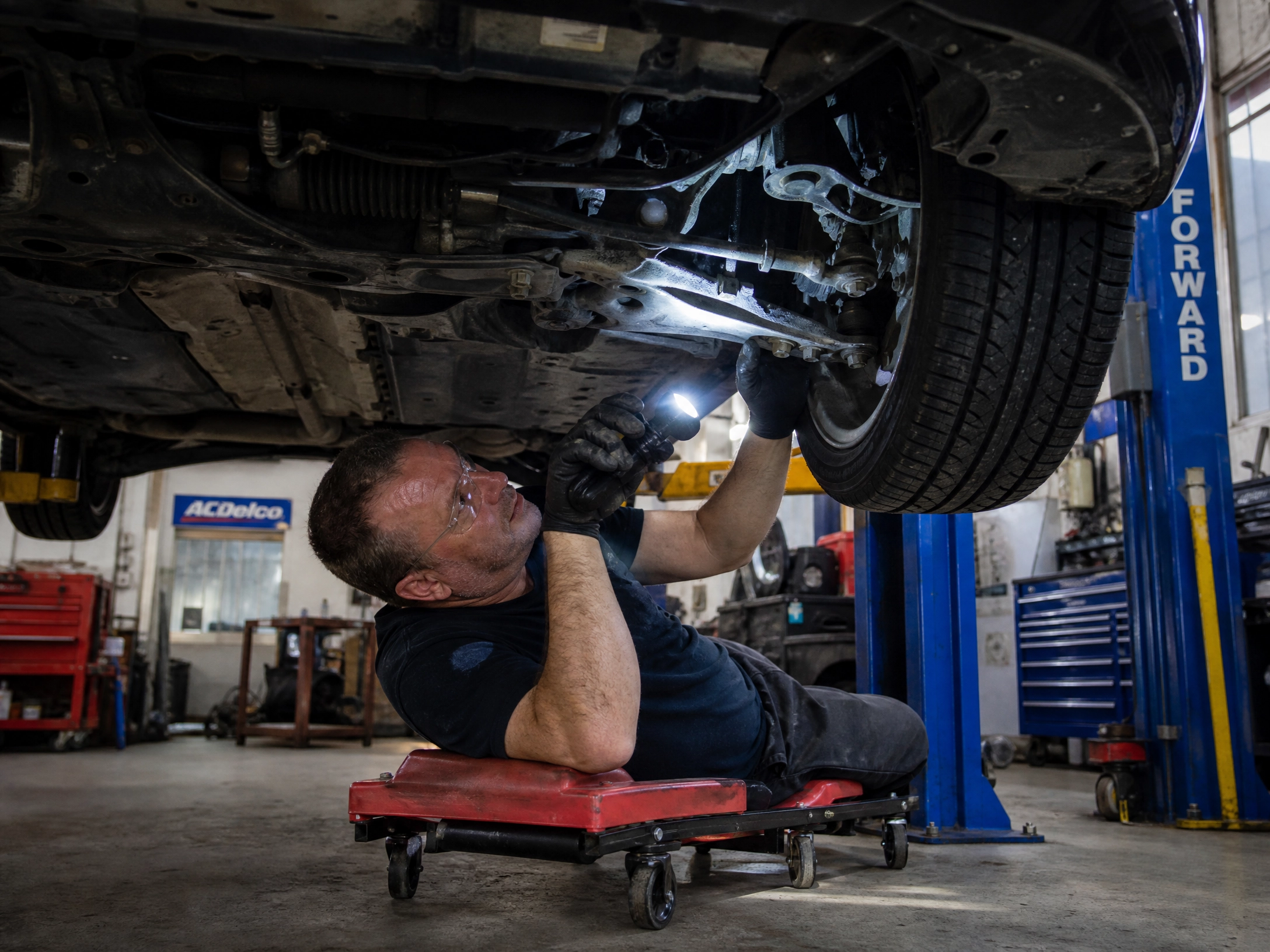
A worn bushing often shows up as a little extra give when you grab the control arm and push.
How I test for play in the shop
- Raise the car on a lift or jack stands and let the suspension hang free.
- Grab the tire at the 3 and 9 o’clock positions and rock it side to side, feeling for clunks at the tie rod ends.
- Grab the tire at 12 and 6 o’clock and rock up and down, checking the ball joint and control arm bushings.
- Any looseness, clunking, or visible cracking in rubber bushings means it’s time for replacement parts, not a wait-and-see approach.
Steering Symptom Diagnosis Matrix
Here’s the cheat sheet I wish someone had handed me when I started turning wrenches. Match what you’re feeling against the columns below to get a head start before you even open the hood.
| When Does It Pull? | Steering Wheel Behavior | Likely Culprit | Danger Level |
|---|---|---|---|
| Only when braking | Sudden yank toward one side the instant you press the pedal | Stuck brake caliper or seized slider pin | High — uneven braking force |
| All the time, even coasting | Constant, steady drift the moment you let go of the wheel | Wheel alignment out of spec (camber/caster/toe) | Moderate — tire and fuel waste |
| Only under acceleration or hard braking | Pulls one way on gas, snaps back the other way on the brake | Worn control arm bushings, ball joints, or tie rod ends | Severe — possible loss of steering |
| Right after startup, gets worse with speed | Mild, steady pull that tracks with a soft tire | Unequal tire pressure | Low — quick free fix |
Quick Self-Diagnosis Tool
Answer the two questions below and the tool will point you toward the most likely culprit. It’s not a replacement for a real inspection, but it’s a solid starting point before you call the shop or pop the hood yourself.
Car Pull Diagnostic Tool
When does the car actually pull?
Quick Answers to Common Questions
Can low tire pressure alone cause a hard pull?
Usually not a hard, sudden pull. A soft tire causes a mild, steady drift that’s there from the first mile. If the pull is sharp or only shows up under braking, look at the calipers and alignment instead.
Is it safe to drive with a car that pulls?
For a short trip to the shop, a mild tire-pressure pull is low risk. A brake-only pull or a memory steer pull is not something I’d drive on any longer than it takes to get it looked at, since both can get worse fast.
How much does an alignment usually run?
Most shops charge for a standard four-wheel alignment in a fairly predictable range, and it’s cheap insurance compared to replacing a set of tires early. Ask the shop for a printout of before-and-after numbers so you can see exactly what was adjusted.
Will new tires fix a pulling car?
Only if uneven tire wear or a tire defect was the actual cause. If the underlying alignment or suspension issue isn’t fixed first, you’ll just scrub the new tires down the same way the old ones went.
When to Just Get It Checked
A soft tire is a five-minute fix you can handle in your driveway. A stuck caliper or a worn tie rod end is not something to gamble on, especially once you’ve noticed that memory steer pull I described above.
- Tire pressure low:fix it yourself today, free, two minutes with a gauge.
- Constant alignment pull:book an alignment, it’s routine and affordable.
- Heat, smell, or a brake-only pull:get the caliper inspected before your next drive.
- Memory steer or clunking:treat it as urgent, this affects your ability to steer at all.
I’ve seen all four of these walk through my garage door in the same week. None of them are complicated once you know what you’re feeling for. Trust what the steering wheel is telling you, work through the list in order, and you’ll have the answer long before you need to hand over your keys.
Related posts:
 Winter Car Preparation Guide: Essential Cold-Weather Maintenance Tips
  The Ultimate Year-Round Car Maintenance Checklist: Oil, Brakes, Fluids & More
  Brake Fluid Breakdown: Understanding DOT Ratings and When to Bleed Your Braking System
  Why Is Your Car Leaking Clear Fluid? (How to Identify 5 Common Leaks)
Leave a Reply