Brake fluid absorbs moisture over time, and contaminated fluid can have a lower boiling point than fresh fluid. Under severe braking heat, fluid that boils can create vapour and cause a soft or sinking pedal. A pedal that changes suddenly is a serious fault: stop safely and arrange professional inspection rather than continuing to drive.
Fluid colour alone cannot establish its condition, and a generic tester reading does not prove the cause of a brake failure. Follow the vehicle maker’s inspection and replacement procedure, including the specified fluid grade and any ABS bleed procedure.
Brake fluid service is an important part of scheduled maintenance. The correct interval depends on the vehicle manufacturer, fluid specification and operating conditions. This guide explains the difference between flushing, bleeding and topping off, and when a professional service is the safer choice. For related brake maintenance, see our brake maintenance guide and brake-fluid checking guide.
Your Pedal Is a Water Pipe
Your brake system is hydraulic. The pedal pushes the master cylinder, which pushes fluid, which pushes caliper pistons, which clamp pads on rotors.
The whole trick depends on one physical fact: liquid does not compress. Your foot’s pressure arrives at the wheels instantly and undiminished.
But gas compresses. If anything in the fluid turns to vapor — boiling from heat, or air sneaking in past a seal — your pedal stroke spends itself squeezing that vapor instead of moving the pistons. That’s the “spongy” or “going to the floor” feeling, and on a mountain it’s the whole ballgame.
The One Enemy: Water
Brake fluid is hygroscopic. It pulls moisture out of the air through microscopic pores in rubber hoses, past seals, and every time the reservoir cap is opened.
It doesn’t take a leak or a flood. It happens parked in a dry garage. Typical absorbed water runs 2 to 3 percent after a couple of years, and it never leaves on its own.
Water does two things you don’t want. It drops the fluid’s boiling point, and it corrodes the system from the inside out.
What Water Does to Your Boiling Point
| Fluid | Dry boiling point | Wet (3% water) boiling point |
|---|---|---|
| DOT 3 | 401°F | 284°F |
| DOT 4 | 446°F | 311°F |
| DOT 5.1 | 518°F | 375°F |
Hard braking from highway speed can push caliper fluid past 300°F on its own. Add a sticky caliper, a heavy load, or a mountain, and wet DOT 3 is boiling in your lines. Boiled fluid is the pedal-to-the-floor story from my intro.
What Water Does While You Sleep
The corrosion side is slower and just as expensive. Water in the lines rusts steel brake lines from the inside, pits caliper bores, and fouls the tiny valves inside the ABS module.
Corrosion can weaken steel brake lines and eventually cause leakage or failure, potentially resulting in a sudden loss of braking pressure. Inspect exposed lines for heavy rust, pitting, wetness and damaged coatings, and have questionable lines assessed by a qualified technician without delay.
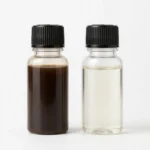
The fluid also darkens as it ages and collects debris. Clear amber fluid turning to cola is your visual cue that the chemistry is spent.
So When Do You Flush?
Use the brake-fluid replacement interval in the vehicle manufacturer’s maintenance schedule. Some manufacturers specify a time-based interval, while others provide model-specific guidance; if the schedule is unclear, ask a qualified technician to check the correct procedure.
Three ways to know instead of guess:
- Test strips. Dip a strip in the reservoir and it changes color based on copper content and moisture. Parts stores sell them for a few dollars. Over 3% water means flush now.
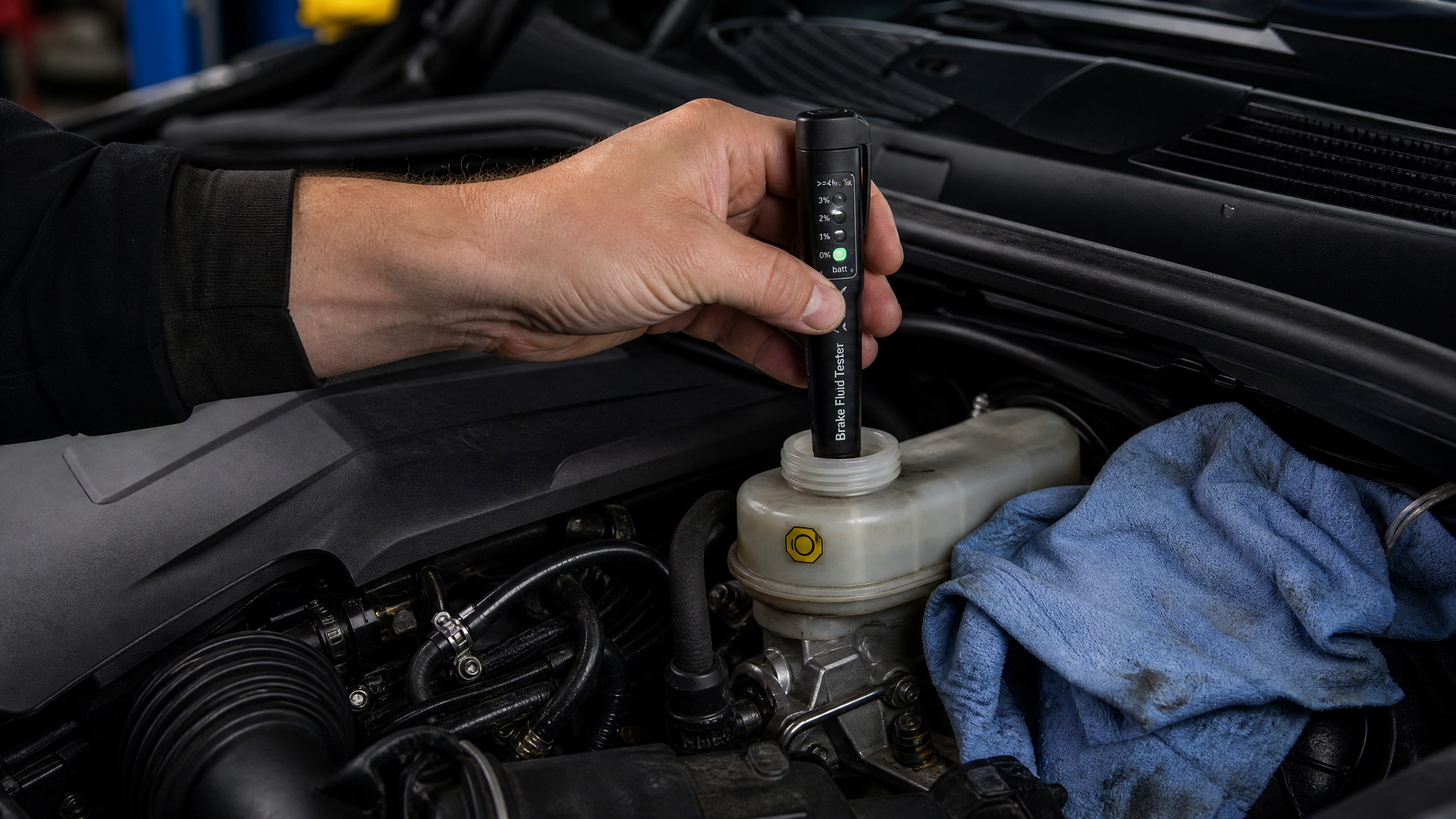
- A refractometer or electronic tester. A refractometer or electronic tester can help assess the fluid’s condition and boiling point. It reads the actual boiling point left in the fluid.
- Eyes and nose. Dark brown or black fluid, or fluid that smells burnt, is done. Fresh fluid is clear to light amber.
If you tow, drive mountains, or run track days, tighten the schedule to every year or two. Heat is the tax collector on brake fluid.
Flush vs. Bleed vs. Top-Off: Know Which You’re Doing
A top-off just adds fluid to the reservoir. It fixes nothing except the level, and a low level means a leak you should be chasing, not topping off.
A bleed pushes air out of one or more circuits after a repair, like a caliper swap.
A flush pushes old fluid out of the entire system — master, lines, ABS, calipers — and replaces it with new. That’s the maintenance job, and it’s what this article is about.
DIY Flush: The Two-Person Way
You can do this with a helper, a 10mm flare wrench for the bleeder screws, clear vinyl tubing, a catch bottle, and two quarts of the DOT rating your cap calls for.
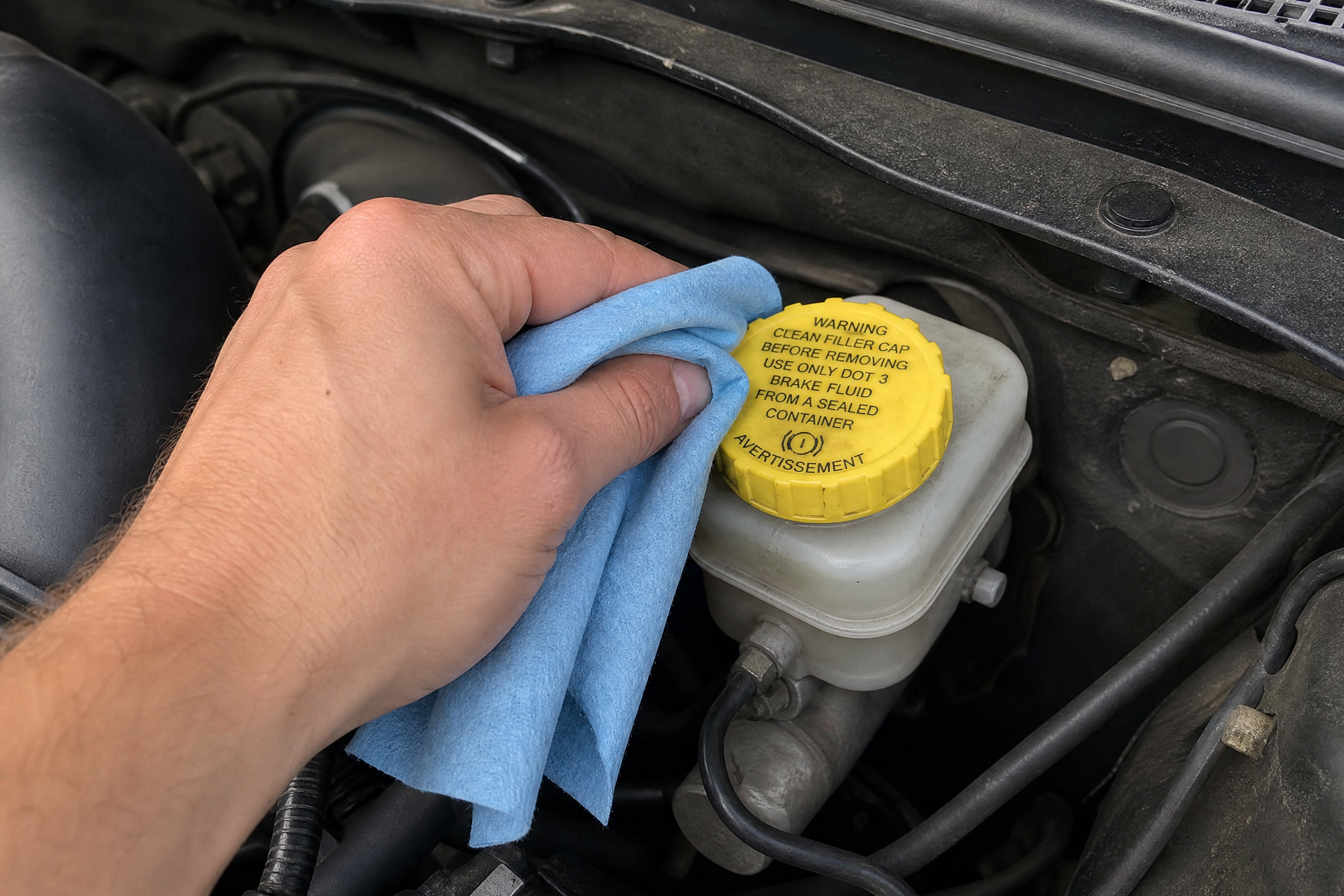
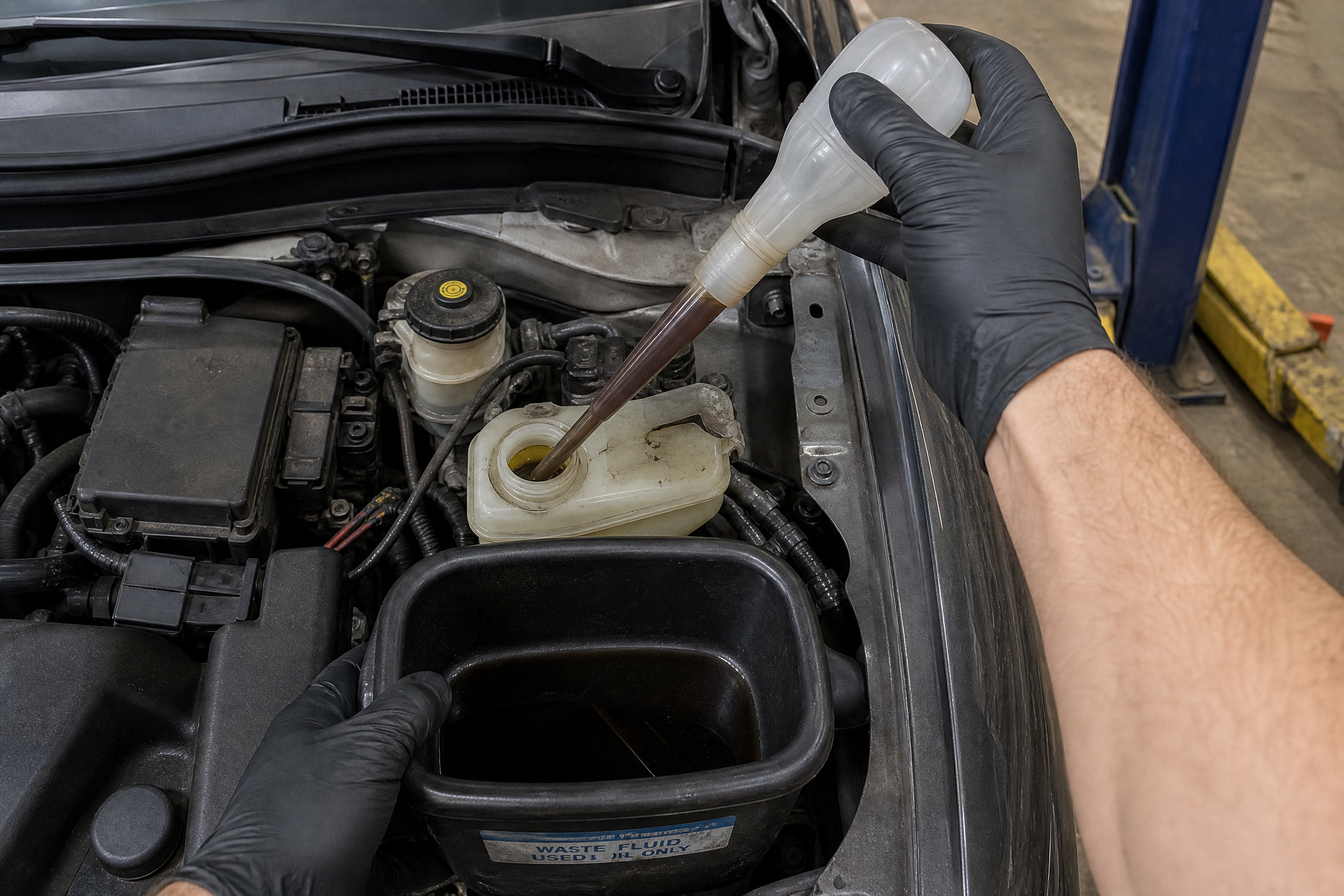
1. Start with a full reservoir. Clean the cap and the area around it before opening. Dirt falling into the master is how ABS valves die. Suck out the old fluid from the reservoir with a turkey baster first, refill with new, and keep it at least half full the entire job. If the master runs dry, you just added air to the whole system.
2. Bleed farthest to nearest. The usual order is right rear, left rear, right front, left front, but your manual’s order wins.
3. At each wheel: slip the tubing over the bleeder, drop the other end in the catch bottle with an inch of fluid in it so air can’t backflow. Have your helper press the pedal down and hold. Crack the bleeder open a quarter turn with the flare wrench. Fluid flows, pedal sinks. Close the bleeder. Helper releases the pedal. Repeat until the tube runs clear new fluid with no bubbles.
4. Watch the reservoir like a hawk between every wheel. Top it off every time.
5. Finish with a pedal check. Engine running, the pedal should feel firm and stay firm under steady pressure. A pedal that slowly sinks means air or an internal leak, and that’s a stop-and-recheck moment.
A vacuum bleeder or a pressure bleeder turns this into a one-person job and is worth the $30 if you’ll ever do it twice.
Rules I Don’t Break
- Brake fluid eats paint. It strips clear coat down to bare metal if it sits. Lay a rag over the fender before opening the reservoir, and rinse any spill with water immediately.
- Use fluid from a sealed container. Fluid left open in a shelf jug for months is already wet. Buy the smallest sealed bottle that does the job.
- Never mix DOT 5 silicone with glycol fluid. DOT 3, 4, and 5.1 mix in a pinch. DOT 5 does not mix with any of them, and a silicone-contaminated system is a full teardown.
- Flare wrench only on bleeders. An open-end wrench rounds the soft brass, and a rounded bleeder is a drilled-out caliper.
- Dispose of old fluid as hazardous waste. Parts stores and county facilities take it. Never the drain, never the trash.
What a Flush Buys You
A firm pedal that stays firm on the third stop down a hill. Lines and ABS valves that live to old age. Calipers that don’t seize at 80,000 miles.
Brake-fluid replacement is relatively inexpensive compared with hydraulic-system repairs. Moisture absorption occurs over time, so many manufacturers specify a time-based interval as well as any mileage guidance.
Try It: Is Your Fluid Due?
Answer three questions and get the verdict I’d give you across the bay.
Brake fluid check-up
How long since the last flush?
What does the reservoir look like?
How does the pedal feel?
Wrap-Up
Brake fluid fails quietly, by calendar, in every garage in every climate. The flush is cheap, the test strips are cheaper, and the failure mode is the worst one a car has.
Check the color monthly, test the moisture yearly, and flush every two to three years. Your pedal will tell you thank you on the first hard stop.
Questions about bleeders that won’t crack loose or a pedal that still sinks after the job? Comment with the car and year, and I’ll walk you through it.

Leave a Reply