
My dad kept a 3,000-mile sticker on every car he owned, rain or shine, for forty years. When I finally asked him why, he said, “Because that’s when oil goes bad.” He’d heard it in 1978 and never heard anything else since.
I love the guy, but his rule is older than most of the cars I work on. Oil and engines changed. The sticker didn’t.
Here’s how I actually decide when oil needs changing, the same way I’d explain it to you over a fence.
Where the 3,000-Mile Rule Came From
In the carbureted era, engines ran loose tolerances, blew fuel into the crankcase, and made soot. Conventional oil of the day gave up around 3,000 miles. The rule made sense then.
Modern engines hold tight tolerances, run computer-controlled fuel mixtures, and burn far cleaner. Modern oils, especially synthetics, are built in a lab to last two to three times longer. The old rule stuck around because it’s easy to remember and because quick-lube businesses love it.
What Intervals Look Like Now
| Oil type | Typical interval |
|---|---|
| Conventional | 3,000–5,000 miles |
| Synthetic blend | 5,000–6,000 miles |
| Full synthetic | 7,500–10,000 miles |
| Manual says 10k with a monitor | Follow the monitor |
Your owner’s manual is the referee. If it says 7,500 miles on synthetic, that number beats anything a quick-lube guy shouts at you. And if your car came with a 10,000-mile recommendation and an oil life monitor, the monitor is the schedule.
Severe Service: The Schedule Most of Us Actually Drive
Manuals split schedules into normal and severe (some call it “special operating conditions”). Here’s the catch: most of us drive severe and don’t know it.
Check your week against this list:
- Most trips are under 10 miles, especially in cold weather.
- Lots of stop-and-go or slow traffic.
- You tow, haul, or carry heavy load regularly.
- Dusty, gravel, or salty roads.
- Extreme heat or extreme cold climate.
- Long idling or door-to-door delivery driving.
If two or more of those sound like you, run the severe schedule. In practice that means cutting the normal interval roughly in half — a 10,000-mile oil becomes a 5,000-mile oil.
Short trips are the silent killer. The engine never gets hot enough to boil off fuel and moisture that sneak into the crankcase. That moisture turns to sludge and acid. My worst sludge jobs almost all come from cars that only drove to the corner store.
The Clock Matters Too
Oil dies on the shelf in your engine, not just on the road. Moisture, fuel dilution, and acids build up with time even if the odometer barely moves.
My rule: once a year minimum, even on a garage queen. On a severe-service car with low miles, every six months.
That classic car you drive 2,000 miles a year? Change it every fall before storage. Acid sitting in an engine all winter is how bearings get pitted. And change it again in spring if it sat through a damp season.
Trust the Monitor, Not the Sticker
Most cars built in the last fifteen years run an oil life monitor. It’s not a sensor dipped in oil — it’s a computer model watching RPM, temperature, trip length, and load, and counting down from 100%.
It works. I’ve pulled drain plugs on cars at 0% monitor and found oil that was genuinely done, and on gently-driven highway cars the monitor stretched past 9,000 miles with oil that still looked healthy.
Two rules: don’t reset it early “just in case,” and don’t ignore it past about 500 miles under zero. And remember, the monitor assumes the oil level is correct. Check the dipstick monthly either way. A monitor can’t see a quart that left through a leaky valve cover gasket.
New Car? The First Change Is Special
Some performance and truck manuals recommend an early first change, often around 1,000 to 3,000 miles, to catch break-in metal from the rings seating. Read the first page of the maintenance schedule, not the summary card.
And don’t top off with a different viscosity during break-in “to help it.” The factory fill is chosen on purpose. Just check the level.
How to Check Oil Like a Pro
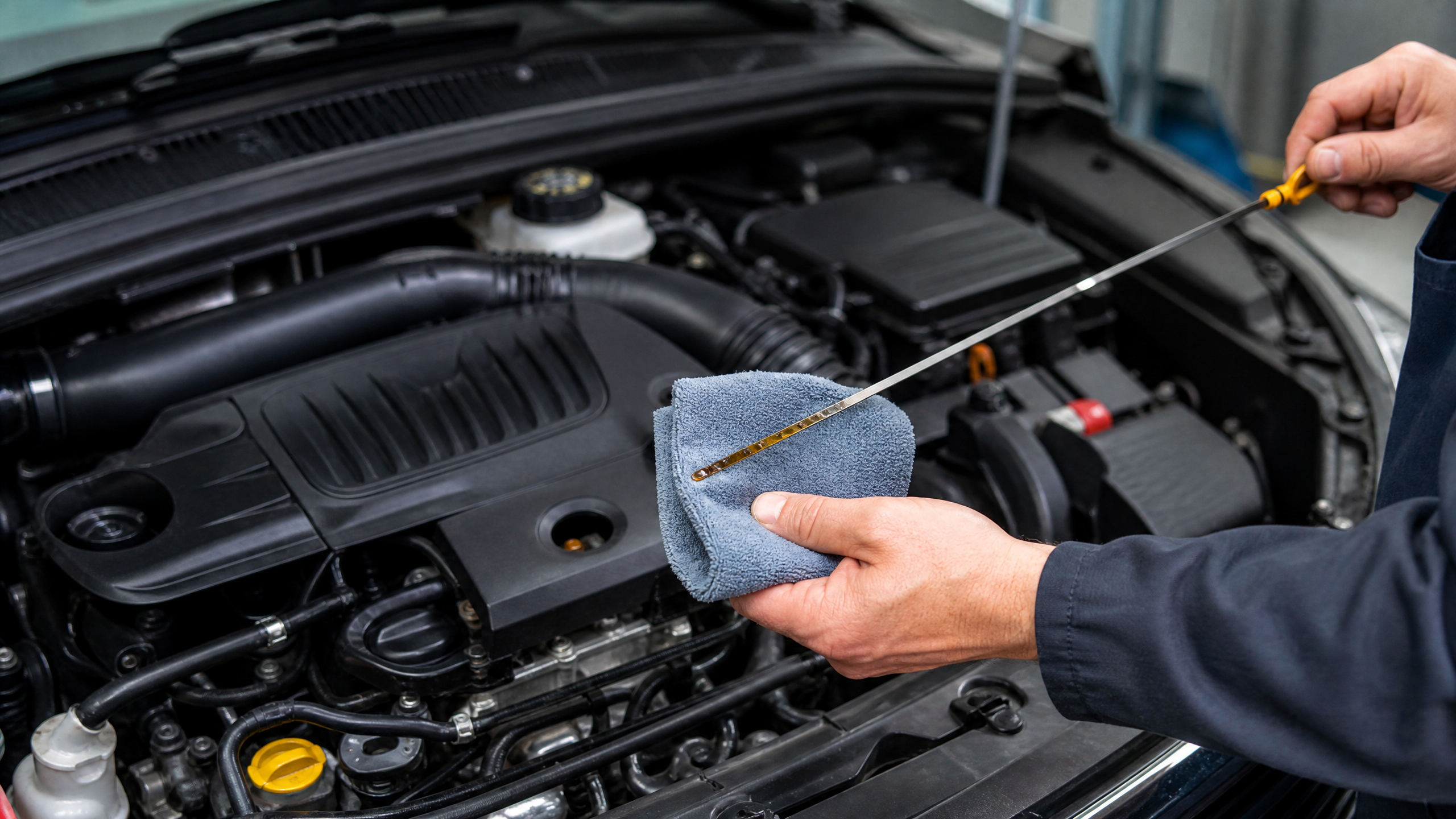
Park level. Give it a few minutes after shutdown so oil drains back. Pull the dipstick, wipe it with a clean rag, reinsert fully, pull again, and read both sides. The true level is the lower of the two readings.
You’re looking for the level between the two marks (or in the cross-hatch). A quart low is a warning. A quart low every month is a leak or a burning problem, and that’s a different conversation.
When you top off, add half a quart at a time and recheck. The distance between the marks is usually about one quart, and overfilling is worse than running slightly low for a week.
Reading the Oil Itself
Dark oil is not dead oil. Detergents in modern oil hold soot in suspension, which is why oil turns dark a few hundred miles in. That’s the oil doing its job, not a sign it’s spent.
Milky, frothy, tan oil is coolant getting in. That’s a head gasket or worse. Stop driving and get it looked at.
Oil that smells strongly of gas means heavy fuel dilution — lots of short trips or a running problem. Change it and fix the cause.
Grit between your fingers means metal or dirt. Neither belongs there.
A burnt smell with very black, thin oil on a high-mile engine means it’s past time. Don’t wait for the monitor if your nose already voted.
What Happens When You Wait Too Long
Oil that lives past its life loses viscosity and turns acidic. Bearings etch, rings glaze, and sludge blocks the pickup screen.
I once pulled the pan on a sedan that ran 15,000-mile changes on conventional oil. The pickup screen was a brick of black sludge. The engine rattled cold and smoked warm. A few skipped oil changes bought that owner a $4,000 used engine.
On the flip side, changing perfectly good synthetic at 3,000 miles isn’t virtue either. It’s just money and a jug of waste oil that didn’t need to exist. The goal is on-time, not early.
Want Real Data? Oil Analysis
If you’re the curious type, a used-oil analysis lab will test a sample for about $25. You mail them a few ounces from the drain stream, and they send back viscosity, fuel dilution, coolant, and wear metals.
Fleets run this to schedule changes by data instead of guesses. For a personal car it’s a fun way to know exactly what your interval should be. I’ve had it talk me out of changing too early and, twice, into catching a problem early.
Try It: Normal or Severe?
Tick what matches your week and the tool tells you which schedule you’re really on.
Which schedule is your week?
Wrap-Up
Forget the 3,000-mile sticker unless you drive a museum piece. Read your manual, be honest about your week, and respect the calendar as much as the odometer.
Check the level monthly, change on the schedule you actually earn, and your engine will outlive the paint.
Tell me your car and your weekly miles in the comments and I’ll tell you which column you land in.




Leave a Reply