The Check Engine Light Isn’t the Enemy
The first time my check engine light came on, I did what most people do: I panicked, then ignored it for two weeks. Eventually I borrowed a $40 OBD-II scanner from a friend, pulled a P0171, and diagnosed a cracked intake hose in about 20 minutes. The repair cost me $18.
That experience changed how I think about these codes. They’re not a threat — they’re a data trail. Your car’s On-Board Diagnostics system (OBD-II, standardized across all US vehicles since 1996) continuously monitors dozens of sensors. When a reading falls outside acceptable parameters, it logs a Diagnostic Trouble Code (DTC) and triggers the check engine light.
Understanding how to read that data trail is one of the most practical skills any car owner can develop.
How OBD-II Codes Are Structured
Every OBD-II code follows a five-character alphanumeric format. Once you know the pattern, you can extract useful information from any code — even one you’ve never seen before.
Character 1 — System
| Character | System |
|---|---|
| P | Powertrain (engine, transmission, fuel, emissions) |
| B | Body (airbags, climate control, power steering) |
| C | Chassis (ABS, traction control, suspension) |
| U | Network/Communication (module-to-module signals) |
For check engine light diagnosis, you’ll almost always be working with P codes.
Character 2 — Code Origin
| Character | Meaning |
|---|---|
| 0 | Generic / SAE-standardized (applies to all OBD-II vehicles) |
| 1 | Manufacturer-specific (extra detail for a particular brand) |
Practical note: A P0 code means any decent scanner and any repair database will give you accurate information. A P1 code requires looking up the specific make — a P1399 means something very different on a Honda vs. a Subaru.
Character 3 — Subsystem
| Digit | Subsystem |
|---|---|
| 1 | Fuel and air metering |
| 2 | Fuel injector circuit |
| 3 | Ignition / misfire |
| 4 | Auxiliary emissions (EVAP, EGR) |
| 5 | Vehicle speed / idle control |
| 6 | Computer output circuits |
| 7–8 | Transmission |
Characters 4–5 — Specific Fault
These two digits identify the exact fault within that subsystem. So a P0302 tells you: Powertrain (P) → Generic (0) → Misfire (3) → Cylinder 2 specifically (02).
The 6 Most Common Engine Codes — and What They Actually Mean
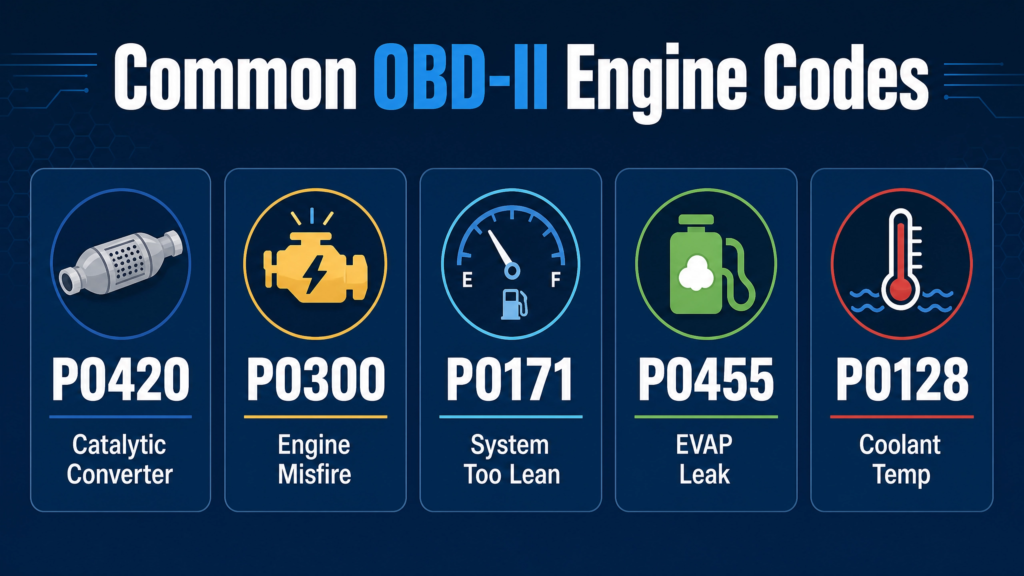
Here’s where generic guides often fall short: they list what the code says without telling you what it means in practice. I’ll cover both.
P0171 / P0174 — System Too Lean (Bank 1 / Bank 2)
What it means: The engine’s air-fuel mixture has too much air (or not enough fuel) relative to the ideal 14.7:1 ratio.
What I actually see cause this:
In my experience, the single most common cause of P0171 on high-mileage four-cylinder engines is a cracked or split intake boot between the air filter and throttle body. It’s cheap, it’s easy to miss visually, and it lets unmetered air into the engine after the MAF sensor — so the sensor doesn’t “see” it, the mixture goes lean, and the code trips.
Other causes, in rough order of frequency:
- Dirty or failing MAF sensor — spray it with MAF cleaner before replacing it; a $6 can often fixes a $200 part
- Vacuum leak — spray carburetor cleaner around intake manifold gaskets with the engine running; idle change = leak found (be careful near ignition sources)
- Weak fuel pump — more common above 100k miles; check fuel pressure first
- Clogged fuel injectors
Do not ignore this. A lean condition runs hot. Extended lean operation can burn exhaust valves and cause head gasket failures.
Diagnostic tip: Check short-term and long-term fuel trim values (STFT/LTFT) with your scanner’s live data. Both banks positive and high (+15% or more) strongly suggests a vacuum leak or MAF issue rather than a fuel delivery problem.
P0300–P0308 — Engine Misfire
P0300 = random/multiple cylinder misfire. P0301–P0308 = misfire in cylinder 1–8 specifically.
What causes misfires — ranked by how often I see them:
- Worn spark plugs — check the gap and electrode condition; a plug that looks “okay” may still be contributing to a weak spark
- Failed ignition coil (especially on coil-on-plug systems) — swap the coil to a known-good cylinder; if the misfire follows the coil, you have your answer
- Clogged fuel injector — a misfire that worsens under load and improves at idle points here
- Low compression — if the misfire doesn’t respond to ignition or fuel fixes, do a compression test; a dead cylinder means internal engine wear
Important distinction: A P0300 (random misfire) is often a different beast than a single-cylinder code. Random misfires can indicate a failing crankshaft position sensor, a worn timing chain, or low fuel pressure — not just bad plugs.
Symptom to note: A flashing (not steady) check engine light during a misfire means the ECU has detected misfire severe enough to potentially damage the catalytic converter. Pull over and address it promptly.
P0420 — Catalytic Converter Efficiency Below Threshold (Bank 1)
This is one of the most misdiagnosed codes in the industry. I’ve seen shops replace catalytic converters that were perfectly fine — and send customers away with the same code two weeks later.
How the system works: Two oxygen sensors monitor the cat — one upstream (before) and one downstream (after). A healthy cat should produce a relatively flat, stable downstream O2 signal compared to the oscillating upstream signal. P0420 triggers when the downstream signal looks too similar to the upstream one, suggesting the converter isn’t processing exhaust gases efficiently.
What actually causes P0420:
- Failing downstream oxygen sensor — a lazy or biased sensor can mimic cat failure; test the sensor before condemning the cat
- Exhaust leak upstream of the downstream O2 sensor — introduces outside air, corrupts the reading
- Engine burning oil — oil in the exhaust poisons catalysts; if you’re consuming oil, fix that first
- Actual catalyst failure — usually caused by overheating from prolonged misfires, or physical damage
My rule: Before recommending a catalytic converter replacement (which can run $400–$2,000+), I always test the downstream O2 sensor response and look for any upstream exhaust leaks. A $50 sensor fix vs. a $1,000 converter replacement is worth the extra diagnostic time.
P0128 — Coolant Temperature Below Thermostat Regulating Temperature
What it means: The engine is taking too long to reach operating temperature, or never gets there.
Almost always the cause: A thermostat stuck in the open position. The thermostat’s job is to keep coolant in the engine until it reaches operating temp (~195°F on most modern vehicles), then open to allow flow. A stuck-open thermostat means the engine runs chronically cold.
Why it matters: Modern engine management systems are calibrated to assume the engine is at operating temperature within a specific timeframe. A cold-running engine gets a richer fuel mixture (hurts fuel economy and emissions), delayed ignition timing, and more friction from thicker oil. Long-term, it accelerates wear.
Thermostat replacement is one of the better DIY jobs — usually $15–$40 in parts and 1–2 hours of labor on most engines. Make sure to replace the coolant gasket and bleed the cooling system properly afterward.
P0442 / P0455 — EVAP System Leak (Small / Large)
What it means: The Evaporative Emission Control system, which captures fuel vapors from the tank and routes them into the engine rather than venting to atmosphere, has a leak.
P0442 = small leak (pinhole). P0455 = large leak (often a missing or loose gas cap).
Start here: Tighten the gas cap fully. If the cap is cracked, replace it ($10–$20). This fixes P0455 surprisingly often.
For P0442, common culprits include the EVAP purge valve, vent valve, or cracked hoses in the EVAP circuit. Pinpointing a small leak often requires a smoke machine — your mechanic pumps inert smoke into the system and watches for where it escapes.
Note: EVAP codes won’t cause drivability problems or damage your engine, but they will cause you to fail an emissions inspection. Don’t ignore them if you’re in a state with annual smog checks.
P0135 / P0141 — Oxygen Sensor Heater Circuit Malfunction
What it means: The heating element inside the upstream (P0135) or downstream (P0141) oxygen sensor has failed.
Why there’s a heater at all: Modern O2 sensors need to reach around 600°F to generate accurate voltage signals. Cold exhaust doesn’t get there fast enough on its own, so sensors have an internal electric heater that brings them up to temp within ~30 seconds of startup. When the heater circuit fails, the sensor either operates inaccurately or not at all until the exhaust heats it passively.
Diagnosis: Check for voltage at the heater circuit wires with a multimeter. If there’s power to the sensor but the heater doesn’t respond, the sensor has failed internally. If there’s no power, check the fuse and wiring first.
Replacement tip: O2 sensor thread seizure is common on older vehicles. Apply penetrating oil the night before you plan to remove the sensor, and use a proper O2 sensor socket (slotted for the wire). Trying to muscle a seized sensor with the wrong tool breaks it off in the bung — a much bigger repair.
🛠️ Interactive Diagnostic Tool: Troubleshoot Your Code.
Not sure where to start? Use our interactive flowchart below to get a custom diagnostic path for your car.
🔧 Engine Code Troubleshooting Guide
Follow this interactive flowchart to diagnose your check engine light
1Getting Started
Your check engine light is on. To begin, you need to retrieve the diagnostic trouble code (DTC).
Do you have an OBD-II scanner ready?
2Retrieve Your Code
Connect your scanner to the port (usually under the driver-side dash) and read the code.
Which code do you see?
3System Too Lean
P0171 / P0174: Too much air, not enough fuel.
- Check for vacuum leaks (hissing sounds)
- Inspect Mass Air Flow (MAF) sensor
- Check fuel filter/pump status
4Engine Misfire
P0300 – P0308: Fuel isn’t burning correctly.
- Inspect spark plugs for wear
- Check ignition coils
- Check fuel injectors
5Catalytic Converter
P0420: Efficiency below threshold.
Often caused by a bad converter or O2 sensor. ⚠️ High repair cost – confirm before replacing.
6Coolant Thermostat
P0128: Engine too cold.
Commonly a thermostat stuck open. Leads to poor fuel economy.
7EVAP System Leak
P0442 / P0455: Fuel vapor leak.
First fix: Tighten or replace your gas cap!
8Oxygen Sensor
P0135 / P0141: Heater circuit failure.
The sensor can’t reach operating temperature quickly, affecting emissions.
9Unknown Code
Look up your specific code in a reputable database and note any vehicle symptoms.
10Visual Inspection
- Check for loose electrical plugs
- Inspect for cracked vacuum hoses
- Look for corroded wires
Did you find a clear issue?
11Professional Help
If you lack tools or the issue persists, a mechanic can provide advanced diagnostics.
A Step-by-Step Diagnostic Process That Works
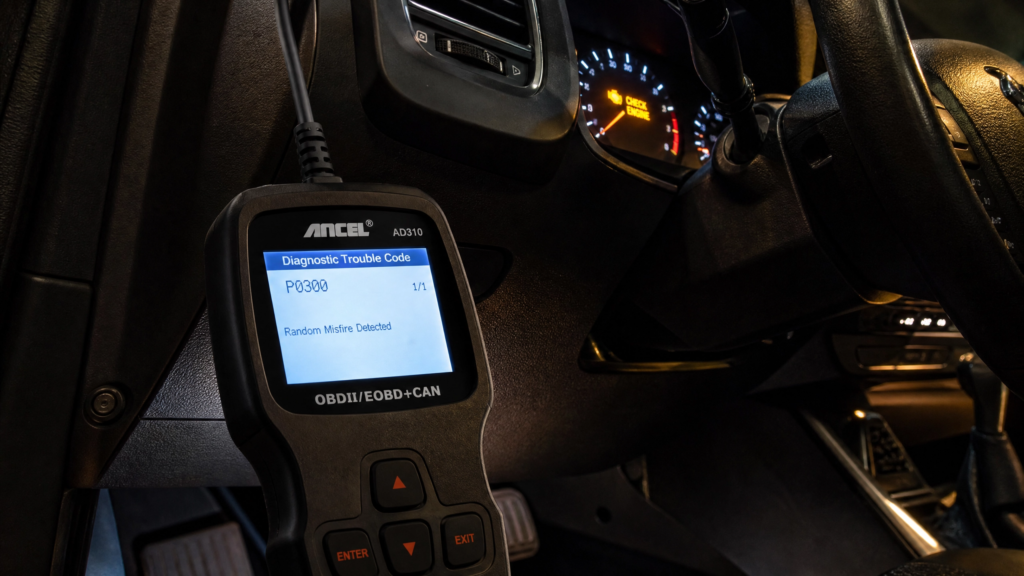
This is the process I follow in my own garage. The order matters — skipping to parts replacement without working through it wastes money.
Step 1: Retrieve the code(s) Connect an OBD-II scanner to the port under the driver’s side dash. Many auto parts chains (AutoZone, O’Reilly, Advance Auto) will scan for free. A basic Bluetooth scanner (Veepeak, BAFX, etc.) runs $20–$40 and connects to your phone — worth owning.
Step 2: Read and record all codes — including pending ones Most scanners show both confirmed codes (triggered the check engine light) and pending codes (fault detected but not yet confirmed across multiple drive cycles). Pending codes give you early warning of developing issues.
Step 3: Pull freeze frame data This is the snapshot of operating conditions at the moment the fault was logged — RPM, coolant temp, vehicle speed, fuel trim, load percentage. It’s often the most important diagnostic data you have. A misfire that only occurs at highway speed and high load tells you something very different than one that triggers at idle.
Step 4: Check for symptoms Does the car run differently? Rough idle, hesitation, poor fuel economy, smell of fuel or burning? Correlate symptoms with the code. A P0420 with no drivability symptoms is a different diagnostic path than a P0420 on an engine that smells like sulfur and stumbles at idle.
Step 5: Visual inspection before touching parts Walk through the relevant components visually. Look for cracked hoses, loose electrical connectors, corroded terminals, obvious damage. I’ve found a P0171 caused by a disconnected vacuum line that a mouse had chewed through — caught in 30 seconds of looking.
Step 6: Test before replacing This is where most DIYers lose money. A code pointing to an O2 sensor doesn’t mean the O2 sensor is bad — it means the O2 sensor circuit reported a fault. Test the sensor, check wiring integrity, and verify power and ground before buying a replacement.
Step 7: Fix the root cause, not the symptom A P0300 misfire caused by low compression won’t be fixed by new spark plugs. A P0420 caused by an oil-burning engine will return after a new catalytic converter. Trace the problem upstream.
Step 8: Clear the code, verify the repair Clear the DTC with your scanner, then drive through varied conditions — city, highway, stop-and-go. The readiness monitors (emissions system self-checks) need to run to completion. If the light doesn’t return, the repair held.
When to Call a Professional
I believe in DIY when it makes sense, but these situations warrant a shop visit:
- Low compression codes or internal engine symptoms — compression tests and teardown aren’t beginner territory
- Transmission codes (P07xx–P08xx) — modern automatic transmissions require specialized equipment and calibration
- Airbag or SRS codes — live pyrotechnic devices; incorrect handling can injure you
- ABS or stability control codes — brake system integrity is not the place to experiment
- The code returns within one or two drive cycles after repair — either the wrong root cause was addressed, or there’s a deeper issue
- Multiple unrelated codes appearing simultaneously — often indicates an electrical/power supply issue that needs methodical tracing
A good independent shop will give you a written diagnostic report before any repair. If they can’t explain what they tested and what they found, find a different shop.
A Note on Code Readers vs. Professional Scanners
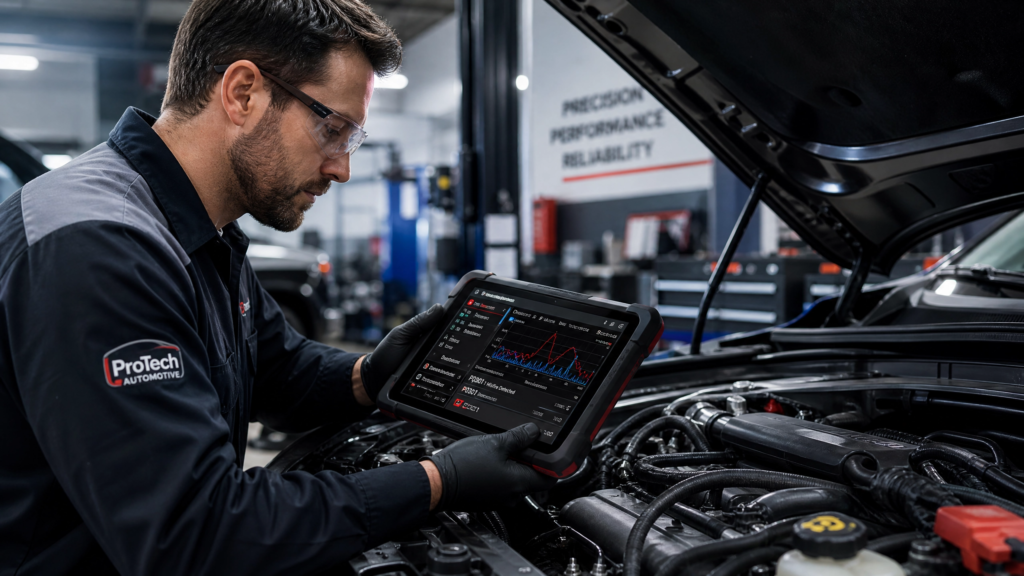
The $20–$40 Bluetooth scanner connected to your phone via a free app (Torque, OBD Fusion, Car Scanner) will retrieve codes, clear them, and show live data. That covers 80% of what most drivers need.
Professional shop scanners (Autel, Snap-on, Launch) add bi-directional control — they can command specific components to activate, run system tests, and access manufacturer-specific enhanced data. If you’re hitting a diagnostic dead end with a consumer scanner, that’s often why.
OBD-II Code Knowledge Check
OBD-II Code Quiz
Test your understanding of engine codes and common car malfunctions based on the article you have just read above.
References and Further Reading
- SAE International J1979 Standard — Diagnostic Test Modes (OBD-II) — the foundational technical specification the OBD-II protocol is built on
- EPA OBD-II Overview — Onboard Diagnostic Regulations — epa.gov
- NHTSA Technical Service Bulletins database — odi.nhtsa.dot.gov — for make/model-specific known issues related to your code
- Mitchell1 / ALLDATA — professional repair databases used by shops; consumer subscriptions available



Leave a Reply