
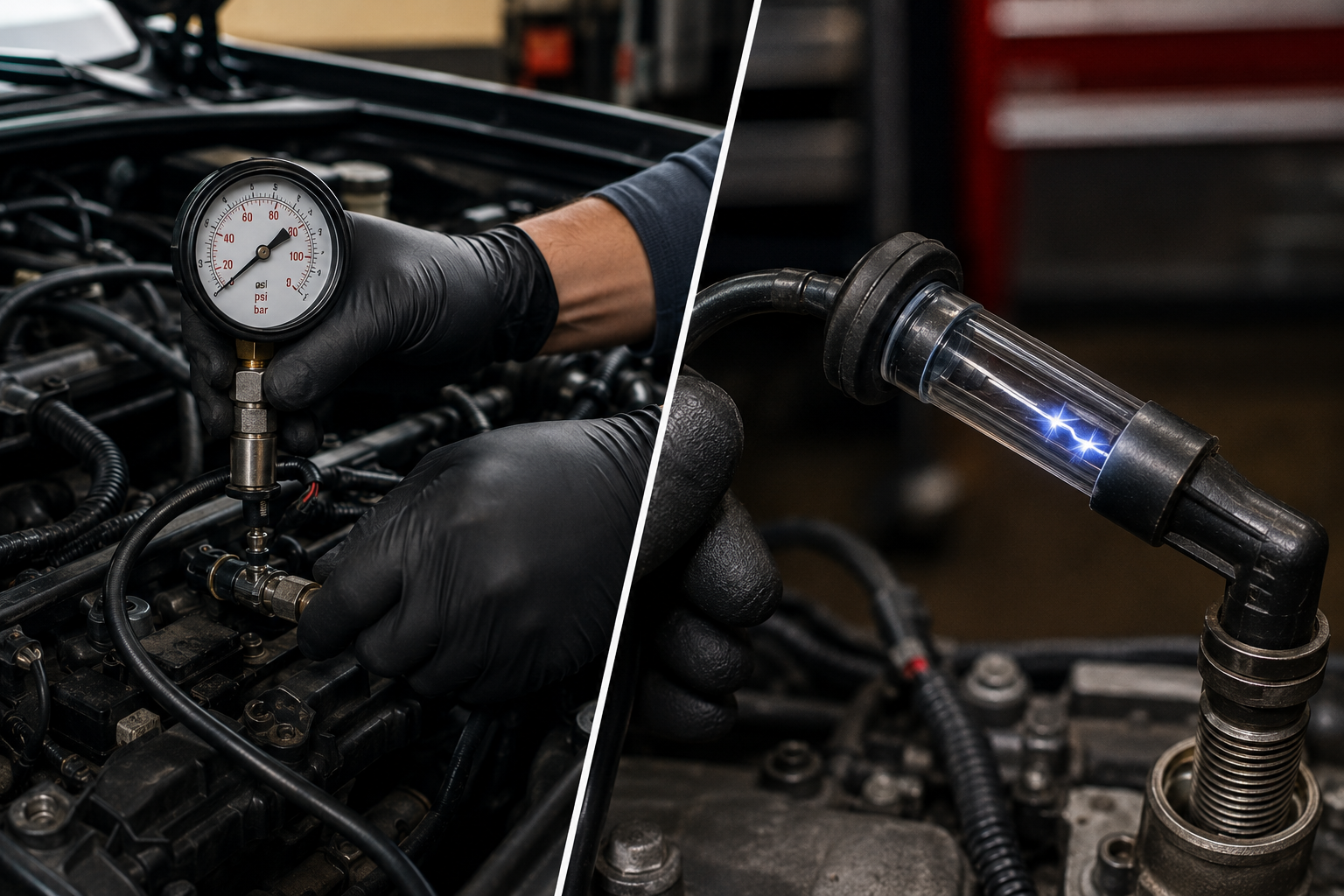
You turn the key. The engine spins over — you can hear it, feel it, even see the tach needle jump. But it just won’t catch. No roar, no rumble, nothing. Just that frustrating cranka-cranka-cranka that eats away at your battery with every try.
I’ve been under more hoods than I can count over the years, and this is one of the most common calls I get from friends and readers. The good news? A crank-no-start almost always comes down to one of two things: no fuel or no spark. Sometimes it’s both. Rarely is it something exotic.
Grab a coffee, pop the hood, and let’s walk through exactly how I’d diagnose this in my own garage.
Cranking vs. Starting — Know the Difference
This trips up a lot of folks, so let’s clear it up first.
Cranking means the starter motor is turning the engine over. You hear that mechanical whirring sound. That tells you your battery, starter, and ignition switch are doing their jobs.
Starting means the engine actually fires up and runs on its own power. That requires three things working together at the right time: fuel, spark, and compression.
If your car cranks but won’t start, compression issues are less common (and harder to check without a compression gauge), so we’re going to focus on the two usual suspects: fuel delivery and spark.
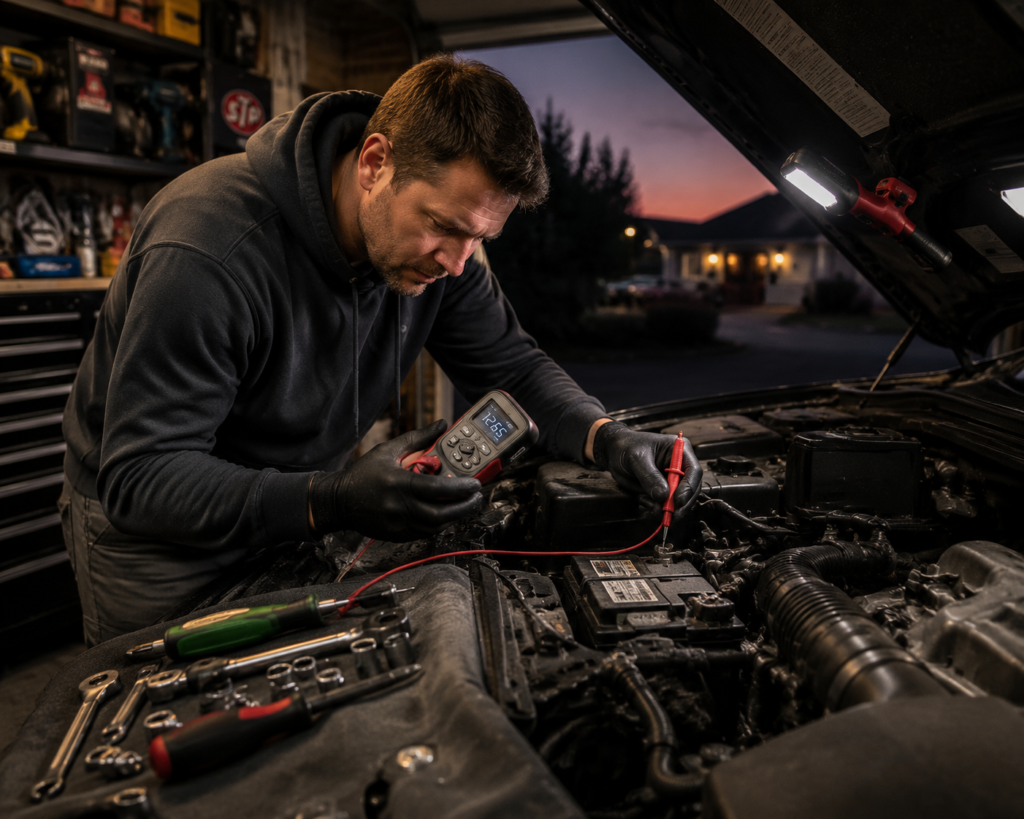
Safety First — Don’t Skip This Part
Before you touch anything, a few ground rules I never skip, even after 20-plus years of doing this.
- Work in a ventilated space. Gasoline vapors and exhaust fumes build up fast in a closed garage.
- Keep a fire extinguisher nearby. You’re dealing with fuel. This isn’t optional.
- Disconnect the negative battery terminal anytime you’re working near the starter or alternator wiring, unless you’re actively testing something that needs power.
- Never smoke or work near an open flame when checking fuel lines or the fuel rail.
- Watch for hot components. Exhaust manifolds and headers stay hot long after you shut the engine off.
- Wear safety glasses. Fuel spray under pressure can go straight into your eyes, and nobody wants that trip to the ER.
One more thing — if you smell a strong gas odor before you even start testing, stop. That could mean a leaking fuel line or a flooded engine, and you don’t want a spark anywhere near that.
Step 1: Check Your Battery and Connections
I know I said we’re focusing on fuel and spark, but weak power can mimic a no-start and waste your whole afternoon if you don’t rule it out first.
- Look at the cranking speed. If it sounds slow or labored, your battery might be too weak to fire the ignition system properly, even though it’s technically “cranking.”
- Check the terminals for corrosion — that white or greenish crust buildup. A wire brush and a bit of baking soda water clears that right up.
- Make sure the terminals are tight. A loose connection can cause intermittent power to the ignition coil or fuel pump relay.
If the battery tests fine and connections are clean, move on to spark.
Step 2: Checking for Spark
Spark is usually the easier of the two to check, and it doesn’t require pulling any fuel lines apart.
What You’ll Need
- A spark plug socket (usually 5/8″ or 13/16″, depending on your engine)
- A ratchet and extension
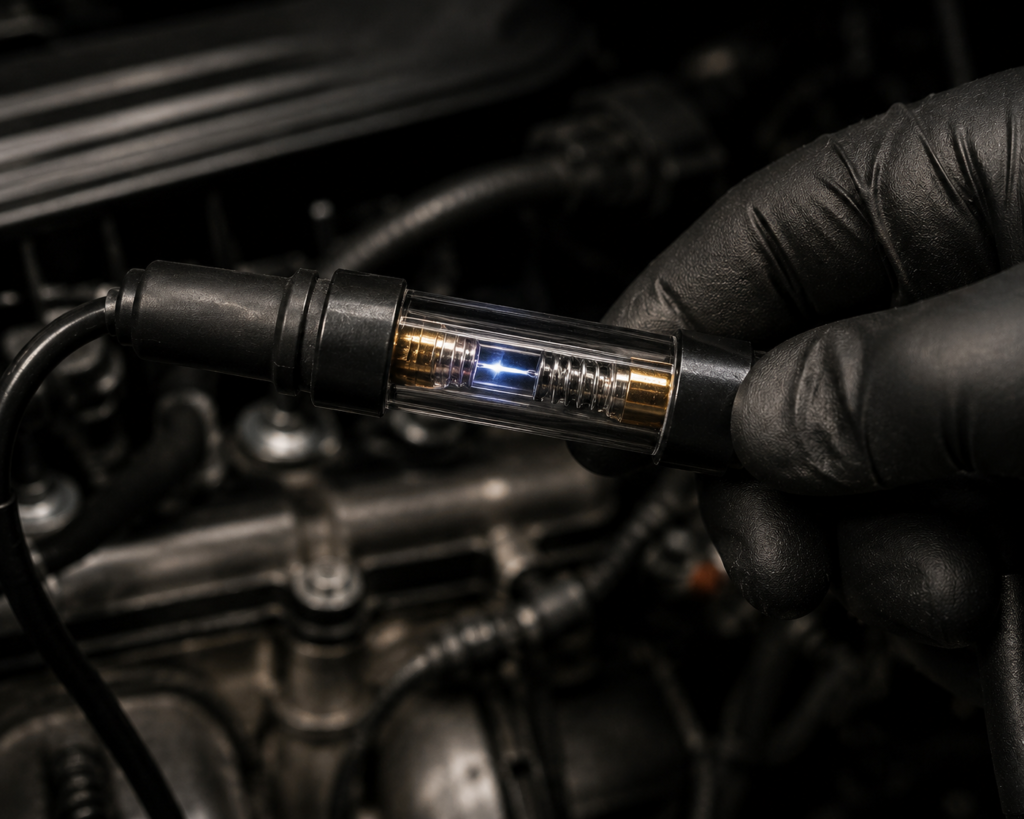
- An inline spark tester (cheap, around $10-15, and way safer than the old “hold the plug near metal” trick)
- Insulated pliers or a plug boot puller
How I Do It
- Disconnect one spark plug wire or coil-on-plug connector. Work on one cylinder at a time so you don’t lose track of which wire goes where.
- Connect the inline spark tester between the plug wire (or coil) and the spark plug. These testers clip on and let you see the spark without holding anything near your hand.
- Have someone crank the engine for a few seconds while you watch the tester.
- Look for a strong, consistent blue spark. A weak orange or yellow spark, or no spark at all, points to an ignition problem.
If you don’t see spark, common culprits include:
- A failed ignition coil
- A bad crankshaft position sensor (this one trips up a lot of DIYers because the car cranks totally normal but the ECU never gets the signal to fire the coils)
- Corroded or damaged spark plug wires
- A blown ignition control module on older vehicles
Quick tip from the garage: if you pull a spark plug and it’s soaking wet with fuel, that tells you two things at once — you likely do have fuel getting to the cylinder, and repeated cranking has flooded it. Wipe it down, let the cylinder air out for a few minutes, and try again after you fix the spark issue.
Step 3: Checking for Fuel Delivery
If spark checks out fine, the problem is almost certainly fuel-related. Here’s how I run through it safely.
What You’ll Need
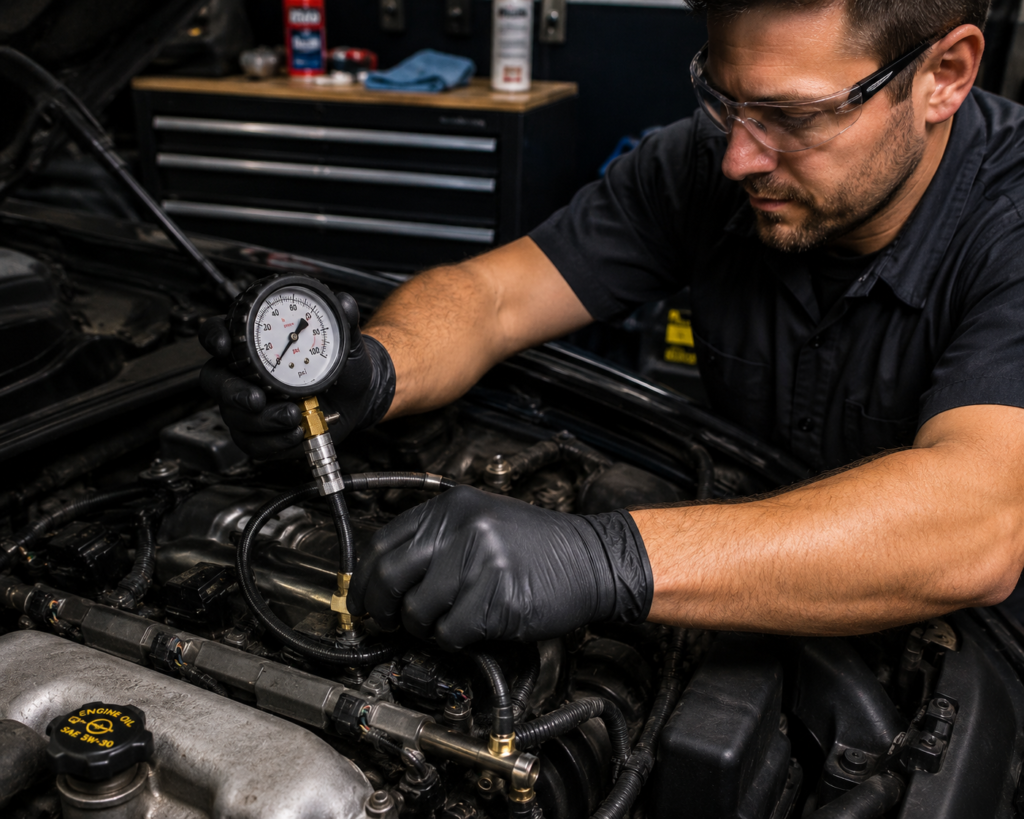
- A fuel pressure gauge with the right adapter for your vehicle (Schrader valve or inline fitting, depending on the make)
- Shop rags — fuel will spray a little no matter how careful you are
- Safety glasses
- A flashlight
How I Do It
- Listen for the fuel pump priming. Turn the key to the “on” position (not crank) and listen near the fuel tank for a 2-3 second whirring sound. That’s the pump pressurizing the system. No sound usually means a dead pump, blown fuel pump fuse, or bad relay.
- Check the fuel pump fuse and relay first. This sounds too simple, but I can’t tell you how many “dead fuel pump” diagnoses turned out to be a $3 fuse. Check your owner’s manual for the fuse box diagram.
- Hook up the fuel pressure gauge to the test port on the fuel rail, or splice into the line if your vehicle doesn’t have one.
- Turn the key to “on” and watch the gauge. Compare the reading to your vehicle’s spec (usually found in the service manual — typically somewhere between 30-60 PSI depending on the system).
- Crank the engine and watch if pressure holds steady or drops.
If pressure is low or absent, check these in order:
- Fuel pump fuse and relay (cheapest and easiest to rule out)
- Clogged fuel filter — if your car has a replaceable one, this is a common wear item
- Failing fuel pump — these wear out over time, especially if the tank has run low on gas often (the pump relies on fuel for cooling)
- Clogged fuel injectors — less common as a total no-start, but possible if the car sat for a long time with old gas
Safety warning worth repeating: if you’re working with a pressurized fuel system, wrap a rag around the fitting before you loosen it. Fuel under pressure will spray out, and it can travel farther than you’d think. Also — brake fluid isn’t the only thing that eats paint. Spilled gasoline can dull a clear coat if left sitting, so wipe up any drips right away.
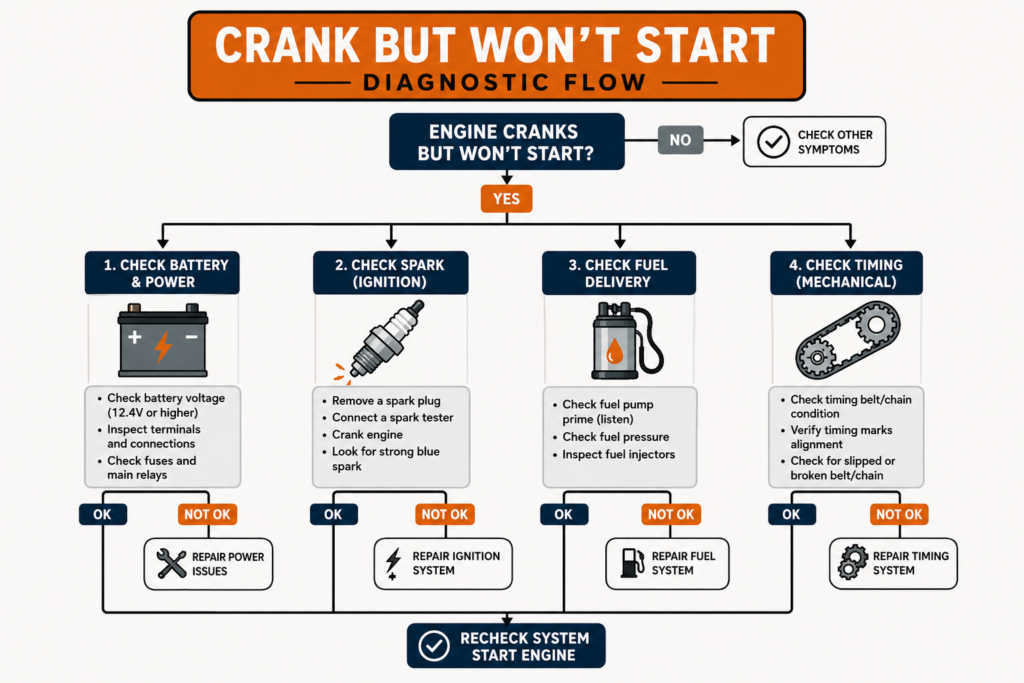
Putting It Together: A Simple Decision Path
Here’s the mental flowchart I run through every time I get a crank-no-start car in my driveway:
- Battery and connections good? If no, fix that first.
- Spark present at the plug?
- Yes → move to fuel.
- No → check coil, crank sensor, wiring, and ignition module.
- Fuel pressure at spec?
- Yes → problem may be timing-related (like a broken timing belt or chain), which needs a mechanic’s inspection.
- No → check fuse/relay, filter, and pump.
- Both spark and fuel present but still no start?
- This usually points to a timing issue — like a jumped timing belt — or a compression problem. At this point, it’s worth getting a second opinion from a shop, especially if there’s any chance the timing belt or chain slipped, since that can bend valves on an interference engine.
A Quick Interactive Tool: Crank-No-Start Diagnostic Helper
I put together a simple interactive tool below that walks you through the same questions I ask myself in the garage. Answer honestly, and it’ll point you toward the most likely culprit.
🔧 Crank-No-Start Diagnostic Helper
Does the engine crank at a normal speed (not slow or sluggish)?
Do you get a spark when testing with an inline spark tester?
Does the fuel pump prime (whirring sound) when you turn the key to “on”?
Is your fuel pressure reading within spec on a gauge?
When to Call a Professional
I’m all for doing your own wrenchwork, but there’s a point where it makes sense to hand the keys to a shop:
- If you suspect a timing belt or chain failure, especially on an interference engine, don’t crank it repeatedly — that can cause more damage.
- If you’re getting fuel and spark but still no start, and you don’t have a compression tester or timing light, a shop can pinpoint it faster than trial and error.
- If your vehicle has a security or immobilizer system acting up, that often needs a scan tool to diagnose properly.
There’s no shame in that. Even I call in favors from a buddy with a lift when a job calls for equipment I don’t keep at home.
Common Mistakes I See DIYers Make
- Cranking the engine over and over without checking anything first. This just drains your battery and can flood the engine with fuel.
- Skipping the fuse and relay check. It’s the cheapest test and gets skipped the most.
- Forgetting to clean around caps and fittings before opening them. Dirt falling into an open fuel line or a hydraulic system can cause expensive damage down the line — same principle mechanics use to protect ABS valves when bleeding brakes. A little compressed air or a clean rag before you crack anything open saves you a headache later.
- Ignoring smells and sounds. A strong gas smell, a clicking relay that doesn’t click, or a faint hiss near the fuel rail are all clues most people drive right past.
Final Thoughts From the Garage
A crank-no-start feels overwhelming when you’re standing in the driveway running late for work, but it almost always breaks down to two simple checks: spark and fuel. Work through it methodically, don’t skip the cheap and easy tests like fuses and relays, and keep safety gear on the whole time.
Most of the time, you’ll find the answer within the first 20 minutes of testing — a blown fuse, a bad coil, a dead pump. Save the expensive diagnosis for the rare cases where both spark and fuel check out fine. That’s usually when it’s time to bring in a second set of hands with the right equipment.
Keep a spark tester and a cheap fuel pressure gauge in your toolbox. They’ll pay for themselves the first time you use them instead of guessing.



Leave a Reply