
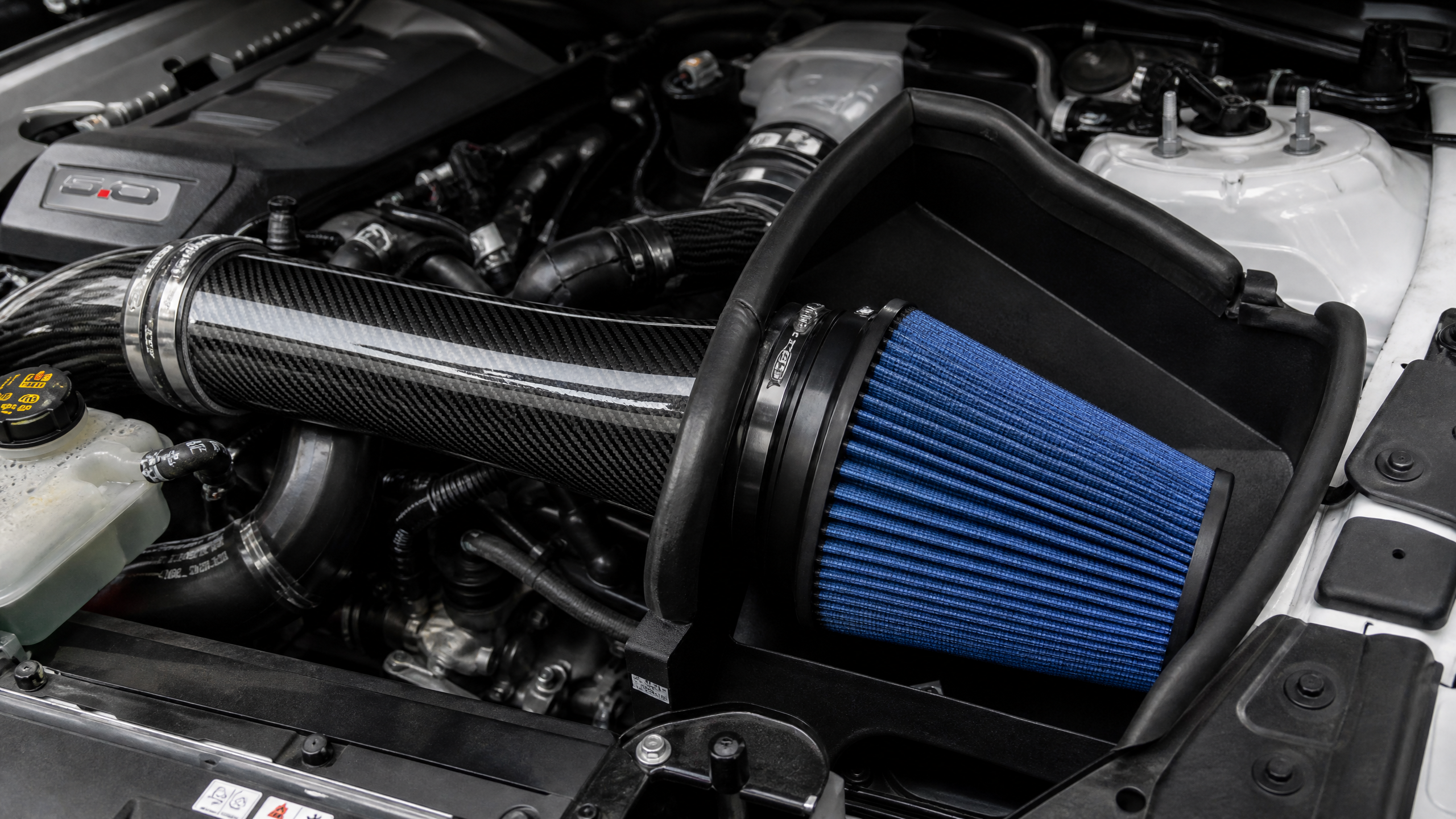
A kid rolled onto my property after a parts-store sale with a cold air intake under his arm and a number in his head: thirty horsepower, guaranteed by the box. We put his car on a friend’s dyno a week later, before and after. The intake bought him four horsepower and a very good engine sound.
He wasn’t scammed, exactly. The box’s number was real — on their flow bench, under their conditions, with the rest of the engine imaginary. Here’s the honest physics, the real gains, and who should actually spend the money.
What an Intake Actually Does
Your engine is an air pump. It makes power in proportion to how much air it can move, and the factory intake is a compromise: quiet, cheap, emissions-legal, and tuned around a paper filter and a resonator box that silences induction noise.
That compromise costs a little airflow. The airbox inlet is often small, the tubing bends sharply, and the paper filter restricts as it loads. An aftermarket intake attacks all three: a bigger filter, a smoother tube, and fewer bends.
Less restriction means the engine spends less effort inhaling at high RPM, where airflow demand peaks. That’s the entire power story, and it explains why the gains live at the top of the tach, not at a stoplight.
Where the Box Numbers Come From
Marketing horsepower is usually measured as a peak gain at the RPM of maximum airflow, on a dyno, often with the engine already modified or tuned, and sometimes just as a flow-bench conversion.
Your commute is not that RPM. At part throttle, city speeds, the engine sips air, and a bigger straw changes almost nothing. That’s why the seat-of-the-pants difference shows up as sound and throttle feel, while the stopwatch stays humble.
Real-World Numbers, Honestly Stated
On a naturally aspirated daily car, expect 3 to 8 horsepower at the top end from a bolt-on intake alone, and often less. That’s one to three percent.
On a turbo or supercharged car, the intake feeds a compressor that multiplies its effect, so gains run bigger — and those cars usually want a tune to use the change properly, which is where the real numbers live.
The honest summary: an intake is a supporting actor. With a tune and other mods, it plays well. Alone, it’s mostly theater — good theater, but theater.
The Pros, Fairly Stated
- Sound.Induction roar under throttle is the number-one reason people buy them, and it’s a real, daily joy.
- Throttle feel.Less restriction can sharpen the rev climb at high RPM, which reads as responsiveness.
- A reusable filter.Oiled gauze or dry synthetic filters clean and re-oil instead of landing in a trash can.
- Engine bay looks.It’s the jewelry of the engine bay, and pride in the car is a real benefit.
- Small real powerat the top end, free of charge with the sound.
The Cons, Fairly Stated
- Cost per horsepoweris terrible. $300–$500 for single-digit gains is the worst power-per-dollar in the catalog.
- Water ingestion risk.Many kits place the filter low and open. Deep puddles at speed can splash water into the engine, and water doesn’t compress — that’s hydrolock, the bent-rod special.
- Heat soak.An open filter in a hot engine bay breathes hot air at stop-and-go, and hot air is thin air. Gains that exist at speed can vanish at a light.
- Tuning and sensor drama.Changing the tube and filter can skew the MAF reading, causing trims to wander or a check-engine light until the computer relearns — or a tune fixes it.
- Noise drone.The same roar you love at 3,000 RPM can drone on the highway after year one.
- Resale and warranty friction.Some buyers see mods as abuse, and while the law says a dealer must prove a mod caused a failure to deny warranty, the argument itself is a tax on your weekend.
CAI vs. Short Ram vs. Drop-In Filter
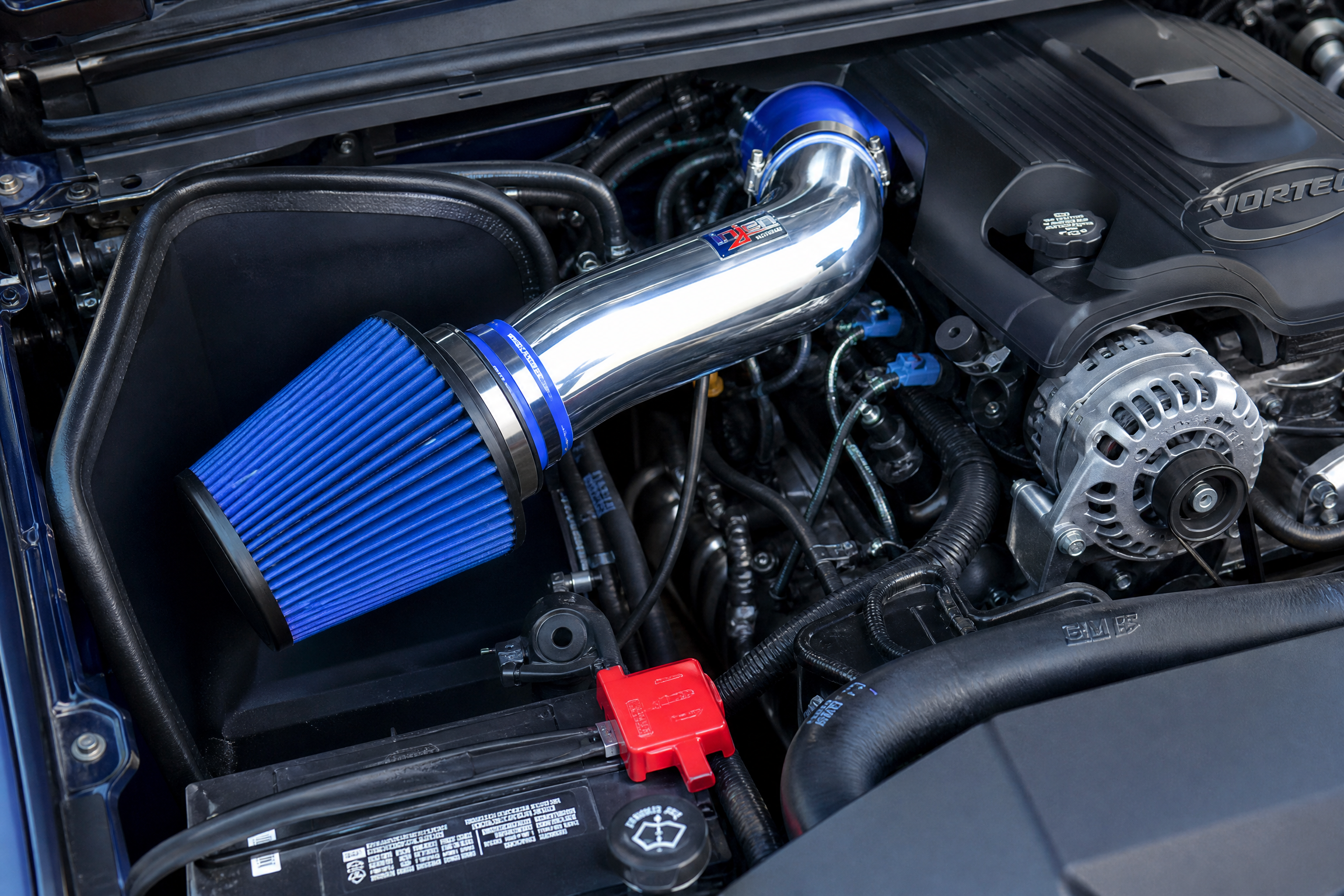
True cold air intakes route the filter toward a real cold-air source — the fender well or a sealed box fed by a scoop. Done right, they keep intake temps down at speed. Done cheap, they’re just short rams with longer tubing.
Short ram intakes live inside the engine bay. They’re cheaper and louder, and they breathe hot air at idle. The power difference between the two is usually smaller than the marketing gap; the temperature difference is real.
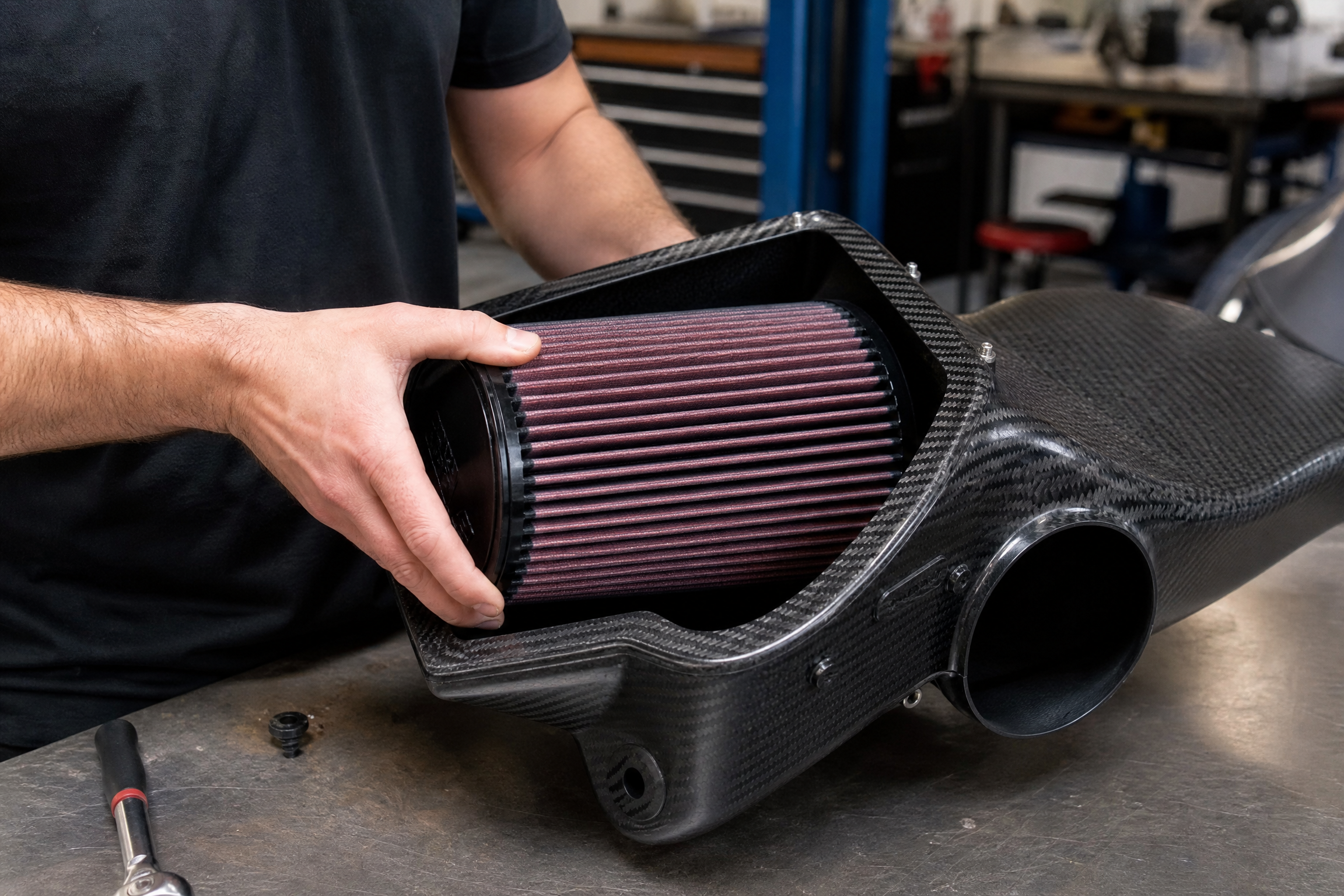
Drop-in panel filters in the factory airbox are the quiet genius option: a little flow, zero drama, factory heat shielding, factory tuning, and you keep the snorkel that feeds cool air. For most daily drivers, this is the smart money.
The Heat Soak Truth
Air density is the whole game. Cold air is dense air, and dense air carries more oxygen per breath. An intake that actually delivers colder air helps; one that delivers hotter bay air hurts at low speed.
That’s why dyno pulls (air rushing in at speed) show gains that traffic never sees, and why sealed-box designs with real cold feeds beat open cones on everything but sound.
Water: The Expensive Splash
Factory airboxes are designed with water management in mind — inlets high, baffles, drains. Open-cone intakes often lose all of that engineering.
If you ford puddles, drive flooded streets, or autocross through wet grass, keep the factory box or buy a kit with a sealed housing and a bypass valve. And when the road is a lake, an intake or not, the smart move is the other road.
Who Should Buy, Who Should Skip
Buy if: your car is turbocharged and headed for a tune anyway; you track the car and want the induction sound and top-end breathing; or you simply love the car and the sound is the point. Sound is a valid purchase — just call it what it is.
Skip if: the goal is cheap horsepower on a stock commuter. The money does more elsewhere. And skip any kit without a CARB EO number if you live where emissions enforcement is real.
The Legal Line
In California and states that follow it, intakes need a CARB Executive Order number to be street-legal. Reputable brands print the EO on the box and the sticker. No EO, no street use — that’s the rule, not my opinion.
Installing One Without Creating Problems
If you’ve bought the right kit for the right reasons, install it like a pro:
1. Disconnect the battery negative terminal. You’ll be unplugging the MAF, and a live MAF circuit resents surprises.
2. Remove the factory intake as a whole, noting how the breather hoses route. Photograph everything before it comes apart.
3. Transfer the MAF sensor with care. Don’t touch the wires inside; they’re delicate and calibrated. Torque its screws snug, not crushed.
4. Dry-fit the new tube and filter before tightening anything. Confirm clearances to the radiator, fan, and hood latch at full steering lock if the tube runs near the strut tower.
5. Seat every coupler fully and torque the clamps properly. A half-seated coupler is a vacuum leak, and vacuum leaks are MAF codes, lean trims, and rough idles.
6. Reconnect the battery, start, and listen for hiss. Rev it gently and watch trims settle. Re-torque the clamps after a heat cycle or two, because rubber settles.
7. Road test and re-check for rubbing at full lock and full suspension droop. The tube moves with the engine; make sure nothing it loves is in its arc.
Living With an Oiled Filter
Oiled gauze filters need service: clean with the kit’s soap, dry fully, re-oil evenly until the gauze shows a uniform color, and no more. Over-oiling wicks oil onto the MAF and skews it — the classic self-inflicted intake wound.
Dry synthetic filters skip the oiling and just need gentle cleaning. Either way, inspect after dusty seasons and wash before it loads.
The Tuning Conversation
A stock ECU adapts within its trim limits, and most mild intakes live inside those limits. But if the kit changes the MAF housing diameter, the computer reads airflow wrong, and no amount of relearning fixes math. That’s when a tune is required, not optional — and a tune is also where intake gains finally show up as real numbers.
Better Power-Per-Dollar, Honestly Ranked
If horsepower is the goal, this order beats an intake every time:
1. Tires and
Mistakes I Keep Seeing
Loose clamps.The number-one cause of post-install check-engine lights.Over-oiled filters.MAF skew, rough idle, and a sensor cleaning bill.Open cone in a splash zone.Hydrolock is a whole engine, not a whole weekend.Buying the number, not the car. Four horsepower that sounds like thirty is still a great purchase — if you bought it for the sound.
Try It: Is an Intake Worth It for You?
Three questions, straight answer.
Should the intake happen?
Your car is…
Main goal…
Local emissions enforcement…
Wrap-Up
A cold air intake is a sound upgrade that brings a little power to the party, not a power upgrade that happens to sound good. Bought with that sentence in mind, it’s a great purchase. Bought with the box’s number in mind, it’s a disappointment with excellent acoustics.
Know which one you’re buying, install it with torqued clamps and a careful MAF, and enjoy every downshift.
Trims wandering after an install, or a hiss you can’t find? Comment with the car and the kit, and I’ll help you hunt it.
Related: Check out our guide on Choosing Performance Tires: Grip, Size & Seasonal Considerations.





Leave a Reply