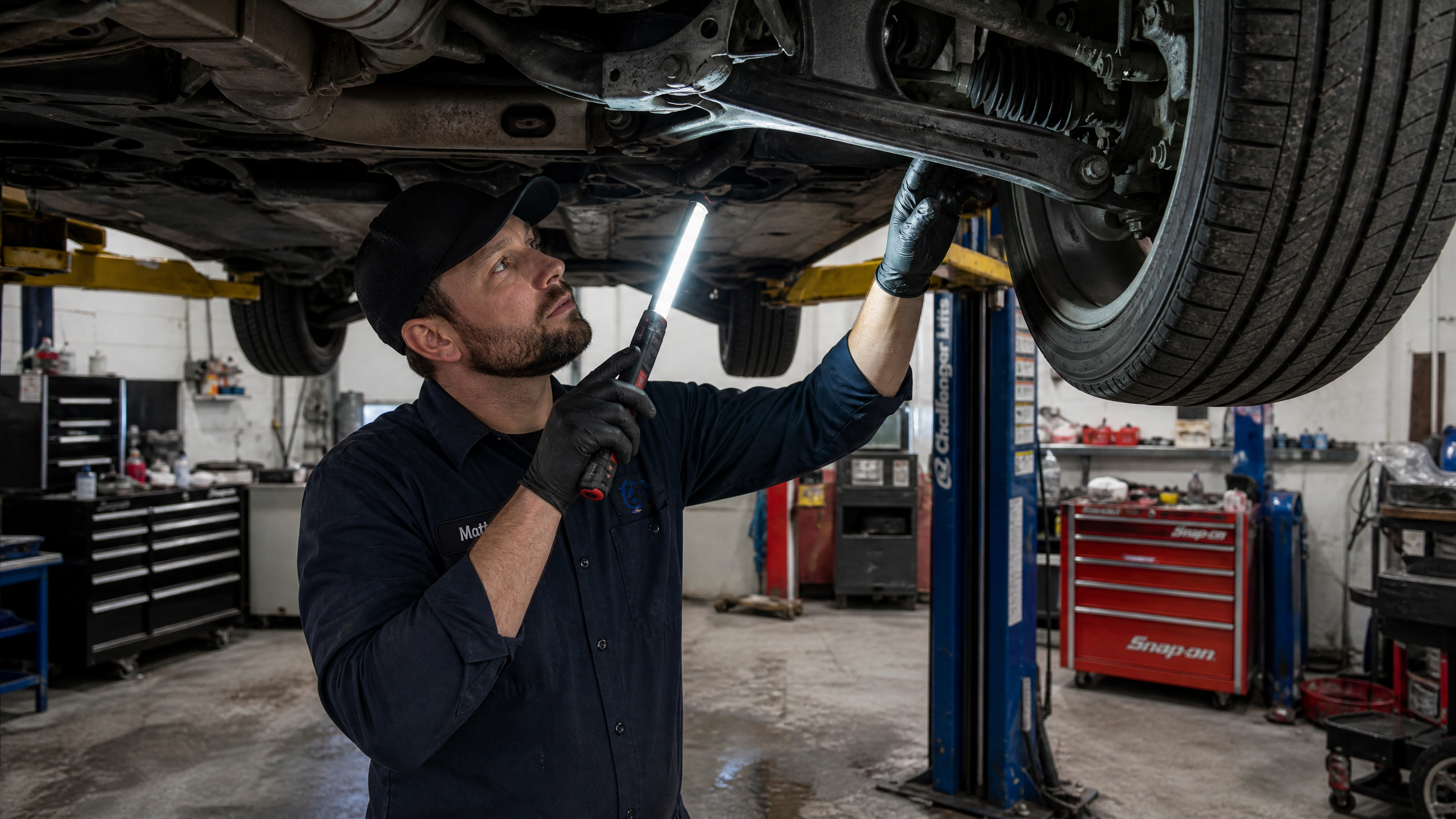
I snapped a rusted bolt last spring just pointing at it. The customer’s frame rail looked fine from ten feet away. Up close, the “fine” was a crust of scale hiding metal the thickness of a credit card.
The same inspection found a torn CV boot, a weeping sway bar link, and a brake line wearing on a clip. Total parts to fix everything: under $120. Total parts if he’d waited two more winters: a brake line burst, an axle, and probably a frame repair that totals the truck.
The underside of your car tells the truth about its life. Here’s how I read it, and how you can, with a light and twenty minutes.
Why Bother Looking Down There
Rust and suspension wear are both slow, both invisible from the driver’s seat, and both cheapest the day you catch them.
A bushing that’s cracked today is a clunk next month and a tire-eating alignment problem by summer. A patch of surface rust today is a hole in three winters if salt gets a vote.
The inspection also catches leaks while they’re seeps, and catches loose hardware before the highway does.
Setup and Safety
You need the car raised enough to see and reach. Ramps work for a visual sweep. Jack stands at the factory points work better and let you shake things. Never work under a jack alone, and chock the wheels that stay down.
Gear list: a bright work light, a mechanic‘s mirror, gloves, safety glasses (rust and grit fall upward when you poke them, somehow), a flathead screwdriver for the rust poke test, and a pry bar if you have one.
Wash the underside first if it’s caked in mud. You can’t inspect what you can’t see, and caked mud holds moisture against the metal like a wet blanket.
Rust: The Three Grades
Grade 1, surface rust. A light orange dusting that wipes or brushes away to solid metal. Cosmetic for now. Wire brush it and hit it with a rust converter or primer so it stays cosmetic.
Grade 2, scale. Flaky layers that chip off in sheets, leaving pitted metal underneath. The part is still solid but is on a countdown. Clean, treat, and plan.
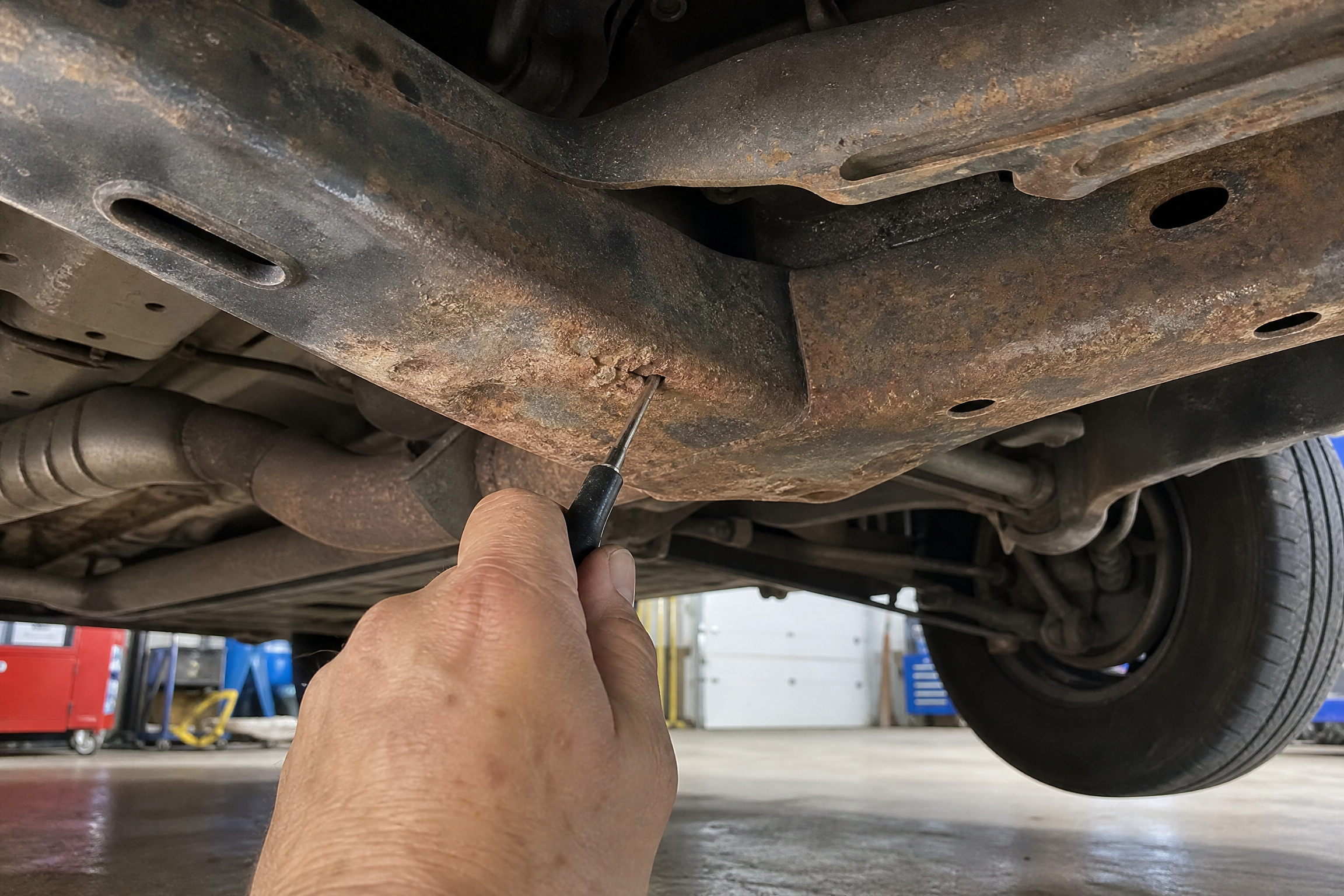
Grade 3, rot. Metal that flakes to paper, bulges, or caves when you press the screwdriver handle into it. That part is structural until proven otherwise. Stop counting on it and get a repair quote.
The poke test is the whole science: solid metal rings and resists; rot gives. I poke every suspicious patch with the screwdriver handle, not the tip, so I test strength without stabbing good metal.
Where Rust Hides
Walk the car slowly with the light and check these in order:
- Frame rails and crossmembers, especially the inside faces where mud packs.
- Pinch welds under the doors, the classic rot line on older unibodies.
- Subframes and control arm mounts.
- Brake lines and fuel lines, which rust from outside in and fail without warning.
- Exhaust, hangers, and the floor pans above it.
- Wheel wells and fender lips from the top side, where wet leaves sit.
Salt belt readers: pay double attention to any spot where two metals meet, like a bracket bolted to a rail. That junction traps moisture and hides the rot behind the bolt.
The Suspension Sweep
With the car on stands and the wheels hanging, work corner by corner.
Shocks and struts. Look for wet shine or dirt-caked oil on the body — that’s a blown seal. Bounce the corner hard; one rebound and settle is healthy, a pogo stick is a dead damper.
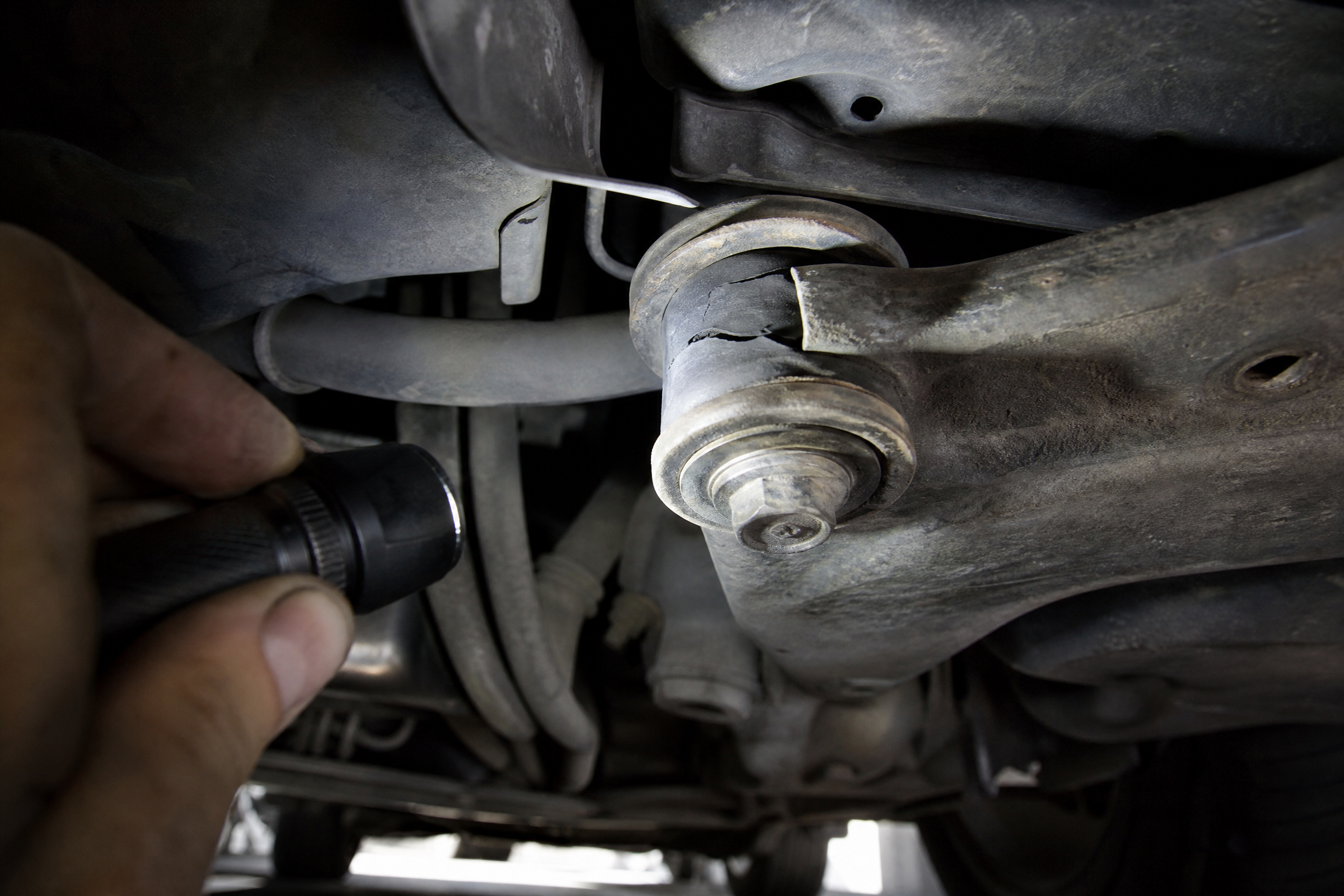
Bushings. Control arm and sway bar bushings should be solid rubber, not cracked, shredded, or missing chunks. A bushing that’s separated from its sleeve lets the alignment wander.
Ball joints. Grab the tire at 12 and 6 and rock it. Clunk or visible play with the car supported points at ball joints or hub bearings. Grease boots torn and flinging grease mean the joint is eating dirt.
Tie rods and steering. Grab the tire at 3 and 9 and rock. Play here is steering — tie rod ends or the rack. A torn tie rod boot is a small part today and a rack tomorrow.
Sway bar links. Thin rods with little ball joints at each end. Torn boots or a rattle over bumps means they’re done. They’re a $20 part and a five-minute swap per side.
CV axles. Look at the big rubber boots at each axle end. A torn boot slings black grease in a circle on the underbody and clicks in turns once the joint runs dry. Caught at the boot stage, it’s a $15 boot kit.
Springs and mounts. Check coil springs for rust scale at the bottom coil, and strut mounts for cracked rubber up top.
The Leak Color Map
While you’re down there, read any wet spots by color:
- Brown to black, slick: engine oil.
- Red and slick: transmission or power steering.
- Green, orange, or pink and watery, sweet smell: coolant.
- Clear and drippy with the A/C on: condensation. Normal. Relax.
- Brown and smells like gas: fuel. Fix before sparks.
Trace every stain uphill to its source. Gravity lies about where leaks start.
Make It a Seasonal Rhythm
I inspect every fall before the first salt, so repairs happen on dry weekends, and every spring after the last salt, to wash the winter off and see what it did.
A spring pressure wash of the underside, done from below at an angle so you don’t blast water into bearings, removes the salt crust that would otherwise sit and chew all summer.
About undercoating: rubberized spray over already-rusted, unwashed metal traps the rot and speeds it. Over clean, treated metal it helps. Prep first, coat second, never the reverse.
DIY Eyes, Shop Hands
What you can fix at home: sway bar links, torn boots, surface rust treatment, brake line inspection reports, and bushings if you own a press and patience.
What I want in my bay: welded frame repairs, ball joints pressed into control arms on cars where the whole arm isn’t the part, and any brake line replacement. Some jobs are cheap insurance for the professional version.
Try It: What Did You Find Down There?
Pick what you saw or heard and get the likely suspect and the move.
Undercarriage symptom picker
Wrap-Up
Twenty minutes under the car twice a year turns surprises into shopping lists. Rust gets graded, boots get wrapped, links get swapped, and the truck keeps doing truck things.
Grab the light and the mirror this weekend. The underside already knows what’s coming — your job is just to find out first.
Found something weird down there? Comment with the car, the mileage, and what the poke test said, and I’ll give you my read.


Leave a Reply