
A guy limped his sedan into my yard last spring with the complaint that the transmission was “foaming out of the engine.” It wasn’t the engine. Someone at a full-service station had “topped off” his transmission until the dipstick read way past full.
Churning fluid whips into foam, foam doesn’t hold hydraulic pressure, and the excess had blown out the dipstick tube and the vent. A $0 service turned into a fluid exchange, a soaked exhaust cleanup, and a transmission that shifted funny for a month.
Checking and topping up transmission fluid is a two-minute job that saves expensive guesswork. Do it right and it’s harmless. Do it like that station and it’s a repair bill. Here’s the right way.
What Transmission Fluid Actually Does
Automatic transmission fluid is not just a lubricant. It’s the hydraulic fluid that applies clutch packs, the coolant for those clutches, the cleaner that carries debris to the filter, and the friction material’s partner in making shifts feel right.
Low fluid means slipping clutches, which means heat, which means burnt fluid, which means a rebuild. Overfull fluid means foam, which means the same slipping and heat. The level wants to sit in a narrow window, and the window is marked on the dipstick for a reason.
First Question: Do You Even Have a Dipstick?
Many modern cars were built sealed — no dipstick, just a fill plug on the pan and a factory procedure. Manufacturers call this “lifetime fluid,” which really means “lifetime of the warranty.”
If your car is sealed, an honest check requires lifting the car level, running the fluid to a specific temperature, and reading the fill plug. It’s doable but fiddly. If that’s your car, this guide still helps you read the color when you’re in there, but consider having the level verified at a shop once a year.
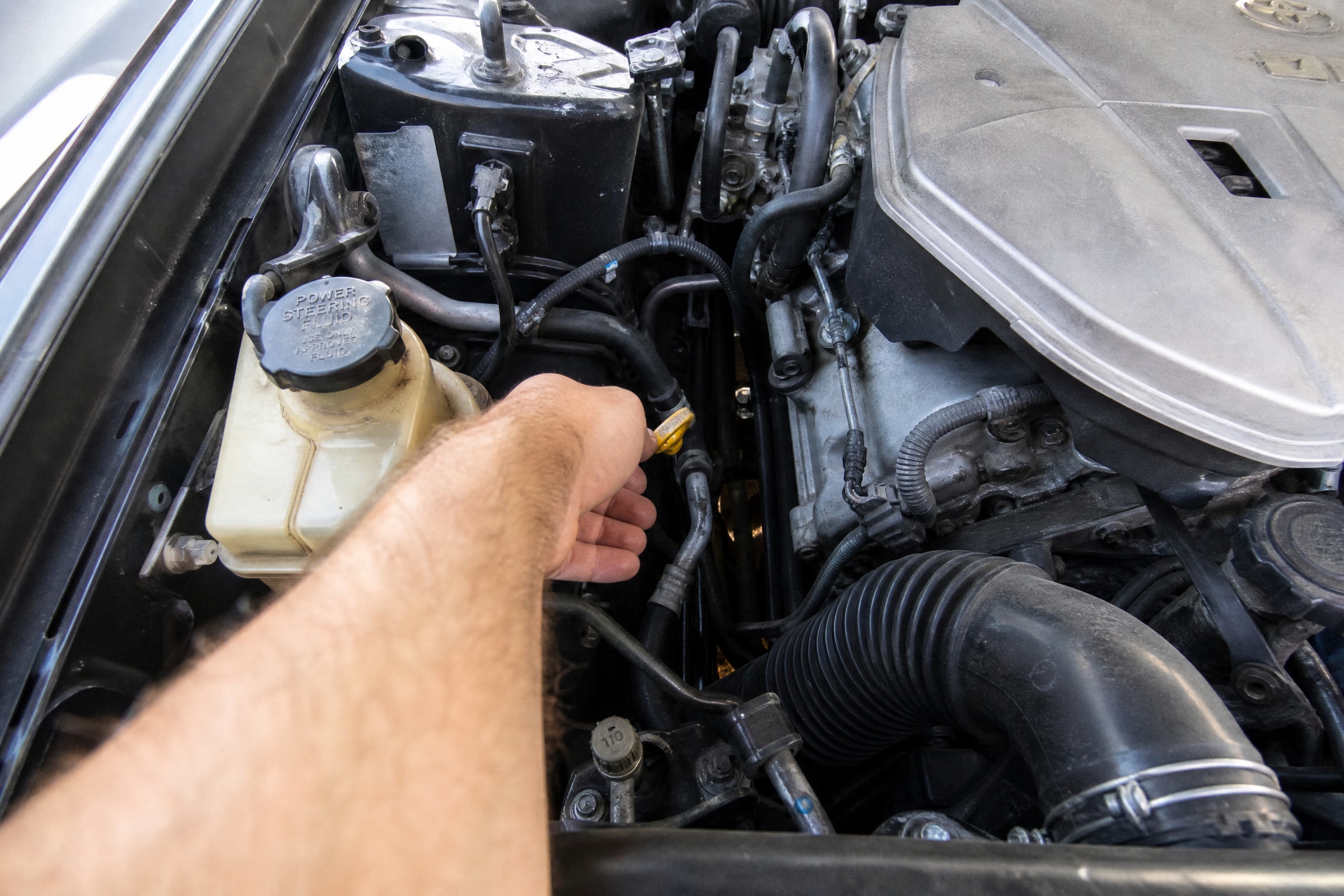
If you have a dipstick — most trucks, older cars, and many imports — you’re in luck. The rest of this is for you.
How to Read the Dipstick Right
The transmission is fussy about how it’s measured. Get the conditions wrong and the reading lies.
1. Drive it first. The fluid needs to be at operating temperature, usually 15–20 minutes of mixed driving.
2. Park level. A slope tilts the pan and moves the reading a half-quart either way.
3. Leave it running, in Park. Most automakers want the engine idling and the selector in Park during the read. A few want it off; your manual wins.
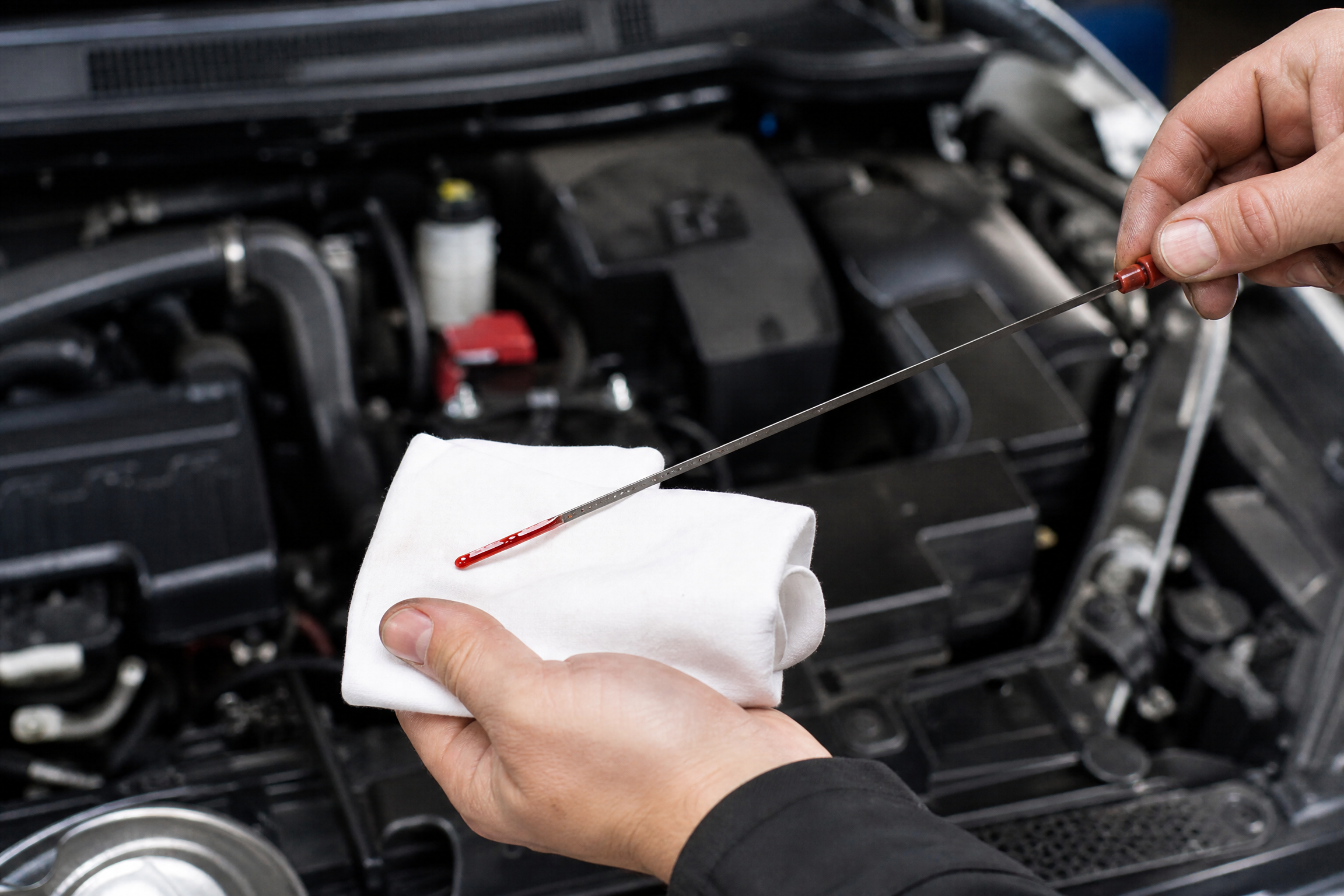
4. Pull, wipe, reinsert fully, pull again. Read both sides and trust the lower mark.
5. Read the marks. You’ll see crosshatching or HOT and COLD zones. At operating temp, the level should sit in the HOT range or crosshatch, not above it.
While it’s out, wave the dipstick under your nose and look at the color. The stick is your free diagnostic tool.
Reading Color and Smell
| Look and smell | What it means |
|---|---|
| Bright red or pink, sweet smell | Healthy. Note the date and move on. |
| Dark red to light brown | Aged but working. Plan a drain-and-fill soon. |
| Brown with a burnt-toast smell | Clutches have been cooking. Service now and watch for slipping. |
| Black and smells burnt | Damage in progress. Service and get a shop opinion. |
| Milky pink froth | Coolant is entering through the radiator’s trans cooler. Stop driving. That’s a radiator or cooler-line job, and water in a transmission is fatal fast. |
Red means go, brown means plan, black means act, milky means stop. I keep that poster in my head on every check.
Topping Up Without Wrecking It
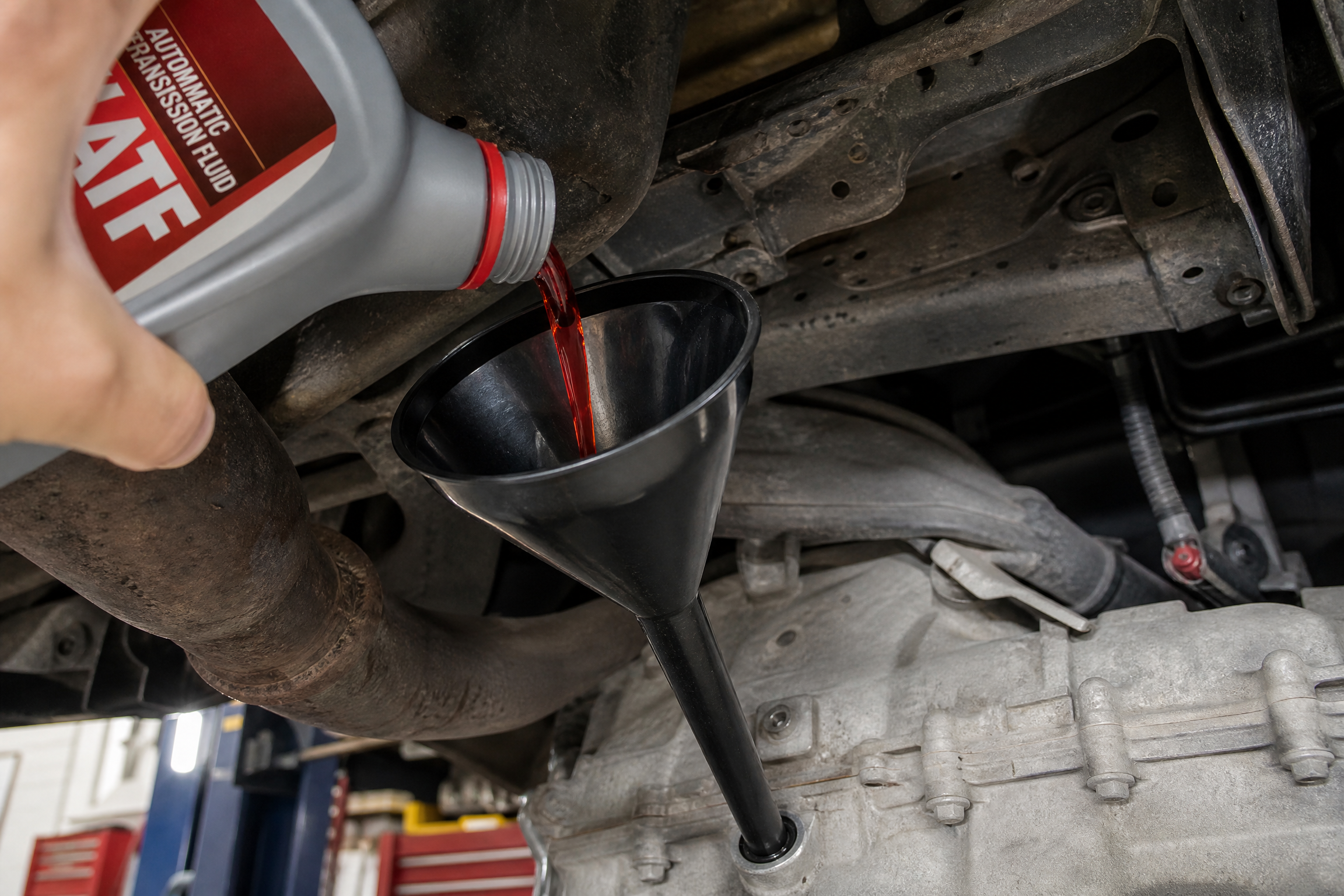
If the level is low, add fluid through the dipstick tube with a long-neck funnel or a funnel with a flexible tube. The tube is narrow; pour slow.
Add half a pint at a time. Then recheck through the full procedure. Half a pint moves the mark more than you’d think, and you cannot un-pour fluid.
Use exactly what the manual specifies. Dexron, Mercon, ATF+4, CVT fluid, and so on are not interchangeable. The friction modifiers differ, and the wrong fluid causes shudder, slipping, and worn clutches. I’ve seen a “it was on sale” CVT fluid choice end in a $4,000 belt-and-pulley job.
If you’re low, ask why. A healthy sealed-ish transmission shouldn’t drink fluid. Look for red stains under the car at the cooler lines, the pan gasket, and the axle seals. Topping off hides the leak; finding it is the real fix.
Sealed Transmissions: The Honest Talk
If there’s no dipstick, don’t panic and don’t drill. The factory procedure usually goes: car level on a lift or stands, fluid warmed to roughly 86–122°F depending on make, fill plug opened, and fluid added until it trickles out of the check hole at the right temp.
The trick is the temperature window, which is why shops use a scan tool reading the fluid temp sensor. If you tow or haul with a sealed unit, ask your shop to verify the level at every oil change. It’s five minutes and prevents the two most expensive words in truck ownership: “transmission slip.”
When Checking Isn’t Enough: Service It
Checking tells you level and condition; it doesn’t renew the fluid. Most manuals call for a drain-and-fill or exchange between 30,000 and 100,000 miles, and severe service cuts that in half.
A drain-and-fill swaps maybe half the fluid, since the torque converter and cooler hold the rest. It’s gentle, cheap, and perfect for maintenance on a healthy box.
A high-pressure flush on a neglected, high-mileage transmission is where I get cautious. The surge can stir sludge into valves that were working fine. On a well-kept car, exchanges are fine. On a 150k-mile box that’s never seen service, do gentle drain-and-fills twice, a few thousand miles apart, and call it a rescue.
Mistakes I Keep Seeing
Overfilling. Covered in the intro. The dipstick’s top mark is a ceiling, not a target.
Wrong fluid. The bottle must match the spec, not just say “universal.” Universal is a compromise; your clutches want the recipe.
Checking cold and calling it low. Cold fluid reads low. You’ll overfill it when it warms.
Letting dirt in the tube. Wipe the dipstick area before pulling. Grit in a transmission is sandpaper on clutches.
Try It: Read Your Fluid
Pick what the dipstick showed you and get the next move.
What did the stick say?
Color
Smell
Level (hot, checked properly)
Wrap-Up
A transmission check is free, takes two minutes, and reads the health of the most expensive component in your drivetrain.
Hot, level, idling in Park, half-pint top-ups, exact-spec fluid. Those five habits keep a transmission honest past 200,000 miles.
Tell me what your dipstick looks like in the comments — color, smell, level — and I’ll tell you what I’d do next.
Related: Check out our guide on How to Install Apple CarPlay/Android Auto in Any Car.


Leave a Reply