A customer once rolled in with a “performance chip” he bought online for $39. It was a blank circuit board with a resistor glued to it. The listing promised 40 horsepower. The dyno said zero, and the resistor didn’t even get warm.
I tell you that story so we start from honesty: tuning is real, measurable, and sometimes huge — but only when it’s done right. The ECU is the brain of your engine, and changing what it thinks is one of the most powerful mods on a modern car.
Here’s how it works, what it’s worth, and how to avoid turning your engine into a very expensive paperweight.
What the ECU actually controls
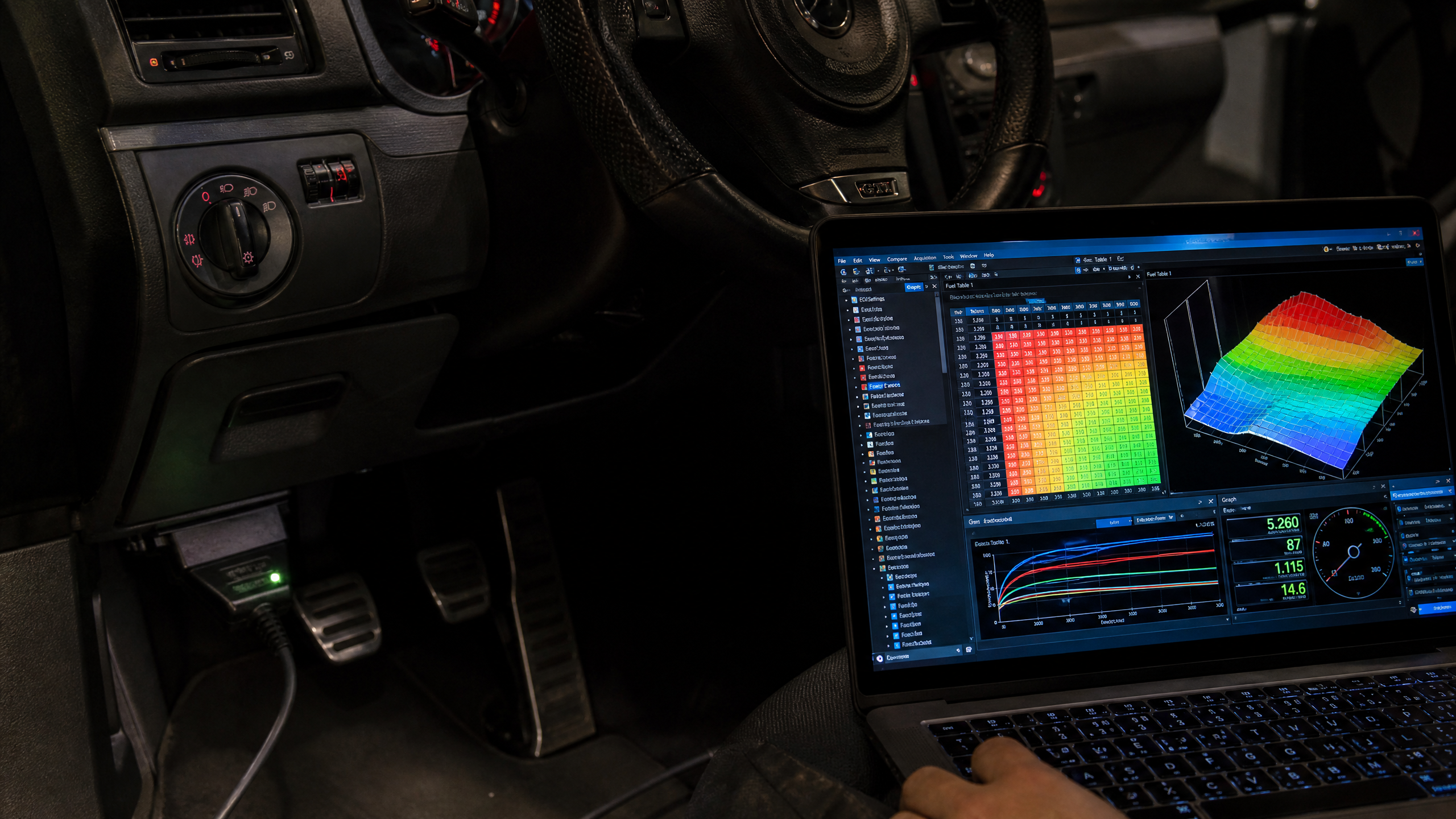
Your engine control unit reads sensors hundreds of times a second and commands a handful of things that decide how much power you make:
- Air/fuel ratio (AFR): how much fuel gets injected for the air coming in.
- Ignition timing: when the spark fires relative to piston position.
- Boost pressure: on turbo and supercharged cars, how hard the compressor pushes.
- Valve timing (VVT): when the valves open and close.
- Rev and speed limits, plus protection systems like knock control.
Factory calibration balances power, emissions, fuel economy, and warranty coverage across every climate and every gas station from here to the desert. That balancing act leaves margin on the table. Tuning is the art of spending that margin wisely.
The three levers of power
Fuel. At cruise, engines run near 14.7:1 air/fuel, called stoichiometric. At full throttle, power comes from richer mixtures — roughly 12.5:1 to 13:1 on a naturally aspirated car, and 11:1 to 12:1 on a boosted one, where extra fuel also cools the charge. Too lean under load is how pistons die.
Timing. Power grows as you advance the spark toward MBT (minimum advance for best torque) — until the mixture detonates instead of burning. That detonation, knock, is the engine-killer. The factory backs timing away from the knock limit to survive 87-octane fuel in July traffic. Better fuel and a careful tune let you spend that headroom.
Boost. On a forced-induction car, boost is the big lever. A few extra psi, with fuel and timing to match, is where the 20–50 hp numbers come from. On a naturally aspirated car, you can’t make boost, so gains are smaller and come from timing, fuel, and raised rev limits.
The types of tunes, in plain English
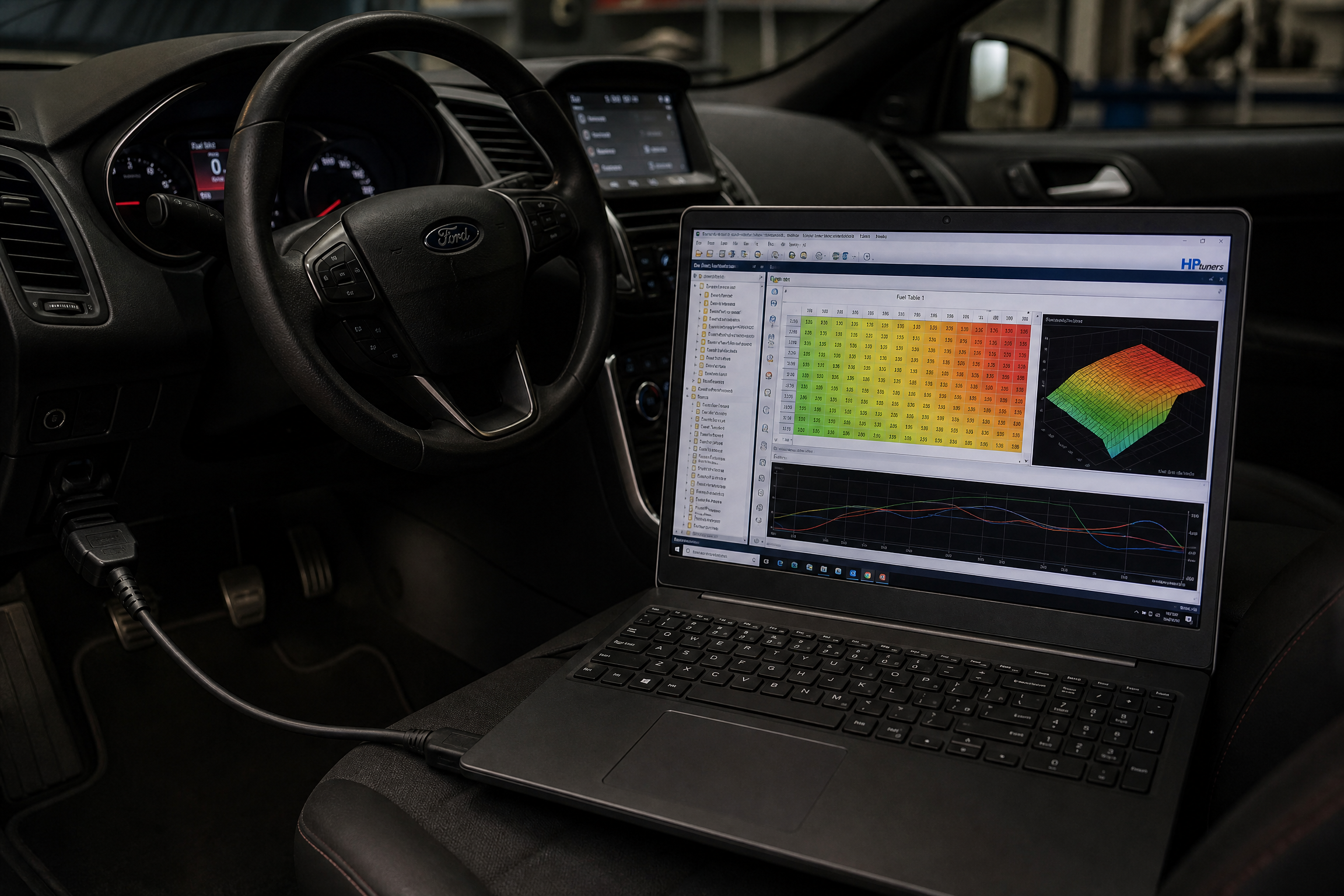
Handheld flash tuners plug into the OBD-II port and rewrite the factory map. Brands like Cobb and SCT dominate here. You can flash an off-the-shelf (OTS) map in your driveway in ten minutes.
Piggyback systems intercept sensor signals to trick the factory ECU. Older tech, still used where flashing isn’t possible.
Standalone ECUs replace the factory brain entirely. That’s race-car territory, with full control and full responsibility.
And the most valuable distinction is this: OTS map vs. custom tune. An OTS map is a good average guess for a mostly-stock car. A custom dyno tune or e-tune is built for your exact engine, your mods, your fuel, your altitude. I’ve seen the same car gain 18 hp from an OTS map and then another 22 hp from a proper custom session.
Realistic gains by engine type
| Engine | OTS flash | Custom tune, stock hardware | Custom tune + bolt-ons |
|---|---|---|---|
| Naturally aspirated | 5–10 hp | 8–15 hp | 15–25 hp |
| Turbo | 20–40 hp | 30–60 hp | 50–100+ hp |
| Supercharged | 10–25 hp | 15–35 hp | 30–60 hp |
Torque usually jumps even more noticeably than horsepower, especially low-end on turbo cars. That’s the “car feels a year newer” feeling people talk about.
Supporting mods: feed the tune
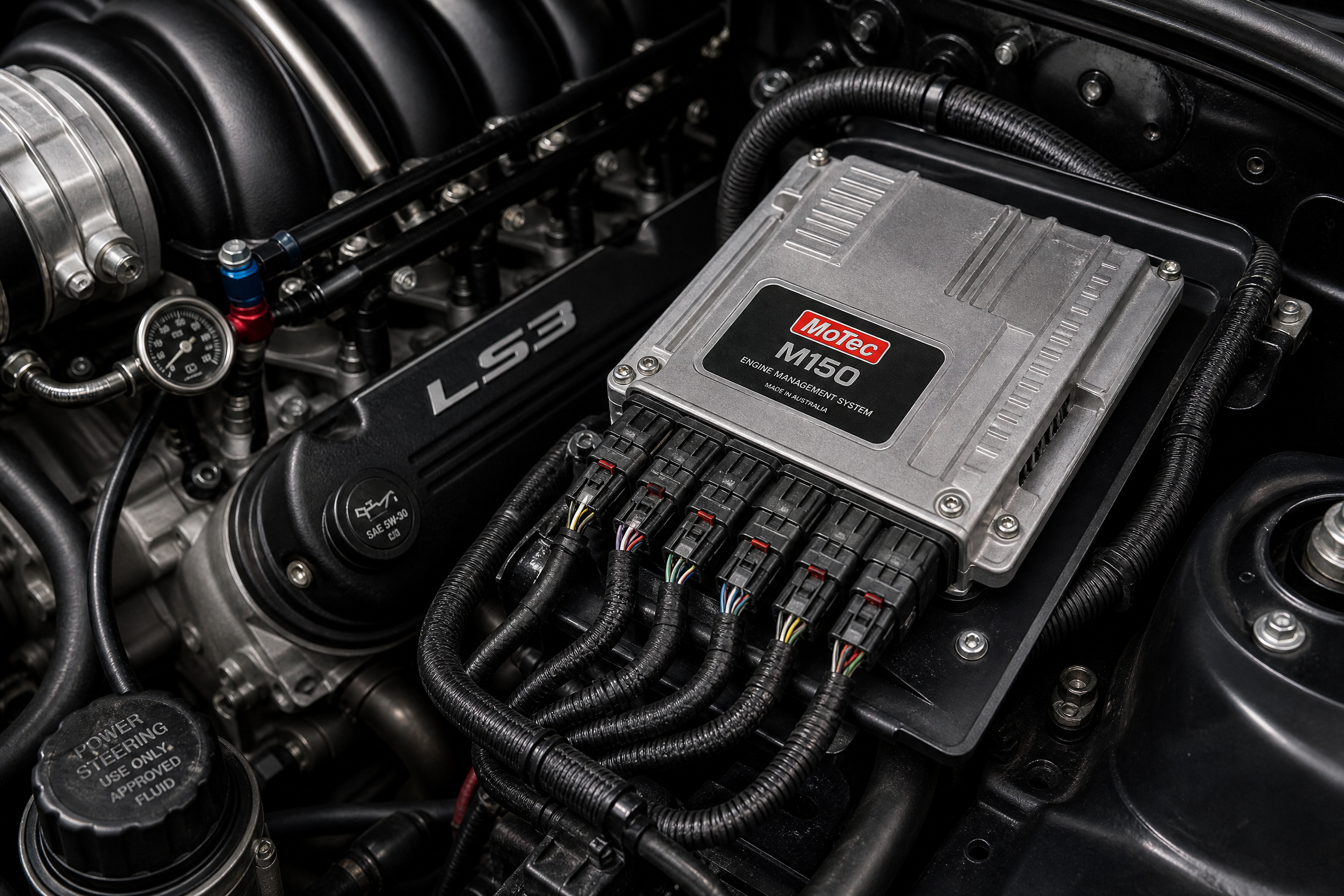
A tune can only use airflow and fuel it can actually get. The classic supporting cast:
- Intake: a real cold-air or short-ram that flows. Gains alone are small; they matter when tuned.
- Exhaust: cat-back helps a little; downpipe or headers help a lot on boosted cars.
- Intercooler: cooler intake air means denser charge and more knock margin. Big on turbo cars.
- Fuel system: stock injectors and pumps have limits. Past a certain boost level, upgrade before tuning.
- Spark plugs: gapped down a touch and one step colder on high-boost builds. Old plugs misfire under boost.
Octane: the fuel that pays for the timing
Higher octane doesn’t contain more energy. It simply resists knock, which lets the tuner run more timing and boost safely. Run a 93-octane map on 87 fuel and the knock sensor will yank timing — or worse, the ECU won’t catch it in time.
What a bad tune feels like
Listen to the car and the logs. Knock shows as audible rattle under load or as knock-retard numbers in a log. Lean conditions cause hesitation, hot exhaust, and eventually melted plugs. Over-boost triggers limp mode or a popping decel that sounds fun and isn’t.
The tune is only as good as the tuner. Ask for references, ask for logs from similar cars, and run from anyone who promises numbers without asking about your fuel or your mods.
Your first dyno day: what to expect
Book ahead, show up with the car mechanically sound, tires in good shape, and the tank half full of the fuel you actually run. A good session is 2–4 hours of pulls, adjustments, and more pulls.
When you read the dyno sheet, look at the area under the curve, not just the peak number. A tune that adds 15 hp everywhere beats one that adds 25 hp at one RPM. And remember dyno numbers vary between machines — compare before/after on the same dyno only.
After the tune: log like you care
For the first few tanks, log AFR, knock activity, intake air temps, and boost on any hard pull. Most handhelds and free apps can do it. If knock shows up on a hot day, back off and talk to your tuner before it becomes a repair bill.
Tool: realistic horsepower gain estimator
Pick your setup and see the honest range I’d expect on my dyno.
The short version
Tuning is the force multiplier for every other mod on this site. Done right, it’s the best money per horsepower you can spend. Done cheap, it’s the fastest way to destroy a good engine. Buy the tuner, not the resistor.
Mike R. has logged thousands of dyno pulls across two decades in the bay. His rule for customers: tune last, tune once, and tune with someone who shows you the logs.
Related: Check out our guide on How to Wash Your Car Without Scratching: Pro Cleaning Tips.
\n
\n\n

Leave a Reply