
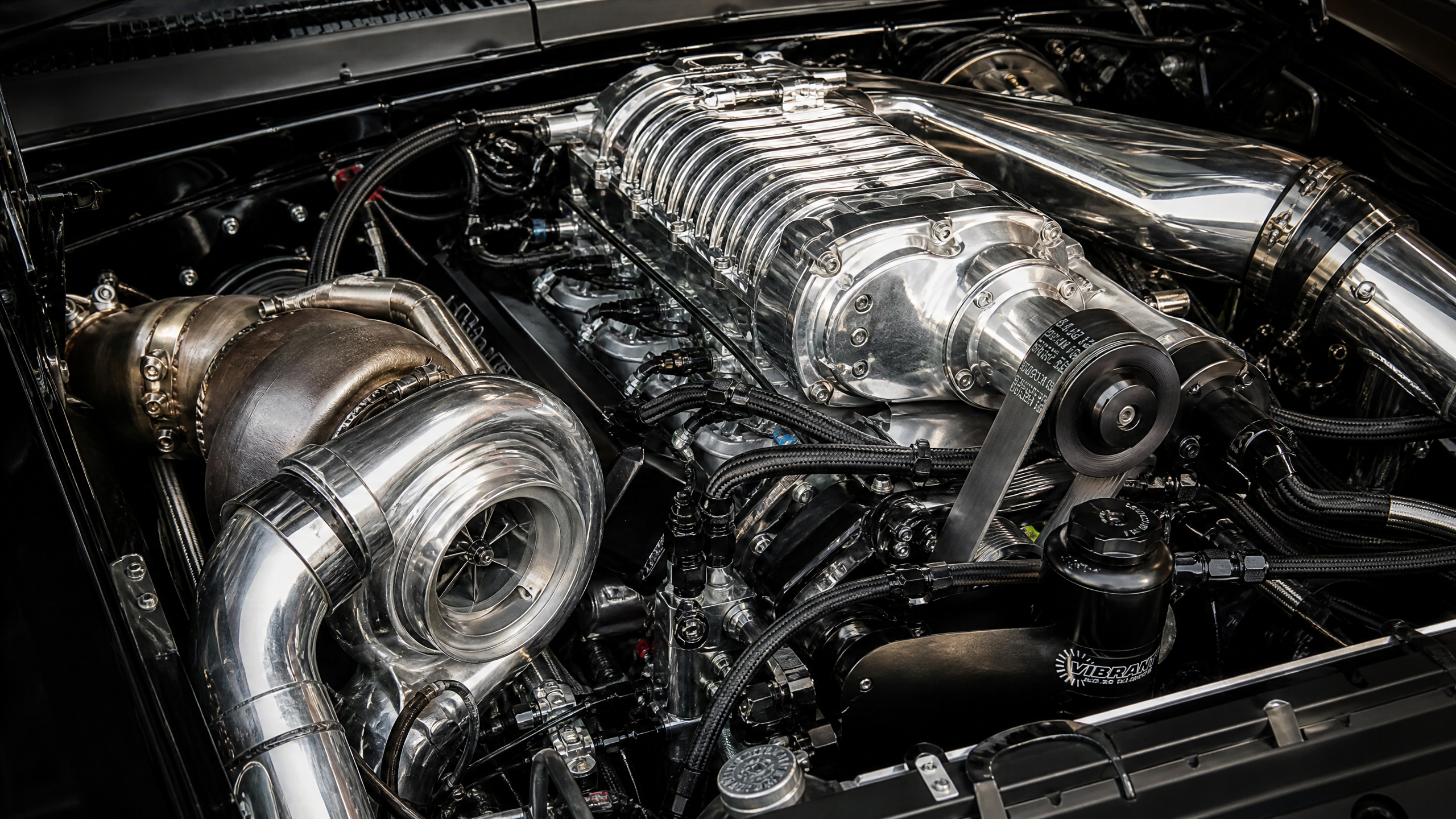
The first time I felt a turbo spool, I was a passenger in a buddy’s stage-2 GTI. He mashed the throttle from a stop, and for half a second nothing happened. Then the boost hit and my head snapped back into the seat. A few years later, I drove a supercharged Mustang, and the response was instant — no wait, just a shove. Same idea, totally different feel. That difference is the heart of this whole debate, and it’s something spec sheets and horsepower numbers never really capture.
Forced induction is the single biggest jump in power you can add to an engine. It’s also one of the most misunderstood mods out there. People throw around words like “boost,” “lag,” and “parasitic loss” without knowing what they mean for their daily driver. So let’s break it all down, the way I wish someone had explained it to me before I spent my first hard-earned dollars: what each system actually does, what it costs, how it feels to drive, how it holds up over time, and whether your car is even a good candidate. At the end there’s a short quiz to help you decide which route fits your build.
The Basic Idea: Stuff More Air In
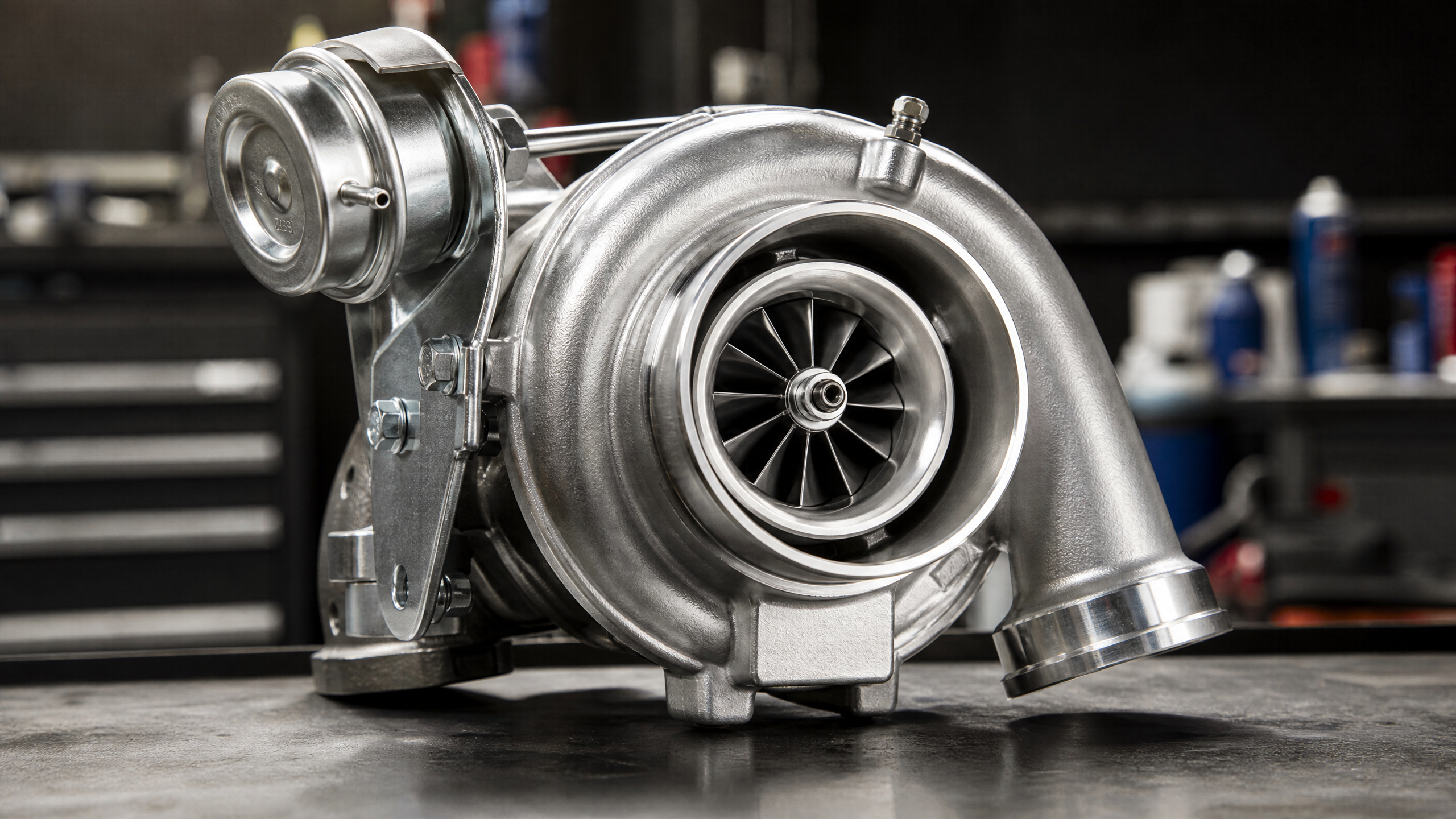
An engine is, at its core, an air pump. It pulls air in, mixes it with fuel, ignites it, and turns that explosion into motion. More air plus the right amount of fuel equals a bigger combustion event, which equals more power. That’s the whole game. Everything else is a way to move more air.
A turbocharger or supercharger is simply a compressor that crams extra air into the cylinders so you can burn more fuel per stroke. Instead of the engine breathing on its own, you’re force-feeding it. That’s why it’s called “forced induction.”
We measure that extra air pressure as boost, in pounds per square inch (psi). A stock, naturally aspirated engine makes 0 psi of boost — it just breathes atmospheric air. A mild street setup usually runs around 6 to 10 psi. Once you’re past 15 psi, you’re asking for trouble unless you’ve strengthened the engine internals and upgraded the fuel system. Boost is not free power; it’s borrowed power, and the engine has to be built to pay it back.
How a Turbocharger Works
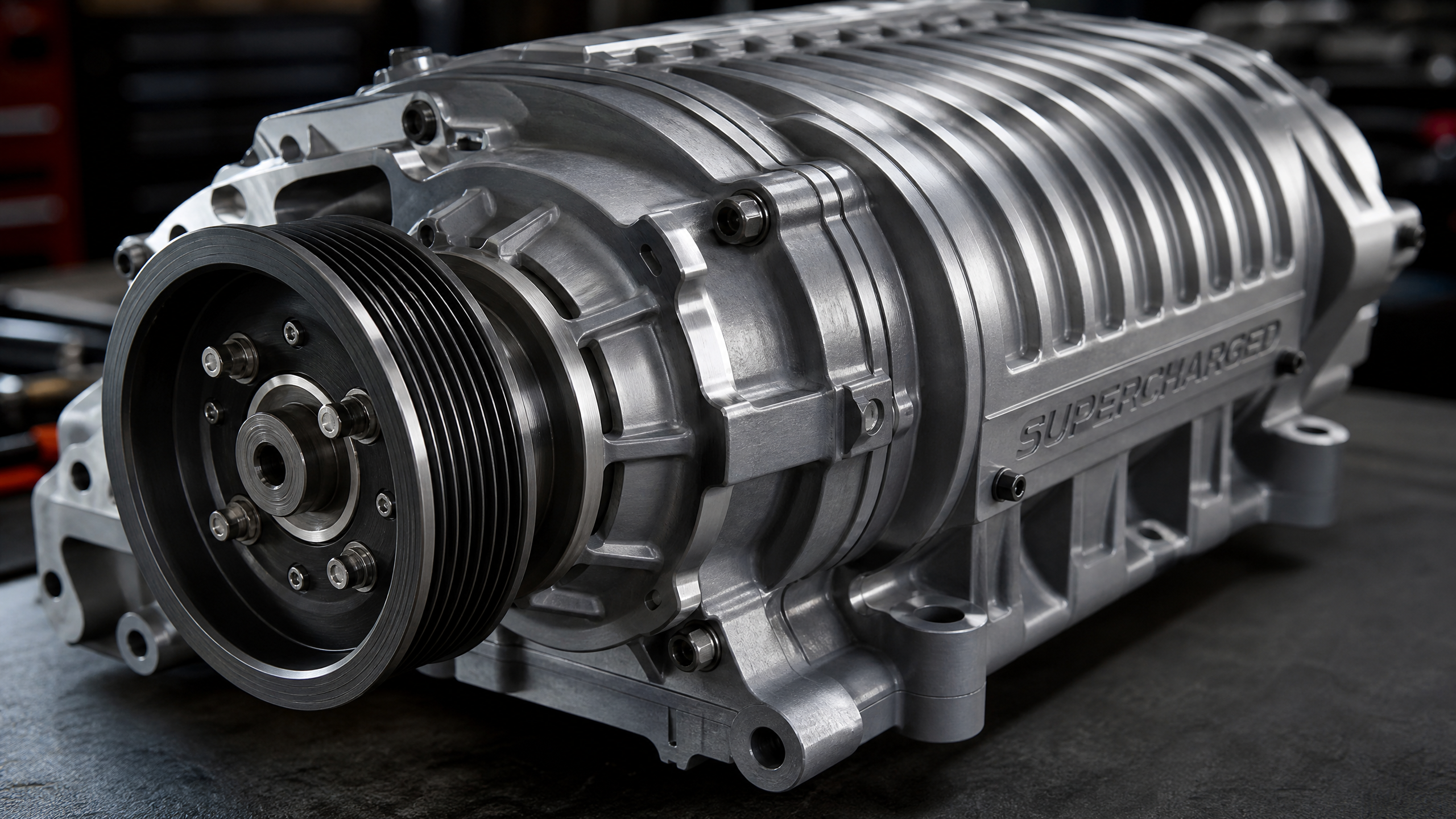
A turbo is a clever piece of recycling. It takes hot exhaust gas that would otherwise just blow out the tailpipe and puts it to work. That exhaust spins a small turbine wheel inside the turbo housing. The turbine sits on the same shaft as a second wheel on the “cold” side, called the compressor. As the turbine spins, the compressor sucks in fresh air, squeezes it, and forces it into the engine.
Because a turbo runs on exhaust energy that’s already going to waste, it doesn’t steal power from the engine to operate. That’s the big efficiency win. A turbo can spin between 80,000 and 150,000 RPM, which is mind-boggling when you think about it. Those shafts ride on bearings that need constant oil, which is why every turbo has an oil feed line and an oil drain line plumbed into the engine.
The catch is that a turbo needs exhaust flow to spin up. At low RPM, when you’re just cruising or pulling away from a stop, there isn’t much exhaust, so the turbo isn’t doing much. There’s a delay between your foot hitting the floor and the boost actually arriving. That delay is turbo lag. Modern turbos have shrunk it a lot, but physics still applies — a big turbo that makes 600 horsepower up top will always take longer to wake up than a small one.
One more thing worth knowing: turbos get extremely hot, and the oil inside them can cook if you shut the engine off right after a hard run. That’s called coking, and it’s a common way to ruin a turbo bearing. This is why you’ll hear turbo folks say to idle for 30 to 60 seconds after a hard pull before turning the key off. It lets the oil cool and keep circulating.
Turbo Types and Setups
Not all turbo setups are the same, and the choice affects how the car behaves.
- Small single turbo: Spools fast, great low-end response, but runs out of steam at high RPM. Good for street cars that want punchy everyday power.
- Large single turbo: Makes huge peak power up top but has more lag. Popular for drag and high-horsepower builds.
- Twin-scroll: Splits the exhaust pulses into two channels so they don’t interfere with each other. Reduces lag and smooths delivery. Most modern factory turbos are twin-scroll.
- Twin-turbo: Two turbos, often one per bank on a V-engine, or one small plus one big. Gives you quick spool and top-end power, at the cost of complexity and expense.
- Variable geometry (VGT): Vanes inside the housing change angle to optimize flow at different RPMs. Common on diesels and some high-end sports cars.
How a Supercharger Works
A supercharger is the brute-force method. It’s bolted to the engine and driven directly by a belt off the crank pulley, the same way your alternator or power steering pump is driven. Because it’s mechanically tied to engine speed, it makes boost the moment the engine turns. No lag, no waiting, no “boost threshold.” The instant you give it throttle, it delivers.
There are three main types, and they feel different:
- Roots style: Think classic Detroit muscle and old Eaton blowers. These are big, lumpy, and make a ton of low-end torque. They’re less efficient at high RPM and run hot, but that instant, muscular shove is unmistakable. You’ll hear the famous whine.
- Twin-screw: A more refined version of the Roots design. It compresses air internally rather than just pushing it, so it’s more efficient and makes better top-end power. Brands like Whipple and Kenne Bell live here. Still has the whine, but more power per pound of boost.
- Centrifugal: Looks and acts a lot like a turbo’s compressor, but it’s belt-driven instead of exhaust-driven. ProCharger is the famous name. Power builds smoothly with RPM, it runs cooler than the Roots types, and it’s great for high-horsepower street cars. The lag is minimal but not zero.
The trade-off with any supercharger is that it steals horsepower from the engine to spin. We call that parasitic loss, and it can eat anywhere from 10 to 30 horsepower just to run the blower. You still come out way ahead on net power, but you’re never getting that energy back. This is the fundamental difference from a turbo, which uses energy that would’ve been wasted anyway.
The Feel: Two Very Different Personalities
This is the part I always tell people to experience in person before buying, because it’s the difference between loving and tolerating your car.
- Supercharged: Linear, immediate, and predictable. Power is there from idle and climbs in a straight line with your throttle foot. It feels like a bigger engine. Great for autocross, street driving, and anyone who hates waiting for power.
- Turbocharged: A surge. The car feels calm down low, then there’s a moment where everything lights up and you get shoved forward. Modern factory turbos smooth this out a lot, but a big single turbo still has that “light switch” character some people love and others find annoying.
If you live for instant throttle response and that feeling of a big V8, supercharge. If you love the drama of boost hitting and you want the most efficient way to make big power, turbo.
The Sound
Worth calling out separately because it surprises people. A turbo actually quiets the exhaust a bit, because the turbine absorbs exhaust energy and mutes some of the noise. You’ll hear the turbo spool and maybe a blow-off valve “psshhh” on throttle lift. A supercharger, especially a Roots or twin-screw, adds a loud mechanical whine that’s part of the charm for muscle car fans. Neither is better — just know what you’re signing up for acoustically.
Cost: What You’ll Actually Spend
| Item | Turbo Kit | Supercharger Kit |
|---|---|---|
| Quality car-specific kit | $3,500 – $7,000 | $5,000 – $9,000 |
| Fuel system upgrades | $500 – $1,500 | $500 – $1,500 |
| Intercooler & piping | Usually included | Usually included |
| Professional tune | $500 – $1,000 | $500 – $1,000 |
| Install labor (if not DIY) | $1,500 – $3,500 | $1,200 – $2,500 |
| Realistic total | $6,000 – $12,000 | $7,000 – $13,000 |
A supercharger is usually easier and faster to install because it’s a self-contained unit that bolts to the front of the engine with its own bracket and belt. Labor is lower. A turbo needs custom exhaust work, oil lines, intercooler piping, and sometimes fabrication, so the labor bill runs higher even if the kit itself is cheaper.
Supporting Mods You Can’t Skip
Neither system works well on a bone-stock engine without supporting changes. Boost is only as good as the fuel and air management behind it. Here’s the real shopping list:
- A bigger fuel pump. A Walbro 255 or 450, or an AEM 320, is a common starting point. Stock pumps often can’t keep up under boost.
- Larger injectors. Depending on power, 800cc to 1000cc is normal for a serious build. Starving the engine of fuel under boost is how you melt a piston.
- A proper tune. This is not optional, and it’s not the place to save money. A bad tune under boost can destroy an engine in seconds.
- An intercooler. Compressing air heats it up, and hot air is less dense and more prone to knock. The intercooler chills it back down before it enters the engine.
- Stronger internals at higher boost. Forged pistons, better head studs, and possibly an oil cooler once you’re chasing 400 to 500+ horsepower.
Reliability: The Honest Truth
A well-built, well-tuned forced induction engine can run reliably for years and tens of thousands of miles. I’ve seen stock-block turbo setups go past 100,000 miles without drama. But every bit of boost is extra stress on every part of the engine. Here’s how you keep it alive:
- Keep boost modest. 8 to 10 psi on a stock-internal engine is the sweet spot for longevity. Racing boost is a different conversation with a different budget.
- Warm it up, cool it down. Let the oil reach temperature before you push it, and idle for a bit before shutdown on turbos to protect the bearings.
- Watch the gauges. Wideband O2, oil pressure, and coolant temperature are your best friends. If something looks off, back off and investigate.
- Service it more often. Shorter oil change intervals and high-quality synthetic oil are cheap insurance for a boosted engine.
If your engine already has high mileage or an unknown history, forced induction will find every weak spot faster than you’d like. Fix leaks, tired sensors, and worn components first. Boost amplifies whatever condition the engine is already in.
Maintenance Differences
Turbos and superchargers age differently. A turbo’s weak points are its bearings and seals, mostly from heat and oil quality — keep the oil clean and it’ll last. A supercharger has a belt that needs periodic inspection and replacement, and Roots/twin-screw units have their own gear oil that needs changing on schedule. Neither is high-maintenance, but neither is “fit and forget.” Budget a little extra attention into your ownership plan.
Which Cars Are Good Candidates?
Some engines take to boost naturally and others fight it. Low-compression, strong-bottom-end engines handle boost better than high-compression, fragile ones. A modern turbocharged four-cylinder that already has forged internals is a great base. An old high-compression engine with thin pistons is a risky base unless you build it up first. Before you buy a kit, search for your exact engine and see what the community has done — someone has almost certainly tried it, and their forum thread will save you expensive mistakes.
Legal and Emissions Notes
Depending on where you live, adding boost may need to pass emissions or inspection rules. Some kits are street-legal with a CARB exemption number; others are “for off-road use only.” Check your local rules before you spend money, especially if you live somewhere with strict testing. The last thing you want is a beautiful build that can’t legally be on the road.
So Is Forced Induction Right for You?
Ask yourself three questions. What’s your real budget — including the supporting mods and tune, not just the kit? How do you want the power to feel when you step on it? And do you want a dependable daily driver or a weekend warrior? If you’re still not sure, take the quiz below.
Quiz: Turbo or Supercharger?
1. What’s your top priority for power?
2. How do you plan to use the car?
3. How much mechanical complexity are you okay with?
Related: Check out our guide on DIY Cabin Air Filter Replacement: Improve Your Car’s Air Quality.
Related posts:
 Brake Fluid Breakdown: Understanding DOT Ratings and When to Bleed Your Braking System
  Rainy Season Car Care: Essential Tips for Safe Wet-Weather Driving
  The Science of Suspension: Choosing the Right Car Parts for Enhanced Performance and Comfort
  Cooling System Maintenance: Prevent Your Engine from Overheating
Leave a Reply