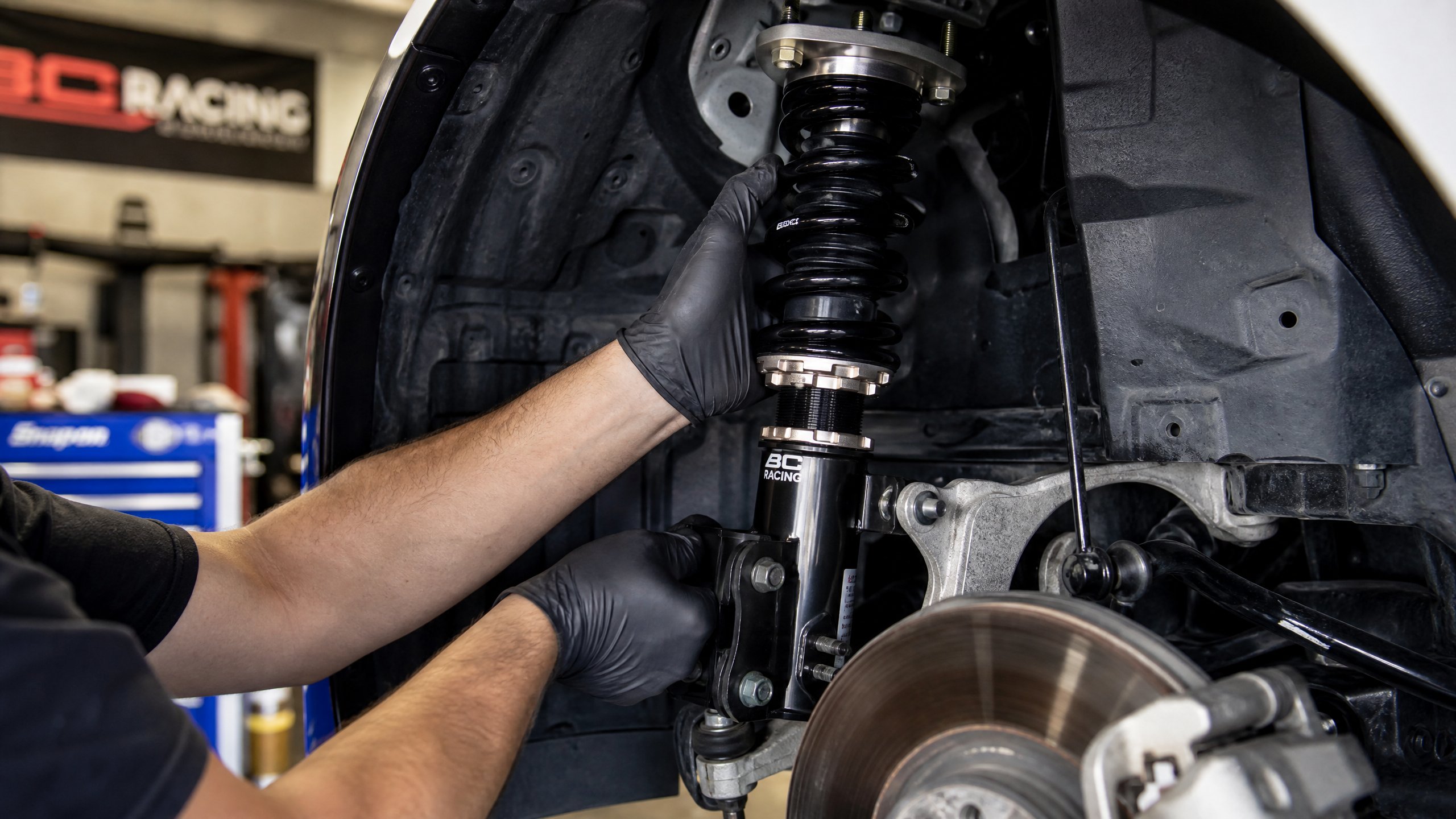
I’ve spent half my life under cars, staring up at control arms, ball joints, and coil springs. To most people, the suspension is just a collection of metal parts that stops the car from bouncing. But as a mechanic, I see it as a complex orchestra. When every part is in tune, the car handles like a dream. When one part is out of sync, the whole experience falls apart.
In this guide, I’m going to break down the science of suspension. We’ll talk about how to choose the right parts for your specific needs—whether you’re looking for a smooth Cadillac ride or a sharp, track-ready cornering machine. If you’ve ever wondered why your car feels “floaty” or why it crashes over every tiny bump, this is for you.
1. The Core Components: Springs and Dampers
The suspension has two main jobs: supporting the weight of the car and absorbing bumps. These jobs are handled by the springs and the dampers (shocks or struts).
Coil Springs
The springs support the vehicle’s weight. If you want to lower your car, you change the springs. But be careful—shorter springs are usually stiffer. I’ve seen too many DIYers put “slam” springs on their daily driver and then complain that their teeth rattle every time they hit a manhole cover.
Dampers (Shocks and Struts)
The dampers control the energy in the springs. Without dampers, your car would just keep bouncing like a pogo stick after every bump.
I always tell my customers: don’t cheap out on shocks. A high-quality gas-charged shock will react faster and last longer than a budget oil-filled unit. If you see oil leaking down the side of your shock absorber, it’s “blown” and needs to be replaced immediately.
2. Bushings: The Unsung Heroes
Bushings are the small rubber or polyurethane inserts that sit between the metal suspension parts. They act as cushions, absorbing road noise and vibration.
Rubber vs. Polyurethane
Most factory cars come with rubber bushings because they’re quiet and soft. However, rubber perishes over time, especially if you live in a hot climate.
If you’re looking for better performance, I recommend switching to polyurethane bushings. They’re much stiffer, which means your suspension geometry stays consistent during hard cornering. The downside? You’ll feel and hear more of the road. It’s a trade-off I’m usually happy to make on my own projects, but maybe not on the family SUV.
3. Geometry and Alignment: The Hidden Math
You can have the most expensive suspension parts in the world, but if your alignment is off, the car will still handle like a shopping cart with a bad wheel.
Camber, Caster, and Toe
These are the three main angles of your wheels.
- Camber is the inward or outward tilt of the tire.
- Caster is the angle of the steering pivot.
- Toe is whether the front of the tires point toward or away from each other.
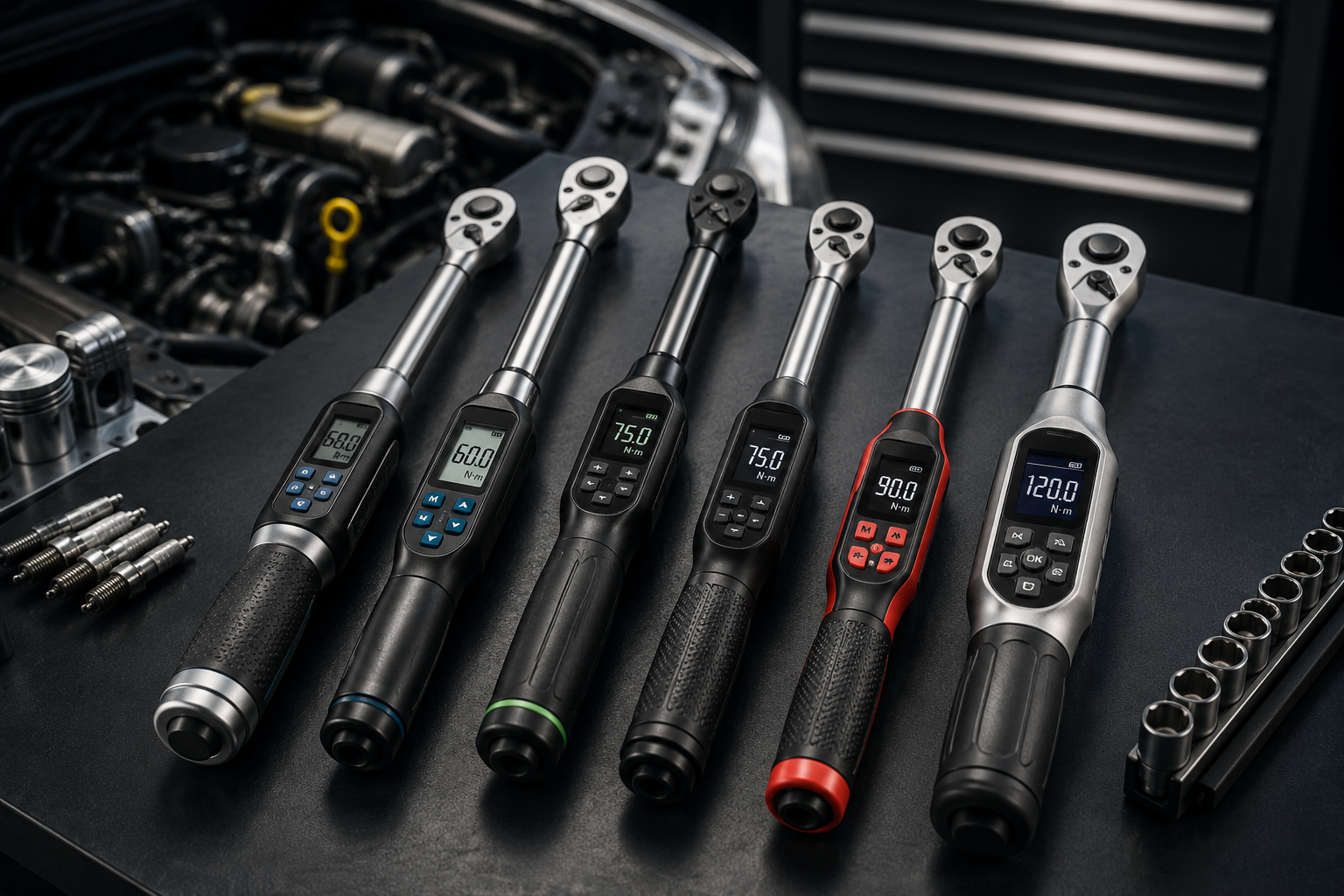
I always use a digital torque wrench when tightening suspension bolts to ensure they’re exactly to spec. Just like ensuring your electrical system is healthy, keeping your suspension in check is vital for safety. Over-tightening a bushing can bind the suspension, while under-tightening can lead to a catastrophic failure at highway speeds.
4. Upgrading for Performance: Coilovers vs. Air Ride
If you’re serious about handling, you’ll eventually look at coilovers or air suspension.
Coilovers
Coilovers combine the spring and shock into one adjustable unit. They allow you to fine-tune your ride height and damping stiffness. I love them for track cars because you can set the car up exactly how you want it.
Air Suspension
Air ride uses rubber airbags instead of metal springs. With the flick of a switch, you can drop the car to the ground for a show or raise it up to clear a steep driveway. Modern air systems are incredibly advanced, but they’re complex and expensive to repair if a bag leaks.
| Part Type | Best For… | Alex’s Pro Tip |
|---|---|---|
| Standard Struts | Daily driving and comfort | Replace in pairs to keep the handling balanced. |
| Coilovers | Performance and track days | Look for units with adjustable “rebound” settings. |
| Poly Bushings | Sharp steering response | Use plenty of grease during install to prevent squeaks. |
| Anti-Roll Bars | Reducing body roll | Start with a thicker rear bar for better turn-in. |
—
5. Diagnosing Suspension Noise
If your car is making a “clunk,” “squeak,” or “groan,” your suspension is trying to tell you something.
The Bounce Test
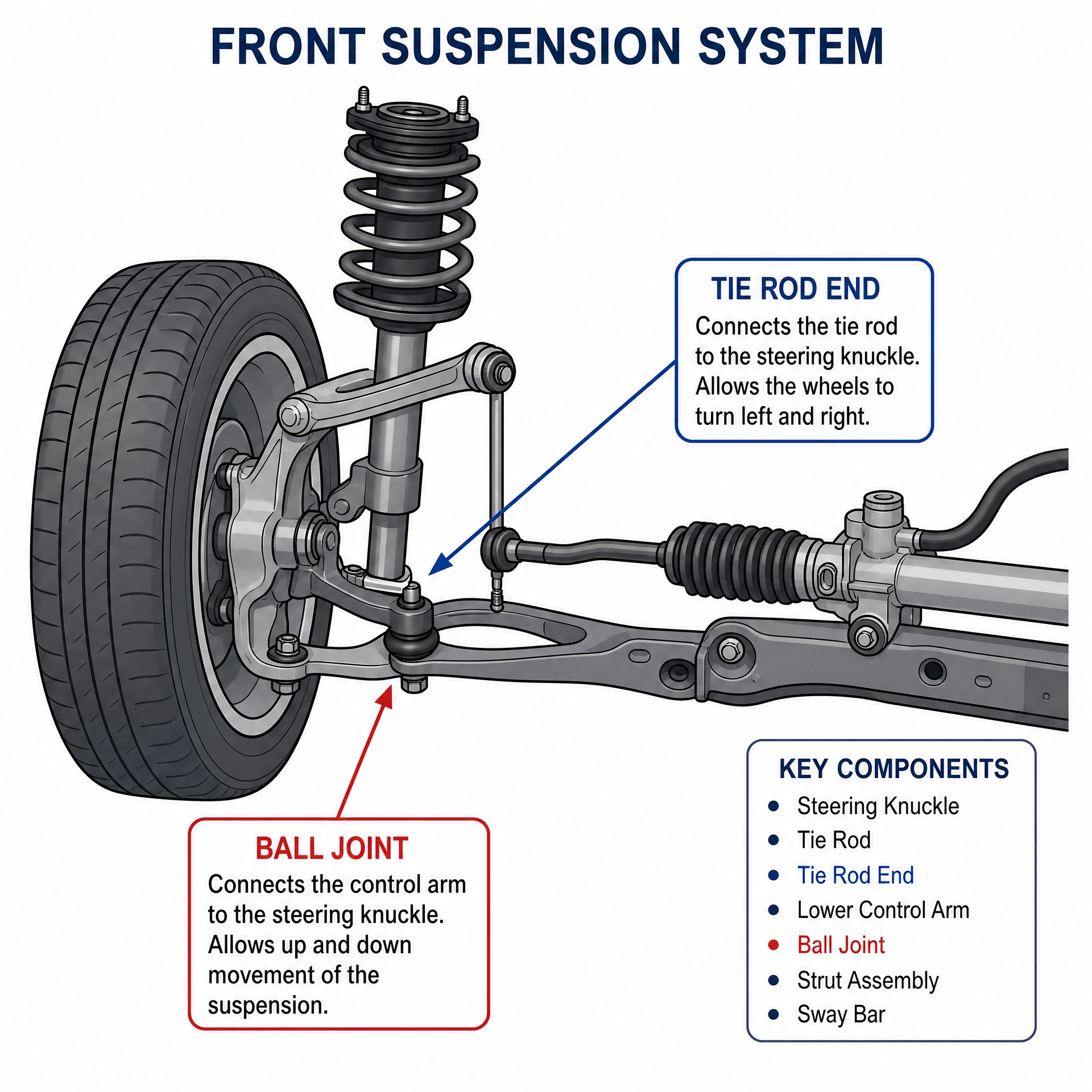
A quick DIY trick I use: go to one corner of the car and push down hard on the fender. If the car bounces more than once and a half, your shocks are shot. If you hear a “clunk” when you hit a bump, it’s likely a worn ball joint or a loose sway bar link. Don’t ignore these sounds; a failed ball joint can cause your wheel to fold inward while you’re driving.
6. The “Suspension Setup” Finder
Not sure which direction to go with your suspension? Use this tool to find your ideal setup based on your driving style.
Alex’s Suspension Matcher
How do you primarily use your car?
Select your driving style to see my recommendation…
7. Final Thoughts: Safety First
I’ve said it before, and I’ll say it again: suspension is a safety-critical system. If you’re working on your suspension at home, always use high-quality jack stands. Never trust a hydraulic jack to hold the car up while you’re under it.
I once had a jack fail while I was changing a strut—if I hadn’t had a jack stand in place, I wouldn’t be writing this today. Be safe, take your time, and don’t be afraid to ask for professional help if a job feels over your head.
Understanding your suspension makes you a better driver and a better mechanic. Whether you’re chasing lap times or just a smoother ride to work, the right parts make all the difference.
Keep the shiny side up, and keep those bolts tight.
— Alex




Leave a Reply