
I still remember the first time my old ’98 Civic started shaking like a wet dog on the highway. I was doing about 65 mph, heading home from a long shift at the shop, when the steering wheel began to vibrate so hard my hands went numb. At first, I thought a wheel was about to fall off. I pulled over, grabbed my lug wrench, and checked every nut. They were tight.
That’s the thing about a shaking steering wheel. It’s annoying, it’s a bit scary, and it usually points to something that needs fixing before it gets expensive. Whether it’s a subtle shimmy at high speeds or a violent shudder when you hit the brakes, your car is trying to tell you something.
I’ve spent thousands of hours under hoods and inside wheel wells. I’ve seen everything from missing wheel weights to ball joints that were held together by nothing but luck and grease. In this guide, I’m going to walk you through exactly how to figure out what’s wrong with your ride. We’ll look at the usual suspects like tire balance and rotors, and then dive into the deeper suspension issues that might be hiding in plain sight.
1. The Most Common Culprit: Out-of-Balance Tires
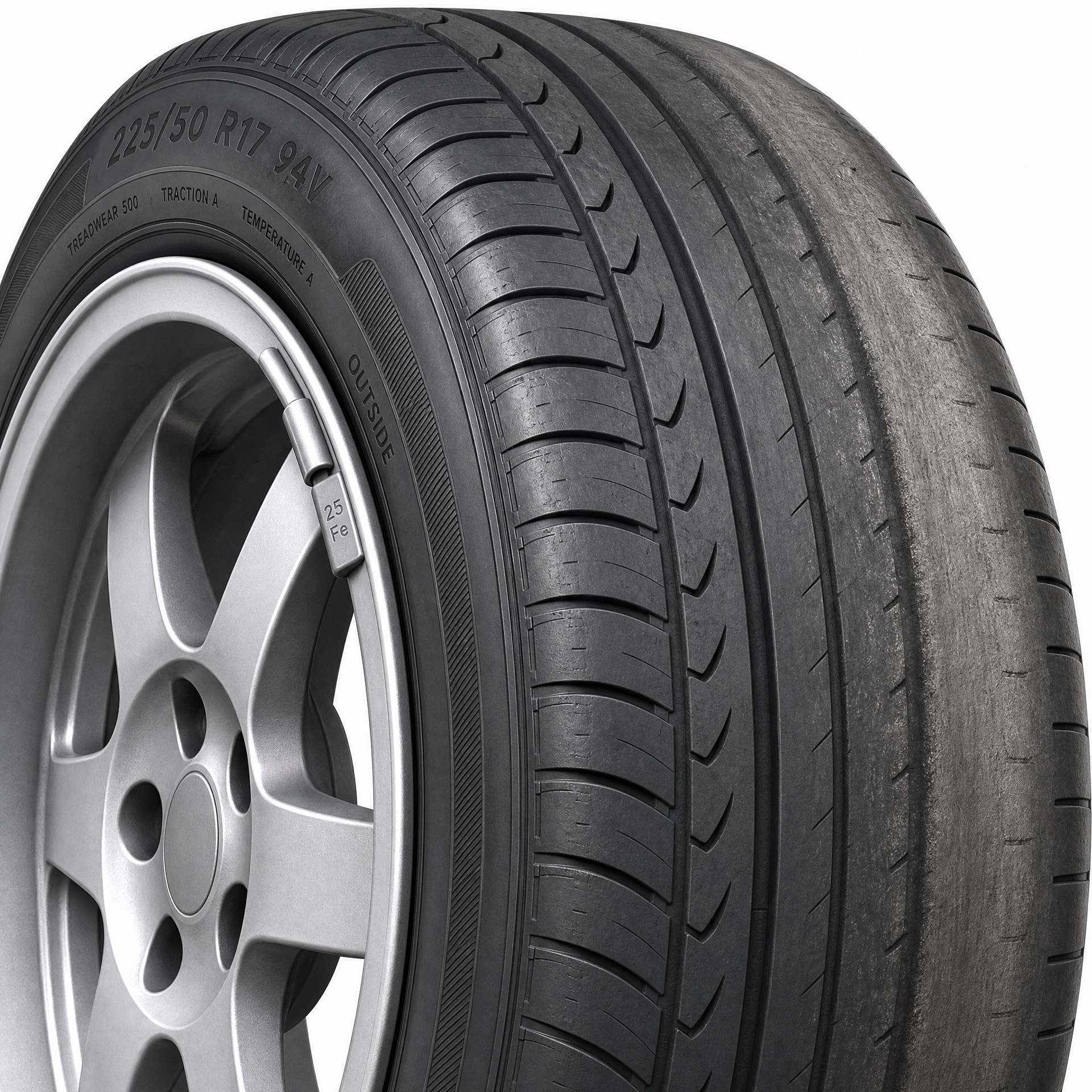
If your steering wheel starts dancing once you hit 50 or 60 mph, nine times out of ten, you’re looking at a balance issue. Tires aren’t perfect circles of uniform weight. When they’re manufactured, one side might be a tiny bit heavier than the other.
At low speeds, you won’t feel it. But once that tire starts spinning hundreds of times per minute, that tiny heavy spot turns into a hammer. It flings the tire up and down, and that vibration travels right up the steering column and into your palms.
How a Tiny Weight Saves Your Sanity
When you take your car to a tire shop, they put the wheels on a balancer. This machine spins the tire and tells the tech exactly where to crimp on a small lead or steel wheel weight. I’ve seen weights as small as a quarter-ounce make the difference between a smooth ride and a vibrating mess.
Sometimes these weights just fall off. I once spent an hour diagnosing a “mystery shake” only to find a clean spot on the rim where a weight used to be. A quick trip to the balancer and $20 later, the car was perfect.
Flat Spots and “Out-of-Round” Tires
Tires can also get “flat spots” if the car sits for too long, especially in the cold. I’ve seen this happen to classic cars stored over the winter. The rubber takes a set, and for the first few miles of spring, it feels like you’re driving on square wheels. Usually, once the rubber warms up, the shake goes away. If it doesn’t, the internal belts of the tire might be shifted, and that means you need a new tire.
2. Shaking Only When Braking? Check Your Rotors
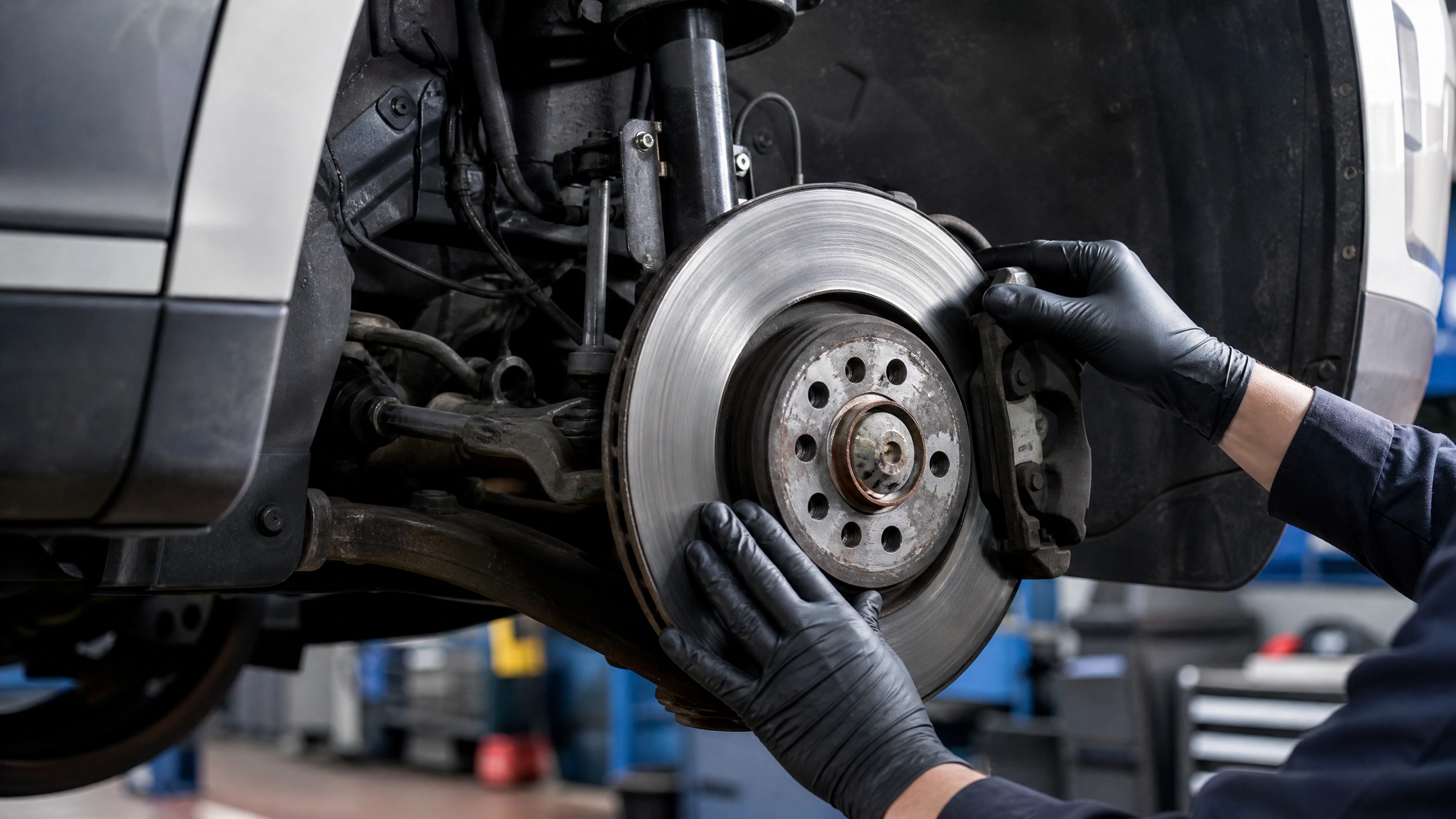
If your steering wheel is rock steady at 70 mph but starts vibrating the second you touch the brake pedal, the problem isn’t your tires. It’s your brake rotors.
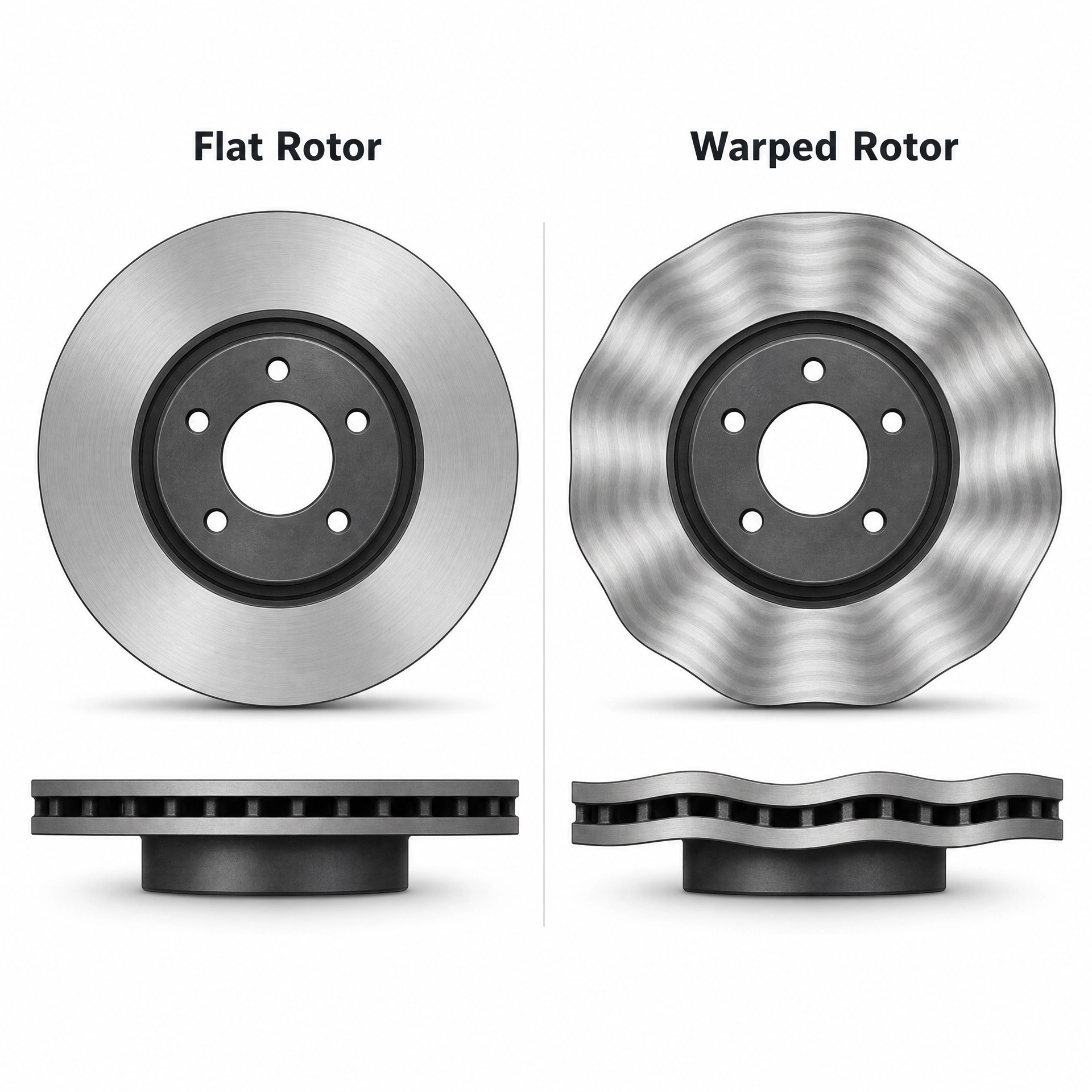
Rotors are the big metal discs that your brake pads squeeze to stop the car. They need to be perfectly flat. Over time, heat and stress can cause them to “warp” or develop uneven spots of pad material. This is what mechanics call lateral runout.
The “Warped” Myth
People always say the rotors are warped like a record, but usually, it’s actually “disc thickness variation.” When you get your brakes too hot—maybe from riding them down a long mountain pass—the pad material can actually fuse to the rotor in uneven patches.
The next time you brake, the pads hit those high spots and bounce. That bounce translates into a pulsing pedal and a shaking steering wheel. I always tell people to avoid “budget” rotors. I once installed a set of “no-name” rotors on a customer’s truck, and they were shaking again within a month. Stick to high-quality coated rotors to save yourself the headache.
Safety Tip: Clean Those Hubs
When you’re swapping rotors, you have to make sure the wheel hub is perfectly clean. Even a tiny bit of rust or grit between the hub and the rotor can make a brand-new rotor sit slightly crooked. I use a wire brush or a drill with a scouring pad to get that surface down to bare metal before the new disc goes on.
3. The Scary Stuff: Loose Suspension and Steering
Now, if the shaking happens at all speeds, or if it feels like the car is “wandering” across the lane, we need to talk about suspension. This is where things get serious. If a suspension component fails while you’re driving, you lose control of the car.
Tie Rod Ends: Your Connection to the Road
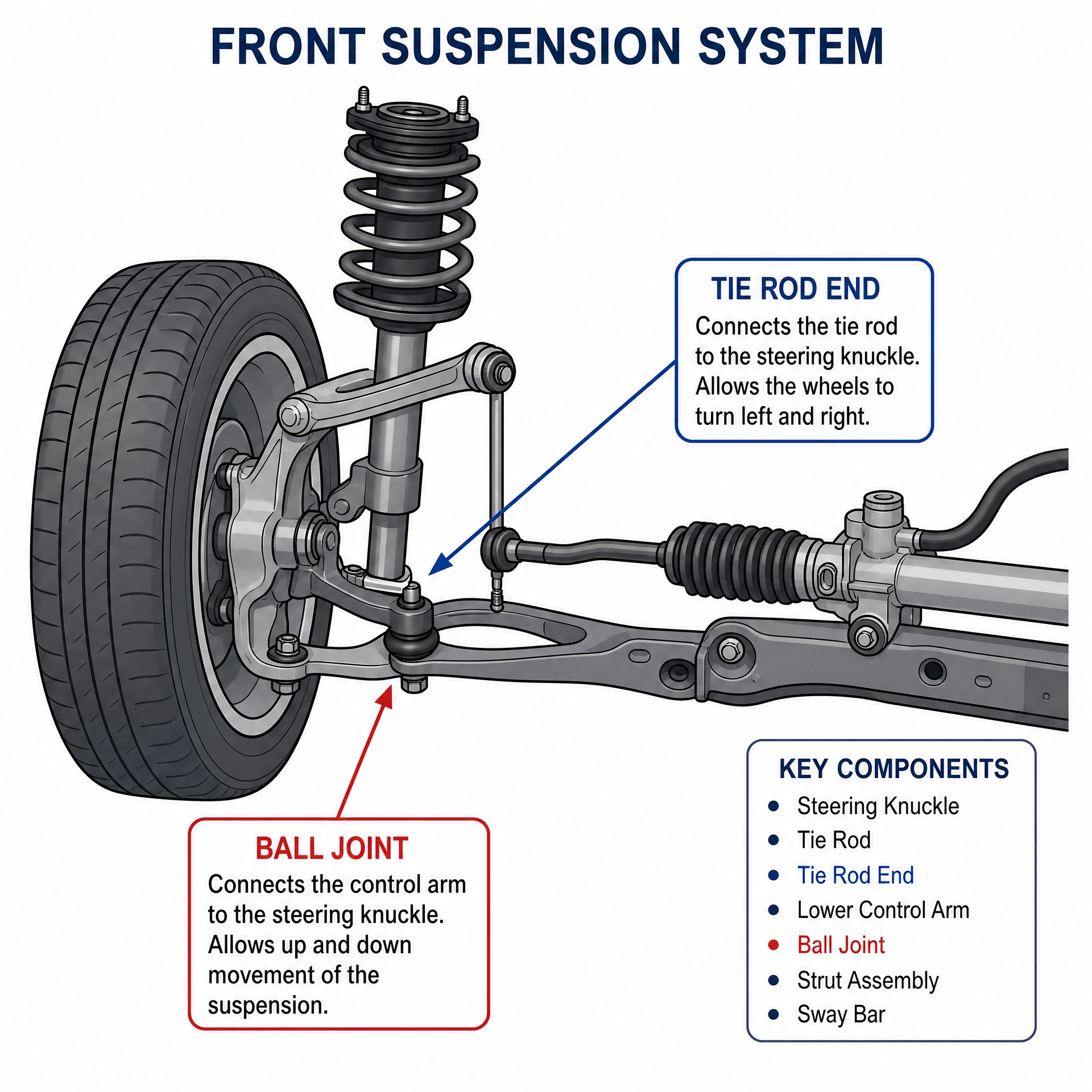
Your tie rods are what connect the steering rack to the wheels. They have a ball-and-socket joint at the end. When that joint gets worn out, there’s “play” in the steering.
I check these by jacking up the front of the car and grabbing the tire at the 3 o’clock and 9 o’clock positions. If I can wiggle the tire back and forth, I know the tie rod is shot. Usually, you’ll need a 19mm socket and a pickle fork or a puller to get the old one off.
Ball Joints: The Pivot Point
Ball joints are the pivots that allow your wheels to turn and move up and down with the suspension. When they get loose, the wheel can actually tilt inward or outward.
A bad ball joint often comes with a “clunking” sound when you go over bumps. I’ve seen ball joints so worn that the wheel was literally flapping in the breeze. If you ignore a bad ball joint, it can eventually pop out of the socket, and your wheel will fold up into the fender. That’s a bad day for everyone.
4. Wheel Alignment and the “Pull”
Sometimes the steering wheel isn’t shaking, but it’s vibrating because the wheels are fighting each other. This is an alignment issue. If your “toe” is out—meaning the front of the tires are pointing toward or away from each other—the tires will “scrub” against the road.
This scrubbing creates a high-frequency vibration and eats your tires for breakfast. You’ll notice the inside or outside edges of the tread wearing down much faster than the middle. If you let go of the wheel and the car immediately dives for the ditch, get it to an alignment rack.
Diagnostic Table: What’s Causing Your Shake?
| Symptom | Most Likely Cause | When Does It Happen? |
|---|---|---|
| High-speed vibration | Tire Balance | Starts at 50-60 mph, gets worse with speed. |
| Shuddering when braking | Warped/Uneven Rotors | Only when the brake pedal is pressed. |
| Shaking over bumps | Worn Struts/Shocks | Car bounces excessively after a pothole. |
| Loose, wandering steering | Tie Rods or Ball Joints | Shaking at all speeds, feels “sloppy.” |
| Vibration with a “pull” | Wheel Alignment | Car won’t stay straight, uneven tire wear. |
—
5. The DIY “Garage Inspection” Guide
I always tell my friends that you don’t need a $50,000 lift to find most steering problems. You just need a decent floor jack, two jack stands, and about thirty minutes. If you’re going to work on your own car, please, for the love of all things holy, use jack stands. Never trust a hydraulic jack with your life. I’ve seen them fail, and it isn’t pretty.
The 12 and 6, 3 and 9 Test
Once you’ve got the front end in the air, grab one of the tires. Place your hands at the top (12 o’clock) and bottom (6 o’clock). Try to rock the tire in and out. If you feel a “click” or see movement, you’re likely looking at a bad wheel bearing or a lower ball joint.
Now, move your hands to the sides (3 o’clock and 9 o’clock). Give it a good, firm shake. Movement here usually means your tie rod ends are toast. If you have a buddy with you, have them watch the steering linkage while you shake the wheel. They’ll see the joint wiggling if it’s bad.
The “Dry Park” Test
This is one of my favorite tricks for finding steering play. With the car on the ground and the engine off, have a friend sit in the driver’s seat and wiggle the steering wheel back and forth rapidly—just a few inches each way.
While they do that, you crawl underneath (safely!) or look down into the engine bay. Watch every joint in the steering rack and the intermediate shaft. If the steering wheel is moving but the tires aren’t, you’ve found where the “slack” is. I once found a loose pinch bolt on a steering column this way that could have been fatal if it had backed all the way out.
6. Hidden Culprits: It’s Not Always the Wheels
Sometimes you check the tires, the brakes, and the suspension, and everything looks tight. But the car is still shaking. That’s when we start looking at the “hidden” stuff.
CV Axles: The Acceleration Shake
If your car only shakes when you’re stepping on the gas, especially when you’re heading up a hill, check your CV axles. These shafts have joints covered by rubber boots. If the boot rips, the grease flies out, and dirt gets in.
The joint starts to wear down and develops “play.” Under the torque of acceleration, that loose joint will wobble like a spinning top that’s losing speed. If you look behind your front wheels and see a bunch of thick, black grease sprayed everywhere, your CV boot is gone, and the axle is probably next.
Engine Mounts: The “Idle” Vibration
Does your steering wheel vibrate while you’re sitting at a red light, but smooths out once you start moving? That’s almost always engine mounts.
Your engine is held in place by big rubber and metal blocks. Over time, the rubber cracks or the fluid inside leaks out. The vibrations from the engine then travel directly into the frame and up the steering column. It feels like the whole car is shivering. Sometimes, a low idle caused by a weak car battery can mimic this vibration. Replacing these usually requires a floor jack and a block of wood to support the engine while you swap the mounts.
Over-Torqued Lug Nuts: The Silent Killer
This is a pet peeve of mine. When you take your car to a shop and they use a massive air impact wrench to zing your lug nuts on, they’re often over-tightening them.
Most cars only need about 80 to 100 lb-ft of torque. If a tech cranks them to 200 lb-ft, they can actually stretch the studs and put uneven pressure on the brake rotor. This is a huge cause of “warped” rotors. I always use a torque wrench to finish the job. It takes an extra minute, but it saves your brakes.
7. Diagnostic Tool: Find Your Fix
I built this little interactive tool to help you narrow down the search. Just click the symptoms that match what you’re feeling, and it’ll give you a starting point.
Alex’s Steering Shake Diagnostic
Select when the shaking happens:
That’s about it for the basics. Steering shakes are usually easy to find if you know where to look. Just take your time, be safe with your jack stands, and don’t ignore what your car is trying to tell you. If you’ve got a weird one I didn’t cover, drop a comment below and I’ll try to help you out.



Leave a Reply