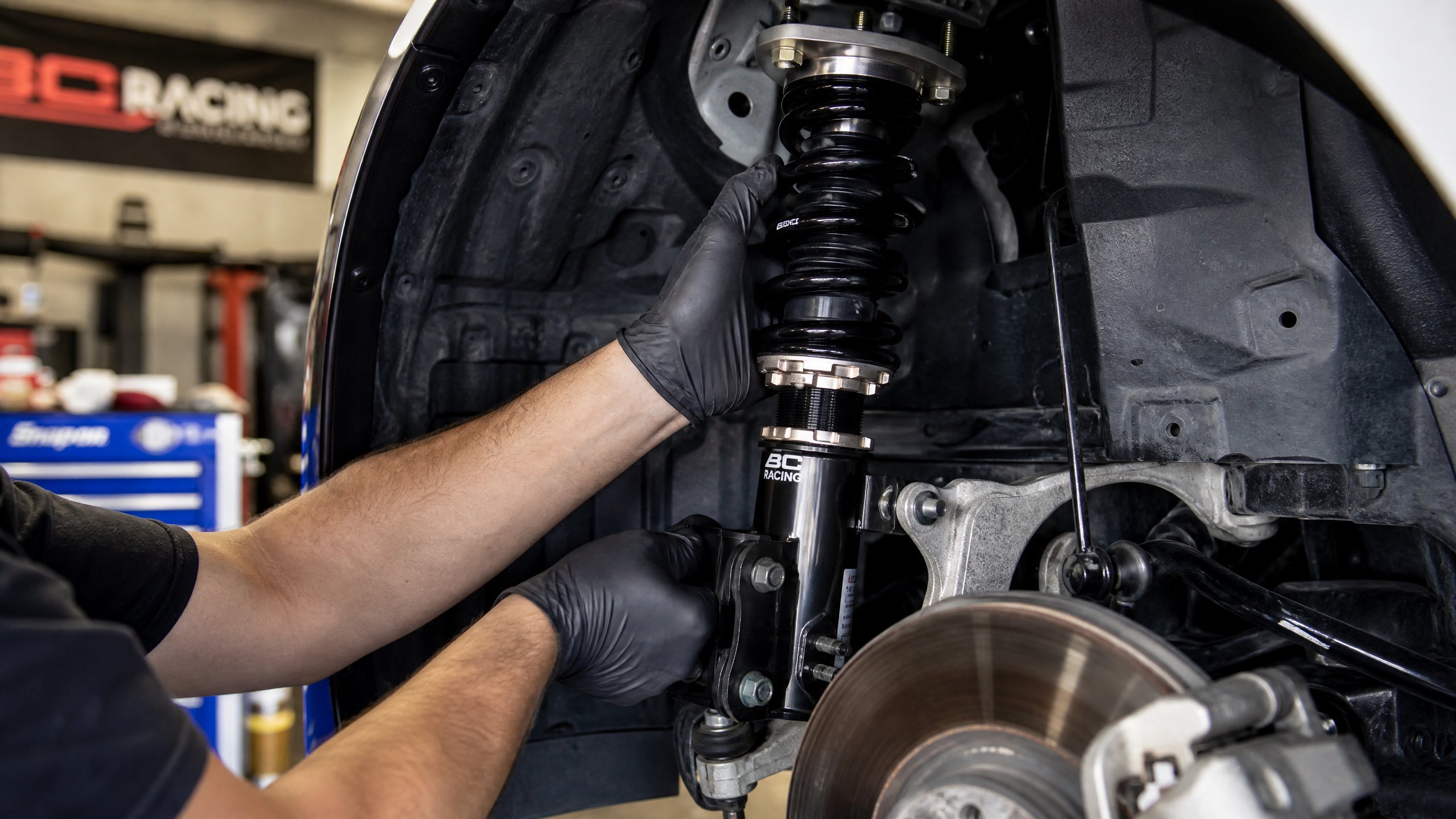
A vehicle’s suspension supports its weight, keeps the tires in contact with the road and controls body movement during braking, acceleration and cornering. Springs, dampers, bushings and suspension geometry work together, so changing one component can affect ride height, alignment, tire wear and handling. This guide explains the main parts and the checks to make before choosing an upgrade.
In this guide, I’m going to break down the science of suspension. We’ll talk about how to choose the right parts for your specific needs—whether you’re looking for a smooth Cadillac ride or a sharp, track-ready cornering machine. If you’ve ever wondered why your car feels “floaty” or why it crashes over every tiny bump, this is for you.
1. The Core Components: Springs and Dampers
The suspension has two main jobs: supporting the weight of the car and absorbing bumps. These jobs are handled by the springs and the dampers (shocks or struts).
Coil Springs
The springs support the vehicle’s weight. If you want to lower your car, you change the springs. But be careful—shorter springs are usually stiffer. I’ve seen too many DIYers put “slam” springs on their daily driver and then complain that their teeth rattle every time they hit a manhole cover.
Dampers (Shocks and Struts)
The dampers control the energy in the springs. Without dampers, your car would just keep bouncing like a pogo stick after every bump.
Compare dampers by vehicle-specific fitment, damping design, adjustment range, construction and warranty—not simply by whether they are gas-charged. A light film around a damper seal may differ from active leakage; wetness accompanied by loss of damping, repeated bouncing, noise or uneven tire wear warrants inspection. Replace dampers in axle pairs when the manufacturer’s procedure calls for it.
2. Bushings: The Unsung Heroes
Bushings are the small rubber or polyurethane inserts that sit between the metal suspension parts. They act as cushions, absorbing road noise and vibration.
Rubber vs. Polyurethane
Most factory cars come with rubber bushings because they’re quiet and soft. However, rubber perishes over time, especially if you live in a hot climate.
If you’re looking for better performance, I recommend switching to polyurethane bushings. They’re much stiffer, which means your suspension geometry stays consistent during hard cornering. The downside? You’ll feel and hear more of the road. This is a trade-off: firmer bushings may suit performance-focused builds but can reduce comfort in a family or daily-driven vehicle.
3. Geometry and Alignment: The Hidden Math
You can have the most expensive suspension parts in the world, but if your alignment is off, the car will still handle like a shopping cart with a bad wheel.
Camber, Caster, and Toe
These are the three main angles of your wheels.
- Camber is the inward or outward tilt of the tire.
- Caster is the angle of the steering pivot.
- Toe is whether the front of the tires point toward or away from each other.
4. Upgrading for Performance: Coilovers vs. Air Ride
If you’re serious about handling, you’ll eventually look at coilovers or air suspension.
Coilovers
Coilovers combine the spring and shock into one adjustable unit. They allow you to fine-tune your ride height and damping stiffness. Coilovers offer adjustable ride height and, depending on the model, damping settings. They can be useful for track setups, but require correct spring rates, alignment and adjustment.
Air Suspension
Air ride uses rubber airbags instead of metal springs. With the flick of a switch, you can drop the car to the ground for a show or raise it up to clear a steep driveway. Modern air systems are incredibly advanced, but they’re complex and expensive to repair if a bag leaks.
| Part Type | Best For… | Alex’s Pro Tip |
|---|---|---|
| Standard Struts | Daily driving and comfort | Replace in pairs to keep the handling balanced. |
| Coilovers | Performance and track days | Look for units with adjustable “rebound” settings. |
| Poly Bushings | Sharp steering response | Use plenty of grease during install to prevent squeaks. |
| Anti-Roll Bars | Reducing body roll | Start with a thicker rear bar for better turn-in. |
—
5. Diagnosing Suspension Noise
If your car is making a “clunk,” “squeak,” or “groan,” your suspension is trying to tell you something.
The Bounce Test
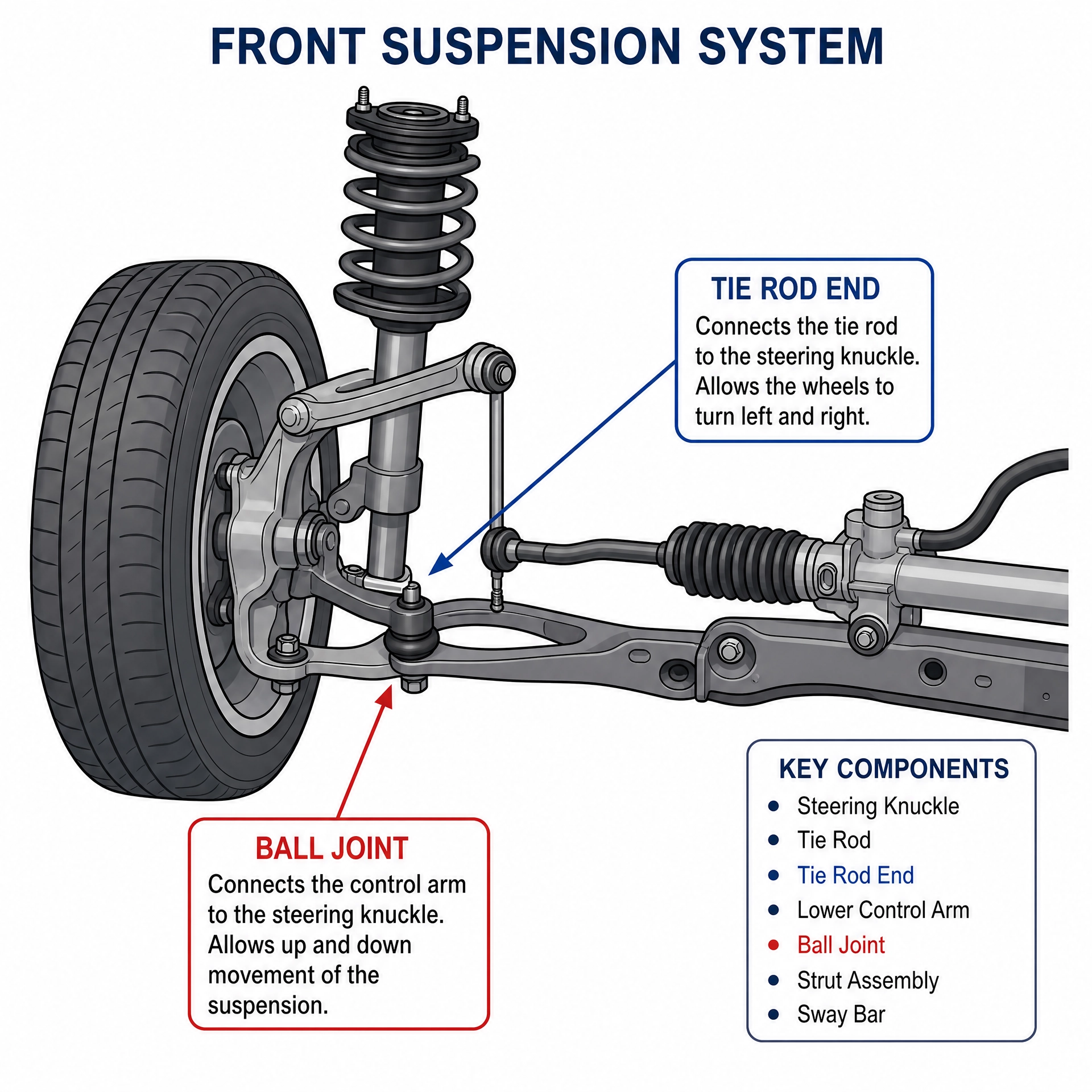
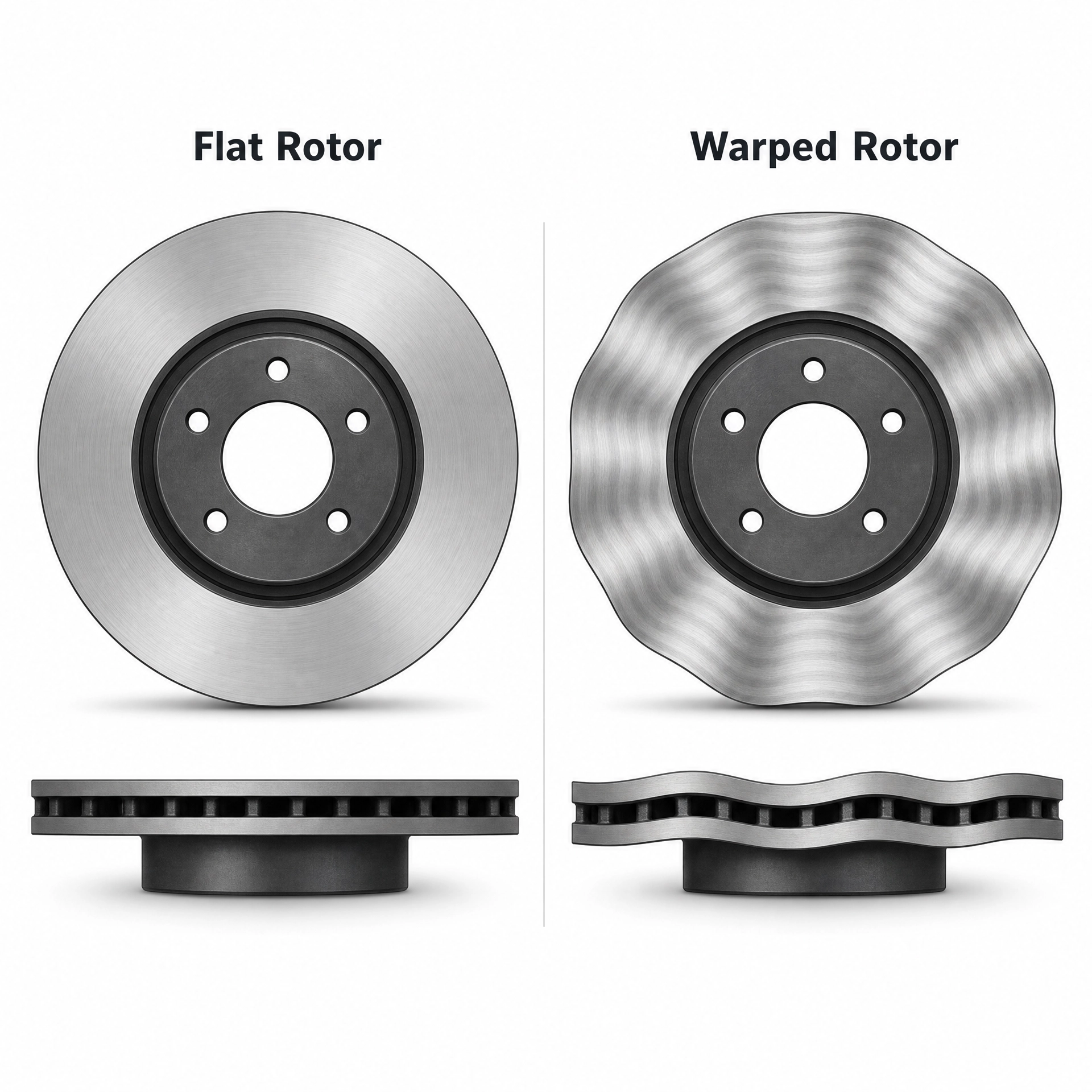
A basic bounce check may reveal severely worn dampers, but it is not a definitive suspension test. Inspect for leaks, damage, loose mounts and uneven tyre wear, and have uncertain components assessed professionally. If the car bounces more than once and a half, your shocks are shot. If you hear a “clunk” when you hit a bump, it’s likely a worn ball joint or a loose sway bar link. Don’t ignore these sounds; a failed ball joint can cause your wheel to fold inward while you’re driving.
6. The “Suspension Setup” Finder
Not sure which direction to go with your suspension? Use this tool to find your ideal setup based on your driving style.
Alex’s Suspension Matcher
How do you primarily use your car?
Select your driving style to see my recommendation…
7. Final Thoughts: Safety First
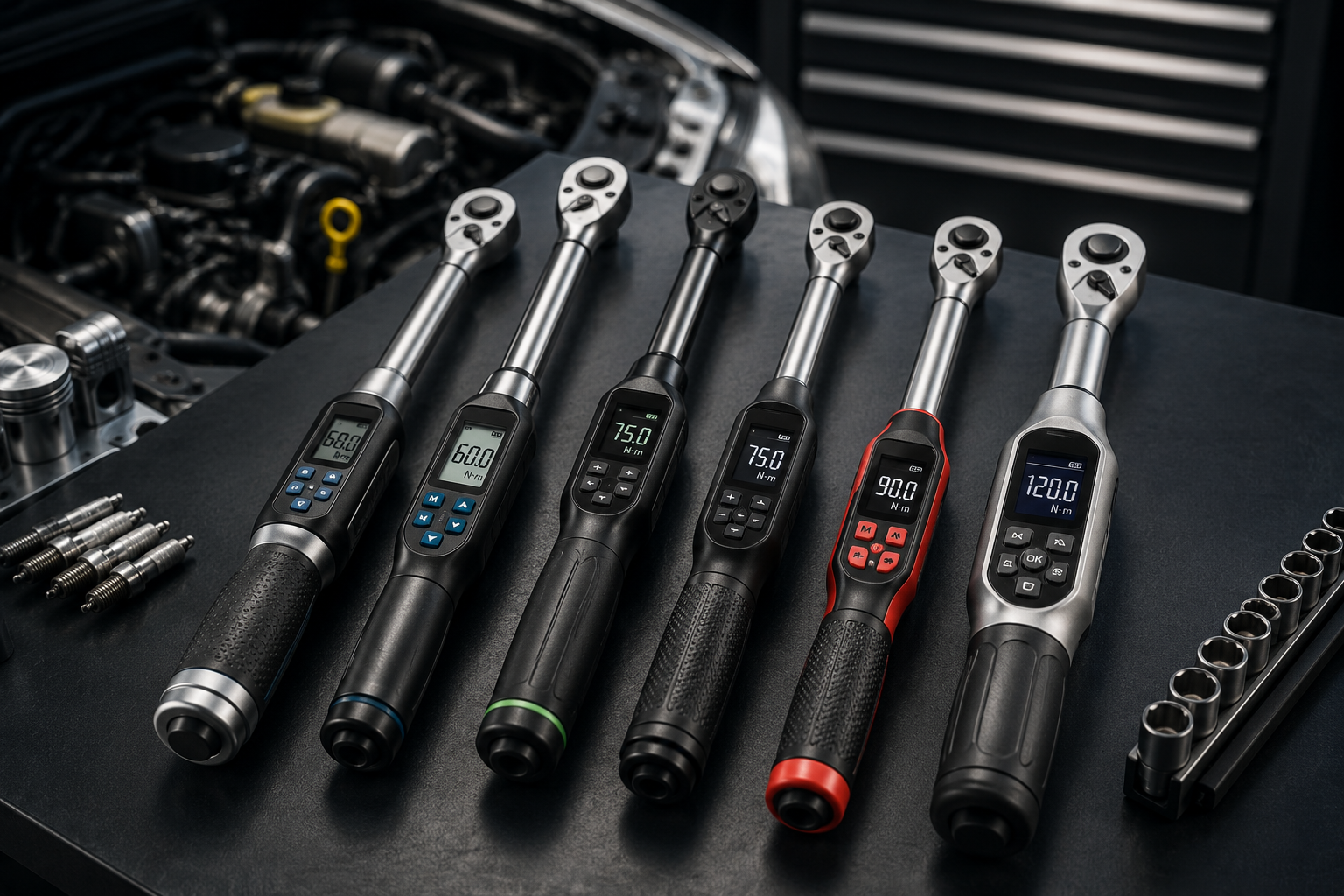
I’ve said it before, and I’ll say it again: suspension is a safety-critical system. If you’re working on your suspension at home, always use high-quality jack stands. Never trust a hydraulic jack to hold the car up while you’re under it.
Never rely on a hydraulic jack alone to support a vehicle. Use correctly rated axle stands on a firm, level surface at the manufacturer’s approved support points, and follow the vehicle and jack-stand instructions. Be safe, take your time, and don’t be afraid to ask for professional help if a job feels over your head.
Choose suspension parts as a matched system. Confirm exact year, model, trim, drivetrain and axle fitment; check whether springs, dampers, mounts and alignment hardware are included; and verify any ride-height or load limits before installation. After suspension work, inspect fasteners and obtain an alignment to the manufacturer’s specifications.
Keep the shiny side up, and keep those bolts tight.
— Alex





Leave a Reply