
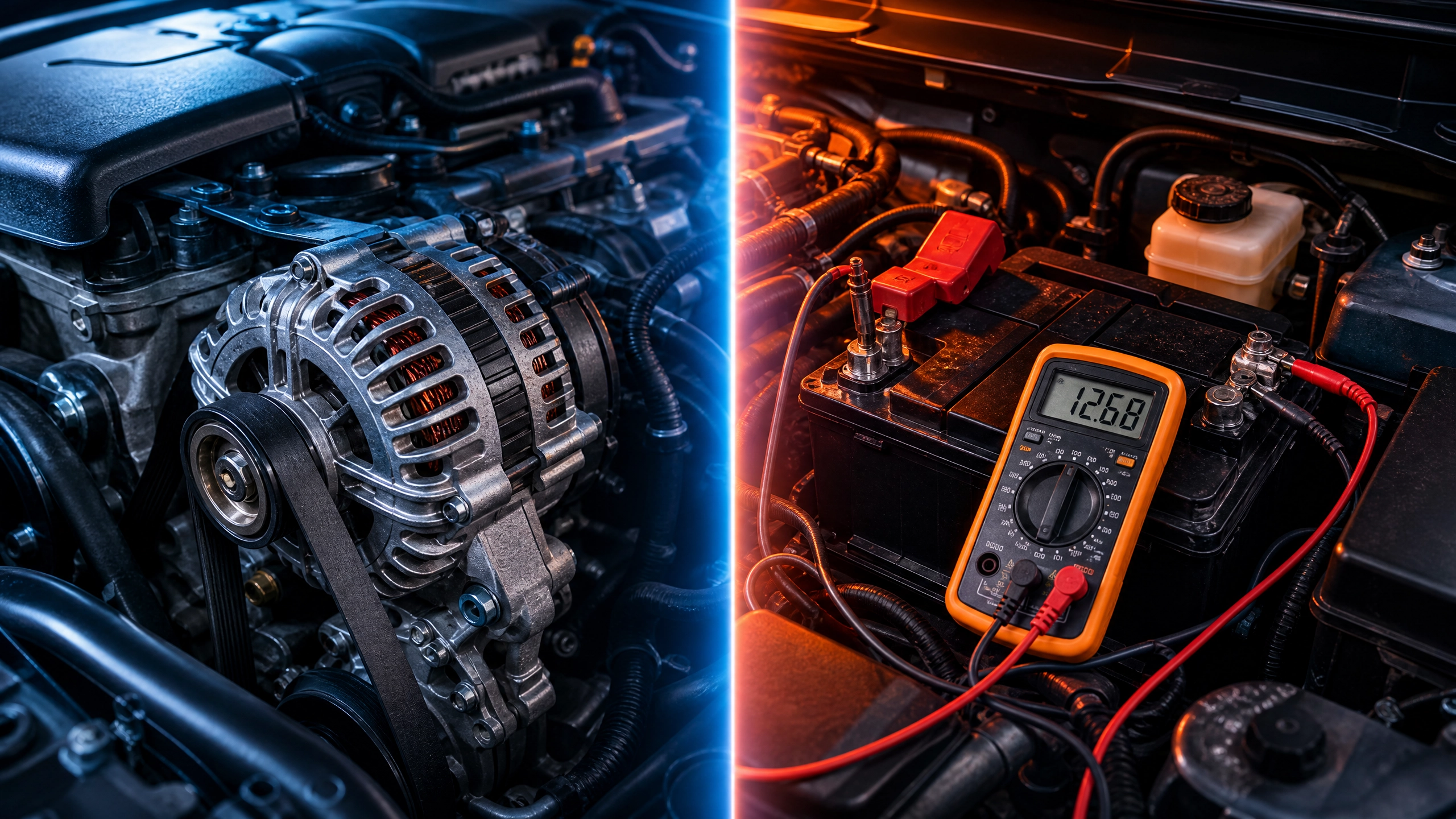
You turn the key. Nothing. Or maybe the engine groans, starts reluctantly, then dies three blocks from your house. Now you’re standing on the side of the road Googling ‘why won’t my car start’ — and every result tells you it could be the battery or the alternator.
I’ve been wrenching on cars for over 15 years, and I can’t count how many times a customer has come to me having just dropped $200 on a new battery — only to discover the alternator was killing it. They ended up paying twice.
So let me walk you through exactly how to tell these two apart without buying anything you don’t need. I’ll give you the same diagnostic process I use in my own garage.

First, Understand What Each Part Actually Does
Your battery is a storage tank. It holds enough charge to start the engine — that’s pretty much its main job. It also keeps things alive when the engine is off (like your clock and alarm).
Your alternator is the generator. Once the engine is running, the alternator takes over and powers everything — lights, radio, AC, electronics — and simultaneously recharges the battery.
When the alternator fails, the car will run on battery power alone. Eventually the battery drains completely and the car dies. That’s why a bad alternator can fool you into thinking the battery is the problem.
The Jump-Start Test — Your Fastest First Clue
Grab a set of jumper cables or a jump starter pack. Get the car running. Now here’s the key:
- Battery problem:The car starts and keeps running fine after the jump. Disconnect the cables and drive normally. The alternator is charging the battery, so it stays alive.
- Alternator problem:The car starts after the jump but dies again within minutes. Without a working alternator putting power back in, the battery drains fast and the engine cuts out.
⚠️ Safety note: Don’t disconnect the battery while the engine is running as a ‘test.’ This was an old mechanic trick, but on modern cars with sensitive electronics and ECUs, it can fry expensive modules. Don’t do it.
The Multimeter Test — Get a Real Answer in 5 Minutes
A basic digital multimeter costs about $15–$25 at any auto parts store. This is the most accurate DIY test you can do at home.
What You Need
- Digital multimeter (set to DC voltage, 20V range)
- A helper (optional but useful)
- Shop rag to clean battery terminal posts before probing
Step 1 — Test Battery Voltage (Engine OFF)
- Clean off any corrosion or dirt around the battery terminals with a shop rag. Corroded terminals give false readings.
- Touch the red (positive) probe to the + terminal, black (negative) probe to the – terminal.
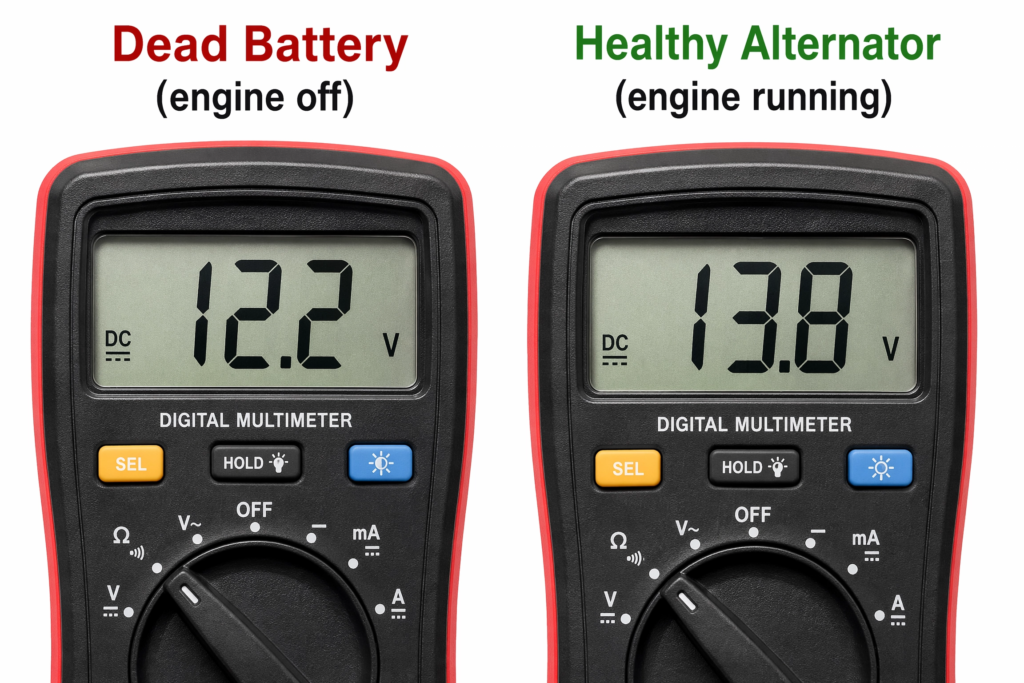
- Reading above 12.6V:Battery is fully charged and healthy.
- Reading 12.0–12.4V:Battery is weak, partially discharged.
- Reading below 12.0V:Battery is dead or nearly dead.
Step 2 — Test Alternator Output (Engine RUNNING)
- Start the car.
- Keep the probes on the battery terminals.
- Reading 13.5V–14.8V:Alternator is working perfectly.
- Reading below 13.5V:Alternator is undercharging. Suspect a bad alternator, worn belt, or loose wiring.
- Reading above 15V:Alternator is overcharging. This will destroy the battery fast.
Then turn on your headlights and AC, and rev the engine slightly. A good alternator will hold voltage steady. A failing one will drop noticeably under load.
Quick Comparison: Battery vs. Alternator Symptoms
Use this table as your go-to cheat sheet:
| Symptom | 🔋 Dead Battery | ⚙️ Failing Alternator |
|---|---|---|
| Car won’t start | Won’t crank at all | May start, then dies |
| Dashboard light | Battery icon lit | Battery or ALT icon lit |
| Electrical behavior | Everything dead or dim | Flickering while running |
| Jump start result | Starts and runs fine | Starts, dies quickly |
| Voltmeter (engine on) | 12.6V (not charging) | Below 13.5V |
| Headlight brightness | Dim or dead | Dims when revving up |
| Battery age | Often 3–5+ years old | Battery often new/fine |
Watch for These Dead Giveaways
Signs It’s Almost Definitely the Battery
- Car won’t crank at all — complete silence or a single click when you turn the key
- Battery is 3–5 years old (most car batteries last 3–5 years max)
- Battery light is on but goes off once the car is jump-started and running
- Car sat unused for 2+ weeks (batteries self-discharge when parked)
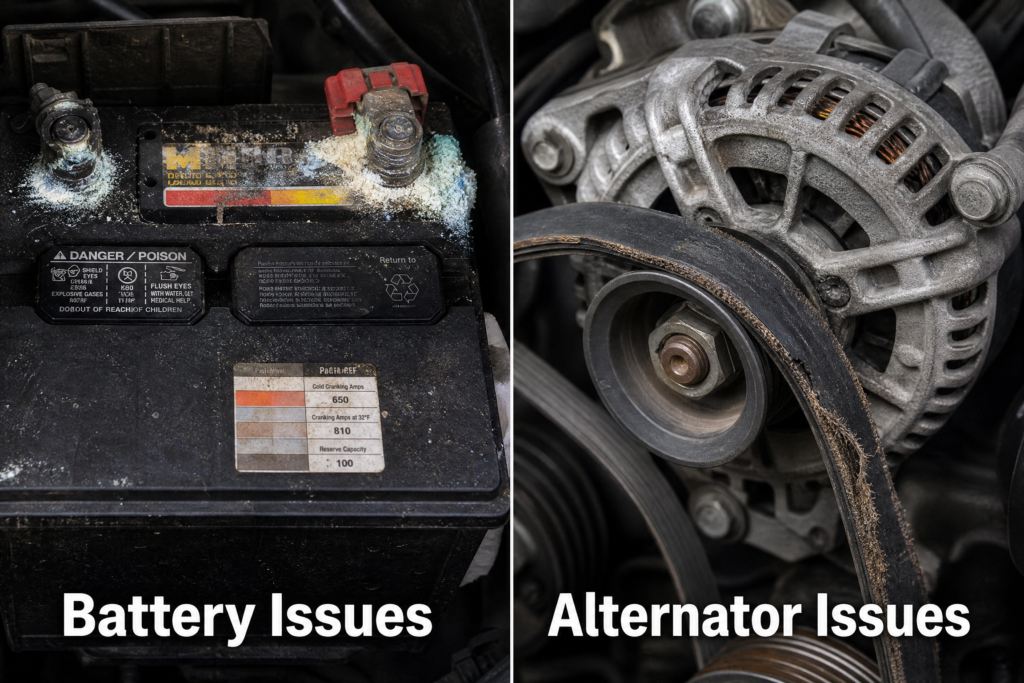
- Terminals have heavy white or blue corrosion buildup
Signs It’s Almost Definitely the Alternator
- Car starts fine but dies 5–20 minutes later
- Electrical gremlins while driving — flickering headlights, radio cutting in and out, power windows slowing down
- Battery light stays on while the engine is running
- Burning rubber or hot electrical smell from under the hood (can indicate a seized alternator bearing dragging the belt)
- You’ve replaced the battery twice in the past year and it keeps dying
Pro Tips From the Garage
Here are a few things that only come from actually doing this work:
- Clean the battery terminals first — always. I’ve seen weak voltage readings that looked like a bad battery, but cleaning off corrosion with a terminal brush and a mix of baking soda and water fixed the ‘problem’ entirely.
- Check the serpentine belt. The alternator is driven by this belt. If it’s cracked, glazed, or slipping, the alternator can’t spin properly. Grab a flashlight and look before pulling anything.
- Check the alternator fuse and fusible link. Many people don’t know that alternators have a fuse. On some cars it’s a 40–100A fuse near the battery. A blown fuse kills alternator output completely.
- Test under load. An alternator can pass a basic voltage test but fail under real load. Turn on everything — AC, headlights, rear defroster — and watch the voltage dip. Below 13V under load is a red flag.
- AutoZone and O’Reilly test for free. Both stores will test your battery and alternator for free while the car is running. It’s not as detailed as a shop test, but it’ll catch obvious failures.
What Does Replacing Each Part Cost?
I get this question constantly. Here’s a realistic breakdown:
Battery replacement: $100–$250 for the part, plus $20–$50 for installation if you don’t do it yourself. Most batteries take 15 minutes to swap.
Alternator replacement: $150–$400 for a remanufactured unit, up to $600+ for some imports and luxury vehicles. Labor runs $100–$300 depending on how buried it is in the engine bay. Some alternators take 30 minutes; others take half a day.
Doing the diagnosis correctly first saves you buying both. I’ve had customers spend $350 on a new alternator when a $30 serpentine belt was causing the problem.
🔧 Interactive Diagnostic Tool
Use the HTML Diagnostic Quiz below to help you diagnose the issue:
🔧 Battery vs. Alternator Diagnostic Quiz
Answer 6 quick questions to identify the likely culprit.
My Final Diagnosis Checklist
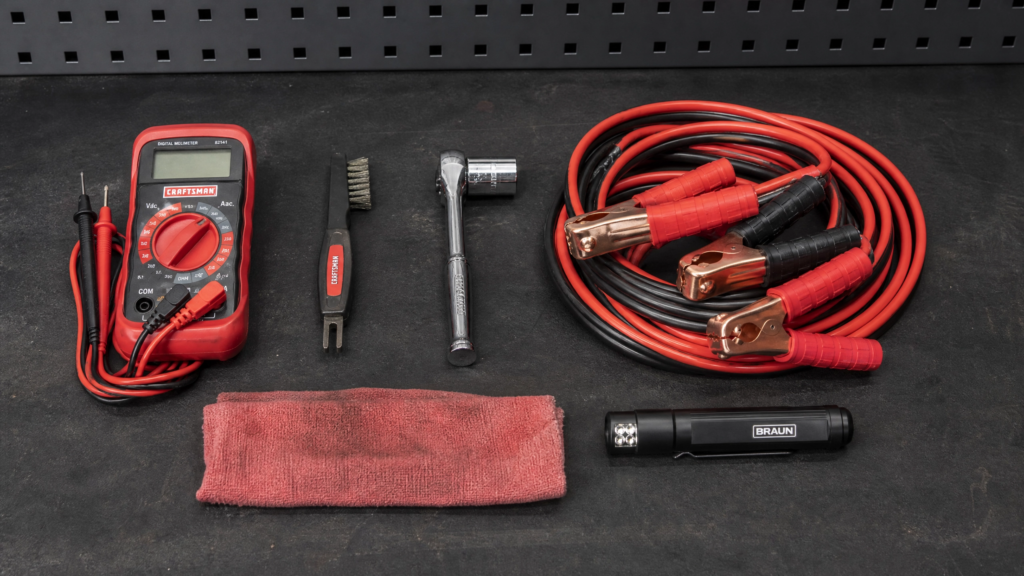
When someone rolls into my garage with a starting problem, I run through this in order:
- Look at the battery age and terminal condition first.
- Run a voltage test with the engine off (should be 12.6V+).
- Jump-start the car and see if it stays running.
- Run a voltage test with the engine running (should be 13.5–14.8V).
- Turn on all electronics and watch for voltage drops.
- Check the serpentine belt visually.
- Check the alternator fuse.
Follow that order and you’ll know exactly what you’re dealing with before spending a single dollar. Most of the time, the answer is obvious by step 3 or 4.
Got a question about your specific car? Drop it in the comments below. I read every one. And if this saved you money, share it — your buddy with the flickering dashboard lights probably needs it too.





Leave a Reply