

I’ve lost count of how many Saturday mornings I’ve spent flat on my back in the driveway, knuckles skinned, trying to get a downpipe bolt to line up that just won’t cooperate. That’s the part nobody puts in the YouTube thumbnail. Performance upgrades are fun, but they’re also messy, occasionally frustrating, and every now and then they teach you a hard lesson about torque specs.
I’ve built a few project cars over the years — a daily-driven hatchback that got a little too quick for its own good, and a weekend track car that ate a set of brake pads every other month. Along the way I’ve made good calls and a few dumb ones. This guide is everything I wish someone had told me before I started bolting parts onto my own cars.
We’ll go through the ten upgrades that actually move the needle, what they cost in real money, and where people usually trip up installing them.
Performance Upgrades at a Glance
| Upgrade | Pros / Benefits | Cons / Considerations | Best For |
|---|---|---|---|
| Cold Air Intake Engine |
|
|
Beginners looking for their first performance modification. |
| ECU Tuning Electronics |
|
|
Turbocharged vehicles and serious power seekers. |
| Performance Exhaust Engine |
|
|
Enthusiasts wanting a balance of sound and flow. |
| High-Performance Tires Handling |
|
|
Every driver; the single best handling upgrade. |
| Suspension (Coilovers) Handling |
|
|
Handling junkies and occasional track day participants. |
| Brake Upgrades Safety |
|
|
Spirited drivers and anyone prioritizing safety. |
| Short Throw Shifter Drivetrain |
|
|
Manual transmission enthusiasts who love shifting. |
| Weight Reduction General |
|
|
Track-focused builds and performance purists. |
| Anti-Roll Bars Handling |
|
|
Drivers looking to fine-tune their cornering stability. |
| Forced Induction Engine |
|
|
Serious enthusiasts with a high budget for power. |
1. Cold Air Intake: The Easiest First Mod
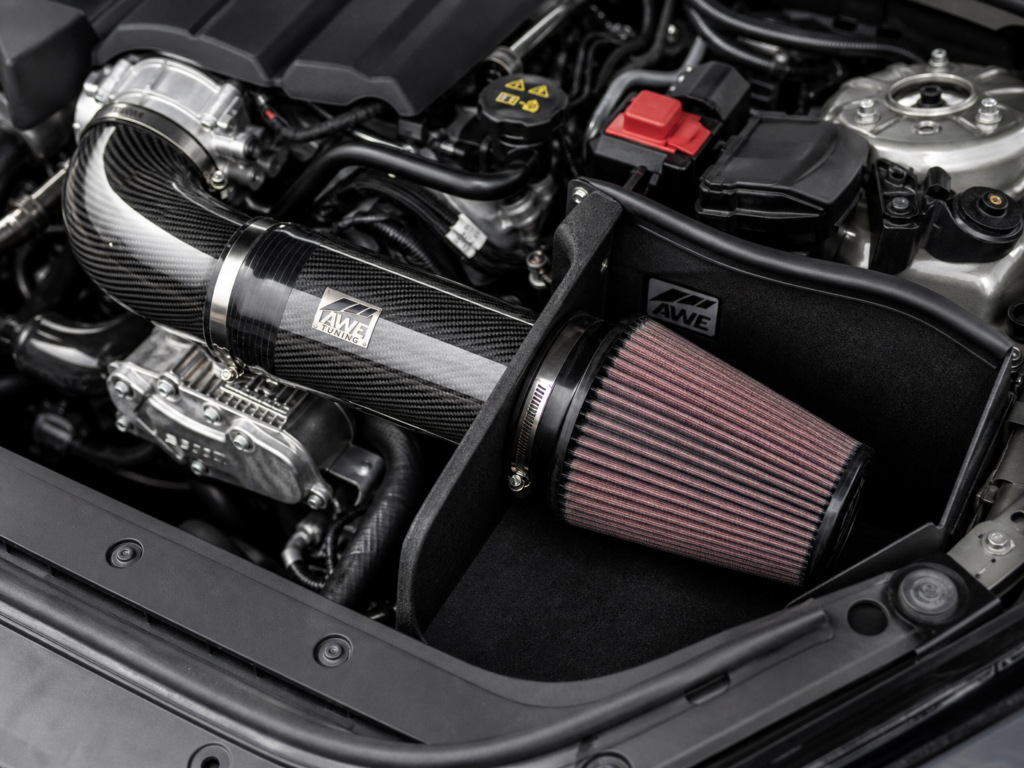
A cold air intake is usually the first thing people bolt on, and for good reason. Cold, dense air makes more power than hot air, plain and simple. Your factory airbox is built to be quiet and cheap, not fast — it sucks in warm air sitting right next to a hot engine block.
A CAI relocates the filter somewhere it can pull in cooler air from outside the engine bay. That denser air packs more oxygen per gallon, which means a more complete burn in the cylinders. You’ll notice quicker throttle response and a meaner intake snarl almost immediately.
Here’s my honest take: don’t expect huge horsepower numbers from a CAI alone. I’ve dyno’d a few and the gains were usually in the 5-10 horsepower range on a stock engine. It’s a great gateway mod, and it pairs well with other upgrades on this list.
A few things I’ve learned the hard way:
- Check your filter for oil residue every few thousand miles — a soaked filter can trip your MAF sensor and throw a check engine light.
- Don’t park where you’ll be driving through deep puddles right after install. Some intake setups sit lower and can hydrolock an engine if water gets sucked in. I’ve seen this kill an engine in under a minute.
- A 10mm socket and a flathead screwdriver for the hose clamps is usually all you need. This is a beginner-friendly job, an hour in the driveway, tops.
2. ECU Tuning: Where the Real Power Lives
If the cold air intake is teaching your car to breathe better, ECU tuning is rewiring its brain. The ECU (Engine Control Unit) controls fuel delivery, ignition timing, and on turbocharged cars, boost pressure. Every decision the engine makes runs through that little computer.
Factory tunes are conservative on purpose. Automakers have to account for bad gas stations, hot Arizona summers, cold Minnesota winters, and drivers who never check their oil. A tune strips out that built-in caution and optimizes things specifically for your car, your fuel, and your driving style.
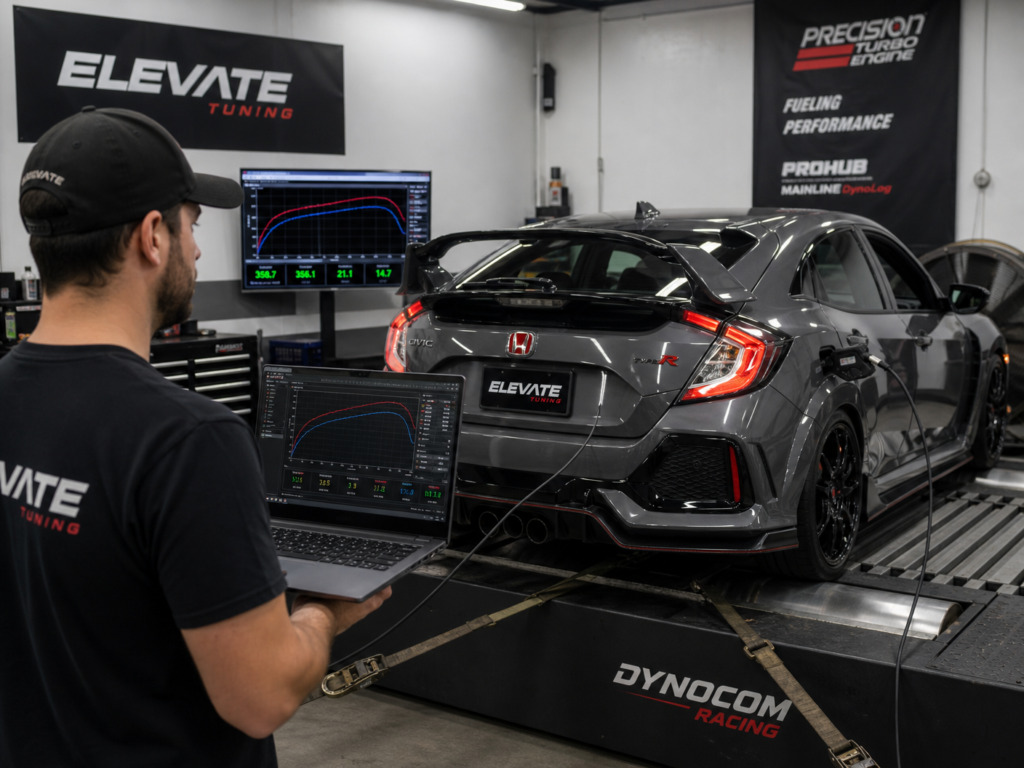
This is where the big numbers show up. I’ve seen turbocharged cars pick up 50-80 horsepower from a quality tune alone, no other parts needed.
Here’s where I get protective with people: pick your tuner carefully. A bad tune can run an engine too lean, spike knock, or push boost higher than your internals can handle. I’ve talked to guys who melted pistons chasing an extra 20 horsepower from a sketchy file off a forum.
What to actually do before you tune:
- Ask for dyno proof, not just “trust me” numbers.
- Check reviews specific to your exact engine code, not just the brand of the car.
- Make sure you’re running the fuel octane the tune calls for — running 87 octane on a tune built for 93 is asking for detonation.
3. Performance Exhaust: Letting the Engine Exhale
Breathing in matters, but breathing out matters just as much. Stock exhaust systems are designed around cost and noise restrictions, which means they create backpressure that chokes the engine slightly on its way out.
A performance exhaust reduces that backpressure so spent gases clear out faster, which frees up a bit more horsepower and torque, plus a much better sound.
You’ve got options here, ranked roughly by cost and effect:
- Axle-back — just the muffler section, mostly for sound, smallest power gain
- Cat-back — everything from the catalytic converter back, moderate power gain
- Turbo-back/header-back — the whole system, maximum flow, biggest gain (and biggest price tag)
I always recommend stainless steel over aluminized steel if your budget allows it. Aluminized rusts out in 4-6 years in salt-belt states; stainless can last the life of the car.
One warning I give every single person who asks me about this: check your local emissions and noise laws before you buy anything. Removing or modifying a catalytic converter is illegal for street use in plenty of states, and some exhaust setups are technically “off-road use only” even though shops sell them like they’re street legal. Get pulled over with a gutted cat and you’re looking at a fix-it ticket at best, an emissions test failure at worst.
4. High-Performance Tires: The Upgrade Everyone Skips
This one isn’t glamorous, and that’s exactly why people overlook it. Tires are the only part of your car actually touching the road. No amount of horsepower matters if your tires can’t put that power down.
Swapping to a grippier, performance-oriented tread compound transforms how a car corners, brakes, and accelerates. I tell people all the time: if you only have money for one upgrade on this entire list, spend it on tires.
I learned this lesson on my own hatchback. I’d put a tune and an intake on it, felt great about the power gains, then went to an autocross event on the same all-season tires I’d had for three years. I got smoked by stock cars on sticky summer tires. Power means nothing without grip.
Picking the right tire for your driving:
- Summer performance tires — best dry and wet grip, but they get hard and lose grip below about 45°F
- All-season performance — a compromise for daily drivers who see real winter weather
- Track day / R-compound tires — incredible grip, but they wear out fast and aren’t great in rain
Don’t cheap out here. Tires are a safety item first, a performance item second.
5. Suspension Upgrades (Coilovers/Springs): Taming the Body
For handling-focused builds, this is where the real transformation happens. Swapping factory springs for stiffer aftermarket springs, or going to a full coilover kit, lowers your center of gravity and tightens up body control in corners.
Lowering springs alone drop the ride height and stiffen things up a bit, but you’re stuck with one setting.
Coilovers give you adjustable ride height and damping (how fast the suspension compresses and rebounds), and some kits let you dial in camber too. You can set it up soft and comfortable for the daily commute, then stiffen it for a track day.
Here’s the warning I give every customer who wants to slam their car to the ground: going too low wrecks your suspension geometry. I’ve seen cars lowered so aggressively that the control arms sit at a bad angle, eating tires unevenly and actually hurting handling instead of helping it. Looks aren’t the same as performance.
My honest recommendation: for a street car that occasionally sees a track day, get a quality adjustable coilover kit rather than fixed lowering springs. You’ll thank yourself the first time you hit a pothole at highway speed.
6. Brake Upgrades: The Mod Nobody Brags About (But Should)
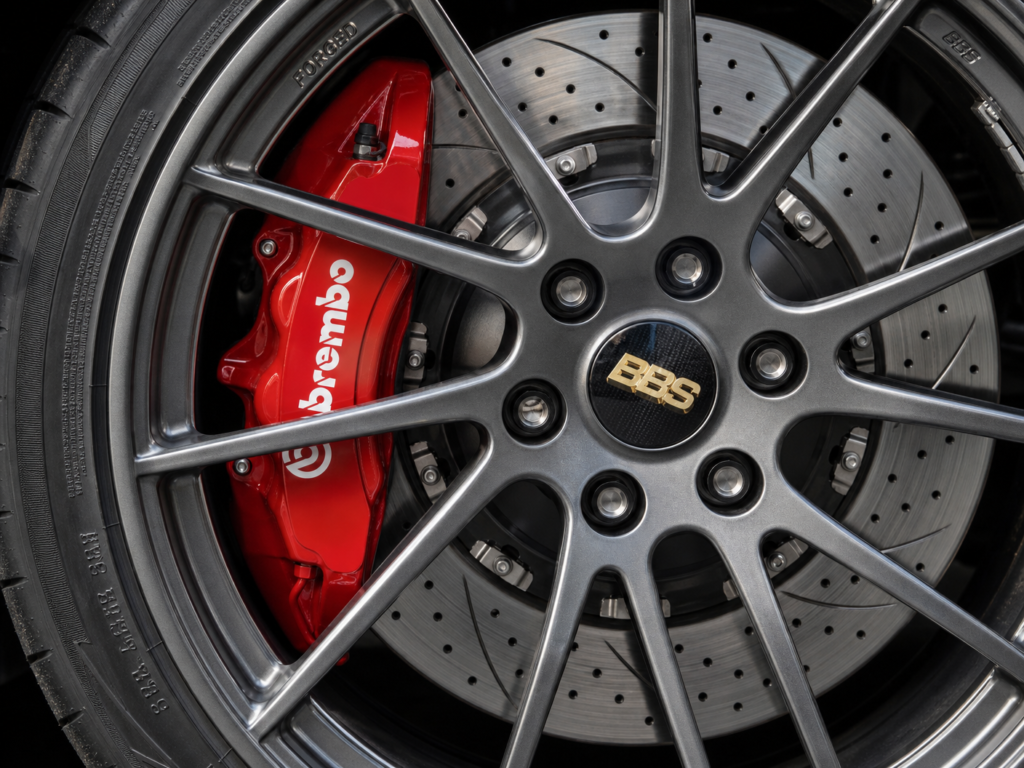
Adding power without adding stopping power is how people end up in the guardrail. I say this to every single person who asks me about engine mods first: upgrade your brakes before, or at minimum alongside, anything that adds horsepower.
Better brakes aren’t just a safety net — they’re a performance mod in their own right. Stopping later and harder into a corner means faster lap times and more confidence on a twisty road.
Your options, from cheapest to most serious:
- Performance pads — better bite and heat resistance, the cheapest place to start
- Slotted or drilled rotors — better heat dissipation, reduced brake fade under repeated hard stops
- Stainless steel brake lines — firmer pedal feel since they don’t expand under pressure like rubber lines do
- Big brake kits (BBK) — larger calipers and rotors for serious stopping power, and a serious price tag
A safety note from years of doing brake jobs: brake fluid will eat your car’s paint down to bare metal in minutes if you spill it and don’t wipe it up immediately. Keep a box of shop rags nearby whenever you’re bleeding brakes or topping off fluid. I’ve watched a single drop sit on a hood overnight and leave a permanent scar in the clear coat.
Also — if your car has ABS, clean the dirt and grime off the master cylinder reservoir cap before you open it. Debris that falls into the fluid can travel through the lines and ruin your ABS valves, and that’s a repair bill nobody wants.
7. Short Throw Shifter: The “Feel Good” Mod
If you drive a manual, this is one of the cheapest mods that makes the biggest difference in how the car feels. A short throw shifter reduces the distance the shifter travels between gears, which means quicker, tighter shifts.
It adds zero horsepower. I want to be upfront about that. What it does add is a sense of connection — every gear change feels more deliberate, more mechanical, more like you’re actually part of the drivetrain instead of just along for the ride.
The install is usually straightforward, but I’ll give you the warning every short throw shifter installer eventually learns: take your time lining up the new shift rails. Rush the install and you can end up grinding gears or missing shifts entirely, which is a much worse driving experience than the stock long-throw shifter you started with.
8. Weight Reduction: The Upgrade That Costs Nothing (Or Everything)
Power isn’t the only way to go faster. Cutting weight helps acceleration, braking, and handling all at once, because you’re moving less mass in every direction.
Common ways people shed pounds:
- Pulling rear seats and sound deadening (track cars only — please don’t do this to your daily driver)
- Swapping to lightweight wheels, which also reduces unsprung weight and helps suspension response
- Carbon fiber body panels, if your budget allows
- A lighter battery, often one of the easiest swaps
A rule of thumb I picked up from years around race shops: losing 100 pounds is roughly equivalent to adding 10 horsepower, except it also helps you brake and corner better, which a horsepower gain alone never does.
The catch is obvious — strip your interior and your car gets loud, uncomfortable, and impractical fast. This is a track-car move, not something I’d recommend for a car you drive your family around in.
9. Anti-Roll Bars (Sway Bars): Fine-Tuning the Balance
Anti-roll bars connect the suspension on both sides of the car and resist body roll in corners. Stiffer bars — and most aftermarket ones are adjustable — keep the car flatter through turns, which keeps your tires planted and your contact patch consistent.

The mechanics of it: as your car corners, the outside suspension compresses and the inside extends. A stiffer sway bar resists that motion, transferring force between the two sides and keeping the body flatter overall.
Here’s the tuning trick that took me a while to really understand: a stiffer front bar pushes the car toward understeer, a stiffer rear bar pushes it toward oversteer. If your car feels like it wants to push wide in corners, look at softening the front bar or stiffening the rear, and vice versa if the back end feels loose.
Adjust one click at a time and drive it before making another change. Sway bar tuning is trial and error, and overcorrecting in one session is a rookie mistake I made plenty of times myself.
10. Forced Induction (Turbo or Supercharger): The Big Swing
If raw power is the goal, this is the ceiling. Bolting on a turbocharger or supercharger forces more air into the cylinders than the engine could ever pull in on its own, and more air means you can burn more fuel, which means a lot more power.
Turbochargers use exhaust gas to spin a turbine, which drives a compressor that forces air in. They make serious power but have a touch of lag — a brief delay before boost really kicks in.
Superchargers are belt-driven straight off the engine, so there’s no lag at all. They typically top out a bit lower than a well-built turbo setup, but the power delivery is instant.
I won’t sugarcoat this one: forced induction is not a weekend bolt-on. It almost always demands supporting upgrades — a beefed-up fuel system, better cooling, sometimes stronger internal engine components like forged pistons and rods — plus a professional tune to actually make it all work together safely.
This is the mod where I tell people to budget double what they think they’ll spend, and to find a shop with real experience on your specific engine, not just a general performance shop. Done right, it’s intoxicating. Done wrong, it’s an engine rebuild.
Take this Quiz to Find Your Perfect Upgrade
Find Your Perfect Upgrade
Answer 3 quick questions to see where you should start.
What is your primary goal?
What is your budget?
How do you use your car?
Building Your Own List
Every car, budget, and driving style is different, and the upgrades that make sense for a daily commuter look nothing like what makes sense for a dedicated track car. Start with what matches your actual use case, not what looks coolest on a spec sheet.
A few honest priorities from someone who’s bolted on most of these:
- Tires and brakes come first, every time, no exceptions.
- Pick one or two mods and live with them before stacking five at once — it’s easier to diagnose problems that way.
- If a mod requires “supporting modifications” to be safe, budget for those too, not just the headline part.
Modifying a car is genuinely one of my favorite parts of owning one. It’s also a hobby that rewards patience and punishes shortcuts.
A quick disclaimer, because I’d be doing you a disservice not to say it plainly: performance modifications can void your factory warranty, affect emissions compliance, and run into local vehicle codes. Check your state’s regulations and talk to a qualified shop before any major install, especially anything involving the exhaust, emissions equipment, or engine internals.
Car Performance MODs ROI Calculator
Horsepower sounds great until you see the invoice. Before you drop money on any upgrade, it helps to know roughly what you’re getting for every dollar spent. Pick a mod below, plug in what it’ll actually cost you installed, and I’ll break down the estimated power gain and cost per horsepower so you can see which upgrades give you the most bang for your buck.
Performance ROI Calculator
Estimate the “Bang for your Buck” for each upgrade.
Related posts:
 Winter Car Preparation Guide: Essential Cold-Weather Maintenance Tips
  Ultimate Guide to Car Audio System Upgrades: From Basics to Audiophile Bliss
  Brake Fluid Breakdown: Understanding DOT Ratings and When to Bleed Your Braking System
  Why Is Your Car Leaking Clear Fluid? (How to Identify 5 Common Leaks)
Leave a Reply