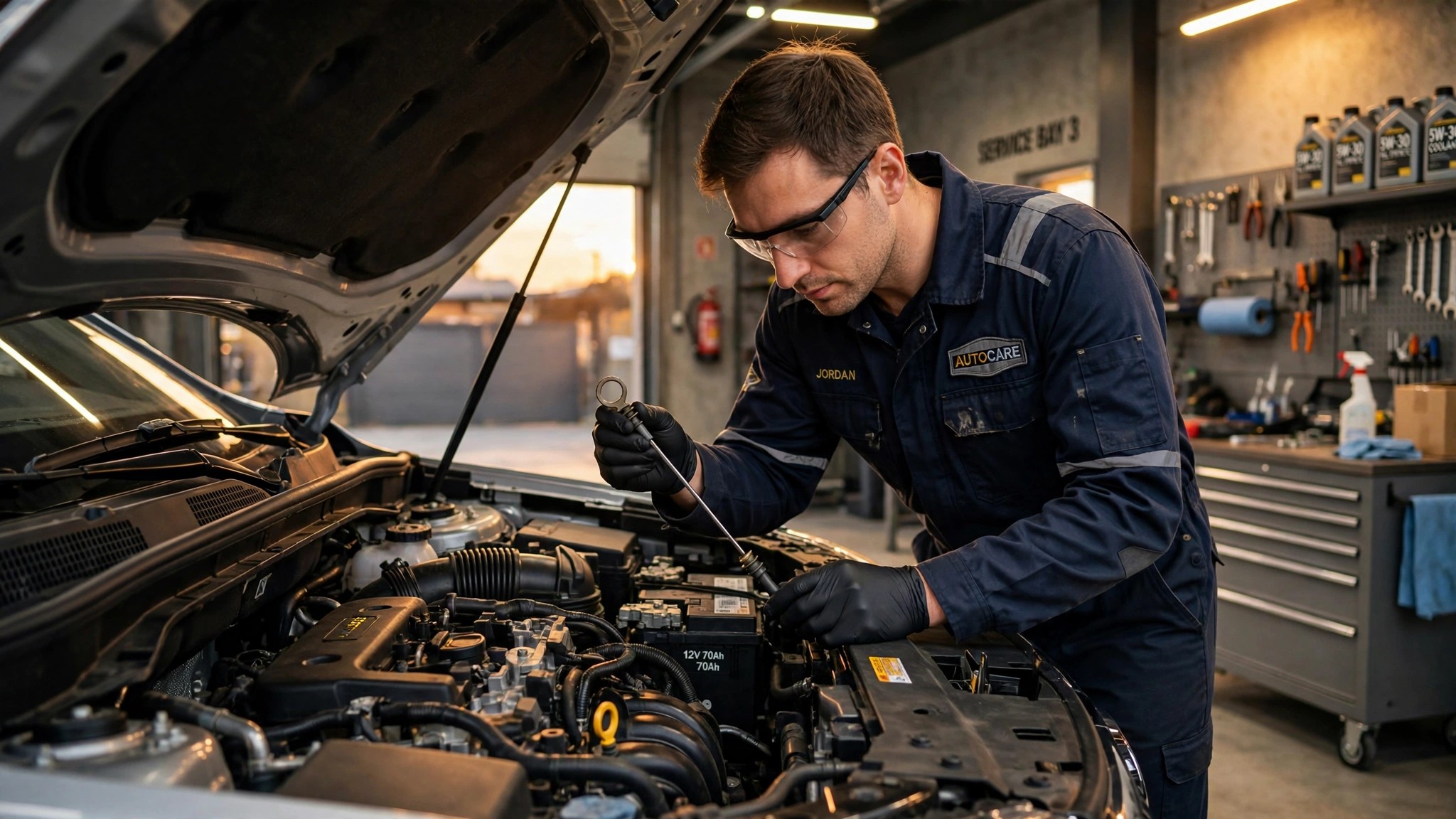
Transmission fluid rarely gets attention until the gearbox starts slipping. By then you’re looking at a big bill. ATF is not just oil — it’s hydraulic fluid, coolant, and clutch friction control in one. Let’s make sure you know when to check it and what to pour.
What Transmission Fluid Does
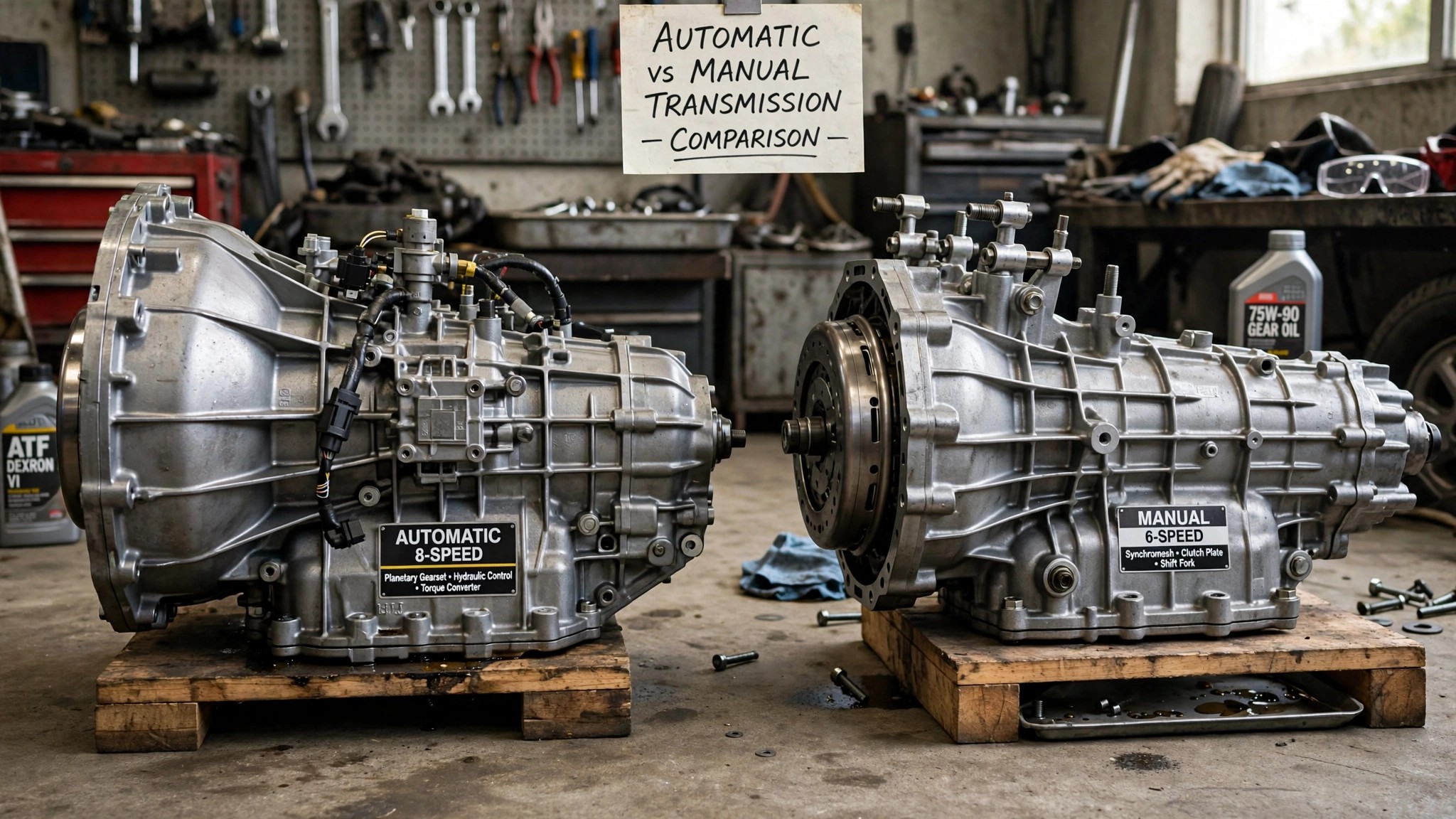
In an automatic, fluid does four jobs. In the torque converter it transfers power from engine to transmission through fluid coupling. Under pressure it pushes clutch packs and bands to shift gears. It carries heat from those clutches to the cooler in your radiator. And it lubricates planetary gears and bearings.
Manual gear oil is simpler. It lubricates gear teeth and synchros and handles extreme pressure where teeth mesh. It’s thicker, usually 75W-90, and doesn’t need friction modifiers for clutches.
The Main Fluid Types
Automatic Transmission Fluid (ATF)
- Dexron VI: GM standard, backward compatible to Dexron III. Many GM and other brands use it.
- Mercon V, Mercon LV, Mercon ULV: Ford specs. LV is low viscosity for 6+ speeds, ULV is ultra-low for 10-speed.
- ATF+4: Chrysler/Dodge/Jeep. Must be ATF+4, not Dexron.
- CVT Fluid: For belt/chain CVTs. Uses special steel-on-steel friction control. Never use regular ATF.
- DCT Fluid: Dual-clutch gearboxes have two clutches and need specific additive package, sometimes two fluids (one for clutches, one for gears).
- Type F: Older Ford, no friction modifiers, very firm shifts.
Manual Gear Oil
- 75W-90 GL-4: Most manuals. Protects synchros that are made of brass.
- 75W-90 GL-5: Differentials, higher extreme pressure. Can be too slippery for some manuals and cause crunching shifts.
- 75W-140: Heavy duty, towing, high heat, trucks and performance diffs.
Rule: use exactly what manual lists. If it says Toyota WS, Honda DW-1, Nissan Matic S, or ZF Lifeguard 8, use only fluid that lists that approval on back label. Clutch material is tuned to that fluid. Wrong modifier = shudder or slip.
How to Check Your Level
Some cars have dipstick, many new ones are sealed with a check plug under car. If you have dipstick, check monthly.
Dipstick Method
- Warm engine to operating temp. Drive 10 minutes, shift through P-R-N-D and back.
- Park level, engine running, foot on brake, in Park.
- Pull dipstick, wipe clean, reinsert fully, pull again.
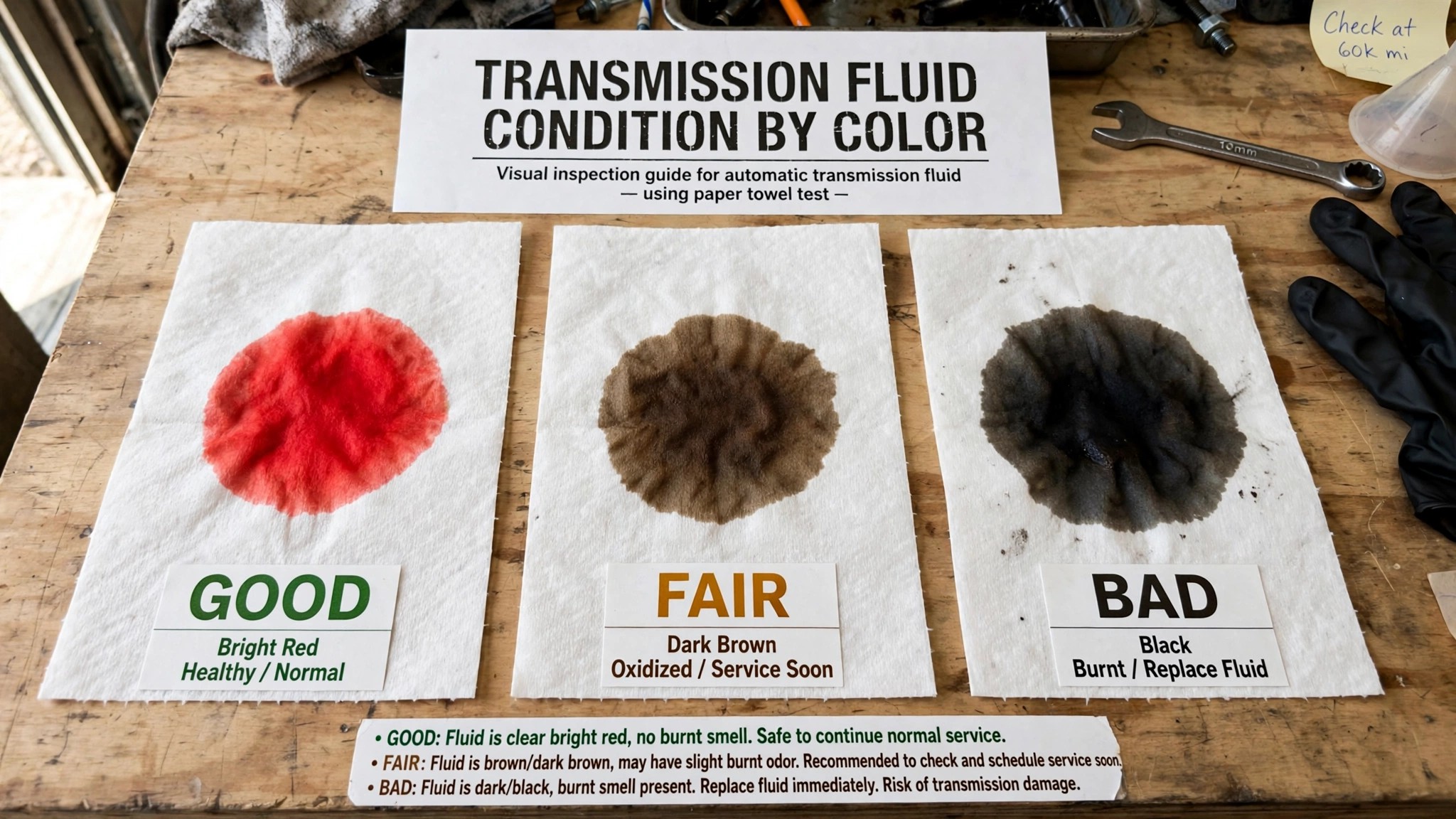
- Level between HOT marks, color bright red/pink, smell slightly sweet, not burnt.
Sealed Method (no dipstick)
You need lift, scan tool to read trans temp (often check at 35-45°C), and you remove check plug. Fluid should dribble out at correct temp. This is shop job for most DIYers, but you can still spot leaks and symptoms early.
When to Change
| Type | Normal | Severe |
|---|---|---|
| Traditional automatic | 60k-100k miles | 30k-60k |
| CVT | 30k-60k | 25k-40k |
| DCT | 40k | 30k |
| Manual gearbox | 30k-60k | 30k or when notchy |
| Rear diff | 30k-60k | 30k if towing |
Severe means towing, mountains, stop-and-go city, hot climate, frequent short trips. Most cars qualify as severe even if brochure says lifetime fluid. Lifetime often means lifetime of warranty, not lifetime of car.
Drain and Fill vs Flush
Drain and fill drops pan or opens drain, replaces 40-60% of fluid. Gentle, safe, recommended every 30k-50k. Do it twice with a short drive between and you replace ~80% over time without shock.
Power flush uses machine to push new fluid through, replaces 90%+. Great when fluid is still red. Risky when fluid is black at 150k miles and never changed and transmission still shifts okay — flush can dislodge debris that was holding a worn clutch together and clog valve body. In that high-mileage, never-serviced, still-working case, many shops recommend leaving it alone or doing one gentle drain and fill only.
How to Choose Right Bottle Fast
- Open manual, find ATF spec line. Write it down exactly.
- Check dipstick or cap — many say Dexron VI or ATF+4 right on it.
- Read back label. It must list your spec, not just say compatible with many.
- For manual, confirm GL-4 vs GL-5. If manual says GL-4, don’t use GL-5 unless label says GL-4 compatible or yellow metal safe.
- Buy from brand that shows license number, not mystery bottle.
⚙ Transmission Fluid Checker & Type Finder
Quick Symptom Quiz
Why Lifetime Fluid Is a Myth
Many manuals say transmission fluid is lifetime fill. What they mean is lifetime of warranty, often 100k miles. Inside, clutch material sheds particles, fluid oxidizes, and additives wear out. Used oil analysis shows ATF viscosity can drop 20% by 60k miles in city driving. That means thinner film and more slip. Changing fluid at 50k-60k is cheap compared to rebuilding at 120k.
CVT Special Care
CVTs don’t have gears, they have belt or chain on cones. Fluid is critical for metal-on-metal friction control. Wrong fluid causes belt slip and overheating. CVT fluid also degrades faster because of high shear. If you have Nissan, Subaru, Toyota CVT, change at 30k-40k if you do hills or city traffic. And never neutral drop or rock car aggressively to get unstuck — that overheats CVT belt in seconds.
Manual Gearbox Feel
If manual shifts get notchy when cold, oil is too thick or worn. Fresh 75W-90 GL-4 often restores smooth synchro action. If you drive in very cold climate, consider 75W-80 for easier cold shifts, if manual allows. For track use, some drivers use 75W-140 for extra film strength, but it can make cold shifts stiff.
Towing and Heat Management
Towing raises trans temp 30-50°C. Above 115°C, fluid life halves for every 10°C extra. If you tow, add auxiliary cooler if not factory equipped, and change fluid at half normal interval. Watch temp with OBD2 scanner — many cars show trans temp in live data. If you see 120°C+ regularly, change fluid sooner.
DIY Mistakes to Avoid
- Checking ATF cold and thinking it’s low — most dipsticks have cold and hot marks, use hot after driving
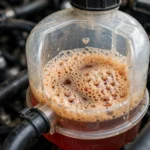
- Overfilling. Too much ATF foams and causes slip and overheating
- Using GL-5 in manual that needs GL-4 — sulfur additives corrode brass synchros
- Mixing CVT fluid with ATF
- Reusing old crush washer on drain plug — it will seep
Cost Breakdown and When to See a Specialist
Drain and fill with OEM fluid: $150-$300 at independent shop. Dealer may charge $300-$500 for sealed trans with temp procedure. CVT fluid is pricier, $20-$35 per quart, and CVT holds 7-9 quarts total. If transmission already slips badly, fluid change rarely fixes worn clutches — you need diagnosis. If delay is only when cold and improves when warm, fluid is likely cause. If slip happens hot under load, clutch pack is worn.
Keeping Records
Write down date, mileage, fluid type, and how much was drained. If you do two drain and fills to replace more fluid, note both. This helps next owner and helps shop know what’s inside. Mixing unknown types is biggest cause of shudder after service.
Warning Signs
- Red puddle under center of car
- Burnt toast smell under hood
- Rev flare: engine revs up but car doesn’t accelerate
- Hard or delayed shift, especially cold
- Shudder/vibration at steady 35-50 mph — often torque converter clutch
- Whine that changes with gear, not engine speed
If you see any of these, check level now. Low fluid can overheat and burn clutch packs in one long hill climb. Top up with correct spec if low, look for leak at cooler lines, pan gasket, axle seals. Don’t keep driving hoping it fixes itself.
Final Habit
At each oil change, ask to check trans fluid condition if accessible. Keep a note of mileage when it was changed. A clean, correct fluid is the cheapest insurance against a $3,500 to $6,000 rebuild. Check monthly if you have dipstick, watch for leaks if sealed, and always use exact spec.
FAQ: Transmission Fluid
Is sealed for life really sealed? No pan has drain plug and cooler lines. Sealed just means no dipstick. You can still service it.
Will changing fluid cause slip? If clutch is already worn out, new thin fluid can reveal slip that old thick dirty fluid was hiding. That’s not caused by change, it was already worn.
Can I use universal ATF? Only if label lists your exact spec like Mercon LV, ATF+4, etc. Many universals claim to cover many specs but don’t have approval.
How do I find my spec fast? Check dipstick handle, oil cap, owner’s manual, and driver’s door jamb sticker for trans code. Or call dealer with VIN.
For those with all-wheel drive, remember transfer case and front differential also have fluid. They are often forgotten. Transfer case fluid is often ATF or special fluid, front diff is gear oil. Check both at 60k miles. If you hear whine from center or front under load, fluid may be low. These small boxes hold less than a quart, so even small leak empties them fast.

Leave a Reply