That Whine And The Weird Foam? I Know That Feeling
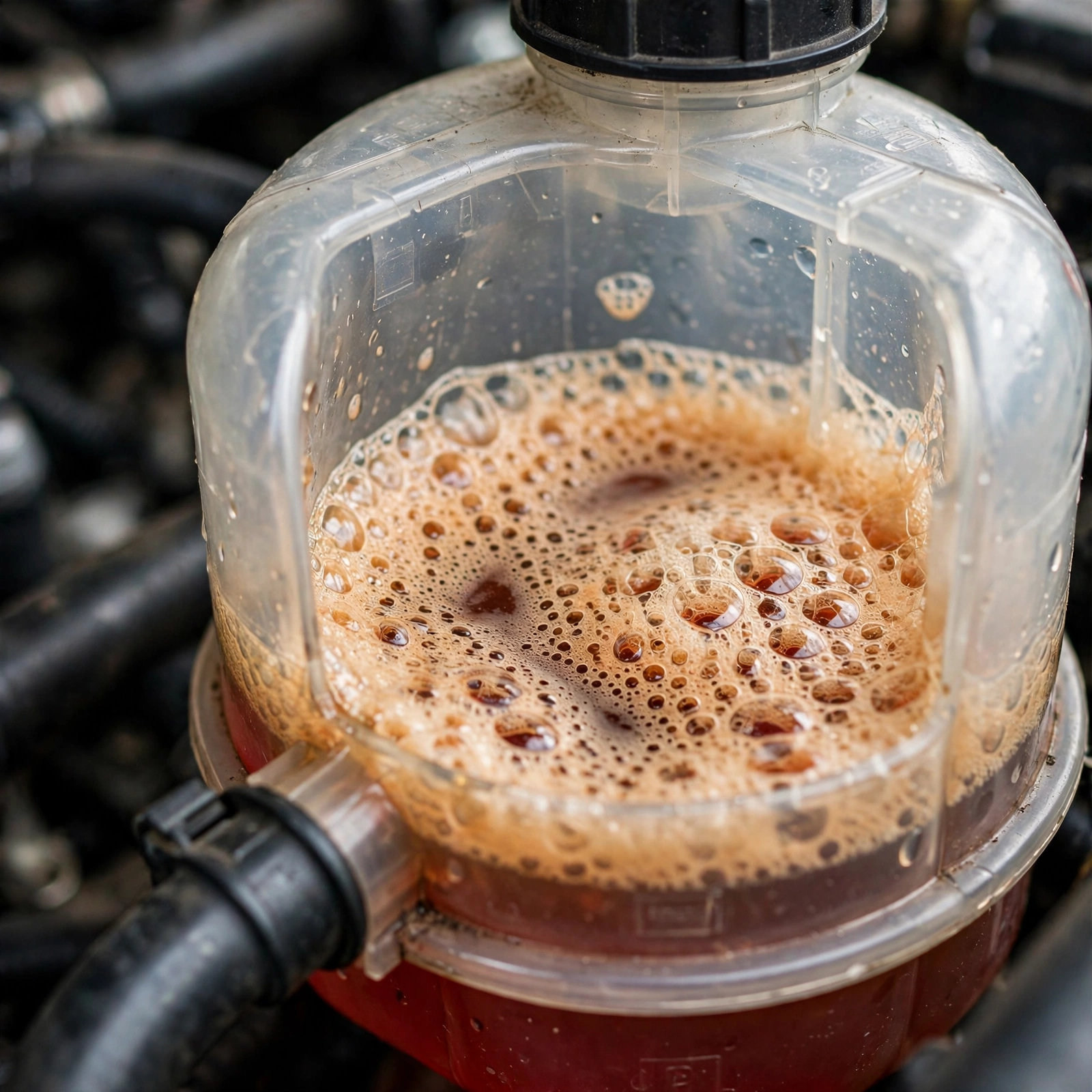
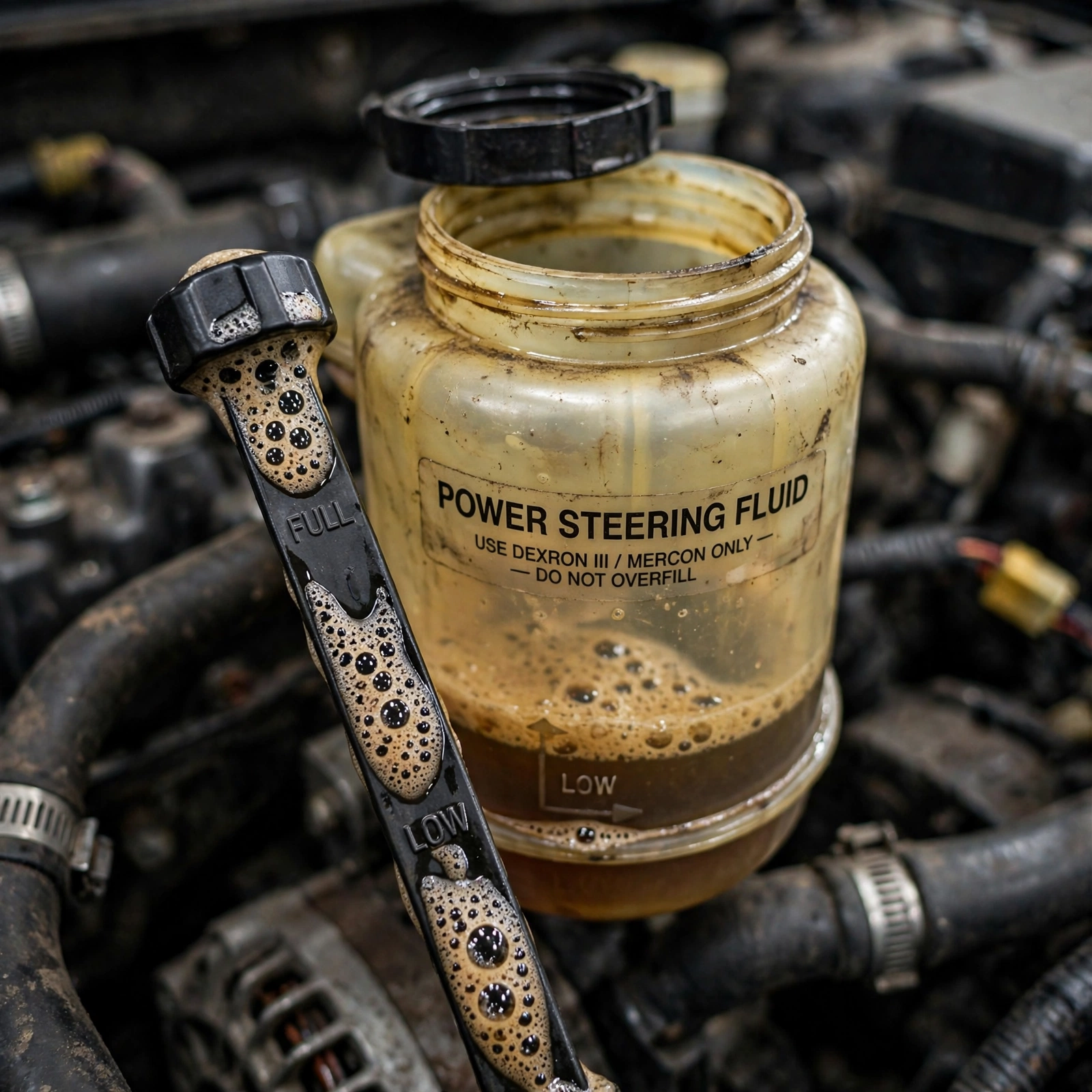
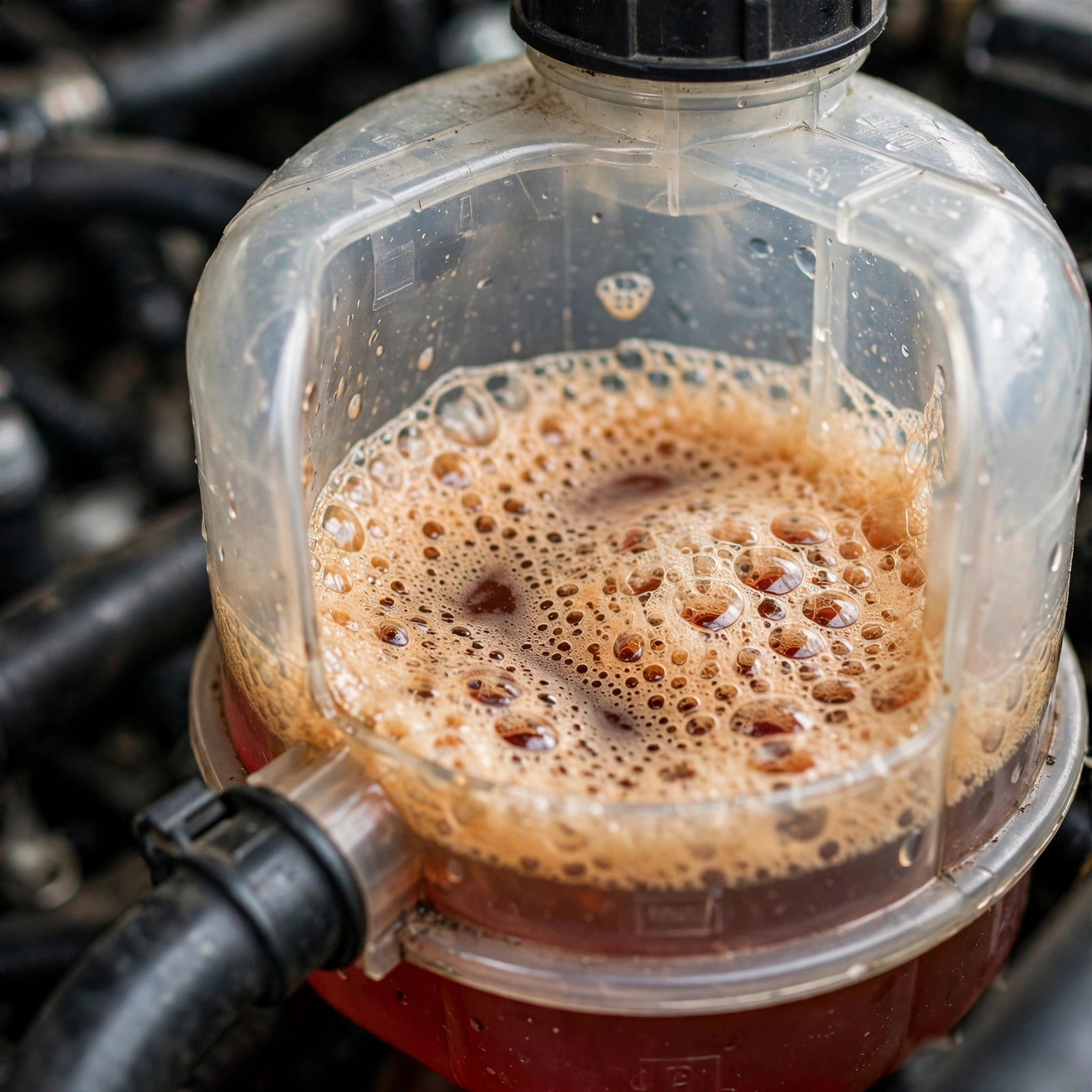
I was under my Mazda in the garage last winter, hands greasy, flashlight rolling around, and the reservoir looked like a root beer float. Foamy power steering fluid is not normal. I heard that classic whine on cold start and the wheel felt grabby in the parking lot. If you’re seeing bubbles, your system is either sucking air or starving for fluid — and those two feel different if you know what to look for.
I’ll walk you through how I check the level correctly, how to tell air leak vs low level, what tools you actually need, and how to bleed it without making a mess. This takes about 20 minutes and one rag you don’t care about.
What Power Steering Fluid Actually Does
Power steering is a hydraulic system. The pump — driven by your serpentine belt — pushes fluid at 800-1500 PSI to the rack. Fluid is the muscle. When air gets in, it compresses. Muscle turns to sponge. You get noise, hard steering, and that cappuccino foam.
- No pressure, no assist — air bubbles collapse under load
- Pump hates foam — dry vanes score and whine gets louder
- Seals hate wrong fluid — more on that below
How to Check Power Steering Fluid The Right Way
Park on level ground. I’ve learned this the hard way checking on my sloped driveway — you’ll get a false low reading.
Tools You’ll Need
- Nitrile gloves and a rag — fluid eats paint and stains
- Flashlight — you need to see the reservoir walls
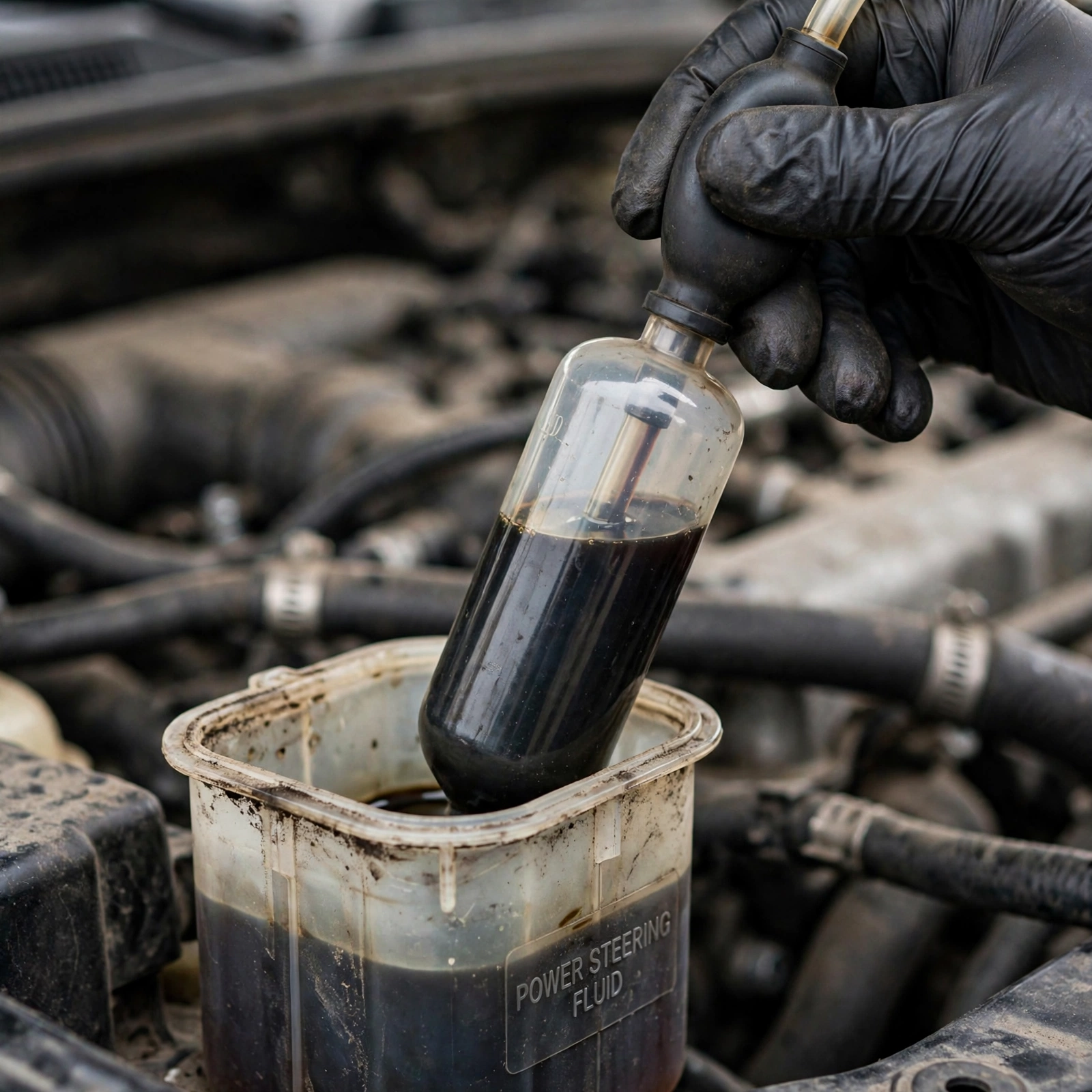
- Turkey baster or vacuum siphon if fluid looks burnt
- 10mm socket for reservoir bracket bolts on many Toyotas and Hondas
- Flare nut wrench 14mm-18mm if you chase leaks at the pressure line
Step-By-Step Check
- Engine off, cold if possible. Safety: clean dirt off cap before opening. Grit kills ABS valves and the pump. One spec of sand scores the spool valve. Wipe the cap area first.
- Find the reservoir. Usually a translucent white or black cap that says Power Steering. On Hondas it’s on the passenger side pump. On many Fords it hides behind the serpentine belt cover.
- Check HOT vs COLD marks. Most dipsticks have both. If you just drove, use HOT. If it sat overnight, use COLD. You’ll see little crosshatches — fluid should sit in the middle of those, not at the top lip.
- Pull, wipe, re-dunk, read. Yes, like checking oil. Screw-type caps: screw it fully down then pull. Push-in caps: push fully. Look at color too — fresh is clear amber or pink. Dark brown/black means burnt — change it.
- Smell and feel. Burnt toast smell? Pump’s been hot. Rub between fingers — gritty means metal or hose debris.
- Check with engine running. Have a buddy turn wheel lock-to-lock while you watch reservoir. If level drops 1/4 inch and foams instantly, you’ve got an air leak on the suction side.
Pro tip: If your cap is leaking, the small O-ring inside shrinks. Honda part is about $6. Tighten reservoir bracket bolts to 7-9 ft-lbs (10-12 Nm) — over-tightening cracks the plastic.
Why Your Fluid Is Foamy: Low Level vs Air Leak
Foam always means air. Question is — where’s it coming from? I keep a mental chart in the garage.
| Symptom | Low Level | Air Leak (Suction Side) |
|---|---|---|
| Fluid level in reservoir | Below LOW, often empty-ish | Full or even high due to bubbles |
| When foam appears | After driving, mostly on hard turns | Immediately on start-up, even at idle |
| Noise | Whine when turning, quiet straight | Constant whine/growl, worse cold |
| Steering feel | Heavy then normal after top-off | Jerky, foamy overflow out cap |
| Leak signs | Wet pressure hose, rack boots | Suction hose clamp, O-ring at pump inlet |
Scenario 1: Low Fluid
This is the easy one. Small seep at the high-pressure hose crimp or rack end seals weeps over months. Level drops, pump sucks air at the top of the reservoir on turns, makes latte foam. Top it off and it goes away for a week or two — then returns because you didn’t fix the leak.
Common leak points: pressure hose fitting at pump — needs 18mm flare wrench, torque to 21-28 ft-lbs (28-38 Nm). Rack boot torn and dripping means internal seals gone — that’s a rack job.
Scenario 2: Air Leak — The Sucker Side
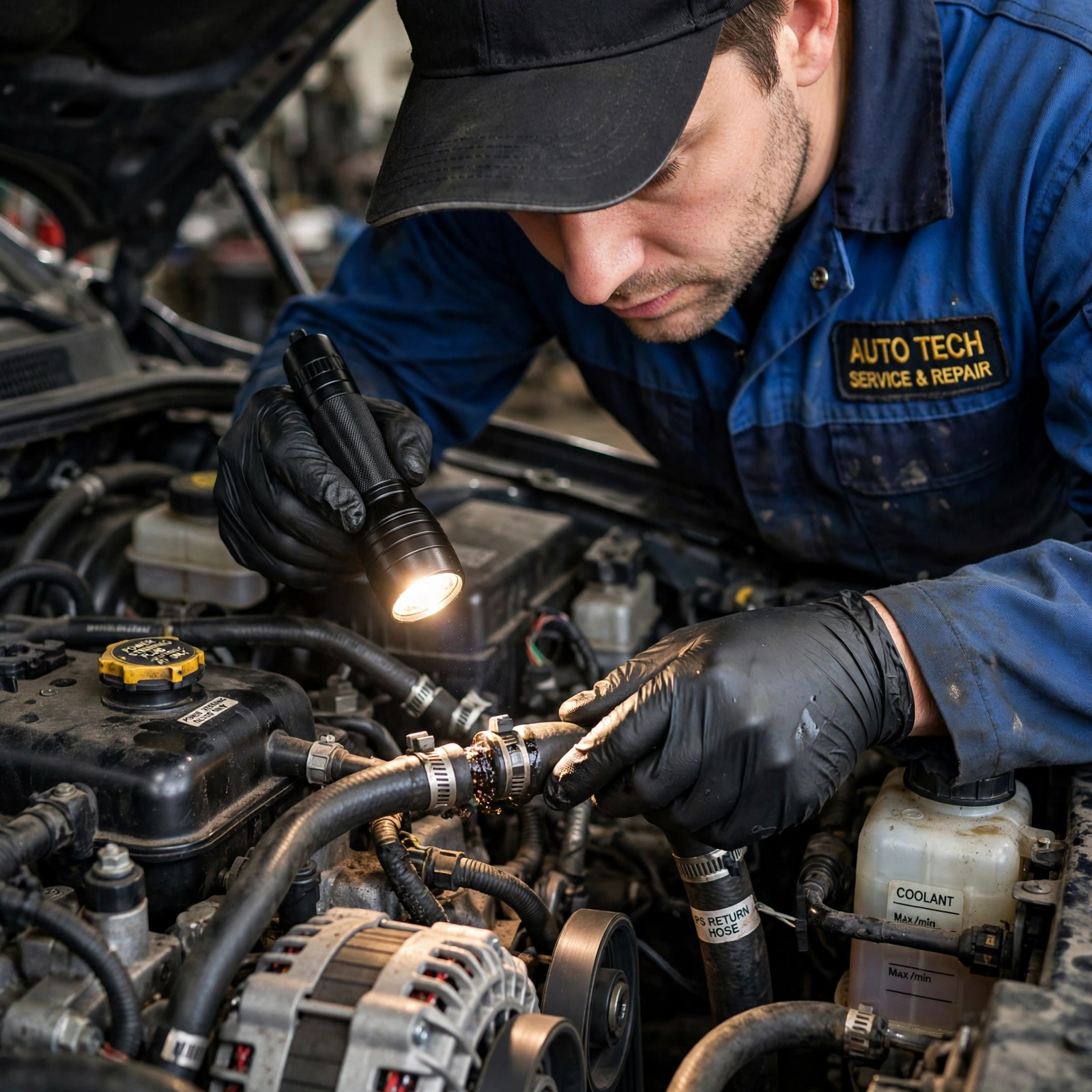
This one’s sneaky. The suction hose runs from reservoir to pump. It’s low pressure. If the clamp is loose, hose cracked underneath, or the inlet O-ring is hard, it sucks air but doesn’t drip much. So you see full reservoir but foamy as hell. That’s your clue.
- Check the return hose clamp with a 10mm socket or flathead — tighten to just snug, about 25 in-lbs. Those worm clamps cut old rubber.
- Wiggle the hose while engine idles. Bubbles increase? Bingo.
- On older Hondas/Acuras: the pump inlet O-ring P/N 91345-RDA-A01 is famous. A $2 O-ring fixes a $400 noise. I keep two in my toolbox.
- Cracked reservoir — hairline at bottom nipple. Feel for wet oil film. Replace, don’t RTV it.
Don’t Mix Fluids: ATF vs Synthetic (Europe vs Japan vs US)
This is where folks wreck pumps. Cap usually says what to use. No guessing.
- Most older US/Asian domestic (Toyota, Ford, Lexus, GM up to ~2010): Dexron III / Dexron VI ATF. It’s red. Works fine.
- Honda/Acura: Honda-specific PSF — not ATF. Using ATF swells seals and makes steering hard when cold. Bottle says “Honda Power Steering Fluid”.
- Many European (BMW, VW, Audi, Mercedes, Volvo post-2000): Green synthetic CHF 11S / CHF 202. Do not put ATF in these. It will kill the $800 pump and reservoir with built-in filter. Cap is green for a reason.
- Some newer Toyotas, Lexuses: WS ATF or electric EPS — no fluid at all. If you have electric steering, no reservoir.
If you mixed? Siphon it out immediately with a turkey baster. You’ll see milky separation. Don’t run it. Flush twice.
Quick Flush Without A Helper (Turkey Baster Method)
You don’t need to crack a pressure line unless it’s really burnt. I do this in my driveway.
- Hot coolant burns — wait for engine to cool. Siphon reservoir with turkey baster into bottle. Get as much out as you can.
- Fill with correct new fluid to FULL HOT.
- Jack front up — use 19mm lug wrench to loosen, jack stands rated for your car. Both wheels off ground so you’re not dragging tires.
- Engine OFF, turn wheel lock-to-lock 20 times slowly. This bleeds without pump cavitation.
- Siphon again, refill, repeat twice until color looks new.
- Engine on, repeat lock-to-lock 10 times, keep reservoir topped. Don’t hold at full lock more than 3 seconds — you stall the pump at 1500 PSI and cook it.
- Lower car, check level, check for bubbles. No foam after 2 minutes idling? You’re good.
Bleeding Air After You Fix The Leak
Replaced clamp or O-ring? You still have air trapped in rack. That foam won’t clear itself on many cars.
- Use the lock-to-lock method above but engine off first.
- Keep cap off so air can escape — but put a rag around neck so it doesn’t spit. Power steering fluid ruins paint to bare metal if it sits.
- If whine stays after 3 cycles, vacuum bleed: you can rent a hand vacuum pump, pull 20 in-Hg on reservoir for 2 minutes. Bubbles rush up.
- Torque for pump inlet bolt on many 4-cyl: 16 ft-lbs (22 Nm). Outlet high-pressure line: 27 ft-lbs (37 Nm). Don’t strip the aluminum pump body.
When It’s Not Air — Pump Failing Signs
If level is perfect, no leaks, new O-ring, bled, but still foamy and noisy — look closer.
- Metal flakes in fluid? Pump vanes wearing. Replace pump.
- Whine changes with RPM not steering? Bearing, not air.
- Heavy steering both ways? Check belt tension — serpentine should deflect ~1/4 inch. Glazed belt squeals.
- Rack leaking from boot? Internal bypass, aeration keeps coming back.
I once chased foam for two weekends on my brother’s Accord. New clamps, new fluid, still bubble bath. Turned out to be a pinhole in the suction hose underneath, hidden by the clamp. $12 hose from dealer fixed it. Look underneath, not just on top.
Maintenance Tips So You Don’t See Foam Again
- Check level at every oil change. Takes 30 seconds.
- Clean reservoir screen if yours has one — many Toyotas filter inside. Pull reservoir (two 10mm bolts) and rinse with new fluid, not carb cleaner.
- Change fluid every 50k miles or when dark. It’s cheaper than a $300 rack.
- Never use stop-leak as a fix — it swells everything then clogs the rack. Temporary at best.
- Keep belt in spec — loose belt lets pump cavitate and look like air leak.
Bottom Line
Foam is your early warning. If it’s low and foamy on turns, find the seep and top it. If it’s full and foamy at idle, you’re sucking air on the suction side — check that little O-ring and clamp before you buy a pump. I learned to wipe the cap clean first, use the right fluid for your car, and never hold it at full lock. Do that and your pump will stay quiet.
Got a whiner right now? Run the tool above, snap a pic of your reservoir, and check those clamps with a flashlight. Takes less time than running to the parts store.

Leave a Reply