You pull up to a light, shift into neutral, take your foot off the clutch, and hear a whirring sound from somewhere under the shifter. It might be soft. It might sound like a small turbine. Either way, you start wondering what it costs to rebuild a gearbox.
Take a breath. A whir in neutral is common, and your own left foot is the best diagnostic tool you have. Before I get to the causes, you need a picture of what’s actually spinning.
What’s Turning When You’re in Neutral
In neutral with the clutch pedal up, the engine is connected to the transmission’s input shaft. That shaft drives a second shaft called the countershaft, which carries a cluster of gears. Those gears turn the gears sitting loose on the output shaft. Nothing is locked to anything, so the car doesn’t move, but a lot of metal is spinning in a bath of gear oil.
That tells you something useful. A whir in neutral comes from the front half of the transmission, from the engine’s accessories, or from the clutch hardware. It does not come from the axles, the differential, or the wheels. Those are standing still.
The Clutch Pedal Test
Do this with the engine warm, the parking brake set, and the wheels chocked. Shift to neutral. Listen with your foot off the pedal. Then push the pedal to the floor and listen again.
What happens to the noise sorts your problem into one of three groups.

The Noise Goes Away When You Press the Clutch
Pushing the pedal disconnects the input shaft from the engine, so the input shaft and countershaft slow down and the noise drops. Quiet with the pedal down points inside the transmission.
- Worn input shaft bearing. This is the usual culprit. The bearing supports the shaft that the engine drives, and it’s spinning any time the clutch is up.
- Worn countershaft bearings. Same idea, a bit deeper in the case.
- Low or worn gear oil. Gears and bearings need a film of oil. Old fluid loses its grip, and low fluid leaves parts running dry.
- Worn gears. Less common in neutral, and you’d usually hear whine in specific gears while driving too.
The Noise Starts or Gets Louder When You Press the Clutch
This one surprises people. Pressing the pedal brings new parts into play, so a noise that appears with your foot down comes from the clutch hardware.
- Release bearing (also called the throw-out bearing). It presses on the clutch when you push the pedal. It only spins while the pedal is down, so a whir that shows up with the pedal is its signature.
- Pilot bearing or bushing. A small bearing in the end of the crankshaft supports the tip of the input shaft. When it dries out, it can squeal or whir with the pedal down, and it’s often worse when the engine is cold.
- Dry clutch fork pivot. A squeak or chirp more than a whir, but worth knowing.
The Noise Doesn’t Change
If the pedal makes no difference, look outside the transmission.
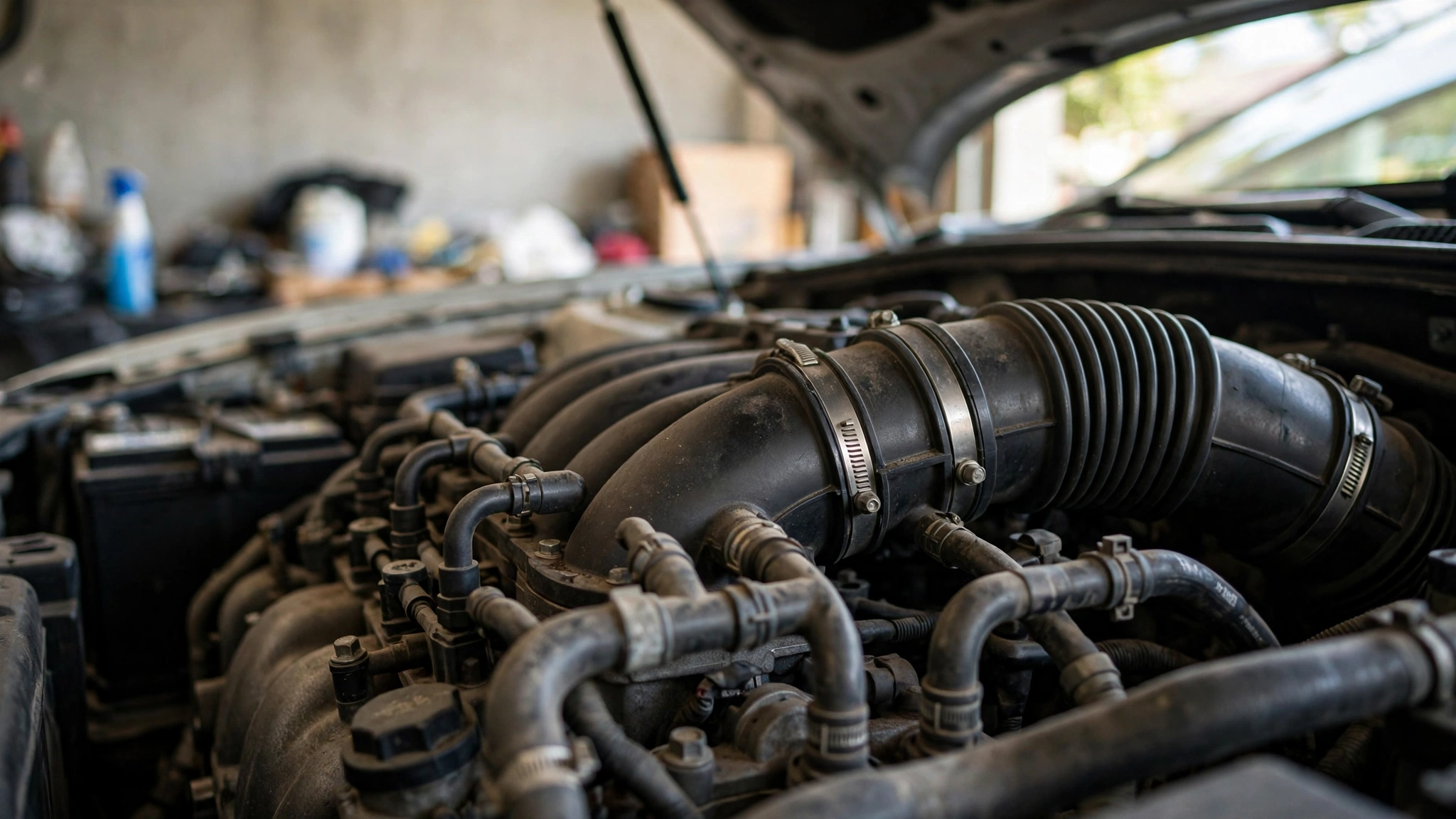
- Accessory bearings. The alternator, water pump, belt tensioner, idler pulley, and power steering pump all spin with the engine. A dry bearing in any of them whirs at the same pitch whether the clutch is up or down.
- Dual-mass flywheel. Many modern cars have a two-piece flywheel with springs inside. As it wears, it rattles or flutters at idle and smooths out as you rev. It’s more a rattle than a whir, but people describe it all kinds of ways.
Try the Clutch Pedal Test Tool
The tool below walks you through the same test, one question at a time. It ends with the likeliest cause and the next thing to check.
Check the Gear Oil Before You Do Anything Else
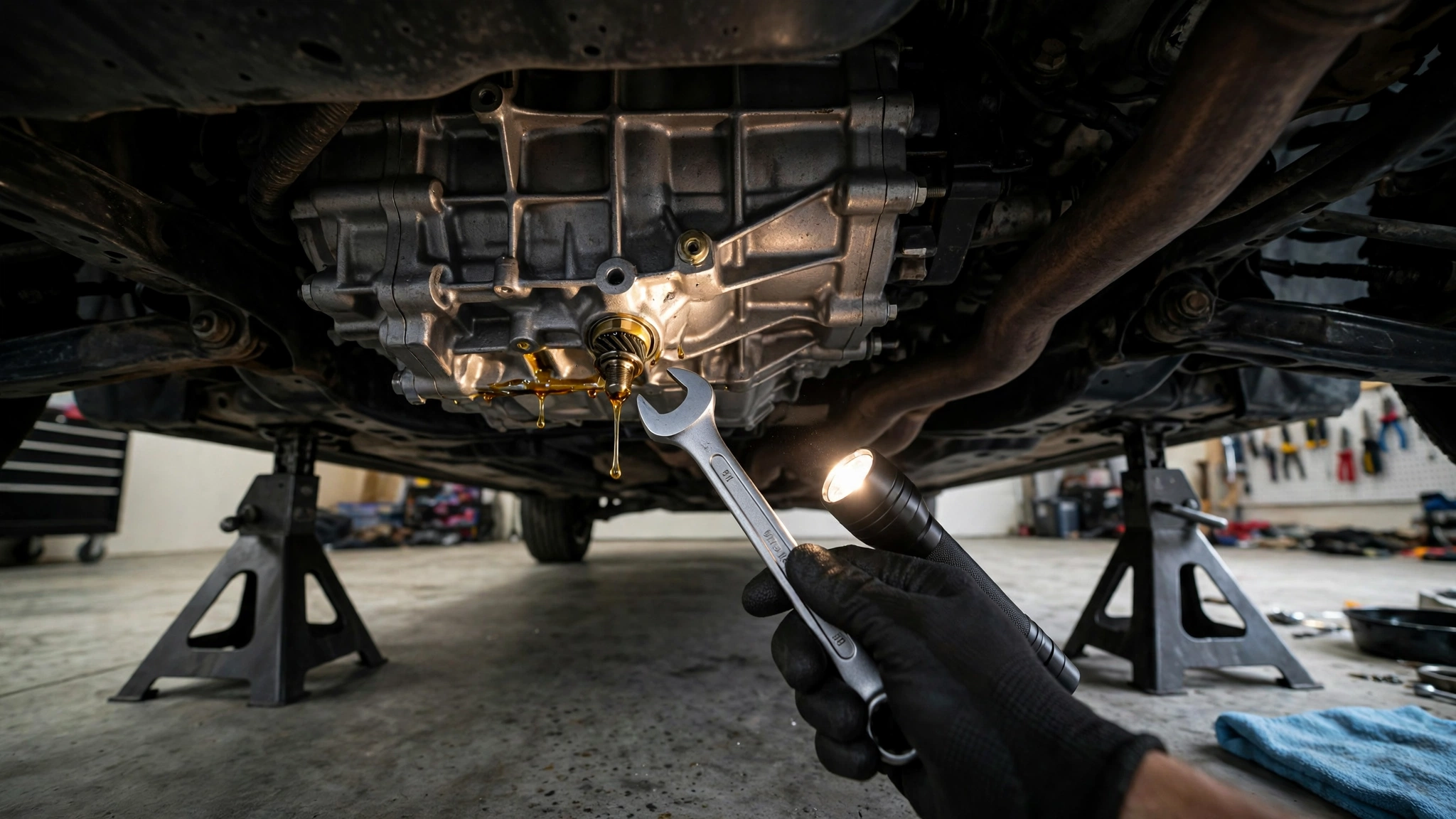
Fluid is the cheapest thing to rule in or out, so look at it early. Your owner’s manual shows where the fill plug sits, usually on the side of the transmission case.
- Park on level ground and let the engine cool. A hot case and hot oil are a bad combination when you’re working under the car.
- Support the car safely. Use jack stands, not just a jack, and chock the wheels that stay on the ground.
- Clean around the fill plug, then remove it. Dirt falling into the case causes its own problems.
- Check the level. On most transmissions, the oil should sit right at the bottom edge of the fill hole. A fingertip in the hole tells you.
- Look at the oil. Fresh gear oil is clear to amber. Dark, burnt-smelling oil is worn out. Shiny metallic glitter means parts are wearing.
- Top off with the exact fluid your manual lists. This matters more than people think. Some transmissions want gear oil, some want automatic transmission fluid, and some are picky about the API rating. The wrong fluid can hurt the synchronizers.
- If your transmission has a magnetic drain plug, a fine gray paste on the magnet is normal wear. Chips and flakes are not.
Is It Safe to Keep Driving?
A steady, soft whir with clean oil at the right level is not an emergency. Plenty of manual transmissions are simply louder than others, and a sound that has always been there doesn’t need a repair.
A noise that’s new, or getting louder, is different. Treat any of these as a sign to book a shop visit soon:
- A whine in a particular gear while driving
- Grinding when you shift
- Gears that pop out of place
- A shifter that feels notchy or hard to move
- Metal flakes in the oil
Bearings often fail slowly and then fast. A worn input shaft bearing can wobble the shaft enough to chew up the gear teeth it touches, and the repair bill grows with every mile.
What the Repair Usually Involves
The transmission has to come out of the car for most of these fixes. That’s a big job, which is why the order of operations matters.
- Input shaft or countershaft bearing: the gearbox comes out and gets opened up.
- Release bearing or pilot bearing: the gearbox comes out, and the clutch is right there.
- Accessory bearing: usually a simple bolt-on replacement with the car on the ground.
If the gearbox has to come out for any reason, ask the shop about replacing the clutch, the release bearing, and the pilot bearing at the same time. Parts are the smaller part of the bill. Most of the cost is labor, and you only want to pay for that labor once. The same goes for the rear main seal on the engine, which is easy to check while everything is apart.
Whir in Neutral vs. Whine in Gear
Don’t mix these two up, because they point to different places. A whir in neutral comes from parts that spin while the clutch is up. A whine in one particular gear while you drive comes from the gears carrying power in that gear, and it usually changes when you accelerate or let off. Worn gear teeth cause that second kind, and it leads to a different repair.
Here’s a quick way to compare. Coast in neutral at the speed where you heard the noise. A sound that follows road speed and stays in neutral comes from the wheels, axles, or differential, not from the front half of the transmission. A sound that follows engine speed and changes with the clutch pedal is the one this article covers.
Habits That Help a Manual Transmission Last
- Change the gear oil on schedule. Many owners skip it because it isn’t on the usual service list. Old oil is the easiest way to shorten a bearing’s life.
- Press the clutch all the way down before shifting. Half-pressed shifts wear the synchronizers.
- Keep your hand off the shifter. Resting weight on it presses the shift fork against the collar and wears both.
- Don’t ride the pedal. Resting your foot on it keeps the release bearing working when it doesn’t need to.
What to Tell Your Mechanic
A good description shortens the diagnosis. Tell them:
- Does the noise change when you press the pedal, and how?
- Is it worse cold or warm?
- Does the pitch rise with engine speed?
- Have you checked the gear oil level and color?
- Did the noise start after a specific event, like a fluid change or a clutch job?
Recording a short video with your phone near the shifter, then again with the hood up, gives them something to compare against what they hear.
Quick Answers
Is it normal for a manual transmission to make some noise in neutral? A little, yes. Spinning gears make sound. What matters is a change from how your car sounded before.
Will thicker gear oil quiet it down? Sometimes for a while, which is why it’s tempting. It’s also a way to hide a worn bearing while it keeps wearing. Use the grade your manual calls for.
Why does the noise go away when I shift into gear? Under load, the shafts push against their bearings in a different direction, and some bearing noise fades. Don’t take that as a sign the problem is gone.
Can low clutch fluid cause a whir? No. Hydraulic clutch fluid affects how the pedal feels, not the noise from the transmission. A spongy pedal or one that stays on the floor points there.
Do I need to ride the clutch pedal at lights? Don’t. Holding the pedal down at a stop keeps the release bearing spinning and wears it out sooner. Shift to neutral and let your foot off.
Start with the pedal test and the oil check. Together they take about fifteen minutes, and they narrow a scary noise down to one or two suspects. You’ll walk into the shop knowing what you’re talking about, and that’s the best way to keep the repair estimate honest.