

The first car I ever lowered, I did it badly, and I want to save you from doing the same. I was young and broke, so I bought the cheapest springs I could find and slammed the car way further down than I should have. It looked great in the driveway. In real life, I scraped the underside on my own street every morning, the shocks were overworked and clunking within months, and the alignment went out so fast the tires started wearing on the inside edges. It taught me the whole lesson of this guide in one expensive go: lowering done right makes a car better, and lowering done wrong just makes it worse in new and interesting ways.
There are three real ways to do it — springs, coilovers, and air — and they differ a lot in what they cost, how they drive, and how much fuss they are to live with. Let me walk you through each one the way I’d talk about them at the shop, plus what “safely” actually means, because that word is doing a lot of work in the title.
Why Bother Lowering It at All?
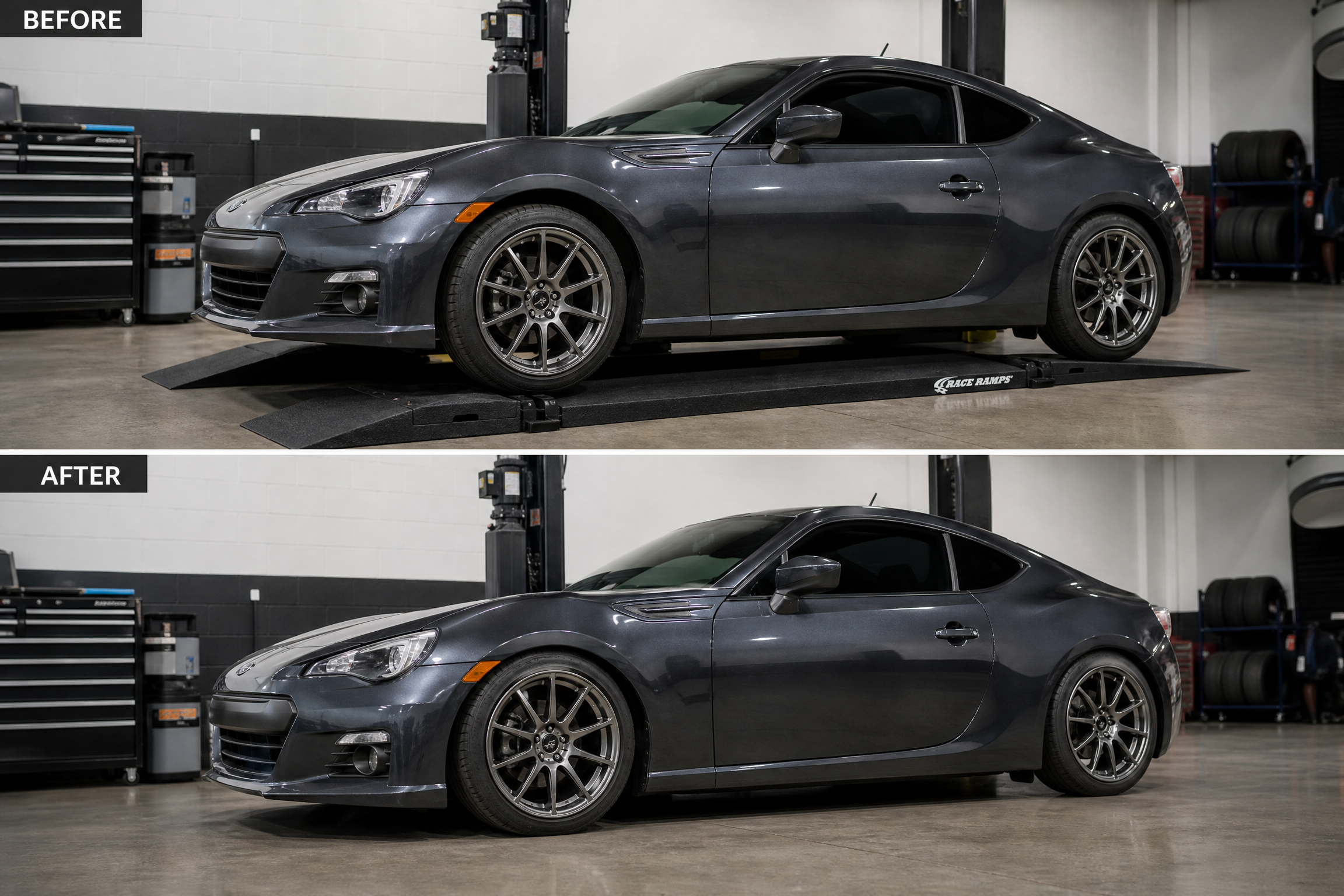
People do it for two reasons, and both are legitimate. One is looks, and there’s nothing wrong with that. A car sitting closer to the ground fills out its wheel wells and looks planted instead of perched. It’s the single change that alters how a car looks more than almost anything else.
The other reason is handling. Drop the center of gravity and the car leans less in corners and turns in a little sharper. Pair a sensible drop with a good alignment and decent tires and it genuinely drives better, not just stands better. The goal is to get those wins without wrecking the ride, scraping everywhere, or messing up the geometry. That balance is everything.
What “Safely” Actually Means Here
This isn’t just about the install going smoothly. It’s about what the new ride height does to the car while you’re driving it. Drop it too far or too carelessly and you run into real problems, some of which are safety problems, not just comfort ones.
The big one is running out of suspension travel. If the car bottoms out over bumps, the tire loses contact with the road, and that’s the opposite of grip. Then there’s camber, which is the tilt of the wheel. Lowering tilts the wheels, usually adding negative camber at the top. A little is fine and even helps the look. A lot eats the inside edge of your tires in a few thousand miles. And on a big drop, the angles the suspension works at change enough that you can get vague steering or bumpsteer, where the car steers itself over rough pavement.
For a street car that you actually drive, a sensible drop is in the one to two inch range. Past that you start needing extra correction parts and accepting real trade-offs. I know the temptation to go lower. Resist it unless you know what you’re signing up for.
Springs: The Cheap, Simple Way In
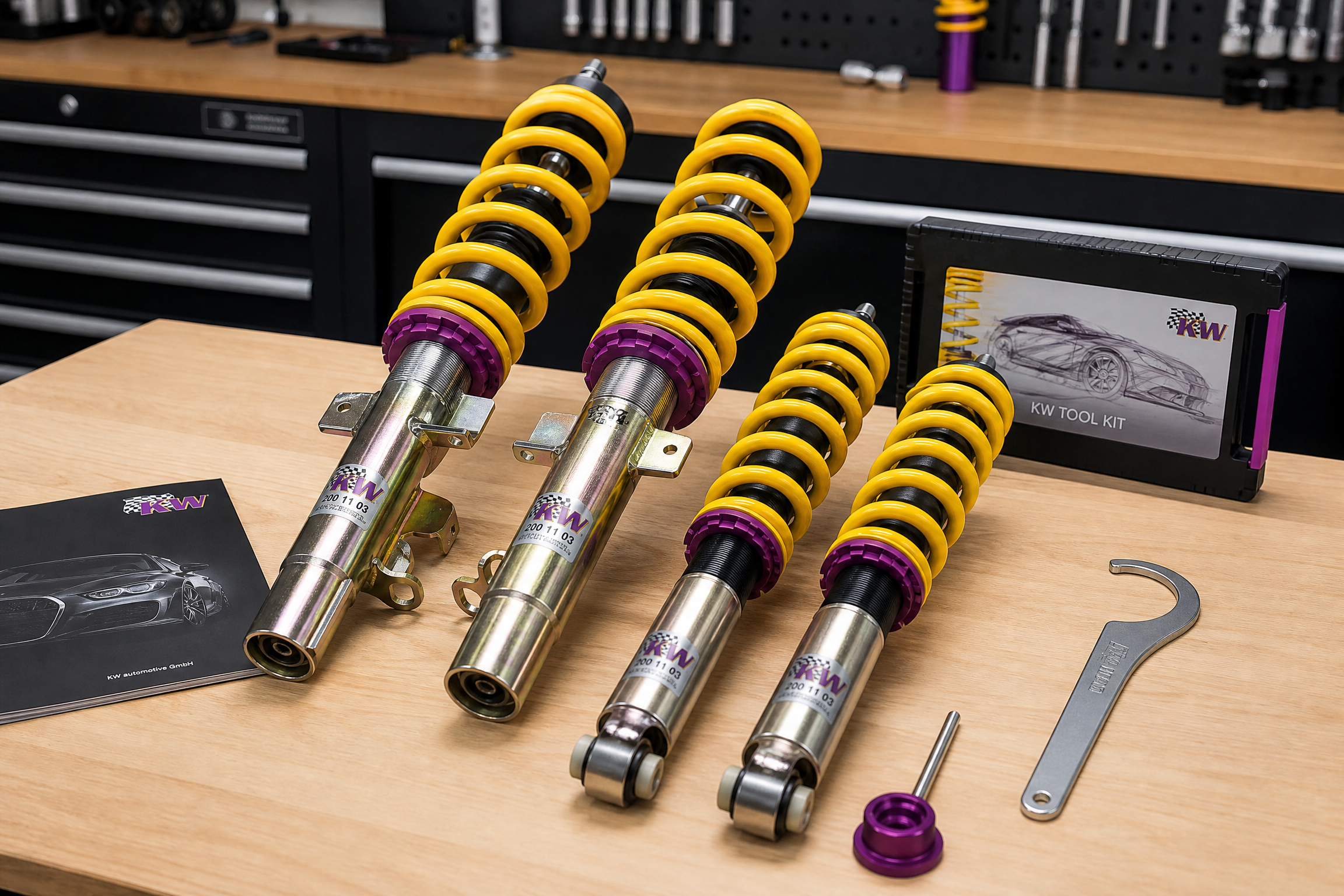
Lowering springs are exactly what they sound like — shorter, stiffer springs that replace the factory ones and drop the car, usually one to two inches. They’re a few hundred bucks for the set, which is why they’re where most people start, and that’s a fine place to start.
The ride gets firmware because the springs are stiffer, but on a mild drop with healthy factory shocks it’s totally livable. The one caveat is that a bigger drop will overwork the stock shocks and wear them out early, so if you’re going more than about an inch and a half, budget for upgraded shocks too.
Coilovers: When You Want to Dial It In
Coilovers replace the whole strut-and-spring assembly as one unit, and the name just means a coil spring sitting over the shock. They’re the choice when you want adjustability instead of a fixed drop.
You set the ride height by turning a threaded collar, so you can get the exact stance you want and change it later without buying anything new. Better sets also let you adjust how firm the damping is, anywhere from comfortable to stiff. That’s a real feature, not marketing, if you drive the car hard or you’re picky.
Here’s where I’ll be honest about money, because coilovers are where you really get what you pay for. The cheap ones, a few hundred bucks for the set, usually ride harsh and leak or get soft within a year. The good ones run a thousand to three thousand and up, and they ride better, last longer, and are often rebuildable. If your budget only reaches the cheap ones, you might actually be happier with a nice set of springs on good shocks than a bargain coilover. I’ve said that to friends and they’ve thanked me later.
Air Suspension: Slam It Parked, Raise It to Drive
Air replaces the springs with air bags that inflate and deflate to raise and lower the car on demand, run by a compressor and a tank with a controller. It’s the most expensive route, usually fifteen hundred to five grand and up once you factor in everything, but it solves the exact problem that made my first lowered car miserable.
The win is that you’re not stuck at one ride height. You can slam it to the ground when you’re parked and showing it off, then air it up to clear the driveway, the speed bump, or the steep parking garage. For a show car or a daily that still needs to get around the real world, that flexibility is genuinely great.
The trade-off is that more parts means more things that can fail. Air lines, fittings, the bags themselves, the compressor — it all needs attention, and a leak means the car wakes up on the ground. It’s also not the pick for hard track use. But maintained well, a good air setup is reliable, and the people who run them tend to love them. Just go in knowing it’s the most maintenance of the three.
The Three, Side by Side
| Factor | Springs | Coilovers | Air |
|---|---|---|---|
| What it costs | $200 – $600 | $800 – $3,000+ | $1,500 – $5,000+ |
| Adjustability | Fixed height | Height + damping | Full on-demand range |
| Ride quality | Firmer than stock | Depends on quality | Comfortable to firm |
| Best for | Budget, mild drop | Performance, fine-tuning | Show + daily flexibility |
| Fuss level | Low | Medium | Highest |
The Supporting Stuff People Forget
Lowering changes the geometry, so a few parts help you do it right instead of just low. You’ll probably want a way to adjust camber, whether that’s camber bolts or a proper kit, so you can stand the wheels back up and save your tire edges. An alignment after the install isn’t optional, it’s mandatory, and it should be set for the new ride height, not the old one.
Depending on the car and how far you go, shorter sway bar end links keep the bar working at the right angle, and on bigger drops a bumpsteer kit corrects the steering so it doesn’t get vague. You don’t always need all of it. A mild drop with an alignment and maybe camber correction covers most street cars. But if you’re going low, budget for the correction parts or the car will drive worse, and that defeats the point.
Installing It Without Hurting Yourself or the Car
Whichever route you pick, a few details separate a clean install from a frustrating one, and I’ve learned most of them the expensive way.
- Use real spring compressors when you take apart the factory struts. A coil spring holds a lot of energy, and if it slips it can hurt you badly. This is not a job for improvised tools or a prayer.
- Tighten the bushing fasteners at ride height. This is the one everybody misses. The control arm and end link bushings should be torqued with the car sitting at its normal height, not hanging in the air on a lift. If you torque them hanging, the bushings twist when the car comes down and they wear out fast and start clunking.
- Set both sides evenly and measure from the wheel center up to the fender lip to confirm it’s level. Eyeballing it usually leaves you crooked.
- Get the alignment right after, before you put real miles on it or drive it hard.
Living With a Lowered Car
A lowered car asks a little more of you, and a few habits make it painless. Take speed bumps slow, and if they’re aggressive, take them at a slight angle so one wheel crosses at a time instead of the whole front end dragging. Learn where your jack points are and get a low-profile jack and stands, because getting under it gets harder. If your garage or driveway is steep, ramps with a gentle approach angle become your friend. And give yourself a week to learn where your clearance limits are before you start trusting it in unfamiliar parking lots.
One More Thing: Check Your Local Rules
Some places have rules about minimum ride height or bumper height, and inspections in certain areas will flag a car that’s too low or missing pieces. Before you commit to a big drop, it’s worth a quick check of what’s allowed where you live. A great build that can’t pass inspection is a frustrating build.
Keeping It Alive
Springs are the least to worry about — just watch for sagging over time and keep the alignment right. Coilovers want clean threads, and when the shocks start leaking or getting soft you rebuild or replace them, which is easier if you bought a rebuildable set. Air needs the most love: check the fittings for leaks, drain the moisture out of the tank, and keep an eye on the bags for cracks or rubbing. A well-kept air setup is dependable. A neglected one will leave you parked on the frame.
Quiz: Which Lowering Method Is Right for You?
1. What’s the budget like?
2. What matters most to you?
3. How do you actually use the car?
4. How much upkeep do you want to deal with?
Related: Check out our guide on Upgrading Your Car Sound System: Speakers, Subwoofers & Amps Buying Guide.





Leave a Reply