
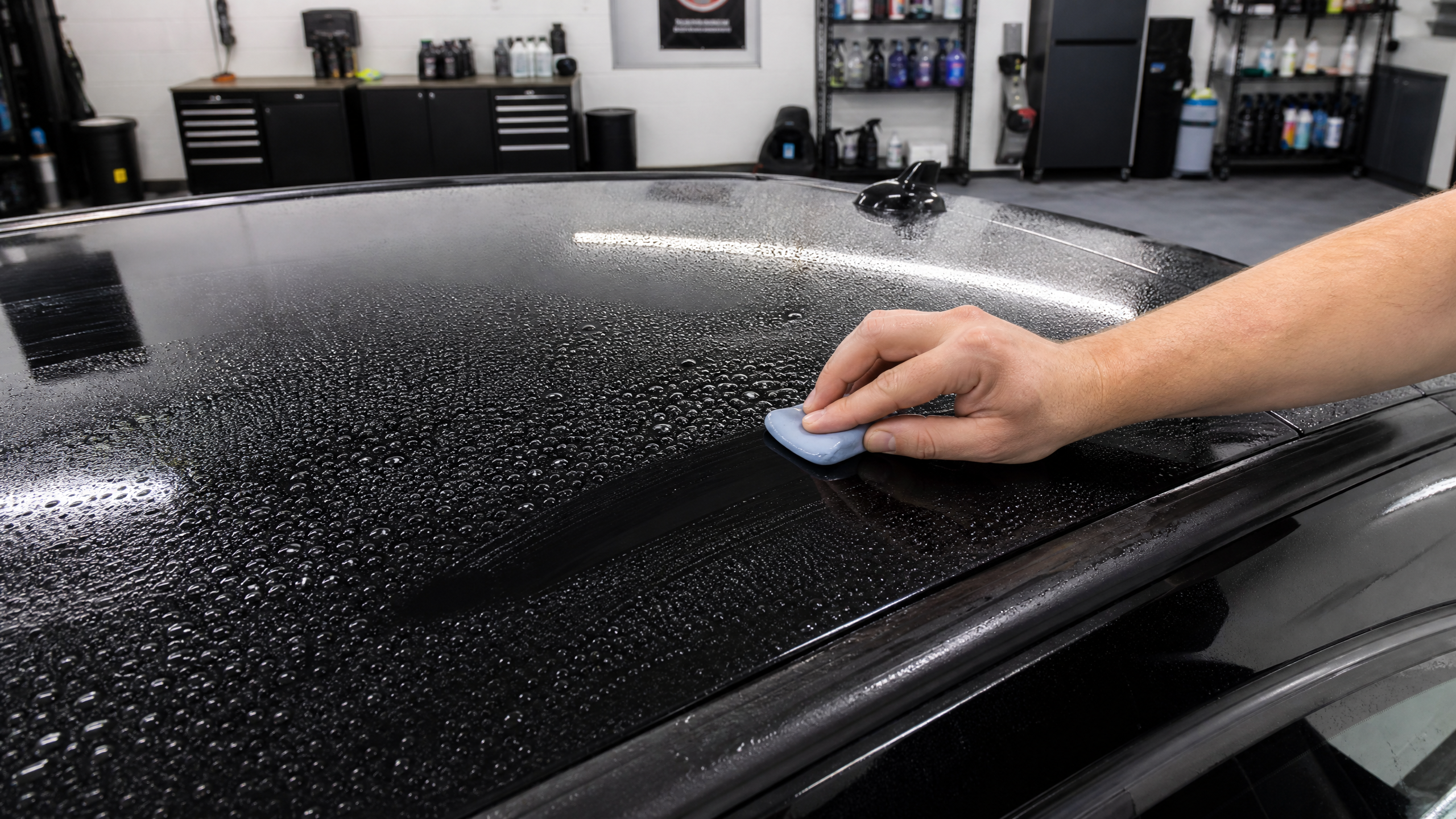
I once saw a guy try to “buff out” a dull finish on a black Mercedes with a high-speed machine and a heavy compound, only to make it worse. The paint wasn’t scratched; it was just loaded with fallout that his wash hadn’t touched. If he’d spent ten minutes with a clay bar first, he’d have saved his Saturday and the car’s clear coat.
Washing removes what’s on top of the paint. Claying removes what’s embedded inthe paint. Here’s the honest science of the clay bar, the “bag test” that never lies, and the technique that turns sandpaper paint back into glass.
The Enemy You Can’t Wash Away
Your paint is a porous surface, and at speed, it’s a target. Industrial fallout, rail dust (tiny metal shards from train tracks), brake dust, tree sap, and road tar all hit the paint and bond to it. Once they’re stuck, they won’t budge with soap and water.
If you wax or seal over these contaminants, you’re essentially laminating grit into your finish. It prevents the wax from bonding properly, and it makes the paint look dull and feel like fine-grit sandpaper.
The Bag Test: The Honest Truth
Wash and dry the car. Now, put your hand inside a thin plastic sandwich bagand slide it gently over the hood or roof. The plastic amplifies the texture of the paint.
If it feels like glass, you’re done. If it feels like a 5 o’clock shadow or a sheet of paper, you have embedded contaminants. That’s the clay bar’s job description.
The Kit, Assembled
- Clay bar(Fine or Medium grade). Fine is safer for beginners; Medium is for cars that haven’t been touched in years.
- Clay lubricant. You can buy dedicated lube, or use a spray bottle of water with a generous squeeze of car shampoo. Never use clay dry.
- Iron remover spray(optional but recommended). It dissolves the metal particles before you clay, making the job faster and safer.
- Clean microfiber towels.
- A bucket of clean water.
The Technique: Glide, Don’t Scrub
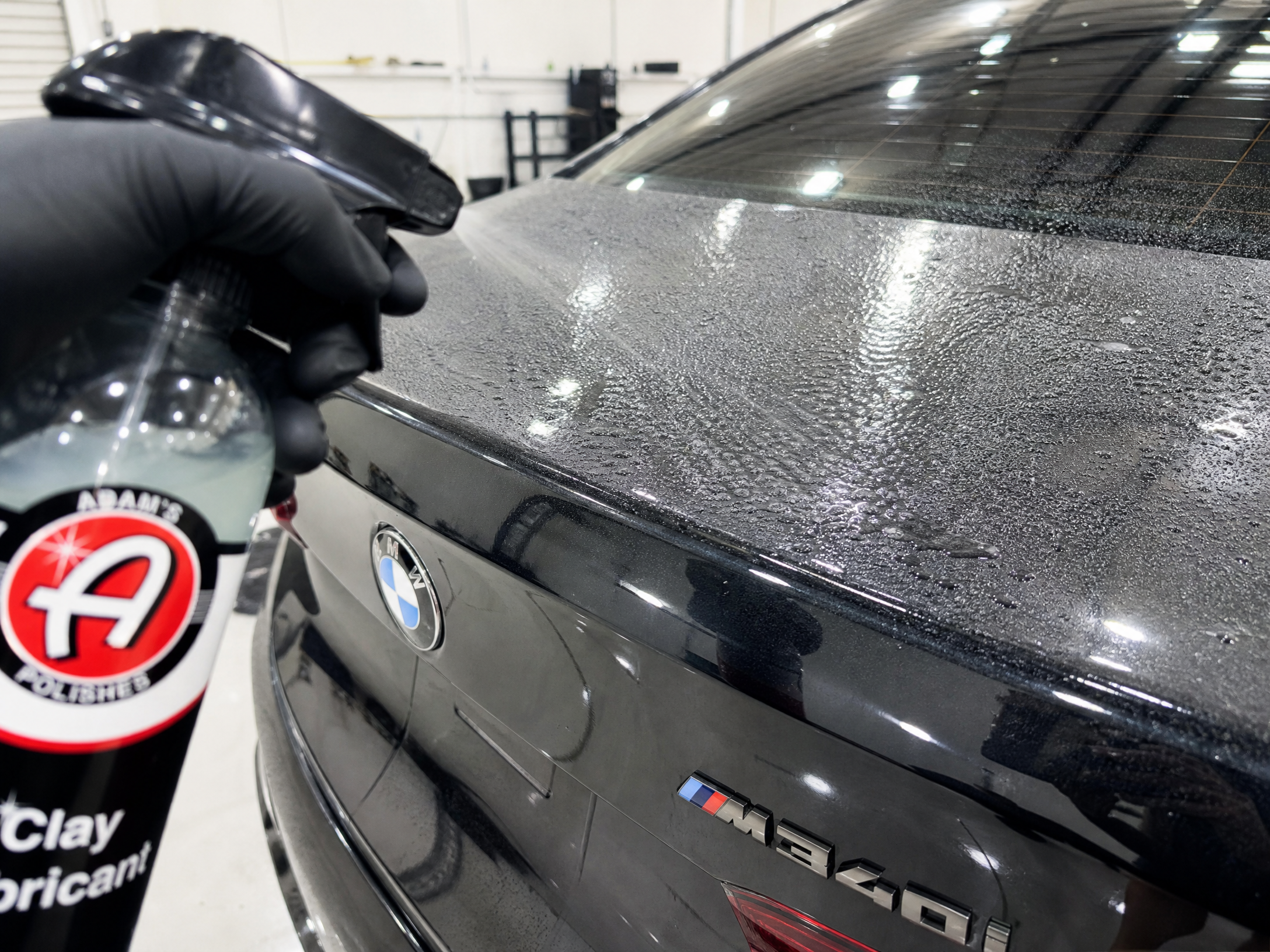
Clay is a sticky abrasive. It doesn’t cut the paint; it grabs the grit and pulls it out of the pores. Technique is everything.
1. Wash and dry first.Never clay a dirty car; you’ll just drag loose sand across the paint and create scratches.
2. Break the bar.Tear off a piece about the size of two fingers. Knead it in your hands until it’s soft and flat like a pancake. Keep the rest of the bar in the wrapper so it stays clean.
3. Lube the zone.Work in a 2×2 foot section. Spray the paint and the clay bar until they’re dripping. Friction is the enemy.
4. The light touch.Slide the clay over the paint in straight, overlapping horizontal or vertical passes. Use zero downward pressure; let the stickiness do the work. You’ll hear and feel it “grabbing” at first.
5. The silence.As the clay lifts the grit, the grabbing stops and the bar starts to glide silently. That’s the signal that the section is clean.
6. Fold and knead.After every section, look at the clay. If it’s gray or brown, that’s the fallout you just saved your paint from. Fold the clay over on itself and knead it until you have a fresh, clean face. Never use a dirty face on the paint.
7. Wipe and check.Wipe the lube off with a microfiber and do the bag test again. It should feel like glass.
The One Unbreakable Rule
If you drop the clay on the ground, throw it away.Immediately. Do not try to rinse it. Do not try to pick the grit out. A dropped bar is now a piece of sandpaper that will ruin your clear coat in one pass. This is why you only work with a small piece at a time.
Iron Removers: The Pro Secret
If your car is white or silver and you see tiny orange specks, that’s rail dust rusting into the paint. Spray an iron removeron the clean, wet car first. It’ll turn purple as it reacts with the metal. Rinse it off, then clay. It saves the clay bar from doing the heavy lifting and reduces the risk of marring the paint.
Clay Mitts and Towels vs. Traditional Clay
Modern synthetic “clay” mitts and towels use a rubberized coating instead of actual clay. They’re faster, they can be rinsed if dropped, and they last longer. For a daily driver maintenance clay, they’re excellent. For a deep restoration on neglected paint, a traditional clay bar still has more “grab.”
After the Clay: The Mandatory Step

Claying is an abrasive process, even at its gentlest. It will strip whatever wax or sealant was on the car. You must apply protection immediately after claying.Whether it’s a simple spray wax, a high-end sealant, or a ceramic coating, the paint is now naked and vulnerable. Seal it up while it’s at its cleanest.
Where Not to Clay
Stick to the paint and the glass. You can clay glass to remove water spots and sap, and it makes wipers work better. Avoid clay on trim, rubber, or unpainted plastic, where it can leave a haze.
How Often?
For an outside-parked daily, twice a year: spring, to undo winter’s film, and fall, before the sealant goes on for winter. Garaged cars and light-use vehicles can go once a year.
Also clay before any ceramic coating, before a major wax season, and after any long stretch parked near construction, trees, or rail lines.
Mistakes I Keep Seeing
Pressing hard.Clay works by stickiness, not force. Pressure turns lifted grit into a scratching tool.Claying a dirty car.Loose sand plus clay equals a hazy finish you’ll be polishing out all Saturday.Dry spots.The lube is the shield. Re-spray more often than feels reasonable.Saving a dropped bar.Sentimentality is how paint gets tattooed.Using one ancient bar for years. A dried, cracked bar has lost its softness and its manners. Fresh bars are cheap.
Try It: Is It Clay Time?
Answer three questions and get the call.
Clay or skip?
Bag test on washed paint feels…
Months since last clay
Parking situation
Wrap-Up
Clay is the bridge between washing and protecting. It’s an hour of light strokes and heavy lube that turns “clean-looking” into actually clean, and makes everything you apply after it work harder and last longer.
Do the bag test this weekend. If the paint talks back, you know exactly what to do — and exactly what to spray while you do it.
Clay left a haze on dark paint, or a bar dried out mid-job? Comment with the car and the product, and I’ll talk you through the recovery.
Related posts:
 The Science of Car Audio Tuning: Why Your Speakers Sound Off (And How to Fix It)
  Why Is Your Car Overheating? How to Safely Check 4 Common Culprits
  Why Your Car Cranks But Won’t Start (How to Safely Check Fuel and Spark at Home)
  Understanding Your Brakes: A Comprehensive Guide into Car Brake Replacement and Maintenance for Safety
Leave a Reply