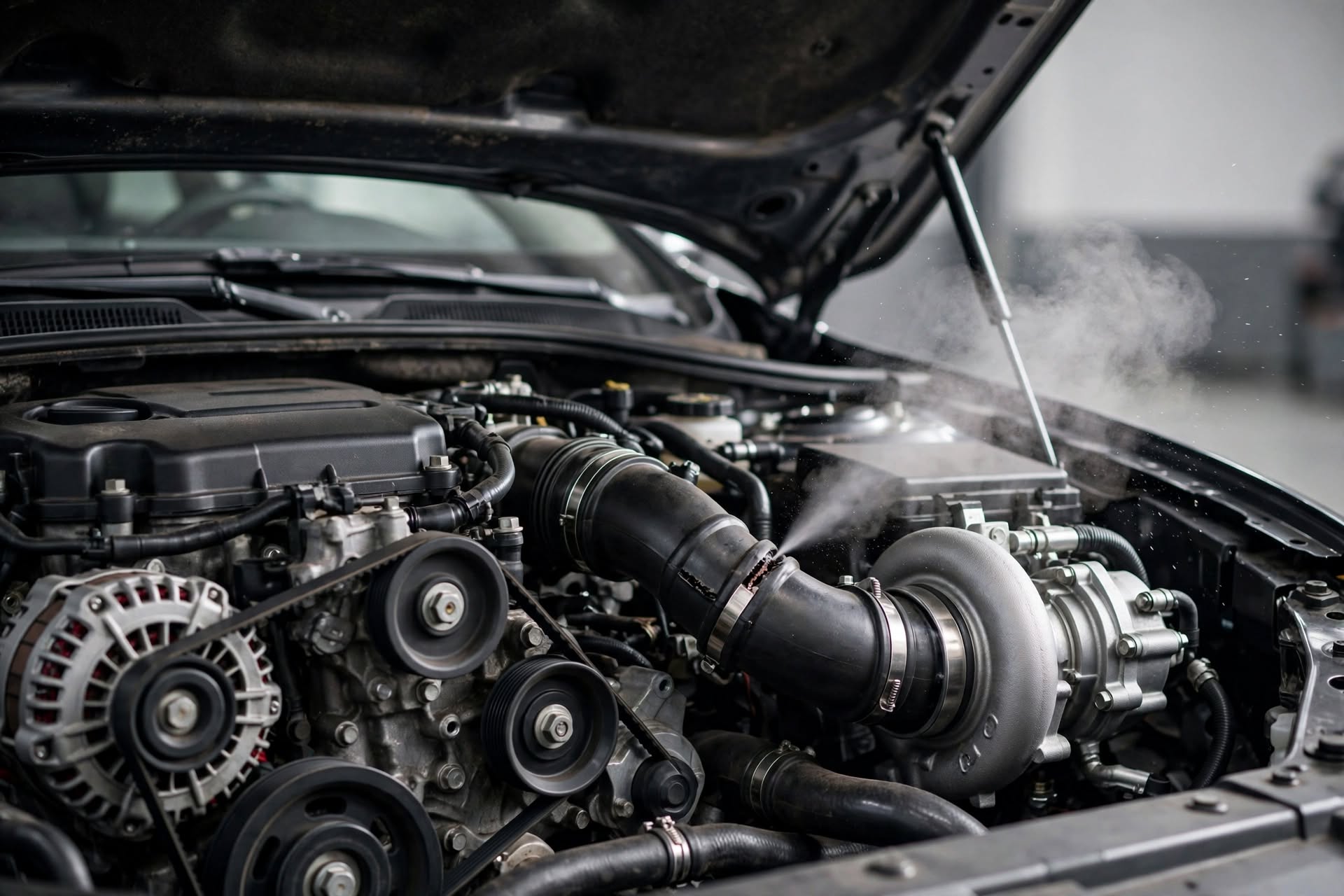
A whistle from the engine bay is a symptom, not a diagnosis. The sound may come from air escaping an intake or vacuum hose, a belt or pulley, a turbocharger pipe, the exhaust manifold or a power-steering system. The timing of the noise—at idle, with engine speed, under acceleration or when turning—helps narrow the possibilities.
CarsRevamp has not inspected your vehicle, so the checks below are a starting point rather than a confirmed diagnosis. Keep hands, clothing and tools away from belts, pulleys, fans and hot exhaust parts. Do visual checks with the engine off and cool; use a qualified technician for tests that require a running engine, lifting equipment or belt removal.
Start by noting when the whistle occurs
Record the conditions without trying to reproduce a dangerous symptom: does the sound happen at cold start, at idle, only while accelerating, as engine speed rises in Park, when you turn the steering wheel, or when you lift off the throttle? Note whether the engine also idles roughly, loses power, overheats or shows a warning light.
A noise that changes with engine RPM points toward an engine-driven component or an air/exhaust leak. A noise only under boost may indicate a pressurized intake leak. A whistle that changes when steering may involve a hydraulic power-steering system on vehicles that use one.
Common sources of an engine-bay whistle
Vacuum, PCV or intake leak
A split vacuum hose, loose intake boot, damaged PCV line or poorly seated oil cap can let air bypass the intended path. A whistle at idle may be accompanied by rough running, a lean fault code or abnormal fuel trims. Inspect hoses and clamps with the engine off; a smoke test is a safer way for a shop to locate a hidden leak than spraying flammable cleaner around a running engine.
Turbocharger or intercooler pipe leak
A split boost hose or loose coupler can whistle under acceleration and may come with reduced power or a boost-related fault. A light turbo whistle can be normal, but a new siren-like noise, smoke, oil consumption or sudden power loss needs prompt inspection.
Serpentine belt, tensioner or pulley bearing
A belt or accessory bearing can make a high-pitched noise that follows engine speed. A belt may squeal more when cold, wet or under accessory load. With the engine off and cool, inspect for cracks, glazing, fraying or contamination. Bearing diagnosis and belt removal should be left to a technician.
Exhaust manifold or gasket leak
Exhaust escaping through a small crack or gasket leak can make a sharp whistle or tick, often louder when the engine is cold or under load. Hot exhaust parts can burn skin; do not touch or probe the manifold. Soot marks or exhaust smell warrant professional inspection.
Power-steering pump or hydraulic system
On vehicles with hydraulic power steering, low or aerated fluid can cause a whine that changes with steering input. Electric power steering does not use a hydraulic reservoir. Check the owner’s manual before inspecting fluid, and never open a hot reservoir or hold the steering at full lock.
Sounds that may be normal
Some turbochargers make a soft, consistent spool sound under acceleration, and some supercharged engines produce a steady whine that rises with RPM. A short whoosh when a turbo car lifts off the throttle can also be normal for its intake and diverter-valve design.
What matters is a change from the vehicle’s usual sound. A new or rapidly increasing siren-like whine, rough idle, warning light, smoke, oil loss or loss of power should not be dismissed as normal turbo noise.
Try the Whistle Finder
Answer three questions about your whistle. The tool ranks the likeliest causes and tells you what to check first. It’s a starting point, not a verdict, so use it to decide where to look.
1. When do you hear the whistle?
2. What kind of engine do you have?
3. Anything else going on?
Safe checks you can do with the engine off
- Park on level ground, switch the engine off, remove the key and allow hot components to cool.
- Inspect the air-filter box lid, intake duct, clamps and visible vacuum/PCV hoses for loose joints, splits or disconnected lines.
- Check that the oil filler cap is seated and the dipstick is fully inserted, if the engine uses one.
- Look at the serpentine belt from a safe position for fraying, glazing, missing ribs or contamination. Do not reach near the belt while the engine is running.
- On a turbo engine, inspect visible intercooler hoses and couplers for cracks or loose clamps. Do not dismantle pressurized plumbing.
- Read diagnostic codes if a warning light is present, and record the code before clearing anything.
Do not spray brake cleaner, carburettor cleaner or other flammable products around a running engine to find a leak. Do not remove a belt or reach toward a fan or pulley unless you are trained and following the service procedure.
How the repair is normally confirmed
A loose intake clamp or split hose may need a correctly sized replacement and a follow-up smoke test. A boost leak may require a pressure test and inspection of the intercooler pipework. Belt or pulley noise requires checking alignment, tensioner movement and bearing condition. An exhaust leak needs inspection of the manifold, gasket and fasteners while the parts are cool.
Do not replace a turbocharger, power-steering pump or alternator based on sound alone. A technician should confirm the source and check related systems before expensive parts are fitted.
When to stop driving and arrange inspection
- Brake pedal suddenly becomes hard: A brake-booster vacuum fault can reduce braking assistance. Stop safely and arrange recovery.
- Sudden power loss, flashing check-engine light or engine misfire: Stop and follow the vehicle manual; continued driving may cause further damage.
- Smoke, burning smell, fuel/exhaust smell or overheating: Pull over safely, switch off and do not continue until inspected.
- New siren-like turbo noise with smoke or rising oil use: Avoid driving and have the turbo/intake system checked.
- Whistle accompanied by steering difficulty: Stop safely if steering assist is reduced or fluid is leaking.
Quick answers about engine-bay whistles
Can a vacuum leak whistle? Yes. A leak in a vacuum, PCV or intake hose can create a whistle, sometimes with rough idle or lean codes.
Why does it whistle only when accelerating? A boost leak or exhaust leak may become louder under load, but the sound alone cannot identify the fault.
Can a belt make a whistle? Yes. Belt slip, a tensioner or an accessory bearing can make a high-pitched noise that changes with engine speed.
Can I use spray to find a vacuum leak? Avoid flammable sprays around a running engine. A smoke test performed with suitable equipment is safer.
Technical references
- Gates: serpentine belt drive systems and component inspection
- Garrett Motion: turbocharger diagnosis and replacement guidance
- DENSO automotive technical information
- Bosch Aftermarket diagnostic and brake-system information
Related posts:
 Troubleshooting Common Car Audio Problems: Diagnosing and Fixing Sound System Issues
 Top Tech Car Upgrades: Dash Cams, Backup Cameras & Parking Sensors
 How to Change Your Car Air Filter Yourself in Under 10 Minutes (No Tools Needed)
 How to Inspect a Serpentine Belt: EPDM Wear, Cracks and Tensioner Checks

Leave a Reply