The short answer: air is escaping somewhere it shouldn’t, or a spinning part is wearing out. Leaks in the vacuum, intake, or boost system cause most whistles. Worn pulley bearings, a tired turbo, and exhaust leaks cover most of the rest.
A thin whistle that climbs as you press the gas is the kind of noise that makes you turn the radio down and listen. I’ve chased this exact sound on plenty of cars in my garage. Most of the time the cause is cheap to fix. The trick is figuring out which suspect you have before you start buying parts.
Listen Before You Touch Anything
Spend five minutes with the hood up and the engine running. Three questions will cut your suspect list in half.
- When does it happen? Only under hard throttle, only at idle, or any time the engine runs?
- Does the pitch follow engine speed? Rev the engine in Park. If you hear the whistle while the car sits still, the wheels, brakes, and transmission are off the hook.
- Is the engine turbocharged or supercharged? Those engines make normal whooshing and whining sounds, so you need to know what’s normal for yours.
Write the answers down. The Whistle Finder tool further down uses the same questions.
The Usual Suspects
1. Vacuum Leak
Your engine pulls air in through the intake. Dozens of small hoses use that suction to run the brake booster, the PCV system, and other parts. A cracked hose or a dried-out elbow lets extra air squeeze through a tiny gap, and tiny gaps whistle.

The clues: a whistle or hiss that’s loudest at idle or light throttle, a rough or high idle, and a check engine light with lean codes like P0171 or P0174. Rubber gets brittle with age and heat cycles, so older cars lead this list.
2. Cracked Intake Tube or Loose Clamp
The big rubber tube between the air filter box and the throttle body takes a beating. It flexes with engine movement and cracks along the folds, often where you can’t see the split until you twist the tube.
A loose clamp does the same job. After any filter change, check that the airbox lid and the tube clamps are fully seated. I’ve fixed more than one “mystery whistle” by tightening a clamp somebody left finger tight.
3. Boost Leak on a Turbo Engine
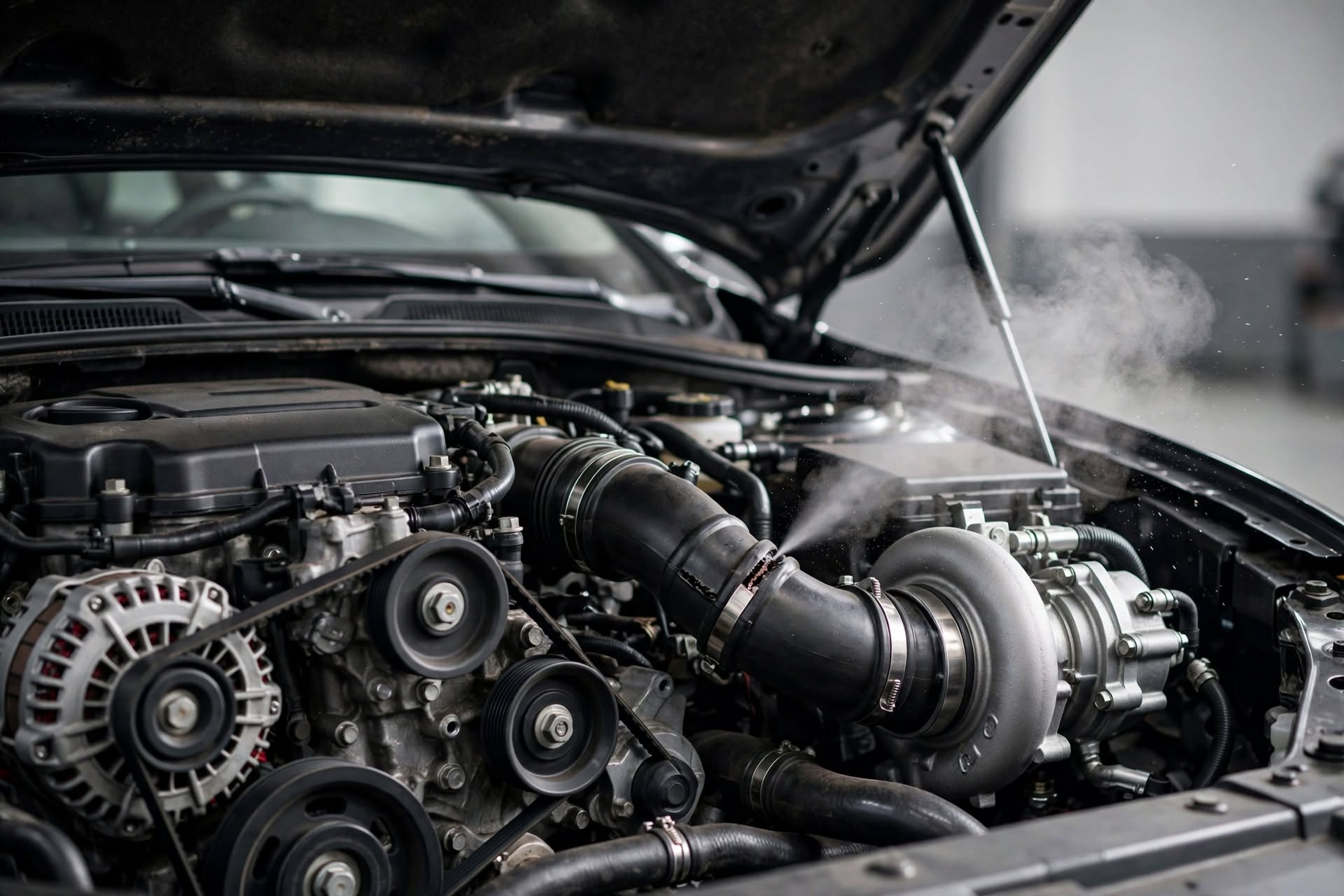
On a turbo car, the air between the turbo and the engine is under pressure. A split coupler, a cracked intercooler pipe, or a clamp that has crept loose lets that pressurized air out with a sharp whistle or hiss. You usually hear it only when you’re on the throttle, and the car feels slower than it should.
Look for an oily film around the joints. Oil mist from the PCV system rides along with the air, so it leaves a stain right where the leak is.
4. A Worn Turbo
A healthy turbo makes a soft spooling whistle. A worn one gets louder over time and sounds more like a siren, with a pitch that climbs fast. Blue smoke from the tailpipe, rising oil use, or oil inside the intake pipe point to worn shaft bearings or seals.
This one is not a wait-and-see problem. A failing turbo can send metal fragments into the engine, and a small repair turns into a big one.
5. A Worn Pulley, Tensioner, or Alternator Bearing
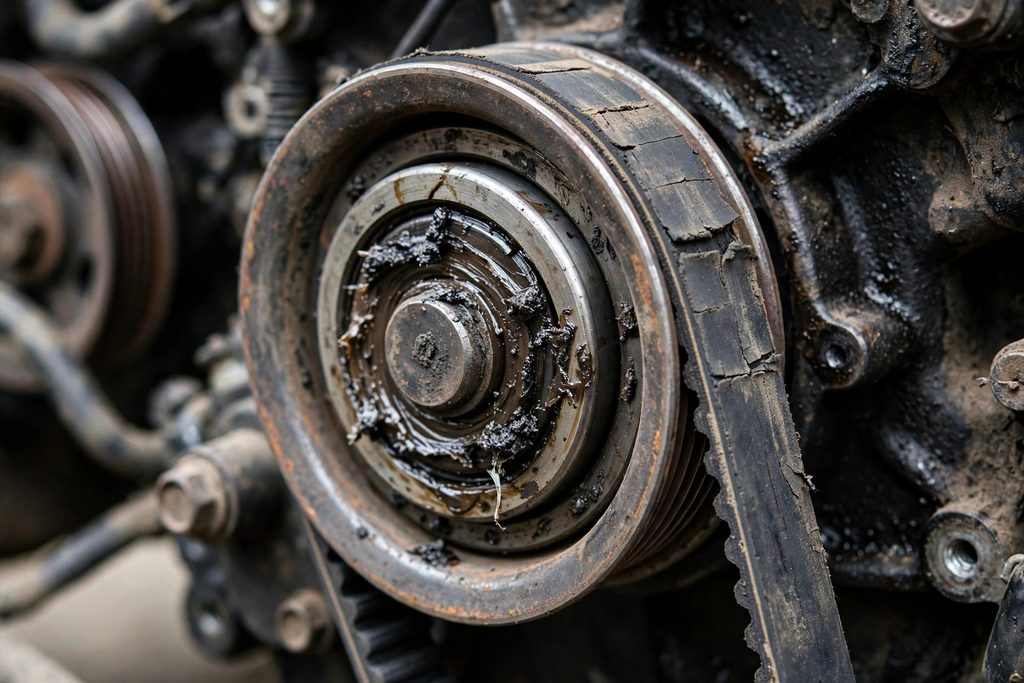
The serpentine belt drives the alternator, water pump, power steering pump, and A/C compressor, and it rides over idler and tensioner pulleys. Any bearing in that chain can go dry and start to whirr or whistle. The pitch follows engine speed, and it’s there in Park too. It often gets worse on a cold morning.
A belt itself usually squeals or chirps. A bad pulley bearing sounds more like a whine or a fine whistle with a gritty edge underneath.
6. Power Steering Pump
A low fluid level lets air into the pump, and the pump whines. The giveaway is that the noise gets louder when you turn the wheel to full lock. If your car has a hydraulic pump, check the reservoir level and look at the fluid. Foamy or dark fluid points to air or age. Many newer cars use electric steering and have no pump to whine, so skip this one if that’s you.
7. Exhaust Manifold Leak
A bad manifold gasket or a hairline crack lets hot exhaust gas squeeze out under pressure. That makes a thin whistle or hiss under load, often with a ticking sound when the engine is cold. The ticking fades as the metal heats up and swells shut over the gap.
Look for black soot streaks around the manifold flange. Let the engine cool completely before you touch anything near it.
8. Loose Oil Cap, Dry Dipstick Seal, or Stuck PCV Valve
These are the sneaky ones. A cap that doesn’t seat or a PCV hose with a pinhole crack can whistle at idle and light throttle. Check them first. They take thirty seconds and cost nothing.
Whistles That Are Normal
Not every whistle means trouble. Know these three so you don’t chase a noise your car was built to make.
- Turbo spool: a soft, steady whistle as boost builds is normal.
- Blow-off or diverter valve: a quick whoosh or flutter when you lift off the throttle is how it’s supposed to work. A torn diaphragm makes it louder than before.
- Supercharger whine: it rises with revs and sounds the same every day. If it’s louder than you remember, check the belt and the bearings.
The test is simple. Did the sound change? A noise your car has always made is usually fine. A new one deserves attention.
Try the Whistle Finder
Answer three questions about your whistle. The tool ranks the likeliest causes and tells you what to check first. It’s a starting point, not a verdict, so use it to decide where to look.
1. When do you hear the whistle?
2. What kind of engine do you have?
3. Anything else going on?
How to Track It Down in Your Driveway
You don't need a lift for any of this. Here's the order I'd work in.
- Park on level ground, set the brake, and let the engine cool. Hot manifolds and belts cause burns and worse.
- Do a visual sweep. Look over every vacuum hose and the intake tube. Squeeze the rubber hoses. Cracks, splits, and hoses that feel either mushy or rock hard need replacing. Check each clamp for tightness.
- Scan for codes. An OBD-II scanner costs less than an hour of shop labor. Lean codes point toward an air leak. If your scanner shows fuel trims, a long-term trim above about +10 percent at idle is a strong hint of unmetered air getting in.
- Listen with a hose stethoscope. Hold one end of a two-foot piece of old hose to your ear and move the other end around the engine with the car running. Keep it clear of the belt, the fan, and hot exhaust parts. The sound jumps in volume when you get near the source.
- Check the pulleys. With the engine off and the belt removed (take a photo of the routing first), spin each pulley by hand. Grit, wobble, or a rough feel means a bad bearing.
- Smoke test it. A shop smoke machine pushes harmless vapor into the intake or boost system, and the smoke shows up wherever air leaks out. Many shops do this for a modest fee, and it beats guessing.
A word on a popular trick: spraying carb cleaner or propane around the intake to find leaks. It works, because engine speed changes when the spray gets sucked in. It also starts fires. I skip it.
What the Fix Usually Looks Like
Once you've found the source, the repair is often simple.
- Vacuum hose or intake boot: replace the part. Don't wrap it in tape. Tape fails with heat, and the whistle comes back within weeks.
- Loose clamp: snug it down, and replace it if the band is stretched or rusty.
- Boost leak: replace the cracked coupler or pipe. Use clamps made for boost pressure, because cheap worm-gear clamps can slip under load.
- Pulley or tensioner: replace the bad pulley, and look hard at the belt too if it's cracked or glazed. Both come off with the same tools.
- Exhaust manifold gasket: this takes more time, since manifold bolts often rust and snap. Soak them with penetrating oil the night before.
- Turbo: rebuild or replace it, and find out why it failed. Low oil, dirty oil, and a clogged oil feed line all kill turbos, and a new one dies the same way if the cause stays.
When to Stop Driving
Pull over and shut the engine off if the whistle comes with any of these.
- Sudden loss of power
- Blue or white smoke from the tailpipe
- An oil warning light or a burning oil smell
- A temperature gauge that's climbing
- A whine that gets louder fast
Quick Answers
Can I keep driving with a whistle? It depends on the cause. A small vacuum leak can wait a few days. A failing turbo or a dry bearing can't.
Can a dirty air filter cause a whistle? Rarely. A badly clogged one can, but poor performance usually shows up first.
Why does it only whistle when the engine is cold? Rubber is stiffer and metal gaps are wider when cold. Cracks open up and manifold joints leak until everything warms and swells.
Is it the belt? If it's a squeal or chirp that gets worse on a damp morning, probably. If it's a thin whistle or whine, look at the pulleys first.
Can I fix this myself? Hoses, clamps, and caps, yes. Pulleys and manifold gaskets are doable with patience and the right tools. Turbo work is better left to a shop unless you've done it before.
Will a whistle make my car fail an emissions test? A vacuum or exhaust leak can. Both mess with the air-fuel mix or the readings from the oxygen sensors.
Start with the cheap, fast checks: clamps, hoses, and the oil cap. Most whistles end right there. If you've covered the easy stuff and the sound is still there, take the car to a shop and hand them your notes. Telling a mechanic "it whistles only under load and the long-term fuel trim is high" saves them an hour and saves you money.

Leave a Reply