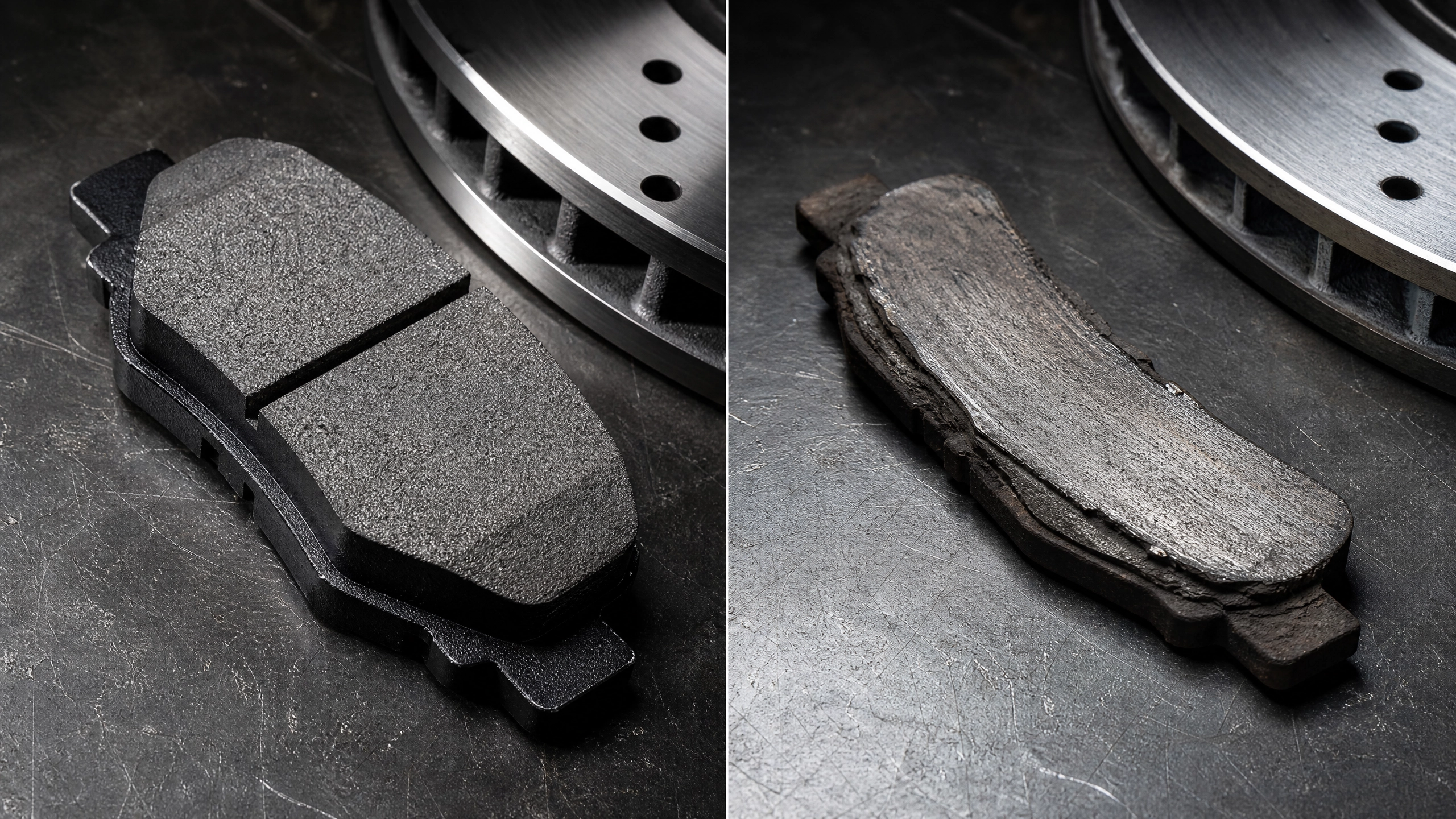
Brake-pad life varies widely with vehicle weight, pad formulation, driving style, terrain, brake condition and maintenance. A mileage estimate can help with planning, but it cannot replace inspection of the friction material and rotor against the manufacturer’s service limits.
This guide explains the factors that influence wear, common warning signs and safe inspection considerations. It compares pad materials by their general characteristics rather than claiming a fixed lifespan or CarsRevamp hands-on wear test.
If braking performance changes, grinding occurs, a warning light appears or the pedal feels soft or sinks, treat the issue as urgent. Do not continue driving with suspected brake failure; arrange professional inspection or towing.
How Long Do Brake Pads Actually Last?
Brake-pad life can range from relatively short intervals in heavy stop-and-go, towing or mountain use to many tens of thousands of miles in lighter highway use. These are broad planning expectations, not guaranteed replacement intervals. Inspect the pads at the intervals in the vehicle maintenance schedule.
Frequent stop-and-go braking, towing, heavy loads and steep terrain can shorten pad life. Lighter highway use may extend it, but the vehicle, pad formulation and brake condition matter too. Mileage alone is not a replacement trigger.
Illustrative Brake Pad Wear Factors
Brake Pad Life Estimator
Illustrative planning ranges only; actual wear varies widely. Inspect against the vehicle manufacturer’s service limits.
| Driving Style / Condition | Estimated Pad Life | Notes |
| Highway / Gentle driving | 50,000–70,000 miles | Minimal heat cycles, low wear |
| City / Stop-and-go traffic | 25,000–40,000 miles | Frequent braking = faster wear |
| Aggressive / Sport driving | 15,000–25,000 miles | High temps accelerate fade |
| Towing or hauling heavy loads | 20,000–35,000 miles | Extra mass stresses pads hard |
| Mountain / Hilly terrain | 20,000–40,000 miles | Sustained braking causes glazing |
What Makes Brake Pads Wear Out Faster?
There are six main factors that chew through pads ahead of schedule. Knowing them helps you predict your own replacement schedule.
1. Driving Habits
Repeated hard braking converts more kinetic energy into heat and can accelerate pad and rotor wear. Leave more following distance and brake smoothly when conditions allow.
2. Vehicle Weight
Vehicle mass, axle loading, brake design, tire size and driving conditions all affect brake work. A heavier vehicle may place greater demands on its brakes, but compare the actual vehicle and use rather than assuming a fixed mileage difference.
3. Terrain
Mountain driving is brutal on pads. Sustained downhill braking generates sustained heat, and heat is what causes brake fade and accelerated wear. If you live in a hilly area, shorten your inspection intervals.
4. Brake Pad Material
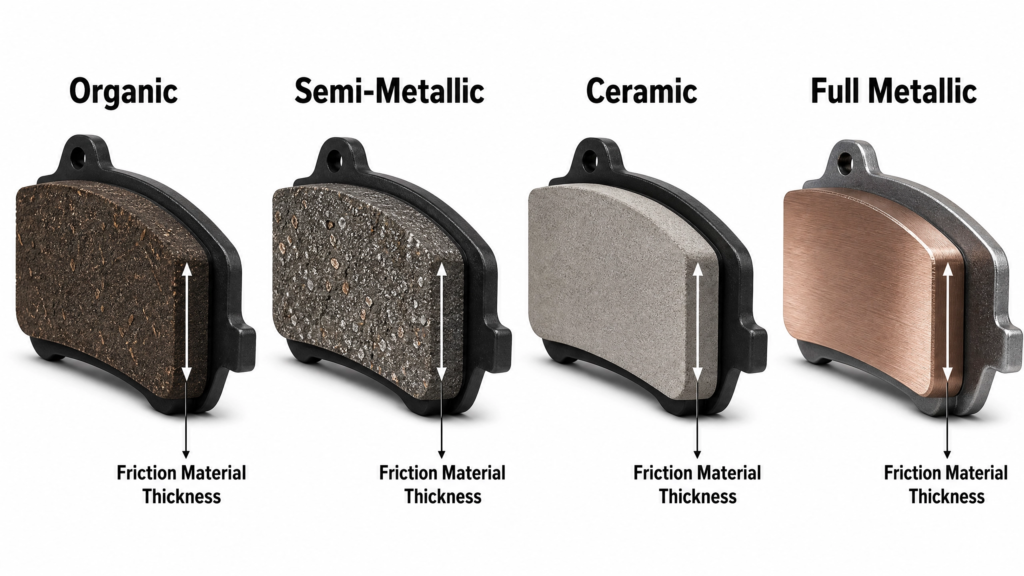
Pad materials have different friction, temperature, noise, dust and rotor-wear characteristics. No material guarantees the longest life in every vehicle; choose a pad approved for the application and intended use.
See the comparison table below for specifics.
5. Caliper Health
A sticking caliper or seized slide can cause rapid and uneven wear. If inner and outer pads or left and right sides differ substantially, have the caliper, slides, hose and related hardware inspected.
6. Rotor Condition
Measure rotor thickness with a suitable micrometer at the locations specified by the service procedure, then compare it with the rotor’s minimum-thickness specification. Also inspect for cracks, severe scoring, heat damage and runout as required.
Brake Pad Types: How Long Does Each Last?
Not all brake pads are equal. Here’s how the main types stack up on lifespan and real-world use:
Brake Pad Material Comparison
A detailed breakdown of performance, longevity, and comfort by material type
| Pad Type | Lifespan | Best For | Dust Level | Noise |
|---|---|---|---|---|
| Organic (NAO) | Varies by formulation and use | Daily commuting, light vehicles, dry climates |
Low |
Very Low |
| Semi-Metallic | 30k – 50k miles | Performance driving, heavy loads, cold weather |
High |
Moderate |
| Ceramic | Varies by formulation and use | Luxury cars, consistent braking, clean wheels |
Very Low |
Low |
| Full Metallic | Not a fixed mileage | Track racing, extreme heavy-duty, mountain use |
Very High |
High |
Ceramic, organic and semi-metallic formulations each involve trade-offs. Choose the pad specified or approved for the vehicle, considering cold bite, temperature range, noise, dust, towing and intended use.
For towing or track use, choose a pad with a friction formulation and temperature range designed for the duty cycle, and confirm rotor and brake-fluid compatibility.
Warning Signs Your Brake Pads Need Replacing
Your car will tell you when the pads are done. You just need to know what to listen and look for.
Some pads use a mechanical wear indicator that contacts the rotor as the friction material approaches its service limit. The trigger thickness varies by design; inspect the pads rather than relying on sound alone.
- Longer stopping distance:If your car takes noticeably more distance to stop, pad material is thin or the pads are glazed from heat.
- Vibration under braking:Usually warped rotors, but worn or broken pads can also cause this.
- Pulling to one side:Often means one pad is wearing faster — check for a stuck caliper on that side.
- Soft or spongy pedal:This is more likely a fluid issue, but heavily worn pads combined with low fluid can also produce this.
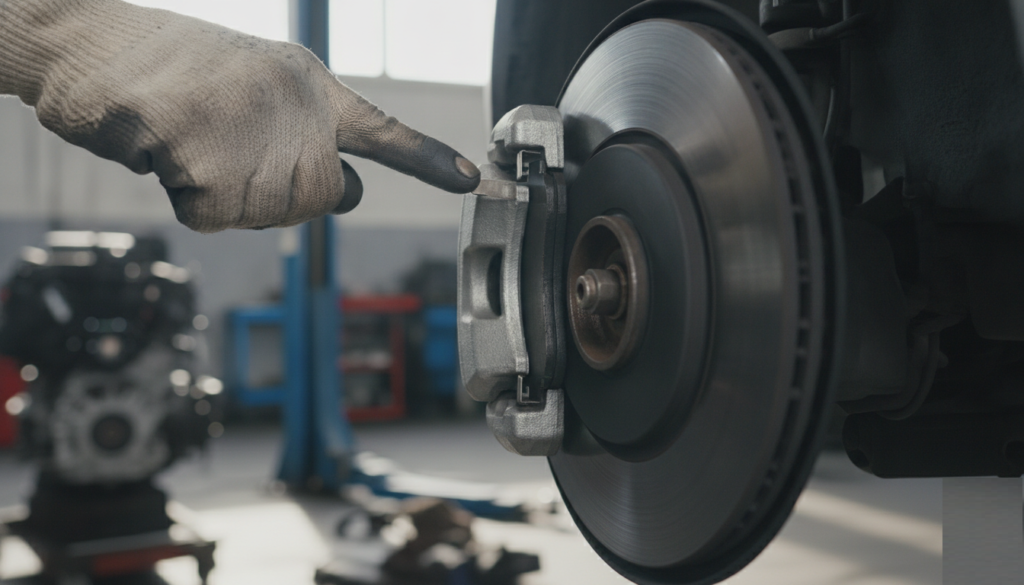
Visual Inspection
Compare the friction-material thickness with the service limit for the exact vehicle and pad. Do not use a pencil-width estimate as a universal threshold; replace pads before they reach the manufacturer’s minimum.
Replace before the friction material reaches the manufacturer’s minimum service limit. The exact threshold varies by vehicle and brake design.
Budget parts-wise: expect $30–$80 for a set of quality pads (like Akebono or Wagner ThermoQuiet), and $40–$120 per rotor if needed.
Don’t Forget These Often-Overlooked Steps
Brake fluid can damage automotive paint. Protect painted surfaces and rinse spills promptly with water according to the fluid manufacturer’s guidance. Keep the reservoir closed except when the service procedure requires access.

Leave a Reply