
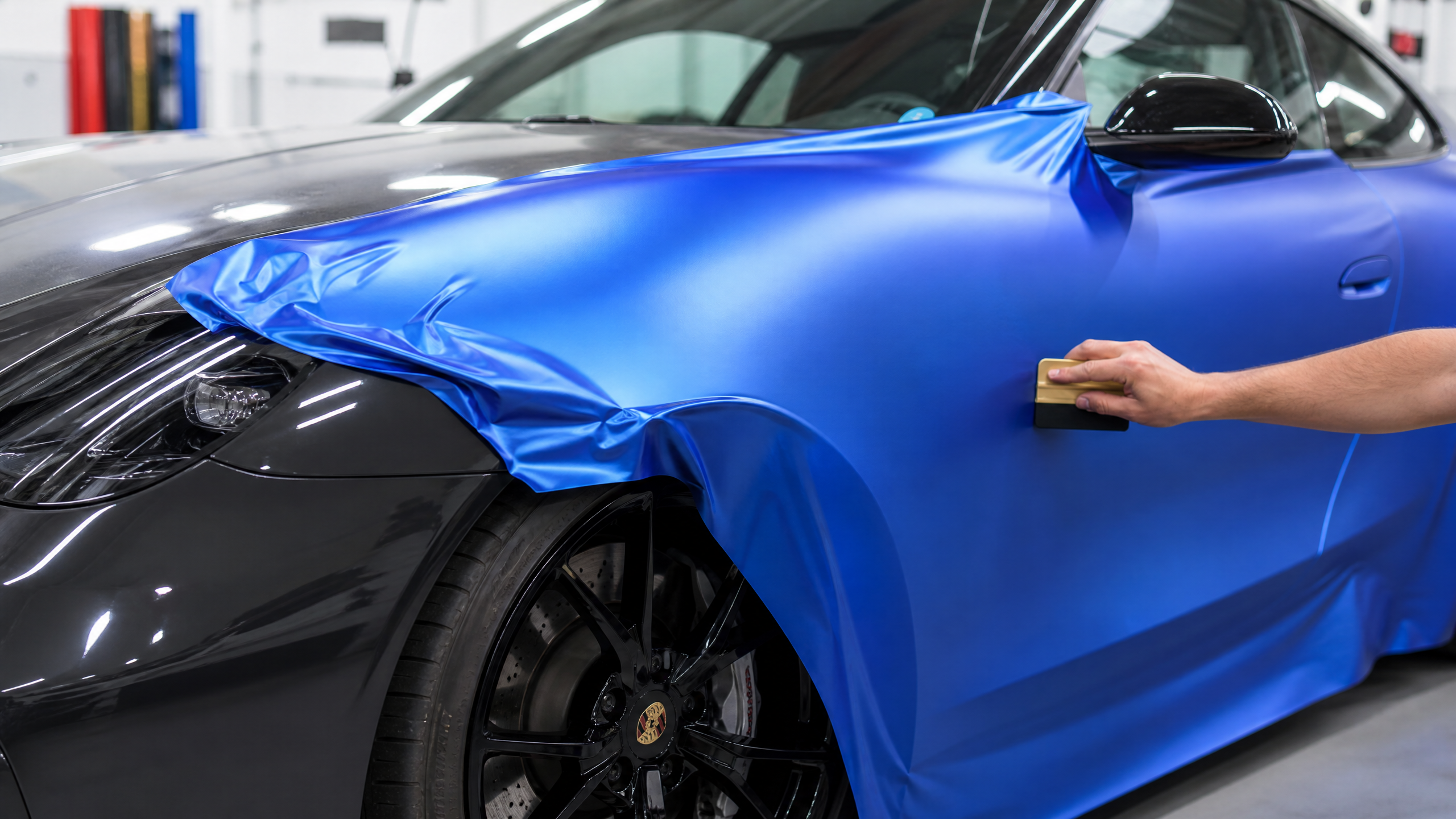
My buddy Marcus wanted his Mustang to be a satin dark blue, and my other buddy Danny wanted his work truck a deep metallic red. Marcus wrapped his. It took four days, he drove it home the same week, and he paid a fraction of what a respray would’ve cost. Danny painted his. The truck lived at the body shop for three weeks and the bill landed somewhere that made him wince. Both look great. But they took completely different roads to get there, and picking the wrong one for your situation is how people end up unhappy and out of money.
The wrap-versus-paint question comes up at the shop all the time, and the honest answer is that neither one is “better.” They solve different problems for different budgets. So instead of a tidy little pros-and-cons list, let me walk you through how I actually think about it, because that’s what’s useful.
What You’re Actually Choosing Between
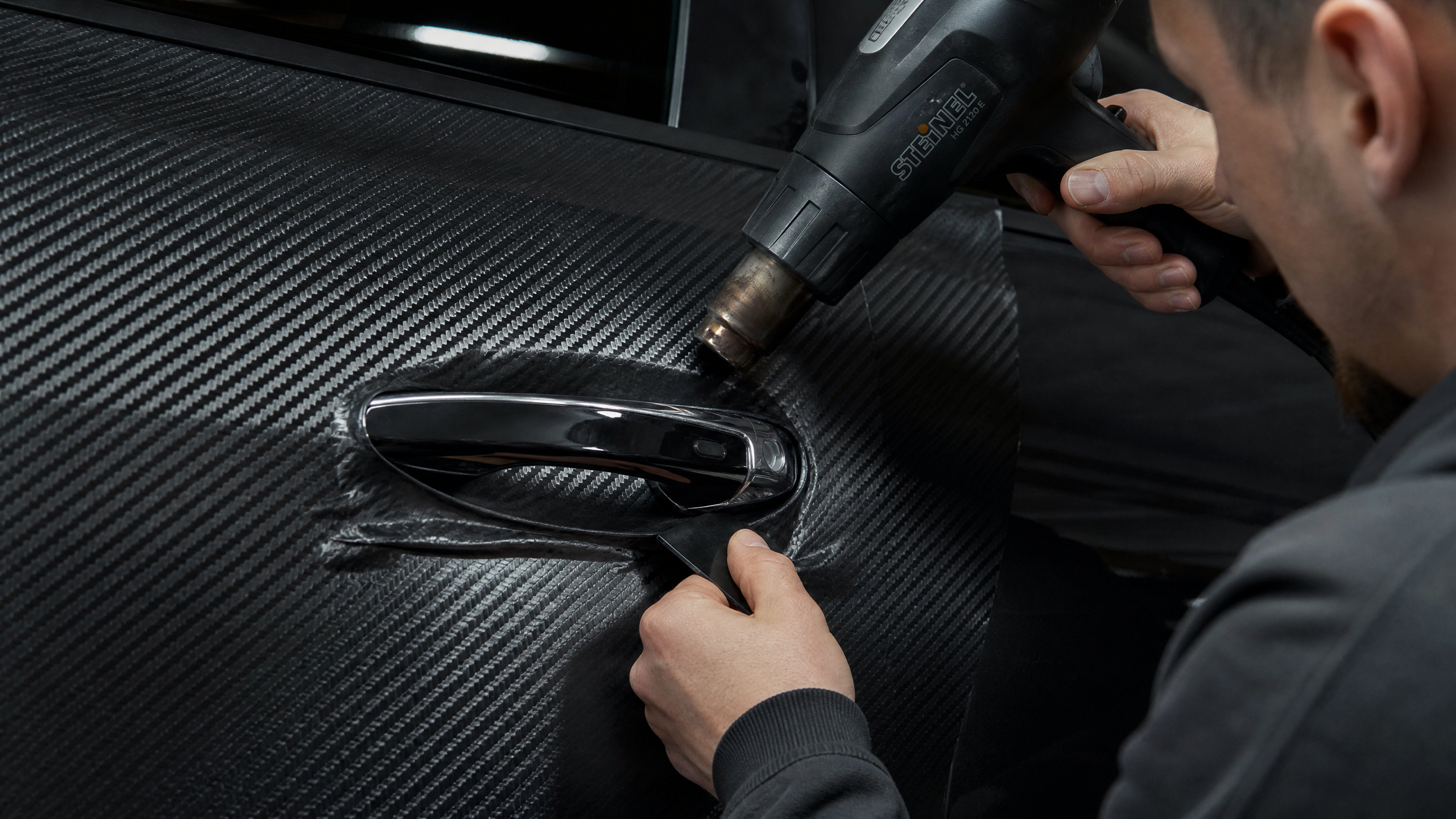
A wrap is a big sheet of vinyl film laid over the paint you already have. It changes the color and the finish without ever touching the paint underneath. When it’s done right, the film gets heated, stretched around panels, tucked into edges, and trimmed clean. A paint job is sanding, prepping, and spraying new color and clear coat onto the body. It’s permanent, and how good it looks is almost entirely about the prep work that happens before the gun ever sprays.
Why I Usually Point People to a Wrap First
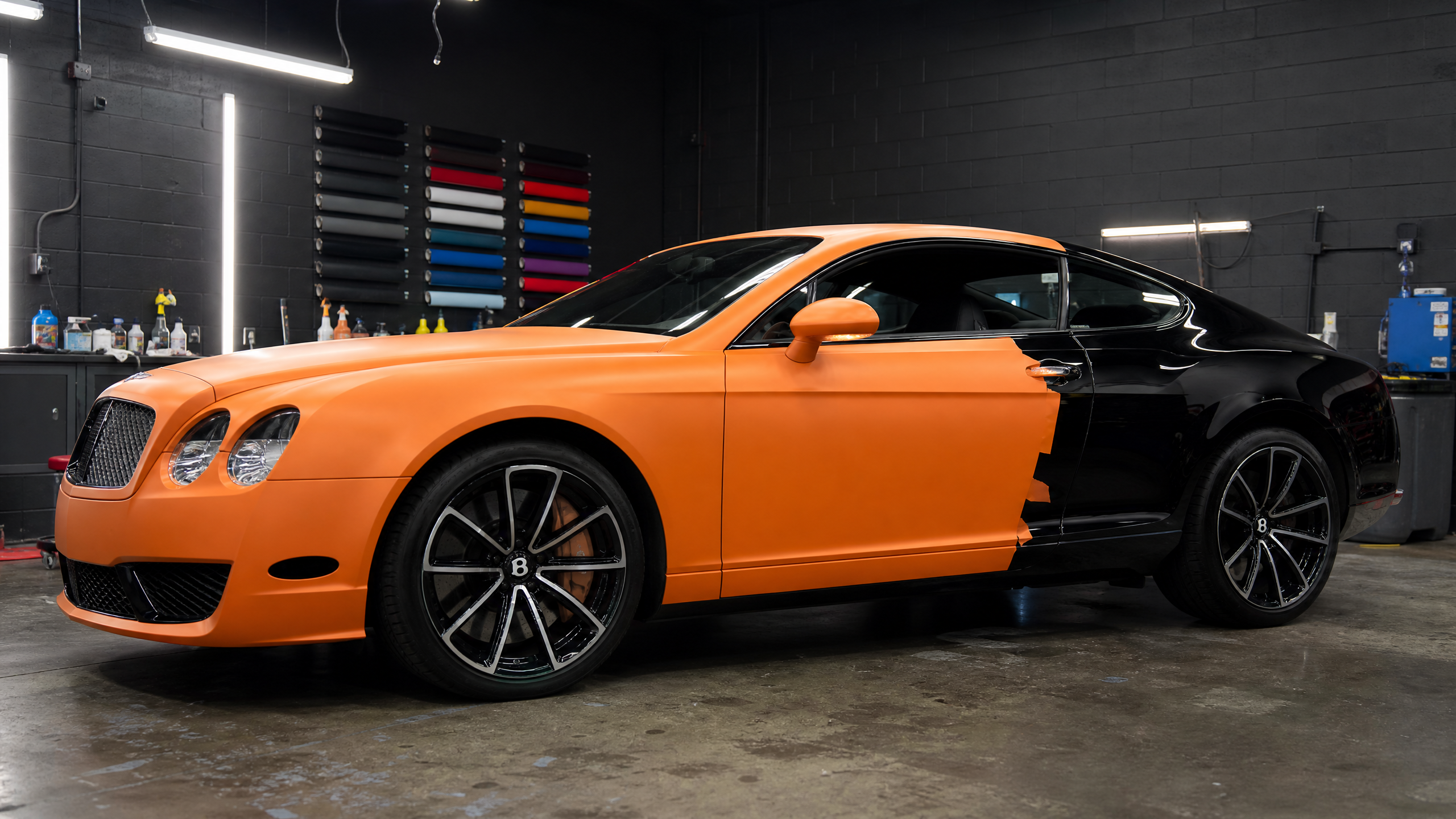
Wraps have gotten popular for a reason, and it’s not just that they look cool. For most people, they just make more sense.
The money part is obvious: a full professional wrap usually undercuts a quality respray, and it’s done in days instead of weeks. But the part people don’t think about is that a wrap is reversible. If you get tired of the color, or you’re getting ready to sell, you peel it off and the original factory paint is sitting there underneath, protected the whole time. That’s huge for resale.
And the options are honestly a little ridiculous. Matte, satin, gloss, chrome, colors that shift when the light hits them, finishes that look like brushed metal. Some of those would cost a fortune in paint, and some of them you basically can’t do in paint at all. The wrap also shields the original paint from light scratches, swirls, and sun fading while it’s on.
Where Wraps Let You Down
I don’t want to oversell it, because wraps have real limits. They don’t last forever. A quality gloss wrap in decent conditions goes maybe five to seven years, and matte and chrome tend to fade sooner than that, especially if the car lives outside in the sun.
The edges are the weak point. A rushed install or someone going at the seams with a pressure washer will get corners lifting. And here’s the one that surprises people: a wrap is thin. It protects against light scratches, but it will not stop a rock chip. If chips are your worry, you want paint protection film, which is thicker and self-healing, not vinyl. I’ll explain the difference in a minute because it trips everyone up.
Also, a wrap only hides what’s already smooth. It conforms to the surface, so a dent, a deep scratch, or a patch of rust shows right through. The body has to be straight before anyone wraps it.
When Paint Is the Right Call
Paint still wins in a few situations, and I’ll defend it when it does. If you’re keeping the car for a long time and want something permanent, a good paint job outlives any wrap by years. Quality paint and clear hold up to sun, weather, and washing better over the long haul, and you can wax it, polish it, and correct scratches in ways a wrap doesn’t allow.
The other big one is that a respray is your chance to actually fix the car. Dents, rust, old damage, mismatched panels — you address all of it while the car is apart. A wrap can’t do body work. So if the car needs love anyway, painting solves two problems at once.
And done at a high level, paint has a depth and a gloss that vinyl just doesn’t quite match. A show-quality respray looks better than the factory did, and that’s a real thing.
But Here’s What Paint Costs, Really
The catch is that a good paint job is expensive and a cheap one advertises itself within a year. Prep is roughly 60 to 80 percent of the entire job, all that sanding and masking and surface work. Skipping prep is how you end up with orange peel, dust nibs, and clear coat that peels off in sheets. And because it’s permanent, a bad or cheap respray can actually knock money off your resale, not add it.
| Option | What It Costs | How Long It Takes | How Long It Lasts |
|---|---|---|---|
| DIY wrap, just materials | $500 – $1,500 | A few weekends | Depends on your skill |
| Professional full wrap | $2,500 – $6,000+ | 3 – 7 days | 5 – 7 years |
| Budget paint job | $500 – $1,500 | 1 – 2 weeks | 1 – 3 years |
| Mid-range respray | $2,500 – $6,000 | 2 – 3 weeks | Many years |
| Show-quality multi-stage | $8,000 – $20,000+ | A month or more | Decades |
Look at that middle for a second, because it’s the whole argument: a cheap paint job and a good wrap cost about the same, but the wrap will look better and protect the original paint. That’s why I steer people away from the bargain paint counter unless they know exactly what they’re getting.
Wrap vs. PPF: The Thing Everyone Mixes Up
Quick clarification, because this saves real money. Vinyl wrap is for color and style. Paint protection film, the stuff people call PPF or sometimes by brand names, is a thick, usually clear, self-healing film made specifically to absorb rock chips and scratches. You can even run them together, color wrap with PPF over the high-impact areas. If someone quotes you a “wrap” and you wanted chip protection, make sure you know which one they mean.
For finishes, stick with the big names — 3M, Avery Dennison, Oracal. Gloss lasts the longest and is the easiest to live with. Matte and satin look incredible but need special care and fade faster. Chrome and color-shift are the showstoppers, and they’re the most expensive and the shortest-lived.
Living With Each One
Caring for a wrap is a little different from paint, and getting it wrong is how people shorten its life. Hand wash it, gently, and keep the pressure washer away from the edges. Use wrap-safe cleaners. And whatever you do, don’t wax a matte wrap. Wax adds shine, which is the exact opposite of the point, and it’ll ruin the flat finish. Gloss wraps can take a wrap-safe sealant.
Paint is easier to live with. Wash it, wax it or put a ceramic coating on it, and if it gets swirled you can polish it back. Paint forgives more and is easier to repair if something happens to it.
The Resale Question Nobody Asks
Here’s the part that swings a lot of decisions. A wrap keeps your original paint pristine, so when you peel it the factory finish is intact, which buyers like. A quality respray can hold value or even help it. But a cheap or mismatched one often hurts it. If there’s any chance you’re selling in the next few years, the wrap is the safer bet because you can just take it off before listing and hand over a stock-looking car.
If You’re Thinking About Wrapping It Yourself
I’ll be encouraging but honest: you can wrap your own car, and it’s a real weekend project, but it’s a patience game and your first panel will probably look rough. Start small. Do the mirrors, maybe the roof, before you try the whole car. I tried to wrap my own side mirror once and it looked like I’d done it with my elbows. The second one came out fine. It’s a feel thing you build as you go.
You’ll want a few things before you start:
- The vinyl itself, and buy more than you think you need. You will mess up a panel and need to redo it.
- A squeegee with a felt edge so you’re not scratching the film.
- A heat gun to stretch the film around curves.
- Knifeless tape so you can trim clean without dragging a blade across paint.
- Nitrile gloves, so your hands don’t stick to the adhesive and leave prints.
- Isopropyl alcohol and microfiber towels for cleaning, plus a clean, dust-free space that’s around 60 to 80 degrees. Cold film won’t stretch, and a hot dusty room traps junk under it.
The basic rhythm is this: wash and clay the panel, wipe it with alcohol, and pull emblems and trim where you can so the film tucks behind them. Cut a generous piece, lay it down, and squeegee from the center outward to push the air out. Use heat to stretch around curves, but don’t overdo it, because over-stretched film thins out and can shrink back later. Tuck the edges, trim with the knifeless tape, then hit the edges with heat again to set the adhesive so they don’t lift.
Flat panels like the roof and hood are the easiest place to start. Bumpers and deep recesses are the hardest, and that’s where DIY wraps usually show their seams. If a panel beats you up, there’s zero shame paying a pro to finish that one piece.
The Honest Talk About Painting It Yourself
I’m going to be blunt here because this is a safety thing. A truly good DIY paint job is much harder than it looks on video, and the health side is serious. Modern two-part clear coats contain isocyanates, which are genuinely dangerous to breathe and can cause lasting damage. You’d need a proper respirator, ideally supplied air, full coverage, and a clean ventilated space, plus a booth, a decent gun, and reliable compressed air. The prep alone is enormous.
For most people, a DIY wrap is a realistic project and a DIY paint job is a multi-month commitment with real risks. If you want paint, I’d genuinely rather you pay a professional than spray two-part products in your garage. Some jobs are worth outsourcing.
So Which One’s Yours?
When a friend asks me this, I run them through four questions and the answer usually sorts itself out. What’s the budget, tight or open? What’s the timeline, this week or can the car disappear for a month? Are you keeping it or selling it soon? And does the body need actual repair, or is the paint smooth and you just want a new color?
Tight budget and want options — wrap. Big budget and keeping it forever — paint. Might sell it or change your mind — wrap, because it peels off. Dents and rust to fix — paint, because you’re doing body work anyway. That’s the whole framework, and it’s gotten me and my friends through a lot of these decisions without any regrets.
Quiz: Should You Wrap or Paint?
1. What’s the budget look like?
2. How long are you keeping the car?
3. Does the body need work?
4. Do you want to be able to change it back?
Related: Check out our guide on Headlight Restoration Guide: Remove Haze and Improve Night Vision.


Leave a Reply