
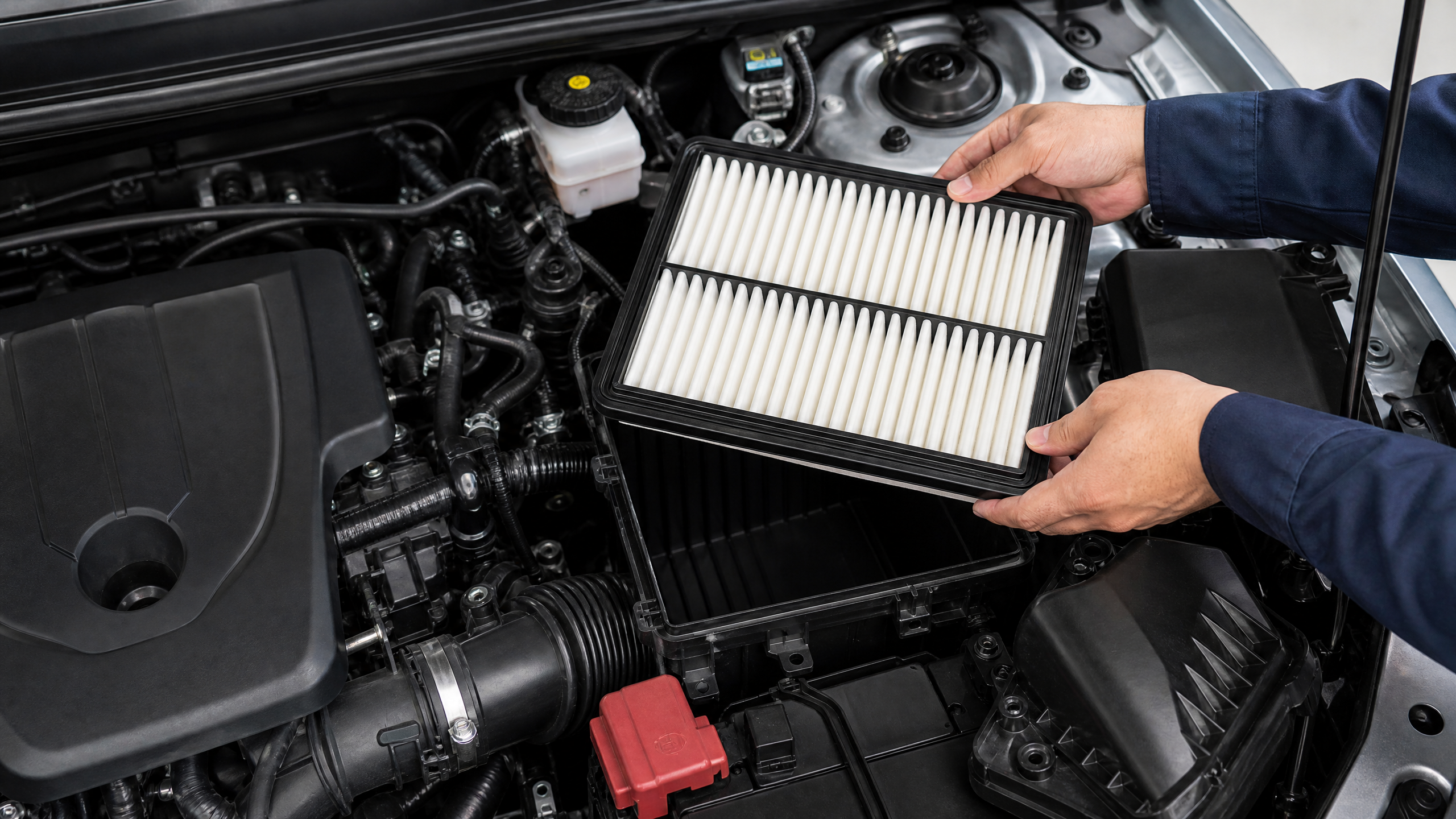
How to Replace Your Air Filter: Boost Fuel Economy & Engine Health
I opened the airbox on a customer’s pickup last month and a squirrel family vacated the premises at speed. Leaves, grass, and one very committed acorn had packed the filter solid.
The truck had been “down on power” for a year. Three parts-store filters and ten minutes later, it pulled like the day it was built.
An air filter is the cheapest maintenance item on your car and the most ignored. Here’s how to check and swap yours without breaking anything.
What the Filter Actually Does
Your engine swallows thousands of gallons of air for every gallon of gas it burns. That air arrives carrying dust, pollen, brake dust, and road grit.
The filter’s paper pleats trap the solids and let the air through. One grain of sand past that paper is a tiny lapping compound on your cylinder walls. Over 100,000 miles, dirt wears engines faster than neglect does.
On modern cars the air also flows past the mass airflow (MAF) sensor, a delicate heated wire that tells the computer how much air is entering. Dirt or oil on that wire skews the reading and can set a check-engine light or cause a rough idle. The filter is the MAF’s only bodyguard.
Signs It’s Choked
- Sluggish throttle response, like the engine is breathing through a straw.
- Rough or stumbling idle.
- A sooty, rich smell from unburned fuel.
- Fuel economy sliding downhill. Honest note: modern fuel-injected cars compensate for a dirty filter, so mileage may hold until it’s truly packed. Older carbureted engines show the drop fast.
- Black smoke on acceleration in older engines.
Find the Box
Pop the hood and look for a black plastic box the size of a shoebox or bigger, with a ribbed hose running to the engine. On older cars it may be a round metal canister under a wing nut.
The lid is held by metal clips or a couple of 10mm screws (some use Torx or Phillips). No special tools beyond a screwdriver or small socket.
The Swap, Step by Step
1. Engine off, hood proped. That’s the whole safety list. This job has no jacks and no hot parts.
2. Undo the clips or screws. Keep screws in a pocket or a magnet tray. They love the ground.
3. Open the lid carefully. Lift it straight up and note how the intake tube seats. Some lids hinge on the tube side.
4. Photograph the filter. One phone photo of the old filter’s orientation saves you ten minutes of head-scratching. Note which way the pleats and the rubber seal face.
5. Lift the old filter out. Keep it level so you don’t shake dirt into the bottom of the box.
6. Clean the box. Wipe the inside with a damp shop rag. Stuff a rag in the intake tube opening while the box is open. One dropped bolt down that tube is a destroyed engine. Ask me how I know a guy.
7. Compare old to new. Same footprint, same seal height. Wrong filters that “kind of fit” leave gaps, and a gap is a dirt highway.
8. Seat the new filter. Drop it in and run a finger around the rubber seal. It should sit flat everywhere, no lifted corners.
9. Close and clip. Make sure the lid seats fully and no wires or hoses get pinched. Clips snap with a firm press; screws get snug, not heroic.
10. Check the intake tube. Squeeze it for cracks while you’re there. A split hose after the filter sucks unfiltered air straight past your brand-new filter and past the MAF sensor.
11. Reset any maintenance reminder if your car tracks the filter, then write the mileage on the filter’s edge with a marker. Future you gets the data for free.
How Often?
The manual usually says 15,000 to 30,000 miles. Dust roads, gravel drives, or a city with bad air cut that in half.
The real test is your eyes. Pull the filter and hold it up to the sun or a bright shop light. Light through the pleats = still working. No light = replace.
And please don’t blow a paper filter clean with compressed air. It looks like you’re helping, but the blast punches microscopic holes in the paper and packs fine dust deeper. You’ve now got a filter that flows great and filters nothing.
Oil Mist on the Filter? Look Upstream
If the filter comes out with an oily sheen on the engine side, that’s usually PCV blow-by: crankcase vapors being recirculated through the intake. A little mist on a high-mile engine is normal-ish. A soaked filter means the PCV valve or the breather system needs attention, and swapping the filter alone just hides it.
While the box is open, check the bottom for leaves and debris. Rodents treat airboxes like rent-free apartments, and a nest restricts airflow exactly like a clogged filter, plus it can smell like something died when the heat kicks on. Because something did.
Skip the Oiled Gauze Filters on a Daily Driver
Those red oiled “performance” filters flow a little more air and get reused after washing and re-oiling. They’re fun on a track car.
On a daily driver with a MAF sensor, the oil mist can migrate onto the sensor’s delicate wires and skew the readings. I’ve cleaned a lot of MAFs that lived right behind oiled filters. Paper is boring and boring is good.
If you already own one and love it, clean and re-oil it exactly per the kit’s instructions, and clean the MAF with proper MAF cleaner at every other filter service.
The Cabin Filter Bonus
Behind your glovebox lives a second filter that cleans the air you breathe, not the air the engine breathes. A musty smell at startup or weak fan flow usually means it’s gray with fuzz.
Most cabin filters swap in two minutes: open the glovebox, release its side stops, drop the door, slide the old filter out, note the airflow arrow on the new one, slide it in. Arrow points the way the air travels — usually down.
I change cabin filters every 10,000 to 15,000 miles, or every fall when the leaves drop. If you want odor control, pick an activated carbon version. It costs a few dollars more and actually scrubs smells instead of just blocking leaves.
Try It: Should I Replace It Now?
Answer three quick questions and get a straight verdict.
Air filter verdict
Miles since last change
Where you drive
Any symptoms? (sluggish, rough idle, weak fan)
Wrap-Up
Fresh air is free horsepower. A clean filter keeps grit out of your cylinders, keeps the MAF reading true, and lets the engine breathe the way the engineers intended.
Check it at every oil change, swap it when the sun test fails, and do the cabin filter while you’re feeling productive.
Got a weird airbox or a filter that won’t seat? Comment with the year and model and I’ll talk you through it.
Related posts:
 The Science of Car Audio Tuning: Why Your Speakers Sound Off (And How to Fix It)
  Why Is Your Car Overheating? How to Safely Check 4 Common Culprits
  Why Your Car Cranks But Won’t Start (How to Safely Check Fuel and Spark at Home)
  Understanding Your Brakes: A Comprehensive Guide into Car Brake Replacement and Maintenance for Safety
Leave a Reply