- Why I finally stopped scraping ice by hand
- How a remote starter actually works
- Manual vs. automatic transmission — the big difference
- Tools and parts I use
- Step-by-step install
- Problems I’ve run into (and the fix)
- Where remote starters aren’t allowed
- Getting the most out of it in extreme weather
- Quiz: is a remote starter right for your car
- Buying reference
Why I finally stopped scraping ice by hand
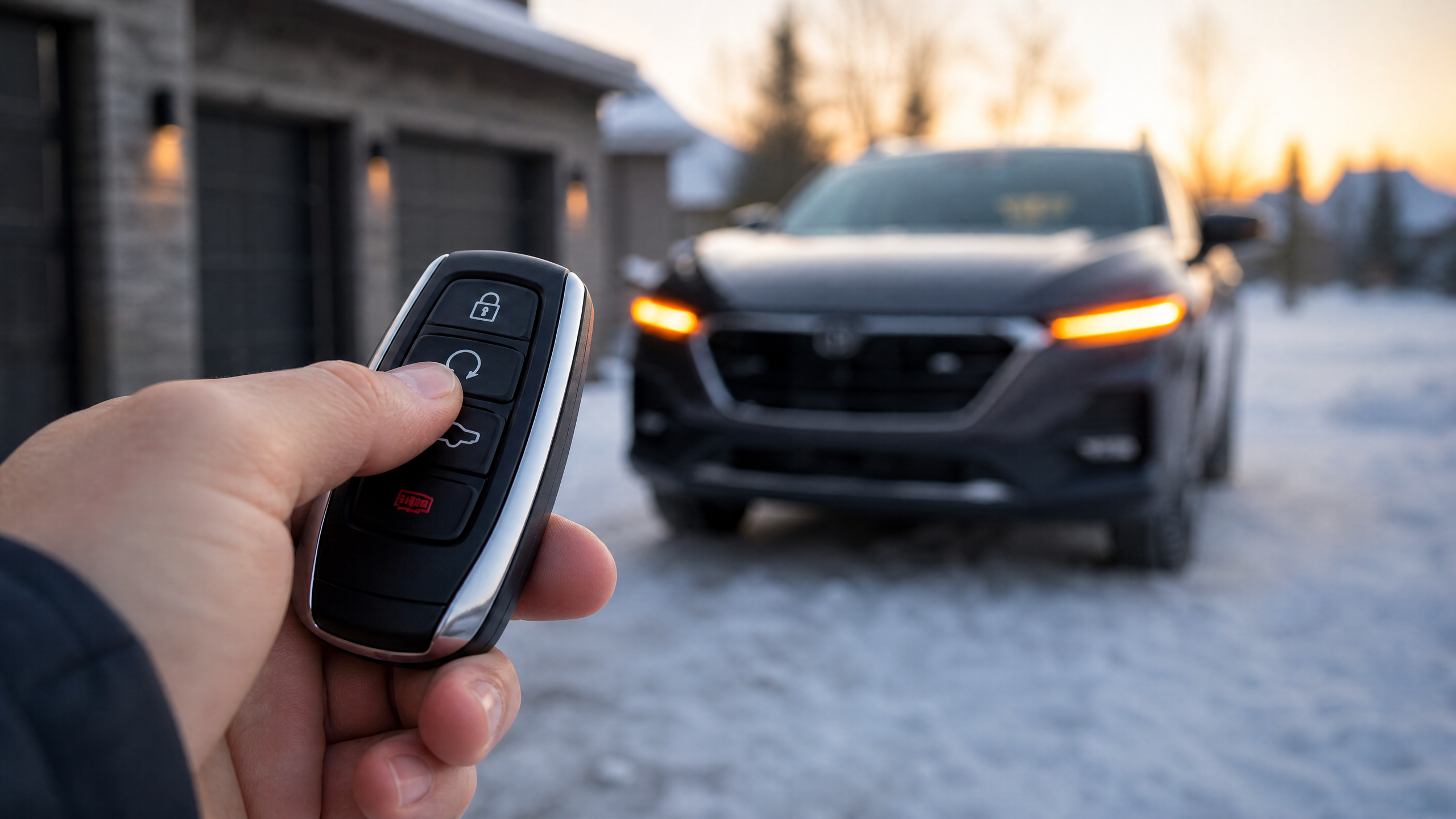
I lived without a remote starter for longer than I should have out of pure stubbornness. I told myself it was an unnecessary luxury add-on, right up until a January morning where I spent fifteen minutes scraping a windshield in fourteen-degree weather before I could even back out of the driveway.
That was it for me. I installed a remote starter on my own truck that weekend, and I’ve put them in a dozen customer vehicles since. It’s genuinely one of the highest satisfaction-per-dollar upgrades you can do to a daily driver, especially anywhere that sees real winters or brutal summers.
This isn’t a beginner-friendly five-minute job like swapping a cabin air filter, but it’s absolutely doable in a weekend if you’re comfortable with wiring and you’re patient about testing before you button everything up.
How a remote starter actually works
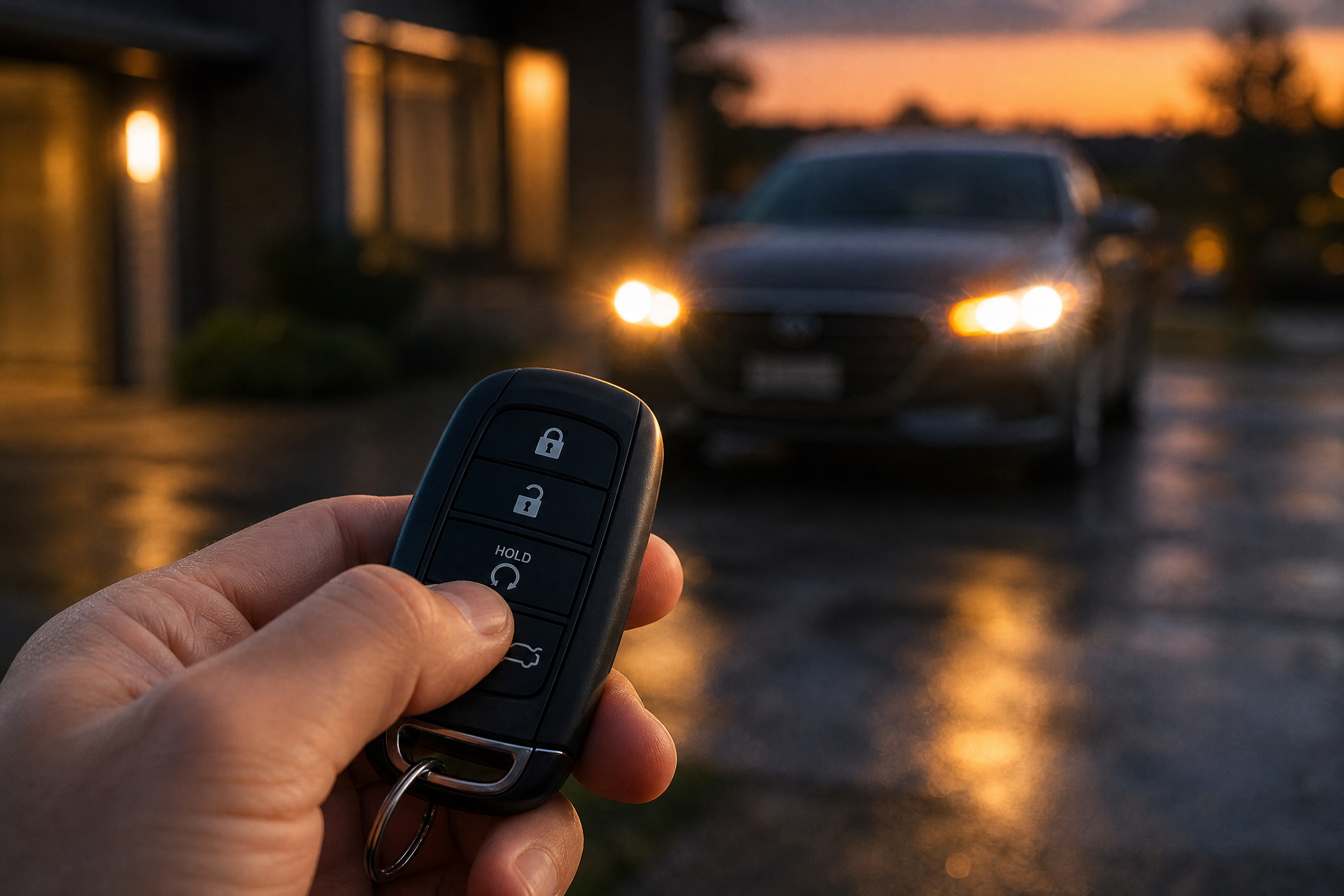
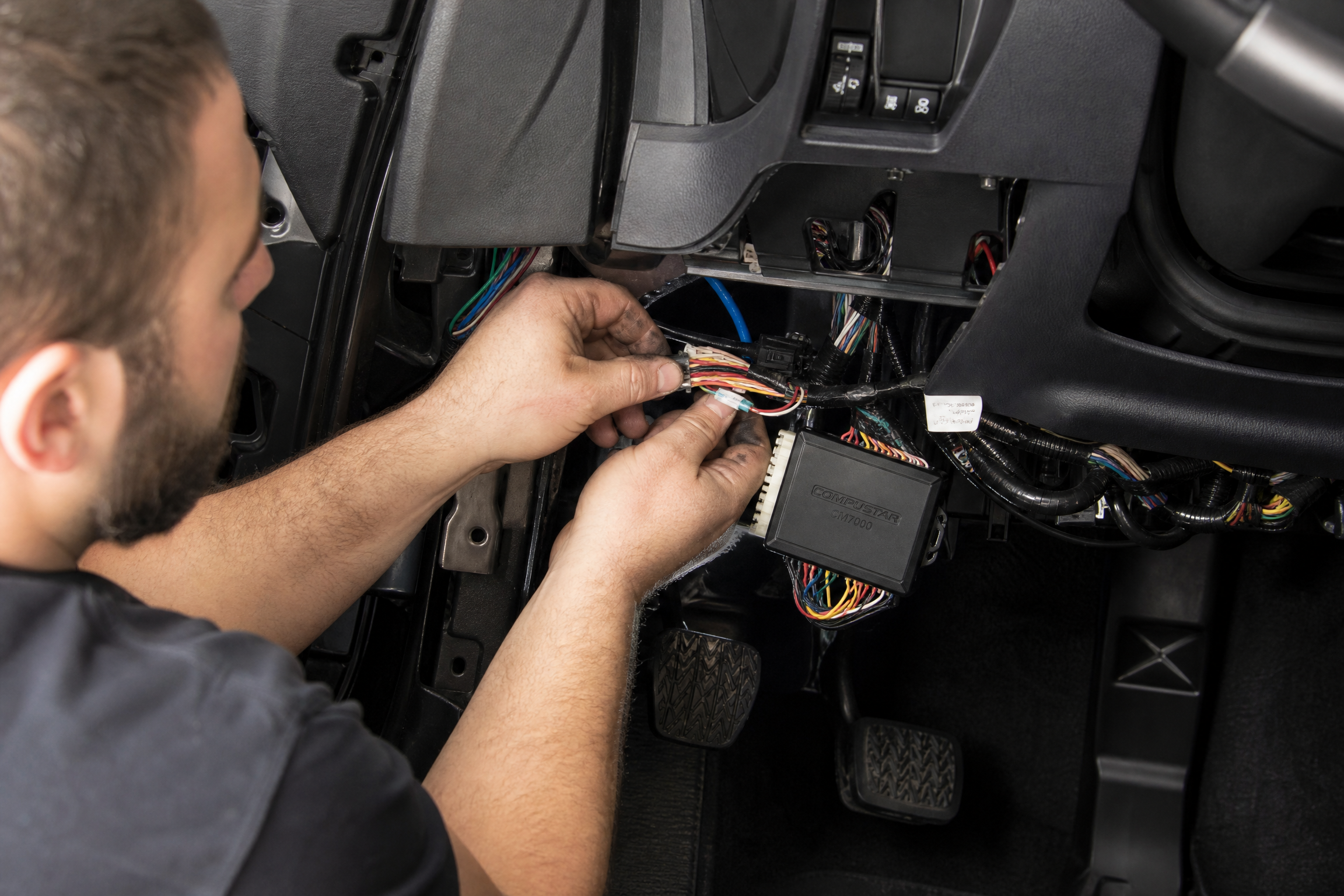
At a basic level, a remote starter module sits between your key ignition switch and the starter, ignition, and accessory circuits. When you press the remote fob button, the module simulates the sequence your key would normally trigger — turning on ignition, cranking the starter, then backing off once the engine catches.
- Tach or wire sense circuit — the module needs to know when the engine has actually started so it can release the starter circuit. This is read either off the tachometer wire, the alternator’s charge wire, or the OEM data bus depending on the vehicle.
- Bypass module — nearly every car since the late ’90s has a transponder chip in the key that talks to the immobilizer. Since your key isn’t physically in the ignition during a remote start, a bypass module reads that chip’s signal (usually by having you leave a valet-programmed spare key clipped inside the dash) and feeds it to the immobilizer so the engine will actually run.
- Parking brake and hood/door safety inputs — the module checks these before allowing a remote start and will shut the engine back down if a door opens or the brake gets pressed without the key present, so nobody can just drive off with a remote-started car.
Manual vs. automatic transmission — the big difference
If you’re driving a manual transmission vehicle, this matters a lot: remote starters need extra safety interlocks to confirm the car is in neutral and the clutch is fully up before allowing a remote start. Most remote starter kits include a clutch safety switch specifically for this.
Skipping that interlock on a manual is a real safety hazard — if the car were somehow left in gear with the clutch partially engaged, a remote start could cause the vehicle to lurch forward. Don’t cut corners here; buy a kit rated for manual transmissions if that’s what you’re working with.
Tools and parts I use
Tools
- Trim removal tool set
- Wire strippers and crimping tool
- Multimeter (non-negotiable for this job — you’ll be probing a lot of wires)
- Soldering iron and heat-shrink tubing (I solder every splice on a remote start install, no exceptions)
- Panel/dash removal tools for accessing the steering column
- Zip ties and wire loom
- Test light
Parts
- Remote starter kit rated for your transmission type
- Vehicle-specific bypass module (T-harness style is easiest — plugs into the factory OBD-II or door module harness with minimal cutting)
- Spare working key for the bypass module, if your kit requires one
- Butt connectors and relay sockets as needed
Step-by-step install
- Research your exact wiring diagram. This is the one job where I strongly recommend buying the vehicle-specific wiring guide from the remote starter manufacturer instead of winging it. Every make and model routes these circuits differently.
- Disconnect the negative battery terminal with a 10mm socket and set it aside from the post.
- Remove the steering column covers and kick panel to access the ignition switch harness and the factory wiring you’ll be tapping into.
- Identify and confirm each wire with your multimeter — ignition, accessory, starter, ground, and the tach or data bus wire. Don’t trust color codes alone on anything but a factory wiring diagram; aftermarket wire colors can vary by trim level.
- Install the bypass module according to its instructions — usually a T-harness that plugs inline with an existing factory connector.
- Wire the remote start module into the ignition, start, accessory, and ground circuits per your diagram, soldering and heat-shrinking every splice.
- Connect the parking brake and hood pin safety inputs if your kit includes them — these are what stop the module from allowing a remote start if the hood is open or the brake is engaged.
- Mount the receiver module in a dry spot with reasonable antenna line-of-sight, away from large metal panels that could block the fob signal.
- Program the valet key to the bypass module if required, following the manufacturer’s specific programming sequence.
- Reconnect the battery and test from inside the vehicle first, then walk the range test outside from increasing distances.
- Reinstall all trim panels and do a final function test: remote start, remote stop, and a normal key start to confirm nothing else broke in the process.
Problems I’ve run into (and the fix)
Car starts but immediately shuts off
Almost always the tach or engine-running sense wire isn’t picking up a signal, so the module thinks the engine never started and cuts the starter circuit as a safety measure. Recheck that connection with your multimeter while the engine idles.
Remote start works but the car won’t stay running / immobilizer kills it after a few seconds
This is a bypass module communication issue — either it’s not wired to the correct data wires, or the valet key programming didn’t complete correctly. Re-run the bypass module’s programming sequence exactly per its instructions; skipping a step in that sequence is the number one cause of this problem.
Range is way shorter than advertised
Check where you mounted the receiver antenna. Metal dash components and especially a foil-backed windshield (common on trucks and SUVs with rain sensors) can seriously choke your range. Reposition the antenna closer to the windshield glass, away from large metal surfaces.
Remote start works from home but not from inside a building
Normal — that’s a physical limitation of the RF or Bluetooth range on the fob, not a wiring problem. Some premium systems offer smartphone app control over cellular data instead of direct RF range, which solves this if it’s a dealbreaker for you.
A quick word on where remote starters aren’t allowed
Before you buy anything, check your local rules. A small number of cities and a few states restrict or ban unattended vehicle idling, including remote-started cars sitting in a driveway. It’s rarely enforced against a homeowner warming up their own car, but it’s worth a quick search for your city name plus “unattended idling ordinance” so you’re not caught off guard.
Some homeowners associations and apartment complexes also have their own idling rules separate from city law, especially in shared parking areas. Two minutes of searching beats an awkward conversation with a neighbor or a property manager later.
Getting the most out of remote start in extreme weather
A remote starter warms the engine and, on most setups, kicks the climate control on too — but there are a few tricks that make a real difference in how comfortable the cabin is by the time you walk out.
- Leave the climate control set to auto with a target temperature before you shut the car off, rather than leaving it on a manual fan speed. Most factory climate systems will ramp up heating or cooling automatically on a remote start when left in auto mode.
- Crack a window slightly in humid climates before a remote start in summer — it lets the initial blast of hot cabin air vent out faster once the AC kicks on, instead of fighting to cool trapped air.
- Set a runtime that matches the season. Most modules let you program how long the engine idles before auto shutoff — I run mine around 10 minutes in winter and closer to 15 in deep summer heat, since AC takes a little longer to really pull the cabin temperature down.
- Don’t rely on remote start alone to clear ice. It’ll loosen a light frost with the defroster running, but a real ice storm still needs a scraper — a remote starter buys you comfort time, not a free pass to skip visibility checks.
Quiz: is a remote starter right for your car
60-Second Fit Check
A few quick questions to see if this is a DIY weekend job for your setup or one to hand off to a shop.
1. What transmission does your vehicle have?
2. How comfortable are you probing factory wiring with a multimeter?
3. Is your car still under a factory or extended warranty?
Buying reference
| Feature | Basic kit | Premium kit |
|---|---|---|
| Control | Standard RF key fob | Smartphone app + RF fob |
| Range | 500–1500 ft line of sight | Unlimited via cellular app |
| Manual transmission support | Sometimes extra module needed | Usually included |
| Extra features | Basic start/stop, lock/unlock | GPS tracking, geofencing, temp-based auto start |
Grab the parts I actually use
I keep an updated list of the starter kits, bypass modules, and tools I trust for this exact job.
Check Remote Starter Kits on Amazon →Final word from the garage
A remote starter is more than just a convenience — it’s a way to save your engine from the wear and tear of cold starts and your own sanity from the misery of a frozen cabin. Take your time with the wiring, test every circuit twice, and you’ll wonder how you ever lived without it.


Leave a Reply