
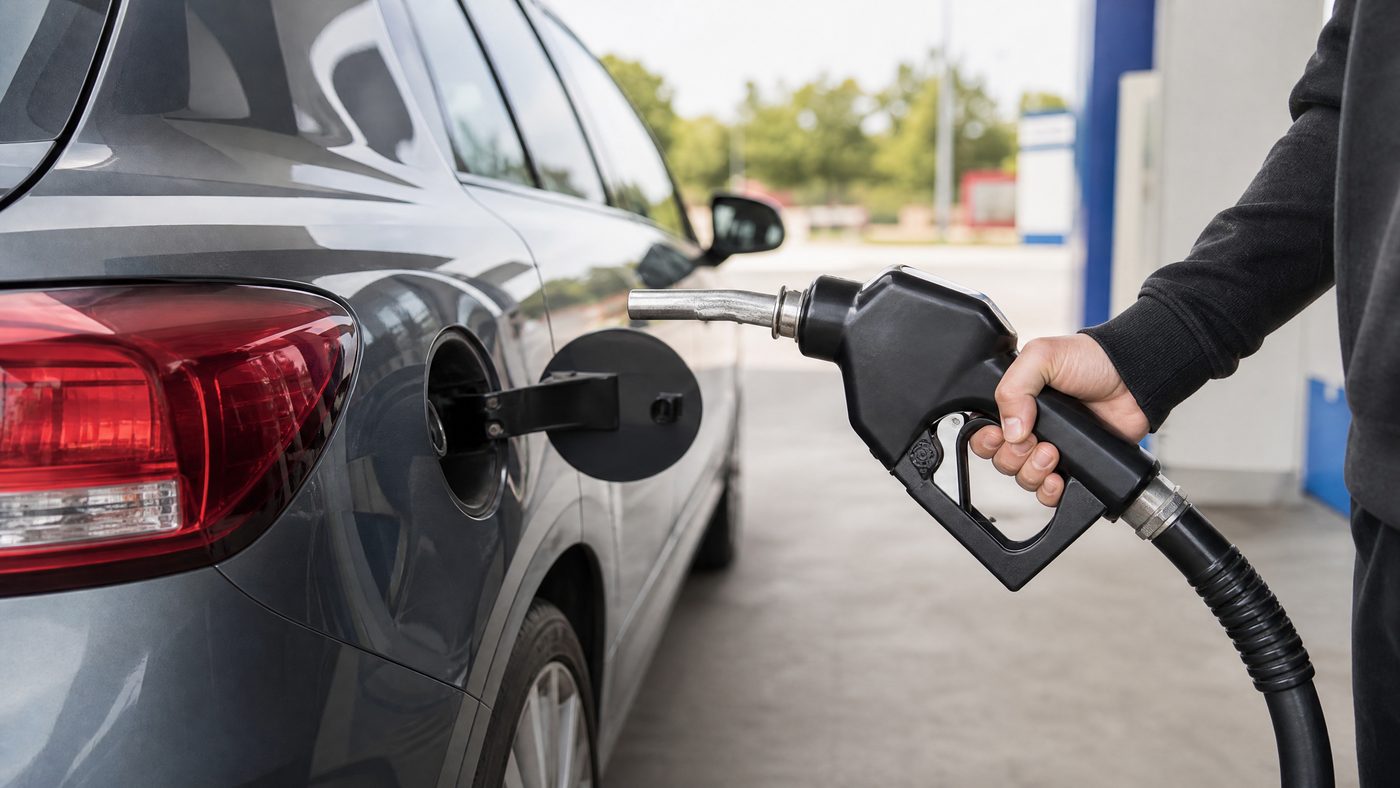
I’ll never forget teaching my niece to drive. We pulled into a gas station, and she just sat there staring at the pump like it was a spaceship control panel. “Which button do I press?” she asked. I realized then that nobody actually teaches this stuff anymore — you just kind of absorb it by watching someone else do it a hundred times.
So here’s the breakdown I gave her, the same one I’d give anyone standing at a pump for the first time. No jargon, no guessing, just the steps in order.
Before You Even Get Out of the Car
A few things to sort out first, while you’re still parked at the pump.
Turn off your engine. Every station has a sign about this, and it’s not just a formality. Gasoline vapors are flammable, and running an engine near an open fuel tank is asking for trouble. It’s rare for anything to happen, but rare isn’t the same as impossible.
Put your phone away, or at least don’t use it while your hand’s on the nozzle. The static electricity risk from phones is mostly overblown, but distraction isn’t. I’ve seen people so locked into a call that they don’t notice fuel spilling over the side of the tank.
No smoking, obviously. I probably don’t need to tell you this one, but I’ve seen it happen.
Know which side your fuel door is on. Sounds basic, but I’ve watched more than one person pull up on the wrong side and have to circle the whole station. Most cars have a small fuel pump icon on the dashboard fuel gauge with an arrow pointing to which side the door’s on. Check that before you pull in if you’re driving an unfamiliar car — a rental, a friend’s car, whatever.
Step 1: Open the Fuel Door and Remove the Cap
This part trips up more beginners than you’d think, mostly because cars aren’t consistent about how this works.
For most cars: there’s a small lever or button inside the car, usually down by the driver’s seat near the floor, or sometimes built into the door panel. Pull it, and the fuel door pops open a crack. You then push on the door itself to swing it open the rest of the way.
For some newer cars: you just push on the fuel door directly, no interior lever needed. It pops open with a little spring mechanism.
Once the door’s open, look for the cap. There are two main types out there:
- Screw-off cap: twist counterclockwise, same as loosening a bolt. You’ll usually hear a little hiss of released pressure — that’s normal.
- Capless system: more common on newer vehicles. There’s no cap at all, just a spring-loaded flap inside the fuel neck. You push the nozzle straight in and it opens the flap itself. No twisting required.
If your cap has a lock, you’ll need your key to release it — check your key fob or the shape of your car key for a small hidden slot near the tip.
One habit I picked up from years of doing oil changes and fill-ups: if your cap is on a tether (attached to the car with a little plastic strap), just let it hang. Don’t set it down on top of the car or the pump island — I can’t tell you how many gas caps I’ve seen left behind on top of a pump because someone drove off without grabbing it.
Step 2: Choose the Right Octane Level
This is where most beginners freeze up. Three or four buttons, all with different numbers, and nobody explains what they mean.
Octane rating measures how resistant the fuel is to “knocking” — a kind of premature, uneven combustion inside the engine. Higher octane doesn’t mean more power or better mileage by itself. It means the fuel can handle higher compression and higher heat without igniting at the wrong time.
Here’s the breakdown you’ll typically see at the pump:
| Octane Rating | Common Name | Who Needs It |
|---|---|---|
| 87 | Regular | Most everyday cars and trucks |
| 89 | Mid-grade / Plus | Some manufacturers recommend this as a middle ground |
| 91-93 | Premium | High-performance engines, turbocharged engines, some luxury brands |
The rule I go by: check your owner’s manual or the sticker inside your fuel door. It’ll say either “Regular unleaded recommended” or “Premium fuel required.” That word — required versus recommended — actually matters.
- If it says required, use it. Running lower octane in an engine that needs premium can cause knocking, which over time damages pistons and cylinder walls. I’ve pulled apart engines with pitted piston tops from years of someone ignoring this.
- If it says recommended, you can usually get away with regular in a pinch, though you might lose a little performance or fuel economy. Not ideal long-term, but not going to blow up your engine either.
- If your car just says regular unleaded, don’t waste money on premium. It won’t hurt anything, but it also won’t do a single thing extra for a standard engine. That’s just money straight out of your pocket for no benefit.
Diesel is a separate category entirely — usually the green handle at the pump, clearly labeled. Never put diesel in a gasoline engine or gas in a diesel engine. This is one of the most expensive mistakes I see, and it usually means towing the car to a shop for a full fuel system flush before it can even be started again. If you’re not sure which your car takes, check the fuel door — it’s almost always labeled right there.
Step 3: Select Payment and Start the Pump
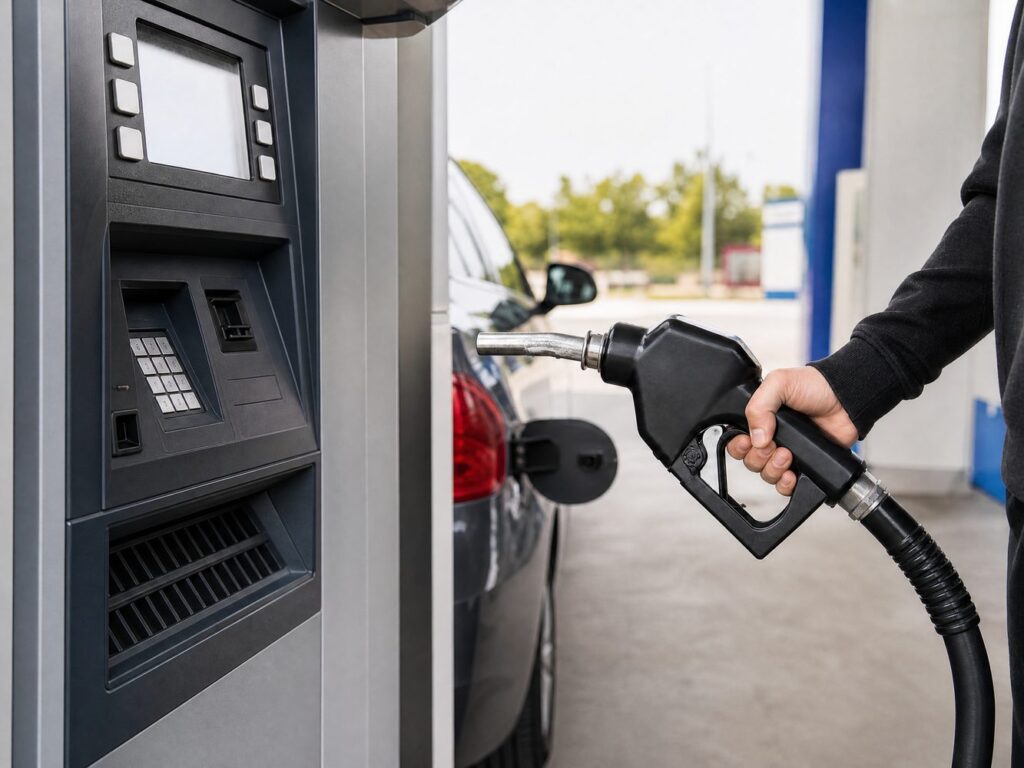
Most stations these days let you pay right at the pump with a card, or you can prepay inside if you want cash or a set dollar amount.
- Insert or tap your card when prompted, following the on-screen instructions
- Select your octane grade from the buttons on the pump
- Lift the nozzle from its holster
- Wait for the “authorized” message or a green light on the pump before inserting the nozzle — some pumps need a second to catch up
Step 4: Insert the Nozzle and Fill Up
Now for the actual fueling part.
Push the nozzle into the fuel neck at a slight angle, then straighten it once it’s a few inches in. Squeeze the handle. Most nozzles have a little clip or clamp you can flip up to lock the handle in the open position, so you don’t have to stand there squeezing it the whole time.
The pump will click off and stop automatically once the tank is full. This is your cue to stop — don’t try to “round up” to a whole dollar amount by squeezing extra fuel in after the auto-shutoff. That extra fuel has nowhere to go and can spill out, which is bad for the environment, bad for your paint if it splashes, and honestly just wastes money since it just runs down the side of the car.
If you smell fuel while filling up, that’s normal in small amounts — a little vapor escapes every time. If it’s a strong, ongoing smell or you see fuel actively dripping, stop and let the attendant know, or move to a different pump.
Step 5: Replace the Cap and Close the Door
Once the pump clicks off, remove the nozzle slowly — there’s usually a few drops left in the tip, so give it a second before pulling it all the way out to avoid dripping on your shoe or the pavement.
Screw the cap back on until you hear it click — most modern caps have a ratcheting mechanism that clicks a few times once it’s properly tight. Don’t overtighten past the clicks; you’ll just wear out the threads.
For capless systems, just push the nozzle out and the internal flap closes itself. Nothing else to do.
Close the fuel door until it clicks shut, grab your receipt if you want one, and you’re done.
If You’re in a Full-Service State
A couple of states, New Jersey being the best known example, still require an attendant to pump your gas for you. If you’re driving through one of these and you’re used to self-service, here’s the short version: stay in the car, tell the attendant your octane grade and how much you want (full tank, or a dollar amount), and let them handle the nozzle. Some Oregon stations have moved to allow self-service, but plenty still work the same way.
It throws people off the first time, especially if you’re used to doing every step yourself. Just roll the window down, keep the engine off, and let them do their job. No need to get out of the car.
Common Mistakes I See All the Time
I’ve worked at gas stations, run a home garage, and pumped my own gas thousands of times over the years. These are the mistakes that come up again and again:
- Driving off with the nozzle still in the tank. This happens more than people admit — usually because someone gets distracted mid-fill. Most nozzles have a breakaway safety feature that prevents disaster, but it’s still a mess and can cost you the hose repair fee.
- Forgetting the gas cap on top of the car and driving off. If your cap isn’t tethered, get in the habit of setting it in your cup holder while you fuel up, not on the roof.
- Overfilling the tank. Beyond wasting fuel, it can trigger your check engine lightif fuel gets into the vapor recovery system (the charcoal canister that captures fumes). If your light comes on right after a fill-up where you topped it off past the click, that’s likely why — it usually clears itself after a few drive cycles once the excess vents off.
- Using the wrong fuel type entirely. Covered above, but worth repeating: check the fuel door label if you’re ever unsure, especially in a rental or borrowed car.
- Ignoring a stuck or jammed nozzle. If the nozzle won’t click into place or fuel is flowing weird, don’t force it. Try a different pump or flag down an attendant.
Car Basics Flashcards
Flip through the key points on checking your oil and pumping gas.
Quick Reference Checklist
- [ ] Engine off before fueling
- [ ] Confirm which side your fuel door is on
- [ ] Open fuel door and unscrew or unlock cap
- [ ] Check owner’s manual or fuel door sticker for octane requirement
- [ ] Select correct octane (or diesel — check labels carefully)
- [ ] Insert nozzle, squeeze handle, let auto-shutoff do its job
- [ ] Don’t top off past the click
- [ ] Replace cap until it clicks, or let capless system self-seal
- [ ] Close fuel door fully
Frequently Asked Questions
Does premium gas clean my engine better than regular? No, that’s a common myth. All gasoline sold in the US, regular or premium, is required to have detergent additives that help keep your engine clean. Octane rating and detergent content are two completely separate things.
Will using premium in a car that only needs regular hurt anything? No, it won’t damage your engine. It just won’t give you any real benefit either — you’re paying more for the same performance you’d get from regular in a standard engine.
What happens if I put a little bit of the wrong fuel in by accident? A small amount of regular in a car that recommends (not requires) premium is generally fine. Gasoline in a diesel tank or diesel in a gas tank is a different story — don’t start the engine, and have the car towed to get the tank drained and the fuel system flushed.
Why does my gas cap hiss when I open it? That’s normal. Your fuel tank builds a small amount of pressure from vapor, and that hiss is just it equalizing. Nothing to worry about unless it’s an unusually loud or forceful release, which could point to an overfilled tank or a vent issue.
Can I use my phone while pumping gas? The actual explosion risk from phones at gas pumps has never been solidly proven in real-world testing, but stations still post the warning, and I’d rather you keep your hand steady and your eyes on the nozzle than risk overfilling or missing a spill because you’re distracted.
Test What You’ve Learned
Here’s a short quiz covering the key points — octane basics, cap types, and the safety habits worth building from day one.
Car Basics Quiz
Test what you picked up about checking your oil and pumping gas.


Leave a Reply