
https://carsrevamp.com/wp-content/uploads/2025/overheating_1.webp
That Creeping Needle in Stop-and-Go Traffic
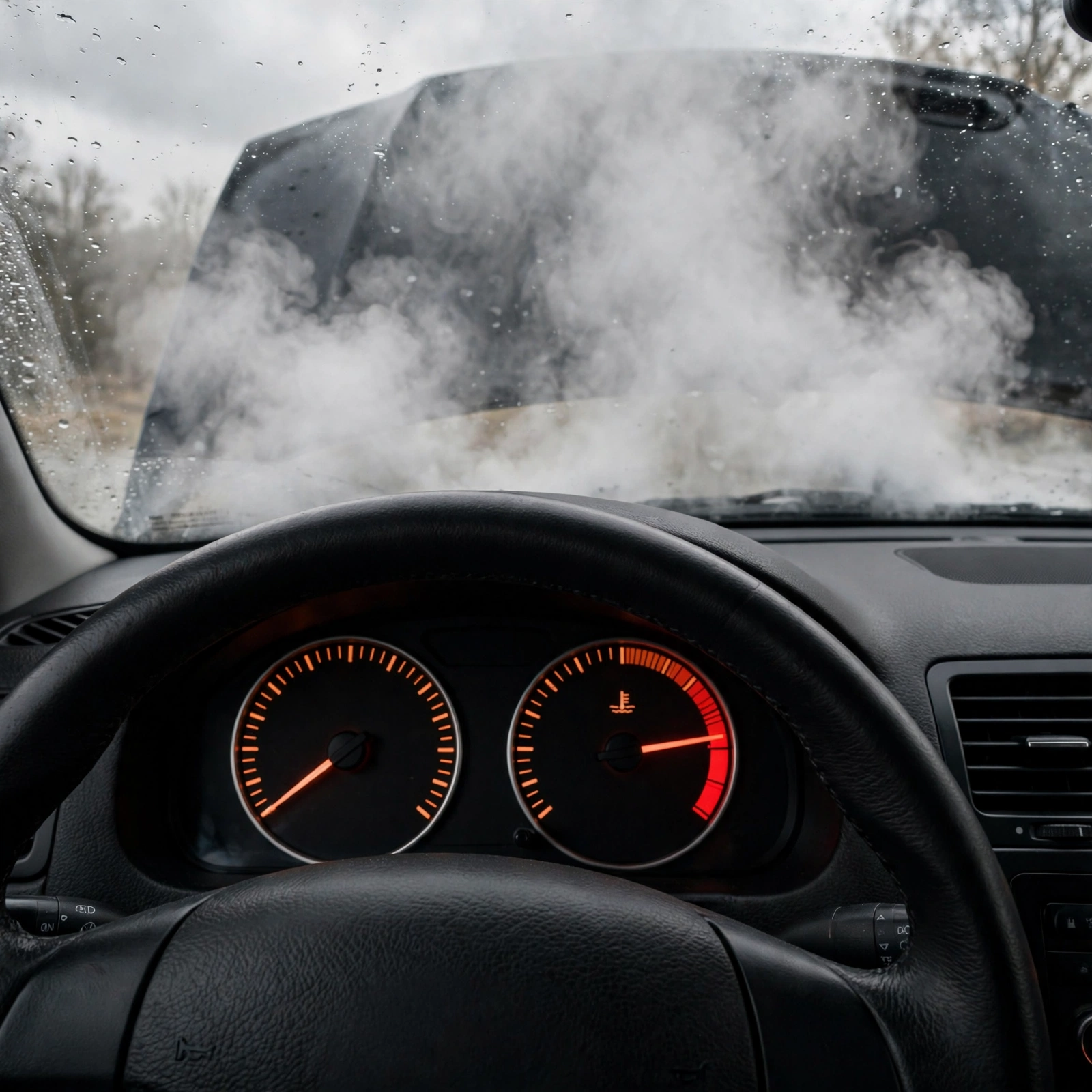
I was stuck on the 101 last July, AC blowing, temp gauge doing that slow climb past the middle. You know the feeling. Your eyes flick from the bumper ahead to the needle on the cluster. One minute you’re fine, next minute you’re watching steam puff from the hood of the car in front of you and thinking, that could be me.
Overheating in traffic is different from overheating on the highway. At speed, you’ve got 60 mph of air shoving through the radiator. In traffic, you’ve got nothing but your electric fans and whatever coolant is actually in the system. If anything’s weak, traffic finds it.
I learned this the hard way under my Mazda in the garage. My hands were greasy, I’d skipped a $12 radiator cap, and it cost me a head gasket. So before summer hits, here are the 5 checks I do now every May. Takes about 45 minutes with a cold engine.
Why Cars Overheat in Traffic But Not on the Highway
Two things change when you stop moving:
- No ram air. At 55 mph, air flows through the radiator without fans. At 0 mph, you need fans pulling 1800-2500 CFM.
- Lower water pump speed. At idle your pump spins at ~650-800 RPM. Less flow, less heat transfer.
- AC condenser heat. That AC you need in traffic dumps 120-140F air right in front of your radiator.
So if your system is 10% low, or your cap doesn’t hold pressure, or a fan relay is tired, it’ll hide on the freeway and show up on a hot Tuesday in traffic.
5 Checks Before Summer
Check 1: Coolant Level and Mix (Cold Engine Only)
Never open a hot system. Hot coolant burns. I wait at least 2 hours after driving. Put your hand on the upper radiator hose — if it’s warm, wait.
- Pop the hood and find the coolant reservoir, not the radiator cap. Modern cars have a pressurized bottle.
- Level should be between MIN and MAX when cold. If you have to add more than 12-16 oz every month, you have a leak.
- Use a refractometer or test strips to check freeze protection. You’re aiming for 50/50 mix in most climates.
- Look at color. Green, orange, pink — stick with what your manual says. Mixing types can make jelly. That jelly clogs heater cores.
You’ll need: flashlight, nitrile gloves, rag. If you’re adding, use distilled water only, not tap. Tap leaves minerals that scale inside.
Safety trick: Clean dirt off the cap before opening to save ABS valves and seals. Grit falling into the tank goes straight to your water pump seal.
Check 2: Radiator Cap and Pressure
This $10-18 part is the most overlooked. The cap holds system pressure — usually 13-16 PSI for cars, 18-21 PSI for trucks. More pressure = higher boiling point. A cap that releases at 9 PSI will boil at 225F instead of 265F.
- Pull the cap when cold. Look at the two rubber seals. If they’re cracked, hard, or the spring feels mushy, replace it.
- Check the filler neck for white crust. That’s dried coolant from a leaking cap.
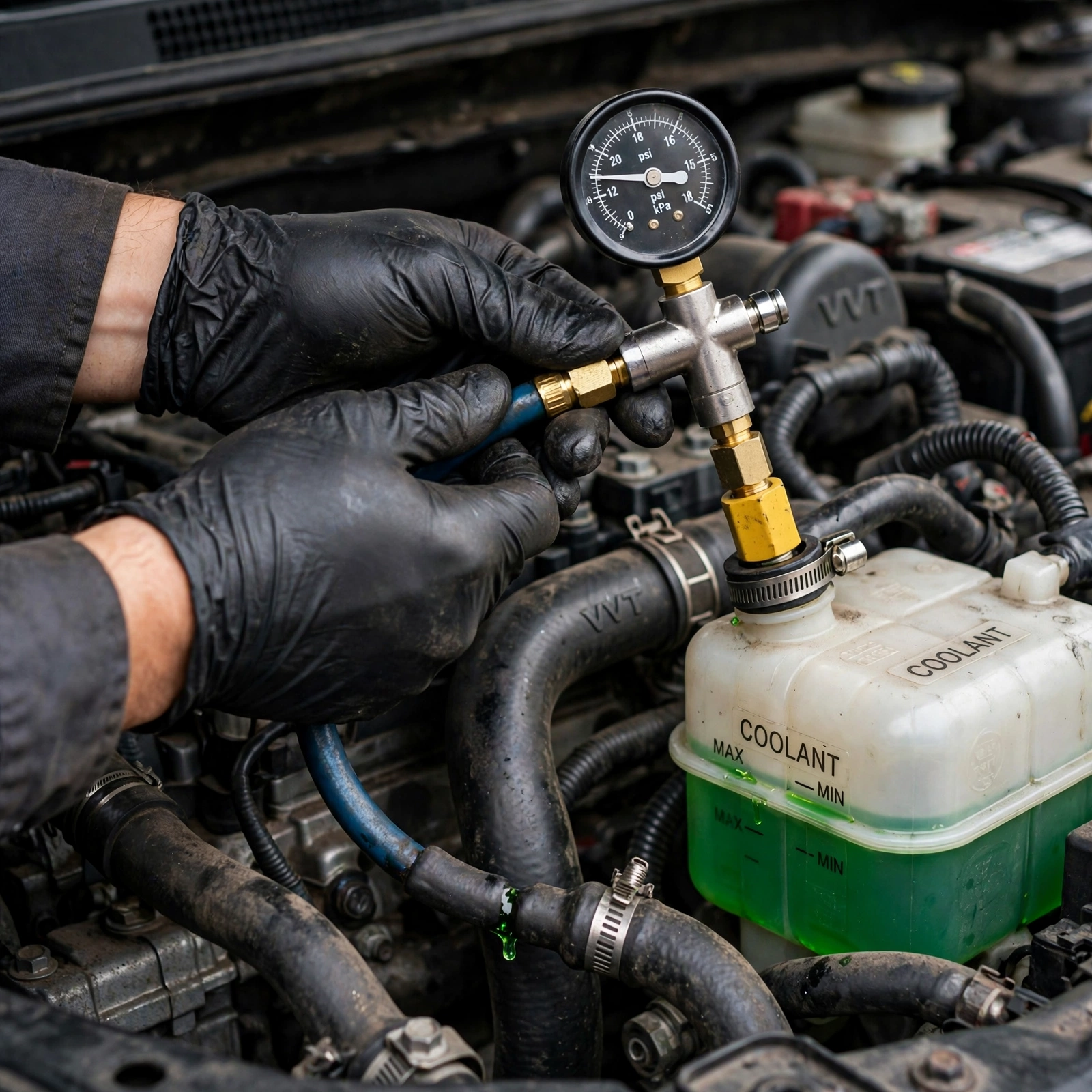
- If you have a cooling system pressure tester — the kit with adapters — pump it to the rating on the cap. It should hold for 2 minutes. If it drops 2 PSI fast, it’s toast.
I keep an OEM cap in my toolbox. Aftermarket caps sometimes have the wrong pressure. Check the number stamped on top. Match it exactly.
| Cap Rating | Boiling Point at 50/50 Mix | Use Case |
|---|---|---|
| 13 PSI | ~245F / 118C | Many imports, older economy cars |
| 16 PSI | ~265F / 129C | Most modern sedans |
| 21 PSI | ~275F / 135C | Performance trucks, some German cars |
Check 3: Electric Fan Operation
You can have perfect coolant and still overheat if your fans don’t run. You’ll hear them. Most cars kick fans on at 207-222F coolant temp.
- Start the car cold, turn on AC to MAX. Both radiator fans should spin immediately on most cars. No spin = problem.
- Let it idle to operating temp with a scan tool watching ECT sensor. No scanner? Watch the gauge and listen. Around 3/4 up, fans should roar.
- Common failures: fan relay (30-40A in underhood fuse box), fan fuse, burnt connector at fan motor. I wiggle the connector — if fan starts, you’ve got a melted pigtail.
- Test the motor directly: unplug it, jump 12V + and ground from battery with a 10A fused jumper wire. If fan doesn’t spin, motor is dead.
Tool sizes you’ll bump into: 10mm socket for fan shroud bolts, 8mm for relay box cover, small flat blade for connector tab. Torque for fan shroud bolts is light — 44 in-lbs (5 Nm). Don’t crank them, the plastic cracks.
Safety: Keep fingers, rag, and loose sleeves clear. Fans can start with the key on even if engine is off. They’ll take a finger.
Check 4: Hoses and Water Pump Seep
Hoses fail from inside. I squeeze them.
- With cold engine, squeeze the upper and lower radiator hoses. They should feel firm like a tennis ball, not crunchy or mushy. Crunch = internal breakdown.
- Check spring clamps and worm gear clamps. Worm gear spec is 30-35 in-lbs. Overtightening cuts the hose.
- Look under water pump weep hole with a mirror. Any pink/green/orange dried trail = pump seal starting to fail.
- Pressure test: With system cold, install pressure tester, pump to 16 PSI, let sit 10 minutes. Walk around with a flashlight. Check heater hoses at firewall, thermostat housing, radiator side tanks.
One trick: smell your carpet. Sweet smell inside plus foggy windshield = heater core leak. That drops coolant without puddles.
Check 5: Thermostat Opening
Thermostat sticks half-open and you overheat only in traffic. Classic.
- Feel the upper hose. After cold start, it should stay cool for 3-5 minutes, then get hot all at once around 195F. If it warms slowly from start, t-stat is stuck open (bad MPG, no heat). If it stays cold while gauge climbs, stuck closed.
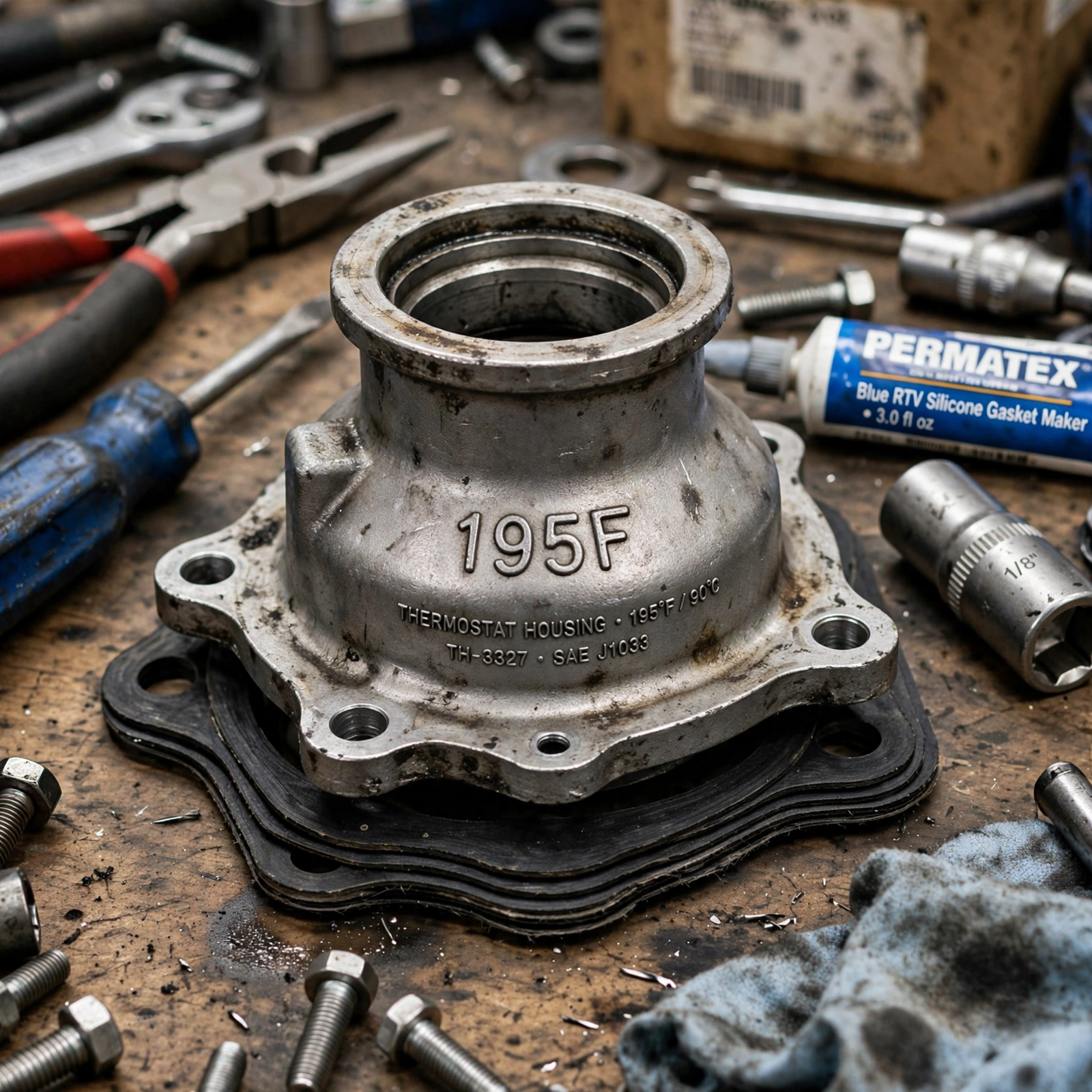
- If you’re replacing: most inline 4-cylinder housings use 10mm socket bolts, torque to 80-89 in-lbs (9-10 Nm) for aluminum housing. Over-torque warps it and it leaks.
- Use new gasket, not RTV alone. Some stats have a jiggle valve — put it at 12 o’clock position to bleed air.
- After refill, bleed air. Many cars have a bleeder — 10mm or 12mm brass screw on thermostat housing or heater line. Open until steady stream, no bubbles.
Most OEM thermostats are stamped 195F (91C) or 180F (82C). Don’t go colder thinking you’ll run cooler. ECU wants 195F to hit fuel trims.
The Quick Traffic Overheat Checklist
Before you drive: coolant at MAX line cold, cap seals soft, fans kick with AC, hoses firm, no weep at pump. If you nail those, you’re good for 95% of summer jams.
| Symptom in Traffic | Likely Check | What to Do |
|---|---|---|
| Temp rises fast with AC on, drops when AC off | Fan operation / condenser blocked | Test fans, clean fins with low-pressure water |
| Temp climbs slowly, reservoir empty | Leak + cap | Pressure test, replace cap |
| Temp spikes, upper hose cold | Thermostat stuck | Replace 195F t-stat, bleed system |
| Steam + sweet smell | Hose burst | Stop engine, tow, don’t add cold water to hot engine |
My 10-Minute Bleed and Fin Clean Ritual
One more thing I do while I’m in there, and it has saved me twice. I was under my Mazda in the garage last May, my hands were greasy, and I noticed the radiator fins were packed with cottonwood fluff. You can’t see it until you look straight on with a flashlight. That stuff cuts airflow by 30% in traffic.
Take a garden hose on low pressure, not a pressure washer, and rinse from engine side out toward front. Pressure washer folds fins over. I use a soft brush and blow with shop air at 30 PSI max. You’ll see bugs, leaves, dirt fall out.
Then bleed properly. Air pocket after a coolant change is the #1 reason for fake overheating. Procedure I use:
- Fill reservoir to MAX cold with 50/50 premix. Use a spill-free funnel — the clear funnel that locks to radiator neck. Lets bubbles escape without mess.
- Set heater to HI, fan low. Start engine, let idle. Don’t rev yet.
- Crack bleeder on thermostat housing — 10mm brass bleeder on many Hondas, 8mm Allen on some BMWs. When steady coolant comes out with no spit, close it. Torque bleeder to 70 in-lbs (8 Nm), it’s brass and strips easy.
- Watch funnel. You’ll see bubbles burp up for 4-6 minutes. Keep topping until bubbles stop and thermostat opens — upper hose gets hot.
- Rev to 2000 RPM for 20 seconds three times. That pushes air from heater core.
Last check: use an OBD2 scanner to read actual coolant temp. Gauges lie — they stay centered from 185F to 220F on purpose so you don’t worry. Scanner shows 212F, then fans on, drop to 198F. Perfect cycle. If you see 228F+ in traffic and fans on, something’s still weak.
Torque specs you want written on your fender with marker while you work:
- Thermostat housing to head: Aluminum housings 80-106 in-lbs (9-12 Nm), cast iron housings 14-18 ft-lbs (19-24 Nm)
- Radiator drain petcock: hand tight + 1/4 turn, about 20 in-lbs. Overtighten and it snaps.
- Water pump bolts: Typically 17-19 ft-lbs (23-26 Nm) for small 8mm bolts, 30 ft-lbs for 10mm.
- Coolant temp sensor: 15 ft-lbs (20 Nm) with a bit of thread sealant, not Teflon tape that can clog.
And a warning I give everyone: brake fluid ruins paint to bare metal is true, but coolant ruins hoses if you don’t wash it off. Dried ethylene glycol is sticky and hides leaks. After any spill, rinse with water. And if you get coolant on your serpentine belt, wash it — coolant makes belts squeal and slip, which slows water pump.
If You Start to Overheat in Traffic
Don’t panic. Here’s what I do:
- Turn off AC, turn on heat to max, fan to high. Yeah it’s miserable, but heater core is a second radiator. Buys you 10-15F.
- Shift to N, rev to 1500-2000 RPM for 30 seconds. More water pump flow and fan speed if belt-driven.
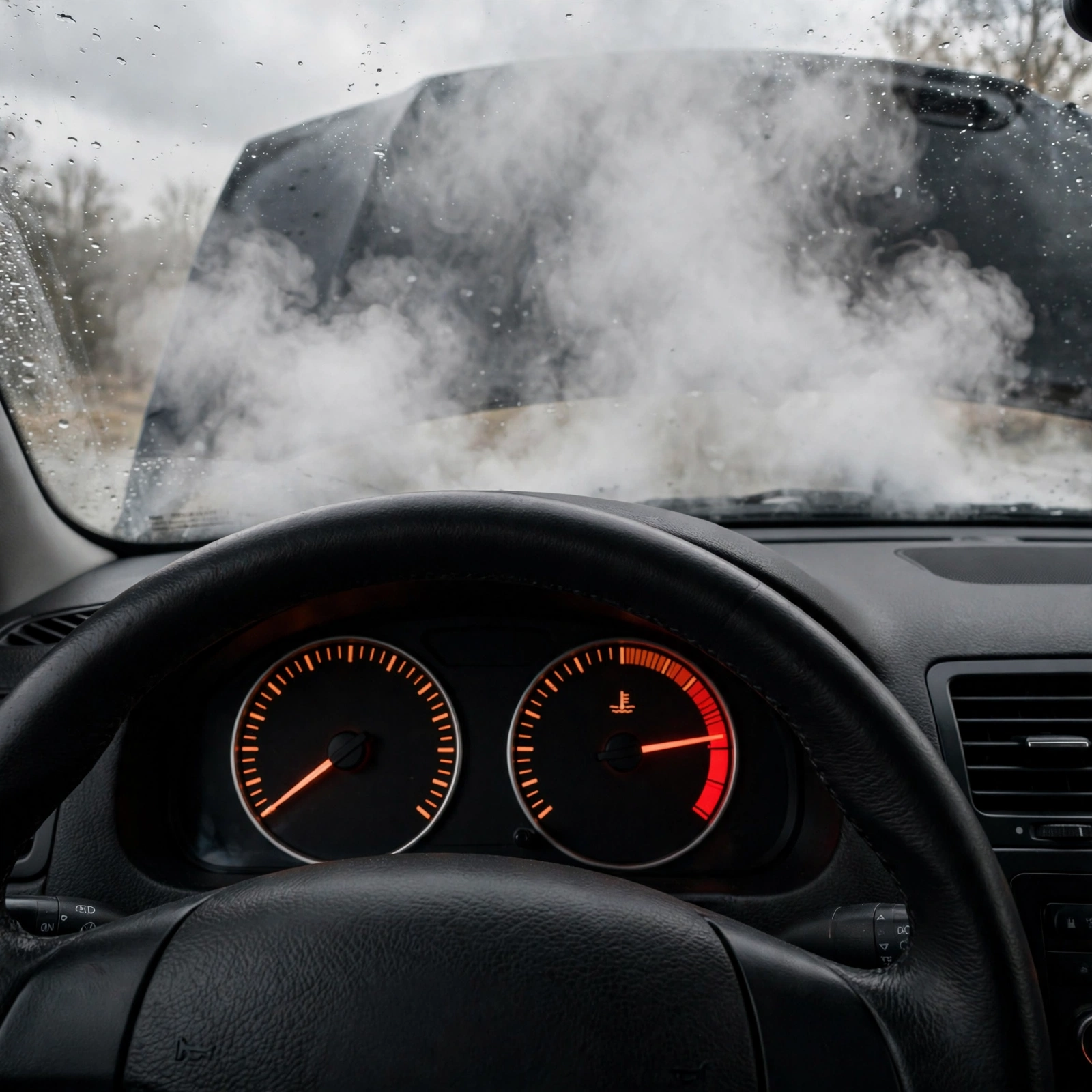
- If needle enters red or steam shows, pull over immediately. Shut it down. Don’t try to make it home.
- Never open radiator cap hot. 16 PSI at 260F will launch coolant like a geyser. Third-degree burn.
- Don’t add cold water to super-hot engine. You can crack a head. Let it drop below 200F first.
After it cools, check reservoir. If low, add 50/50 to MAX. Drive home watching gauge, keep heat on if it creeps. Then do the 5 checks that evening.
Parts I Keep on Hand for Summer
- OEM radiator cap — same PSI as stamped on old one
- Gallon of 50/50 premix — matching type (OAT, HOAT, etc)
- Fan relay — part number from fuse box lid, usually 4-pin 30A
- 10mm gear wrench and pressure tester adapter
- Infrared thermometer — shoot upper hose vs lower hose. Should be 15-30F drop across radiator when fans on
Total cost under $75. Takes less time than waiting for a tow on a 100F day with kids in the back seat.
You don’t need a shop to stop traffic overheating. You just need a cold engine, a flashlight, and 45 minutes. Do those five checks now, and when summer traffic hits you’ll be the one watching the other guy’s steam, not making your own.


Leave a Reply