
Why Coolant Isn’t Just Colored Water
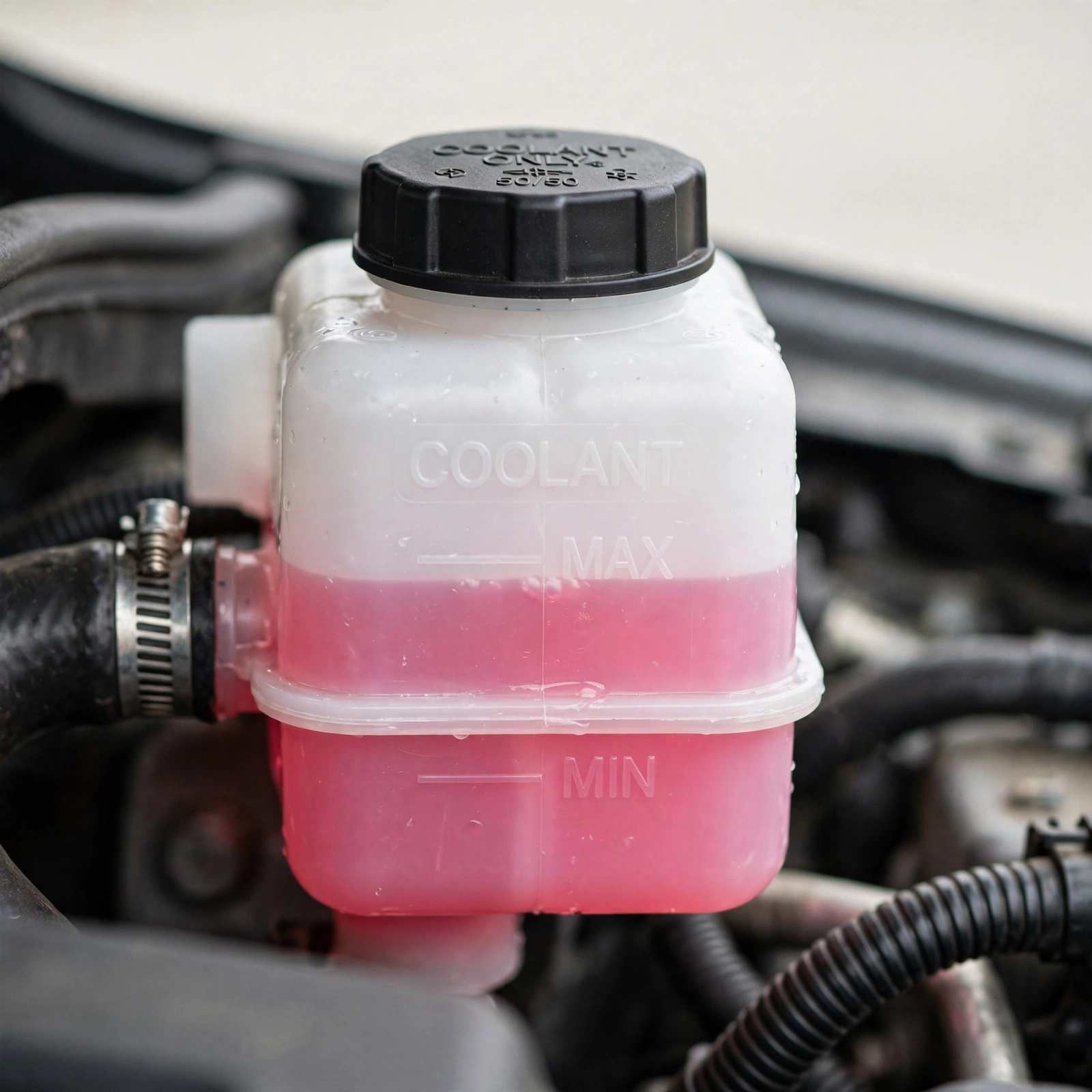
I was under my Mazda in the garage last winter, my hands were greasy and it was maybe 28 degrees out. My neighbor shouted, “Hey, you need coolant?” and I realized most folks think that pink or green jug is optional. It’s not. Your coolant is a mix of ethylene glycol, distilled water, and a package of corrosion inhibitors that keep your water pump, head gasket, and heater core alive.
When that mix gets old, it turns acidic. It’ll eat aluminum. I’ve seen a thermostat housing pitted through because someone topped off green coolant on top of orange for three years straight. So checking level is step one, but knowing when to actually dump it and replace it is what saves you a $1,400 repair.
How to Check Your Coolant Level The Right Way
You don’t need a lift. You need five minutes, a flashlight, and a cold engine. Hot coolant will burn you. It sits at 195-220°F and the system holds pressure at 13 to 16 PSI. Never open a hot radiator cap.
Step 1: Park Cold and Level
- Park on flat ground overnight if you can. Cold check is accurate. Hot level reads higher.
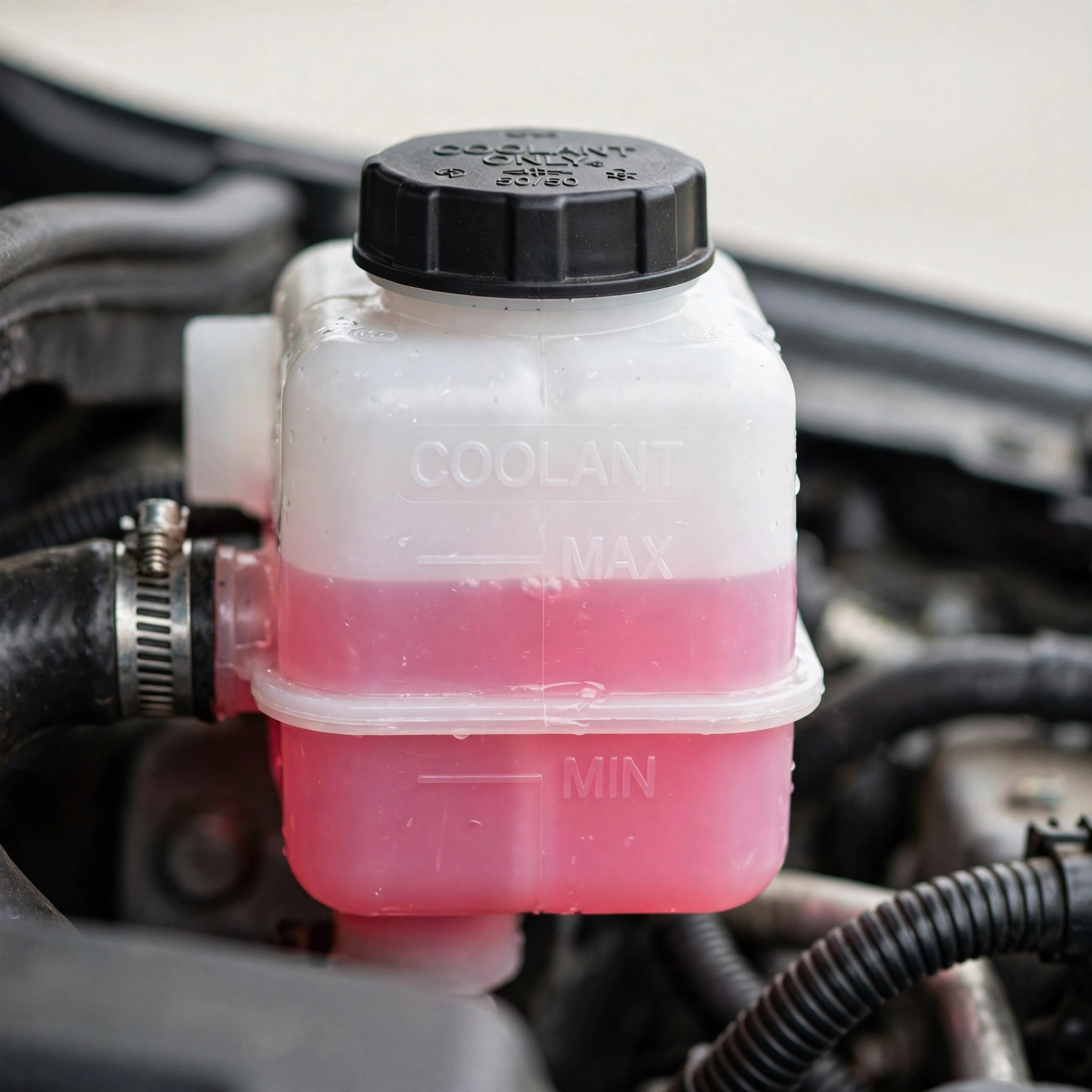
- Pop the hood and find the coolant reservoir — translucent white bottle, not the radiator itself on modern cars.
- Wipe dirt off the cap before you touch it. You don’t want grit dropping into the system and chewing up ABS valves or the water pump seal.
Step 2: Read The Bottle, Not The Radiator
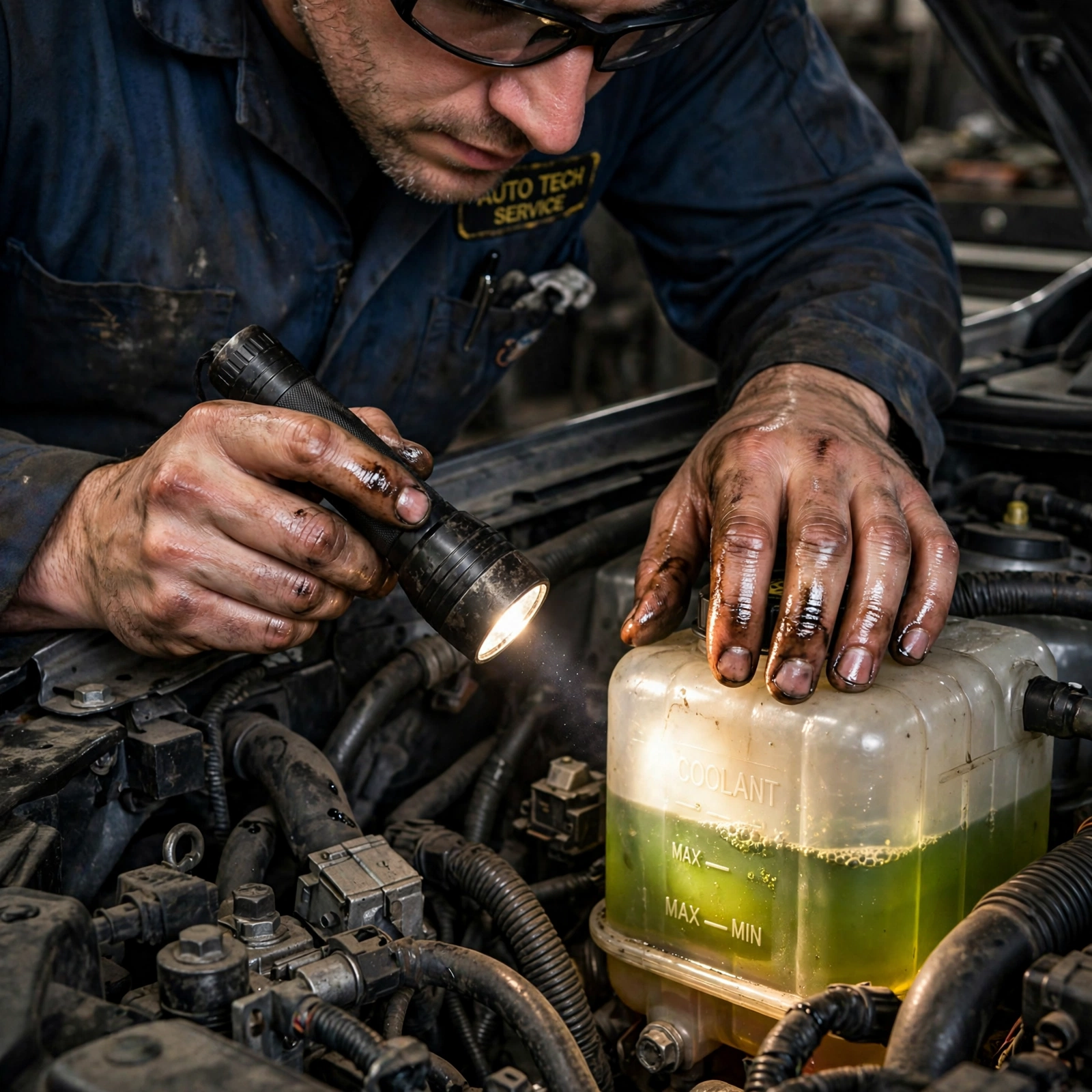
You’ll see two lines: MIN and MAX or LOW and FULL. If you’re cold, level should sit just above MIN. If you’re fully warm, it’ll sit near MAX. If it’s below MIN when cold, you’re low.
My trick: hold a small flashlight behind the reservoir. The coolant line pops instantly. If the bottle is stained brown, you’ll need to open the cap and look inside with the light. On my old Subaru, I had to use a 10mm socket to remove the bottle bracket — 8 ft-lbs torque, don’t over-tighten the plastic.
- Safety: If engine is hot, wait at least 45 minutes. Hot coolant can spray and cause third-degree burns.
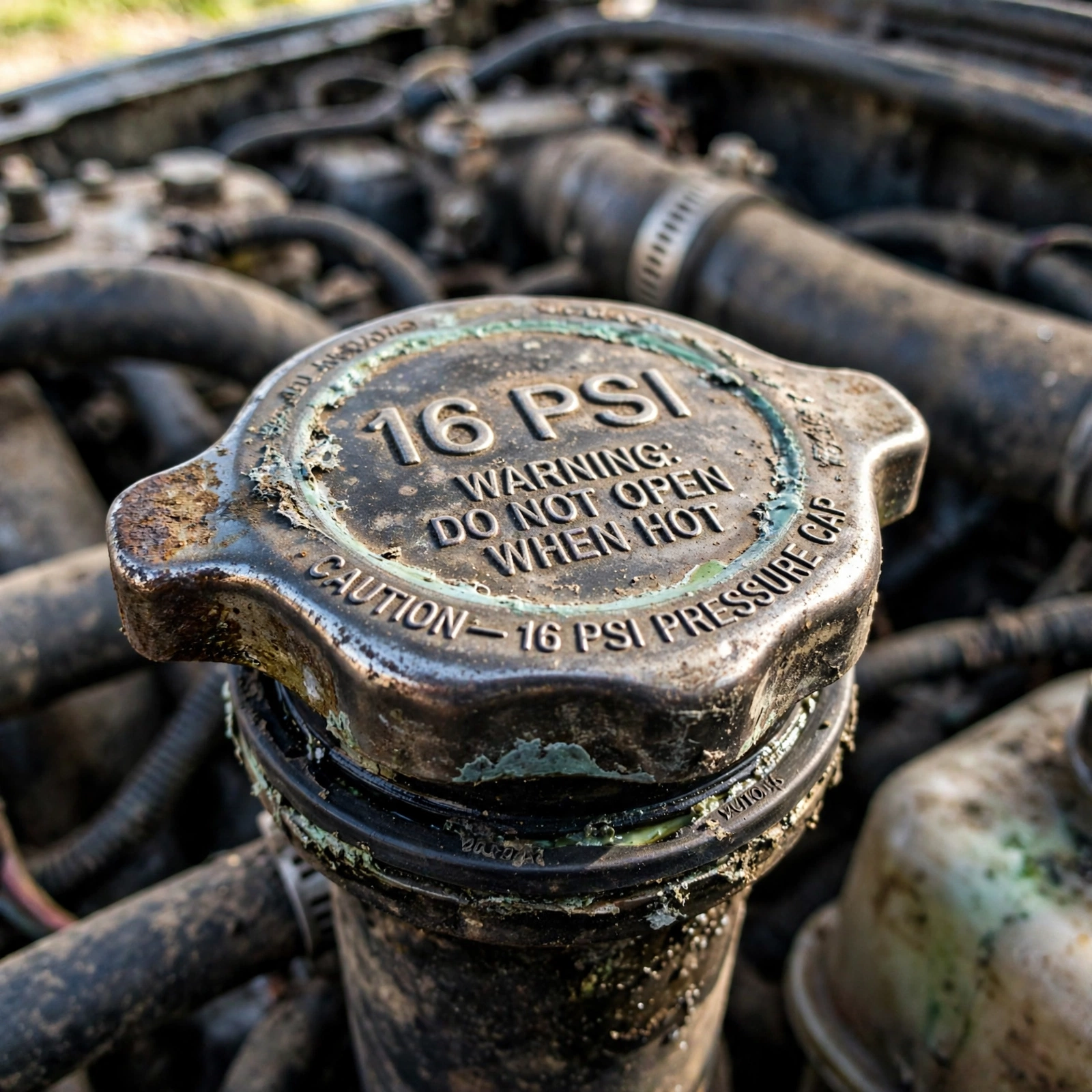
- Don’t open the radiator cap if you have a separate reservoir cap marked “coolant only.” The radiator cap is the pressure cap — 16 PSI rating stamped on top.
- Color check: Pink should be pink. If it looks rusty, oily, or has floating chunks, that’s not topping — that’s flushing.
Top Off vs. Replace vs. Flush — The Difference Matters
A lot of quick lube shops will just top you off. That fixes level for a week, but it doesn’t fix chemistry.
| Situation | What To Do | Why |
|---|---|---|
| Level slightly low, color good, less than 2 years old | Top off with same type 50/50 premix | Normal evaporation |
| Level keeps dropping every month | Find leak + pressure test | You’ve got a leak — hose, cap, water pump weep |
| Color brown, rusty, pH under 7.5, over 3 years / 30k miles | Full replacement | Inhibitors depleted, acidic |
| Wrong color mixed, oil in coolant, overheating history | Flush with distilled + refill | Contamination |
The Tools That Actually Help
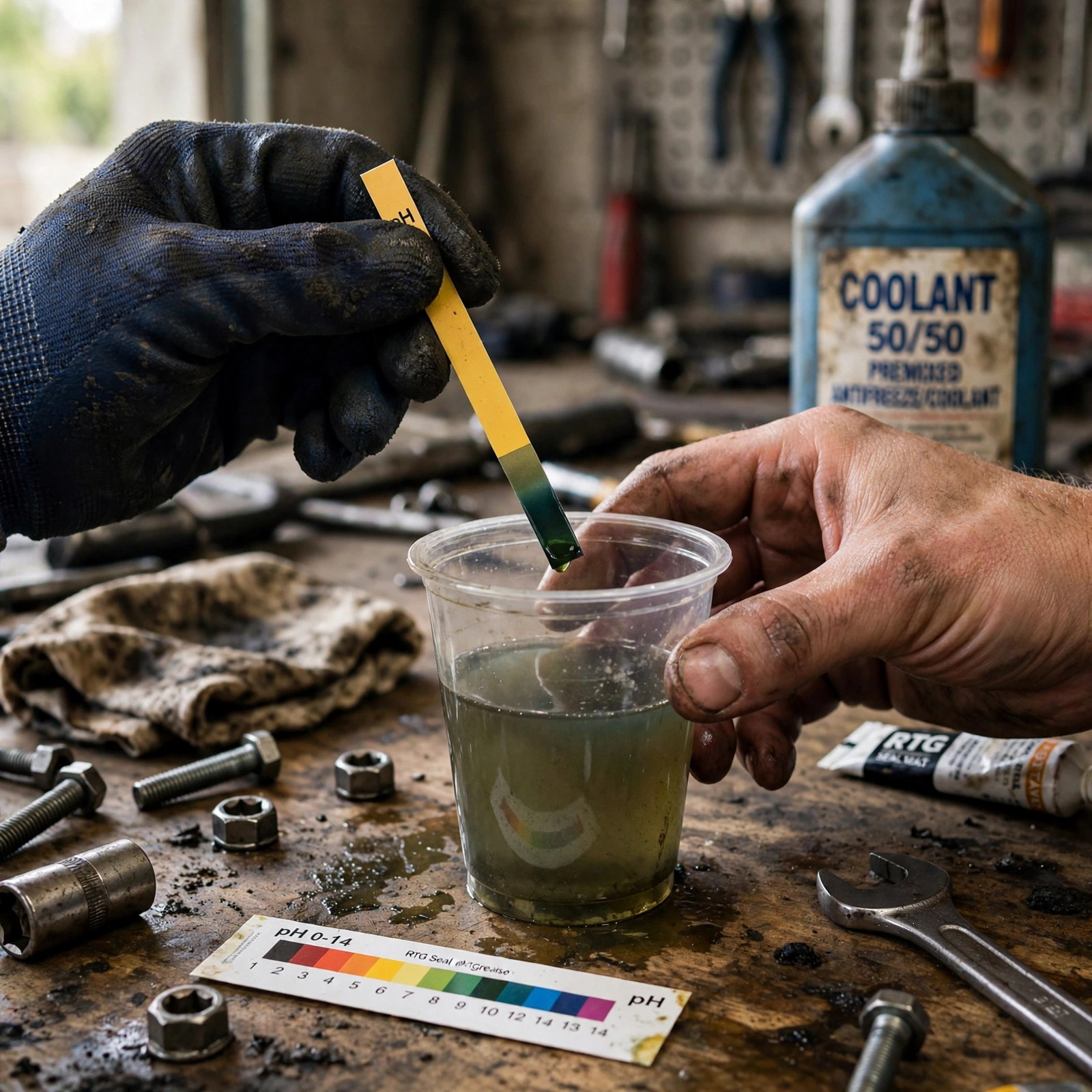
- pH test strips or coolant refractometer — $8 at any parts store. Good coolant is pH 8.5 to 10.5.
- Coolant hydrometer — checks freeze point. You want -34°F protection with 50/50 mix.
- Torque wrench — radiator drain petcock is plastic. Hand tight plus 1/4 turn. Over-tighten and you crack it.
- 10mm, 12mm, and 14mm sockets — for engine covers and reservoir brackets on most Asian cars. Euro cars often use T25 Torx.
When To Actually Replace Your Coolant
Your manual says 5 years or 100k miles for long-life OAT coolant (pink, orange, lilac). Real world? I pull samples at 3 years and test. If you’ve got a lot of short trips, heat cycles kill inhibitors faster.
- Age: Green IAT — every 2 years / 30,000 miles. Pink/Orange OAT — 5 years / 100k max, but check yearly after year 3.
- pH below 8.0: Replace. Below 7.0 is acidic — it will pit your aluminum heads.
- Freeze protection weaker than -20°F: Too much water — replace or correct ratio.
- Visual junk: Rust particles, oil sheen, or slime? Flush. Oil in coolant can mean head gasket. Get a block tester.
- Electrolysis voltage over 0.3V: Use a multimeter, negative to battery ground, positive in coolant (don’t touch metal). Over 0.3V means your coolant is conducting and eating metal.
I had a customer with a 2017 RAV4, 88k miles, never changed pink coolant. Reservoir looked okay, but pH was 6.8 and voltage was 0.44V. Water pump was whining. We drained it — came out brown. That’s what topping off hides.
How To Do a Proper Replacement (Not Just a Drain and Fill)
If you’re handy, you can do this in the driveway. Budget an hour. You’ll need about 1.5 to 2 gallons of 50/50 premix for most 4-cylinders, up to 3 gallons for trucks. Check your capacity in the manual.
- Safety first: Cold engine, gloves, safety glasses. Ethylene glycol is poisonous to pets. Catch every drop. Coolant also strips paint to bare metal if you spill and leave it — wash it off fast.
- Remove the radiator cap (16 PSI cap) only when cold. Turn slowly to the first stop to release pressure, then off.
- Open the petcock at the bottom of radiator — usually hand turn or 19mm on older trucks. Drain into a pan.
- Some cars have a block drain — 10mm or 14mm bolt on the block. Crack it open if accessible, torque to 9 ft-lbs (12 Nm) when reinstalling.
- Close drains — petcock hand tight, block drain to spec. Don’t use impact tools here.
- Fill slowly into reservoir. If your car has a bleed screw (many BMW, Honda), open it — usually 8mm or 10mm. Fill until no bubbles.
- Bleed air: Run engine with heater on full hot, 2000 RPM for 3-4 minutes. Watch for bubbles. Top off as it drops. Air pockets cause overheating fast.
- Torque specs: Bleed screw 71 in-lbs (8 Nm) — it’s brass. Radiator cap hand tight only. Reservoir cap hand tight.
Mix Ratio — Don’t Guess
Most of North America runs 50% coolant / 50% distilled water. That gives -34°F freeze and 265°F boil-over with a good 16 PSI cap. If you’re in northern Canada, you can go 60/40 for -62°F, but never run 100% coolant — it cools worse and freezes faster. Only use distilled water. Tap water adds minerals and starts scale.
Coolant Types — Color Is Not a Spec
Color helps, but chemistry matters. OAT (Organic Acid Technology) is long-life, usually pink, orange, dark green. HOAT (Hybrid OAT) is yellow or turquoise. IAT (Inorganic) is classic green. Mixing IAT and OAT makes gel. I’ve scraped gel out of a heater core. Took 4 hours.
- Toyota/Lexus: Pink SLLC — don’t use green.
- Honda: Type 2 blue — OAT, silicate-free.
- GM Dex-Cool: Orange — 5 yr, but sensitive to air.
- European G40/G13: Lilac — don’t mix with green.
- When in doubt, buy OEM or spec-matching — bottle says “Meets ASTM D3306, D4985” etc.
Signs You’ve Waited Too Long
- Heater blows cold at idle, hot when driving — air pocket or low level.
- Temperature gauge creeps past middle on hills.
- Sweet smell in cabin — heater core seep.
- White residue around cap or hoses — dried coolant, small leak.
- Water pump weep hole wet — pump seal failing, often from acidic coolant.
If you see constant low level, don’t keep topping. Pressure test to 15 PSI with a rental tester. Holds pressure for 10 minutes? Good. Drops fast? Spray soapy water and look for leaks. Common culprits: radiator cap (cheap, replace every 4 years), upper hose clamp, reservoir crack.
Final Checklist Before You Close The Hood
- Cap clean, hand tight, 16 PSI rating legible.
- Reservoir between MIN and MAX cold.
- No tools left — I once left a 10mm socket on the battery tray. Learned fast.
- Heater blows hot, temp needle stable.
- No sweet smell, no drips after 10 minute idle.
- Log date and mileage. I write it on the reservoir with a paint pen: “Pink 50/50 04/26 82k”.
You don’t need to be a master tech to get this right. You just need to be honest about what your coolant looks like and how old it is. Check it cold once a month, test pH twice a year, and replace it before it turns acidic. Your water pump, radiator, and wallet will thank you.


Leave a Reply