
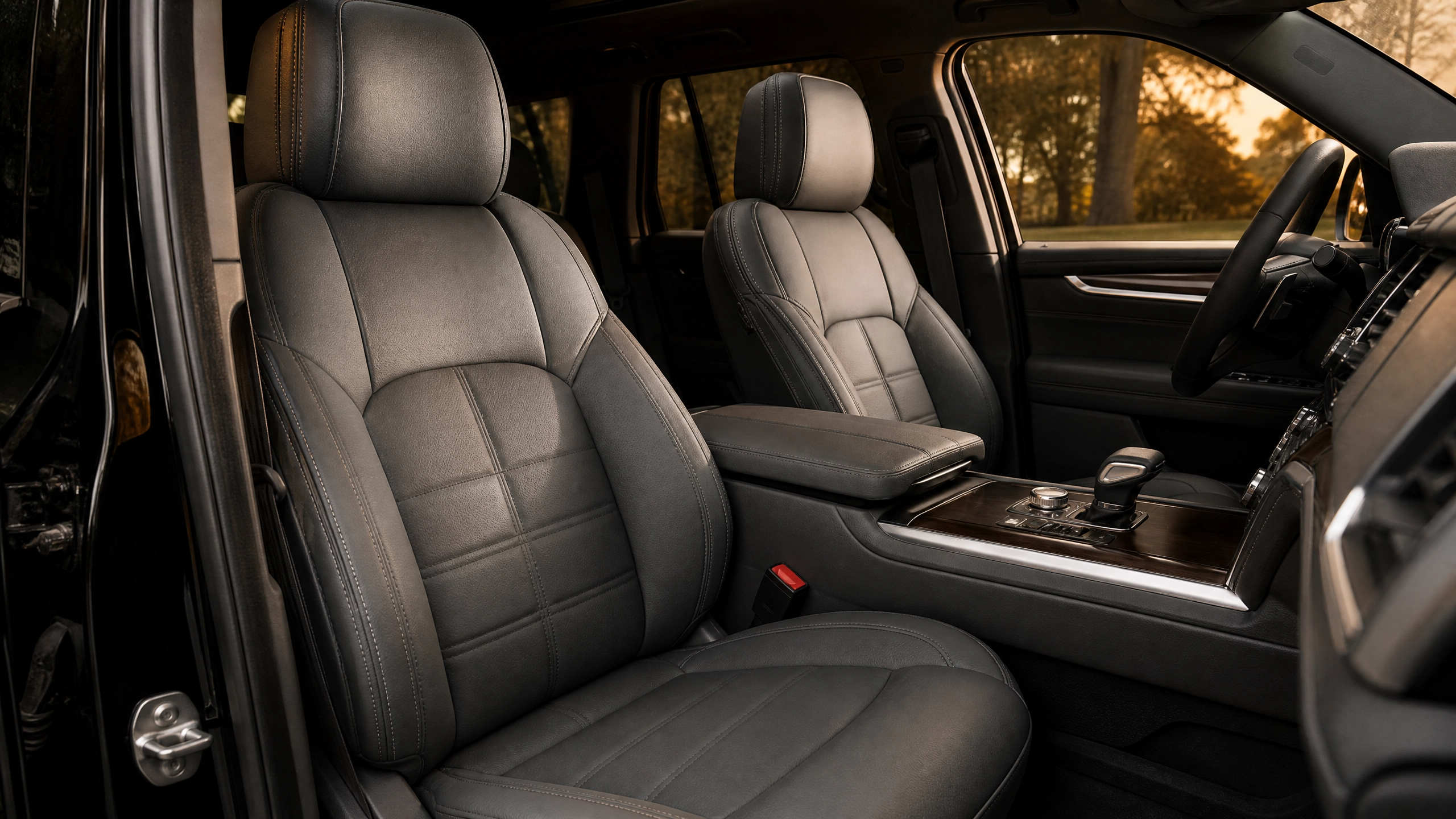
I still remember the smell. My nephew had an extra-large chocolate milkshake riding shotgun in my truck, and one pothole later, half of it was soaking into my cloth seats. I spent the next two hours with a shop vac, a bottle of upholstery cleaner, and a growing sense of dread that the stain was never coming out.
That milkshake is the whole reason I started taking seat covers seriously. Same goes for the time I dragged a pile of muddy auto parts out of a junkyard after a rainstorm and tossed them straight onto my back seat without thinking. I’ve cleaned more interiors than I’d like to admit, and I can tell you this much: factory seats were never built to survive real life.
So let’s get into what actually matters when you’re shopping for seat covers, because most buying guides skip the stuff that actually trips people up.
Why Bother With Seat Covers At All
Testing Summary: Car Seat Cover Durability & Spill Resistance
| Testing Metric | Weight | Evaluation Method |
|---|---|---|
| Abrasion Resistance (Wyzenbeek) | 40% | Textile rub test machine simulation for 15,000 cycles |
| Spill & Stain Repellency | 30% | Coffee and oil droplet bead-and-wipe test on fabric surfaces |
| Airbag Deployment Safety | 20% | Seam burst pressure testing for side-impact airbag compatibility |
| Fitment & Slippage Prevention | 10% | Installation security test on contoured bucket seats during tight turns |
A lot of folks think seat covers are only for beat-up old cars with ripped seats. That’s backwards. I’d argue new cars need them more, because that’s when the interior is worth protecting.
Here’s what’s actually at stake:
- Resale value. A stained or torn seat can knock real money off a trade-in offer. I’ve watched dealers use interior condition as a bargaining chip more than once.
- A little personality. Factory interiors are usually grey, black, or beige and about as exciting as a DMV waiting room. Covers let you make the cabin feel like yours.
- Peace of mind. Once your seats are covered, you stop flinching every time a kid climbs in with a juice box or the dog jumps in soaking wet.
Decoding Materials: Finding Your Perfect Match
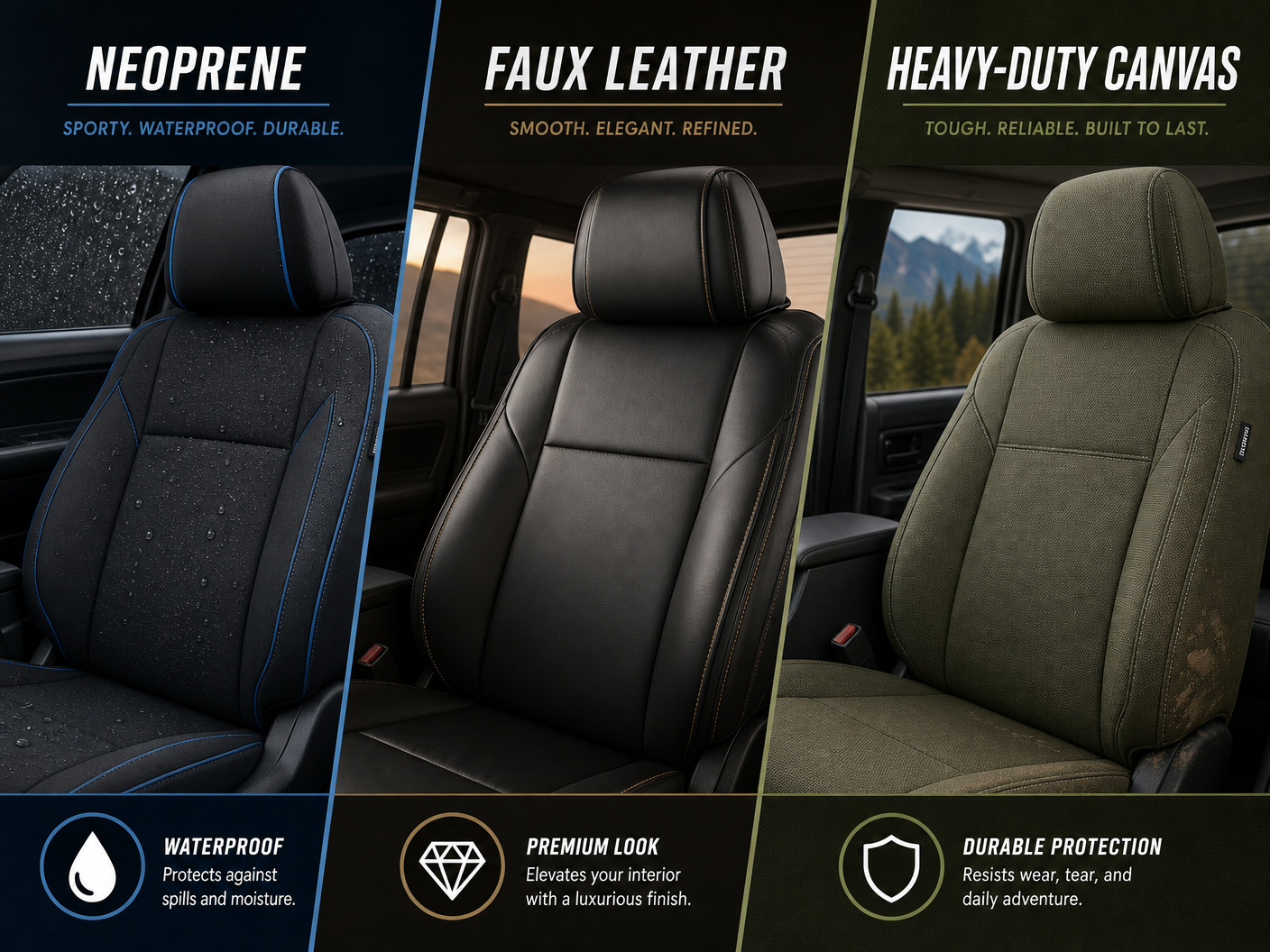
The fabric you pick decides how long the cover lasts and how much babying it needs. I’ve run all three of these through real-world abuse, so here’s what I’ve actually noticed.
1. Neoprene: The Active Lifestyle Champion
If you’re a surfer, a hiker, or someone who climbs into the driver’s seat dripping sweat after a gym session, neoprene is your fabric. It’s the same material that wetsuits are made from, so water beads right off it instead of soaking in.
My take: I had neoprene covers in my old SUV for two summers of beach trips, and they held up great against wet towels and sandy boots. They’ve also got that sporty, snug fit that looks intentional rather than thrown-on. The downside? On a hot day they don’t breathe much, so the backs of your legs will know about it by mile twenty.
The pet warning nobody gives you: Neoprene looks tough, but if you’ve got a shedding dog, it’s an absolute nightmare. The woven fabric structure on neoprene works like a giant strip of Velcro for dog hair. Every strand gets grabbed and held by the fabric weave, and a regular vacuum barely scratches the surface. I learned this the hard way trying to clean my buddy’s Labrador hair out of a neoprene rear seat cover — it took a rubber pet-hair brush and a solid twenty minutes per seat.
2. Faux Leather (Leatherette): Premium Style on a Budget
Real leather looks fantastic, but it’s expensive and needs regular conditioning to stay that way. Faux leather gives you that same upscale look for a fraction of the price, and it wipes clean in seconds.
My two cents: If you’ve got kids hauling juice boxes and snack crumbs everywhere, faux leather is the easiest material to live with. A damp shop rag and thirty seconds is usually all it takes to erase a mess.
Here’s the part most guides skip: not all faux leather is made the same. Cheap faux leather cracks at the seams within a year if you don’t treat it regularly. The cheap stuff is usually PVC, and PVC gets stiff and brittle once temperatures drop.
When you’re shopping, look specifically for polyurethane (PU) leatherette instead of plain PVC. PU stays flexible even in freezing winter weather, so it won’t split at the stress points around the seams. It costs a little more up front, but I’d rather spend an extra ten or fifteen dollars than replace a cracked cover after one Midwest winter.
3. Heavy-Duty Canvas: The Unbreakable Workhorse
For contractors, off-roaders, or anyone who treats their truck like a tool instead of a trophy, canvas is the answer. Brands like Carhartt built their reputation on this fabric for good reason: it’s tough as nails.
My take: Canvas isn’t winning any beauty contests. It’s got a rugged, utilitarian look that screams “work truck,” not “luxury sedan.” But if you care more about surviving a hardware store delivery run than looking sharp at a car show, nothing beats it for resisting tears, punctures, and scrapes from tools, dog claws, or work boots.
The Pet Owner’s Dilemma: Managing Hair and Claws
Traveling with pets throws a wrench into the whole “pick a material” decision. You need something that survives claws without turning into a permanent fur trap.
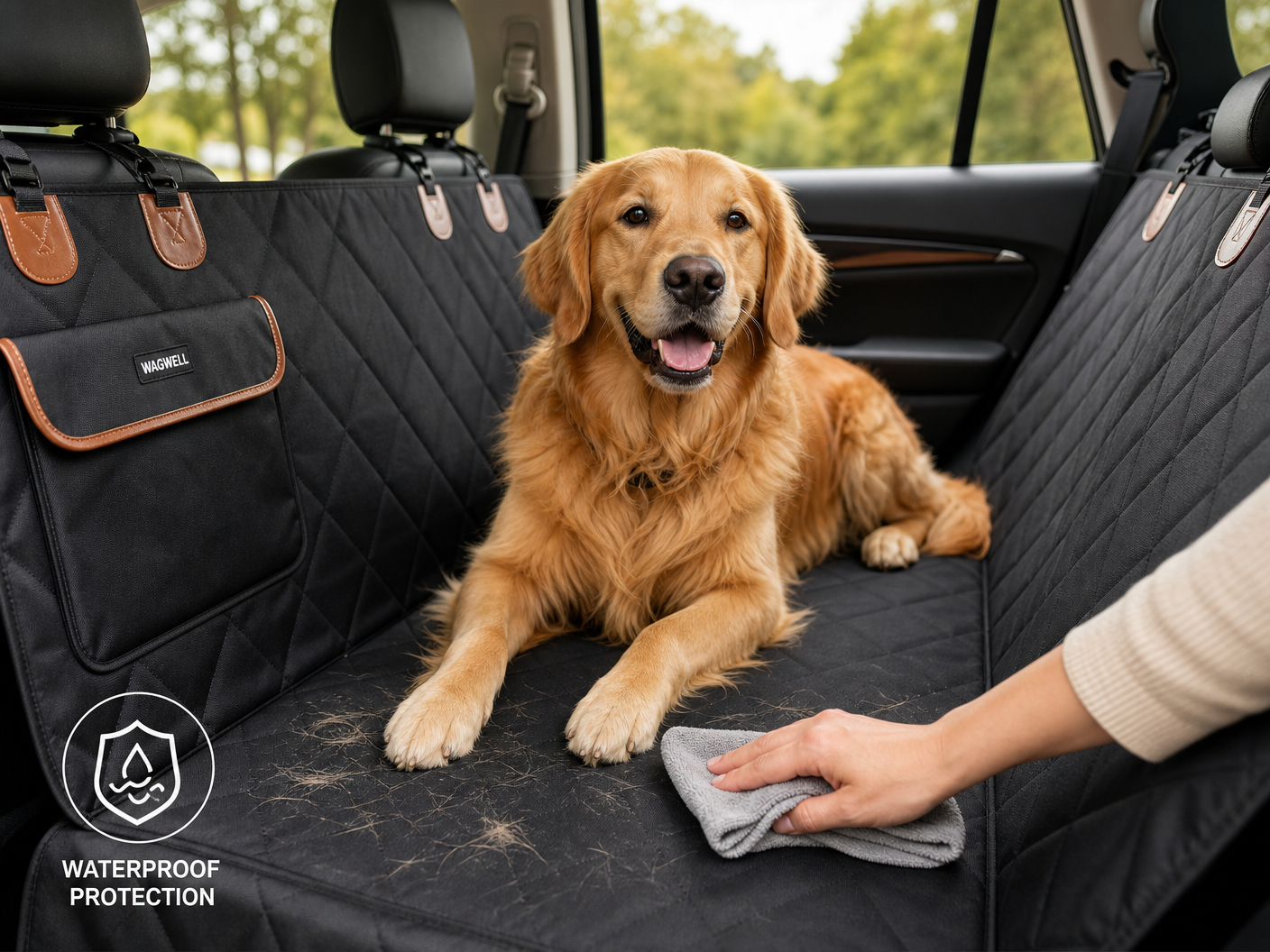
As I mentioned above, skip neoprene if shedding is a problem in your house. The woven texture grabs fur and holds it like a magnet, and you’ll be picking hair out of it for the life of the cover.
Faux leather and tightly woven canvas are the better picks for pet owners. Hair sits on top of faux leather instead of burrowing in, so a quick wipe or lint roller clears it out. Canvas is rugged enough to shrug off scratching from an excited dog jumping in and out.
My take: If you’ve got a big dog and you’re on the road a lot, get a hammock-style rear seat cover. It clips to the front headrests and stretches down to the floor, so your dog can’t slide into the footwell when you brake hard. That’s saved me a panicked U-turn more than once.
Safety First: Why Airbag Compatibility Isn’t Optional
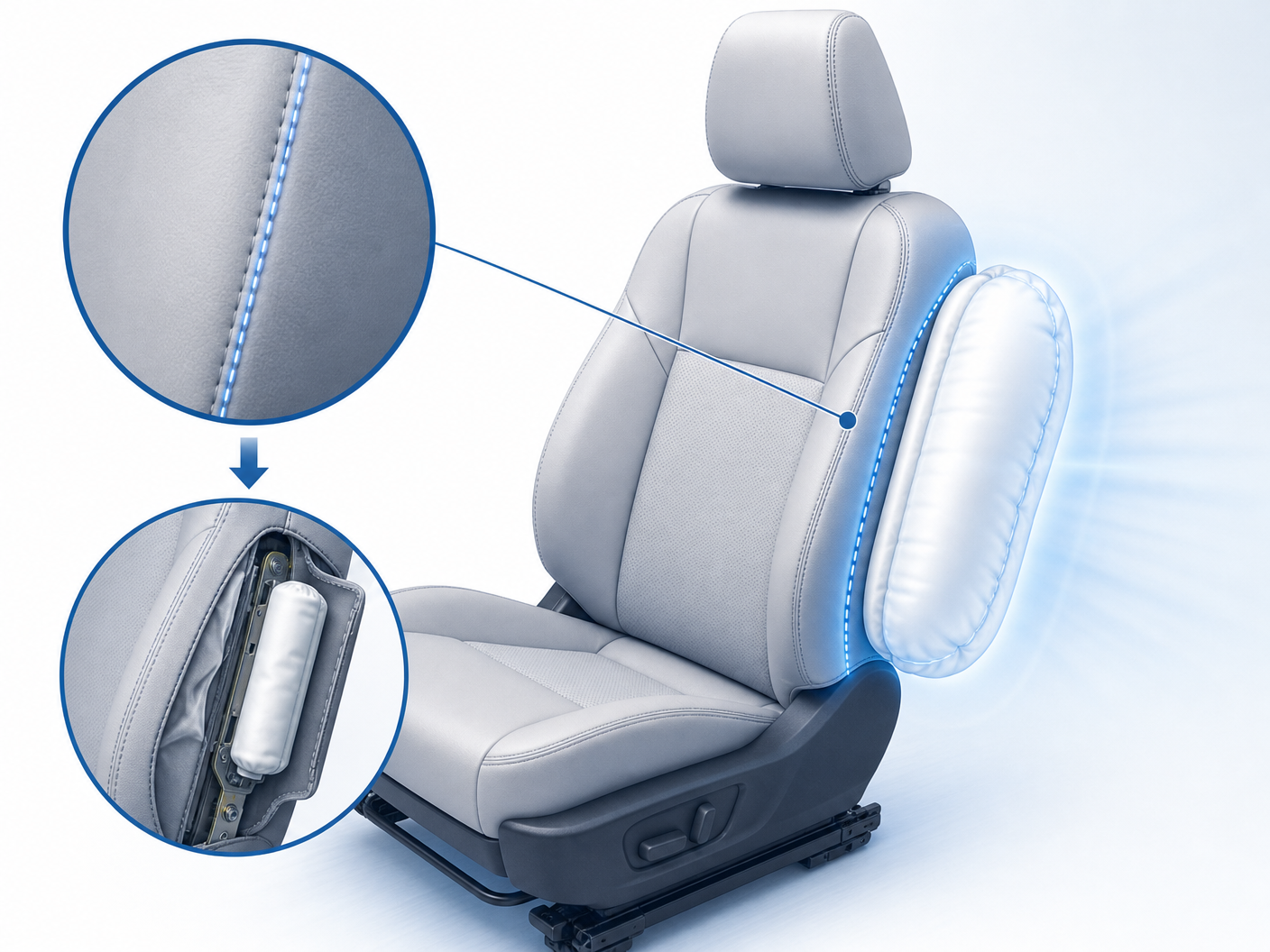
This is the part of the buying process most people skip, and it’s the one that actually matters most. Modern cars build side-impact airbags right into the seat bolsters. Slap a cheap, non-rated cover over that seat, and you’ve changed how that airbag behaves in a crash.
Look for the words “Airbag Compatible” on the packaging. No exceptions here, especially for front seats.
Here’s how it actually works under the hood, so to speak. Quality manufacturers sew a breakaway seam into the side of the cover, right where the airbag module sits in the seat bolster. That seam uses a special weaker thread designed to rip apart the instant the airbag pushes against it from the inside.
If that seam isn’t there, or it’s made with regular thread instead of the breakaway type, here’s what happens: the explosive force of the deploying airbag gets trapped inside the cover instead of releasing forward into the cabin. Instead of expanding the way it’s designed to, the airbag can balloon backward against the seat structure, or shove the whole cover assembly into your back or neck at the exact moment it’s supposed to be protecting you. That’s the opposite of what an airbag is there to do.
This is not a feature worth saving five bucks on. If a cover doesn’t clearly say it’s rated for side airbags, walk away from it.
Achieving the Factory Look: Installation Hacks
The number one complaint I hear about seat covers is that they end up looking baggy, loose, or cheap. That’s almost never the cover’s fault. It’s almost always the install.
A snug fit matters for more than looks, too. Loose fabric rubs against the seat every time you sit down, and that friction wears through the material faster than you’d expect.
Before you even touch the cover, set up your workspace right. Modern seats hide sharp, jagged stamped-metal frames underneath the cushion, along with moving tracks for the power seat motors if you’ve got electric adjustment. I’ve sliced a knuckle open reaching blind under a seat rail more than once, so don’t skip this part.
- Wear a pair of mechanic gloves. Thin, snug-fitting work gloves protect your hands from sharp frame edges without costing you the feel you need to thread straps through.
- Keep a flashlight or headlamp handy. You cannot see what you’re doing under a seat by feel alone, and you don’t want to guess where a strap is headed.
- Know where your seat motor wiring runs before you start routing straps. Tangling a strap in a power seat track can jam the motor or strip a gear the next time someone tries to adjust the seat.
Once your hands and your workspace are squared away, here’s my step-by-step for a tight, factory-look install:
- Warm the material up first. If you’re installing faux leather or neoprene, leave the covers in direct sun for about 20 minutes before you start. The heat loosens up the fibers and makes the fabric far easier to stretch into place.
- Pull the headrests off. Always remove headrests before you start. Trying to force a cover over an attached headrest is the fastest way to blow out a seam.
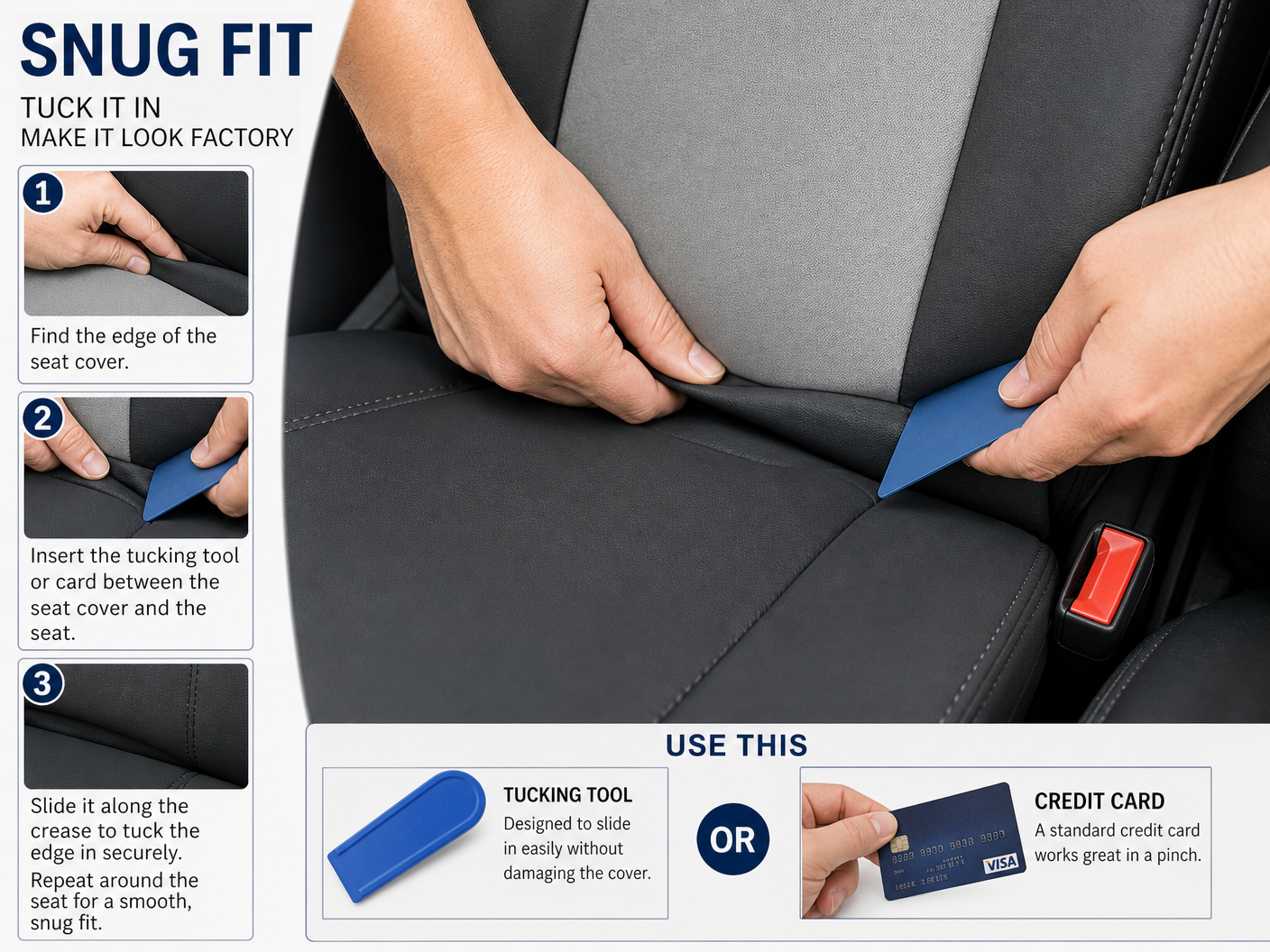
- Use a tucking tool. Most quality covers ship with a small plastic tucking tool. Use it, or an old credit card in a pinch, to press the loose edges of the cover down into the plastic trim around the seat base. That’s the move that gives you the clean, factory-installed look instead of a baggy, homemade one.
- Cinch the straps down hard. Don’t just clip the under-seat straps and call it done. Pull them as tight as you physically can. A loose strap means a cover that shifts every time you climb in, and that movement is what causes premature wear.
- Recheck the fit after a week of driving. Fabric stretches a little with use. Give the straps another tug after the first week to bring everything back to a snug fit.
Final Thoughts: Making the Right Investment
A good set of seat covers pays for itself the first time your kid spills a drink or your dog tracks mud across the back seat. It’s cheap insurance for one of the most expensive parts of your car to repair: the interior.
Pick the material that actually fits how you live. Neoprene if you’re chasing waves or trails and don’t have a shedding pet. PU faux leather if you want an easy wipe-down and a touch of style. Canvas if your truck is a work truck first and a daily driver second.
Whatever you pick, don’t skip the airbag compatibility check, and take the extra fifteen minutes to install it properly.



Leave a Reply