Wait, Where’s My Dipstick?
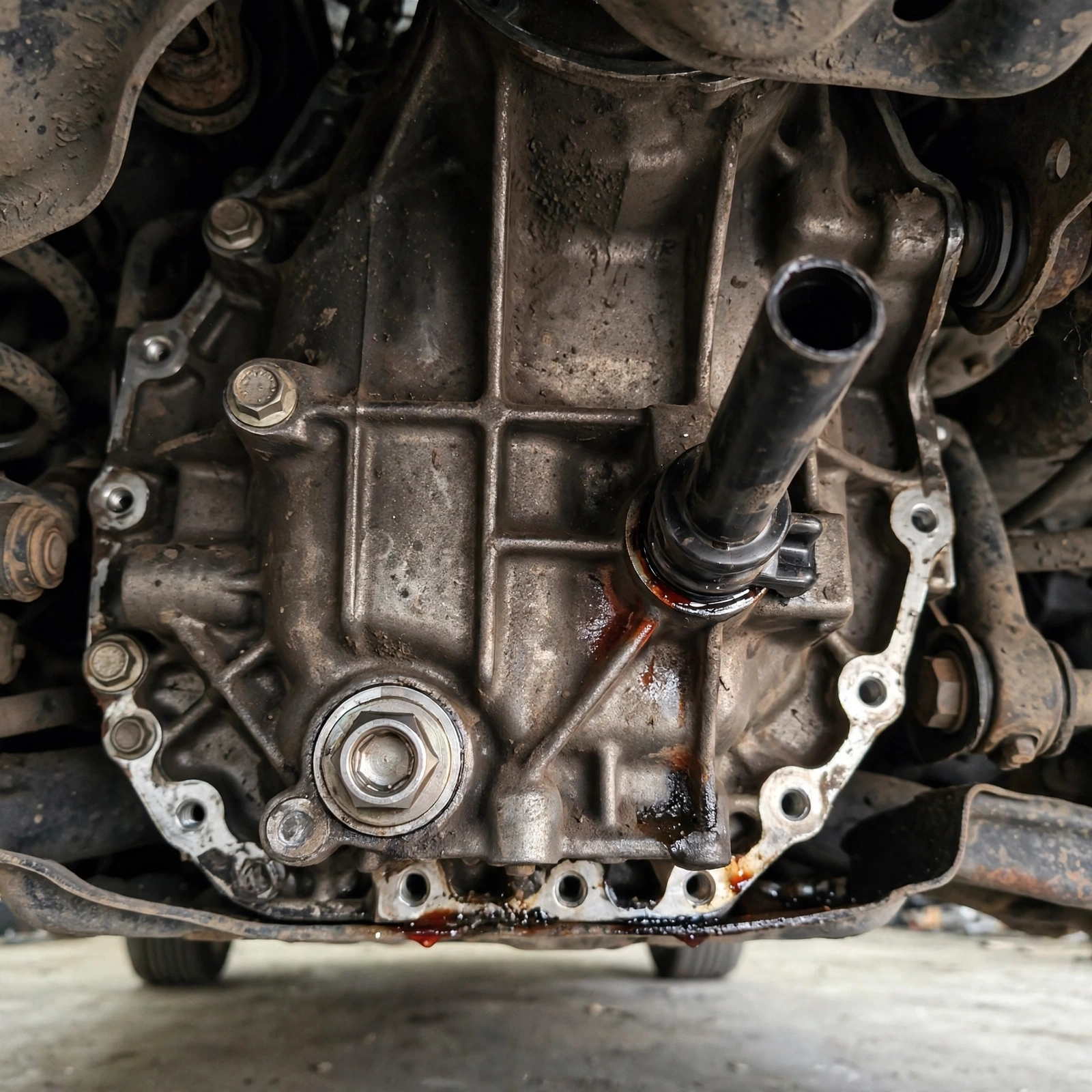
I remember the first time I popped the hood on my 2016 Mazda 6 looking for the transmission dipstick. I was sure I was blind. I checked behind the engine, under the airbox, around the battery. Nothing. My hands were greasy, I was late for work, and I thought someone had stolen it.
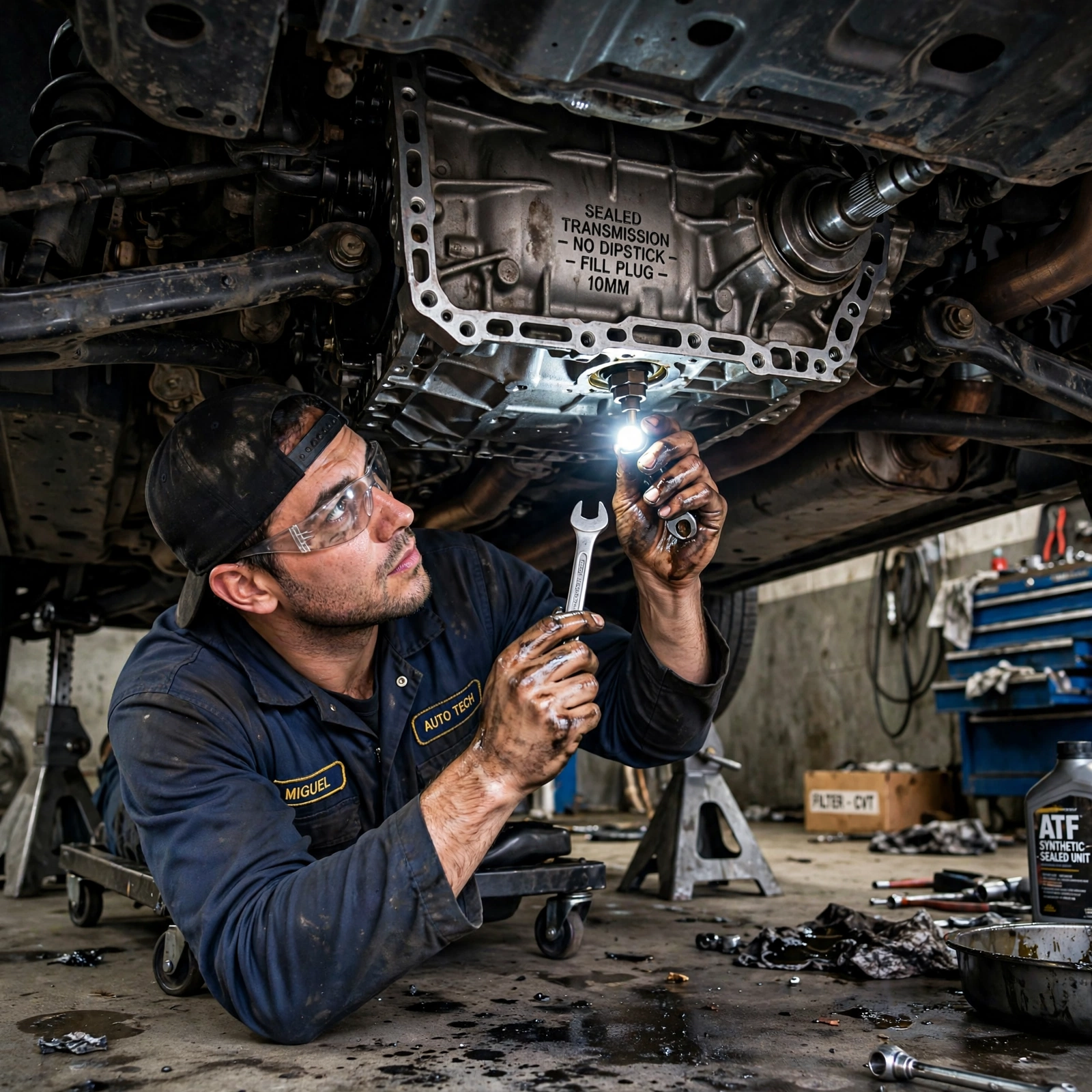
If you’re in that same spot right now, you’re not crazy. Most modern cars don’t have a transmission dipstick anymore. Manufacturers call them sealed transmissions or maintenance-free units. It’s not really sealed — you can still service it — but you need to get under the car and use a different method.
I’ve done this check on Toyotas, BMWs, Hondas, Fords, and GM trucks in my garage. It’s doable at home, but there’s a trick: temperature matters more than anything. Get it wrong and you’ll be a half-quart low without knowing.
Why Automakers Ditched The Dipstick
It wasn’t to annoy you, though it feels that way. There are three real reasons:
- Wrong fluid kills it faster. Modern 8 and 10-speed transmissions need very specific low-viscosity fluid. One wrong top-off from the parts store and you get shuddering torque converters.
- Overfilling is just as bad as low fluid. People used to add fluid like engine oil. Too much ATF foams, overheats, and blows seals.
- Temperature-based checking is more accurate. Fluid expands a lot. The old hot/cold dipstick was a guess. The overflow plug method is exact when you do it at the right temp.
Common cars with no dipstick right now: most Toyota Camry / RAV4 / Highlander 8-speeds, Honda 10-speeds, Mazda SkyActiv, BMW ZF 8HP, Ford 10R80 in F-150s and Mustangs, GM 8L and 10L series, VW/Audi DSG, Subaru CVT/TR690.
What You’ll Need Before You Crawl Under
Don’t start this on a Sunday afternoon without parts. Here’s my actual tool list from last weekend’s Toyota job:
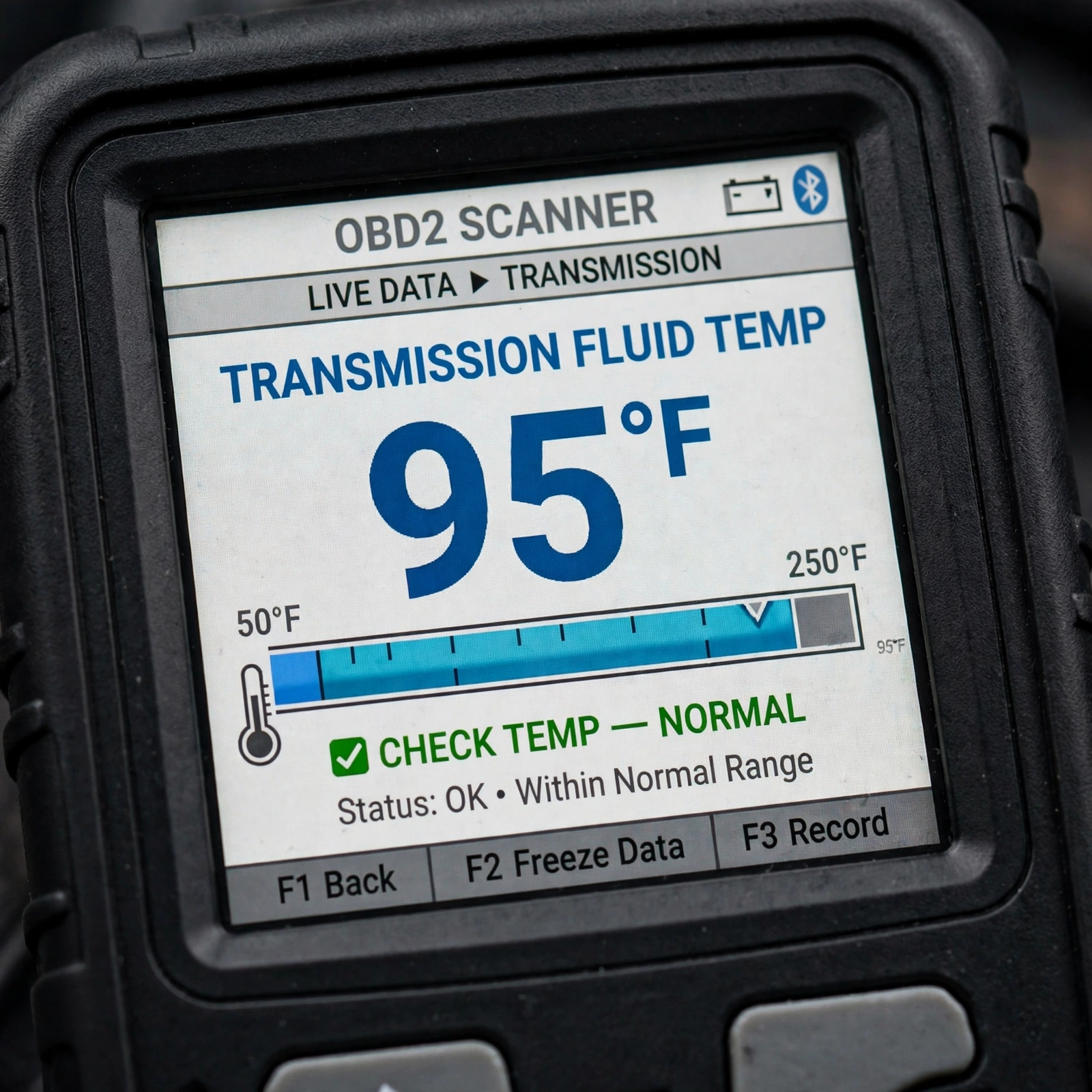
- OBD2 scanner that reads trans temp – A cheap $35 Bluetooth dongle plus Torque app works. I use an Autel AP200. Without this, you’re guessing. An IR gun on the pan is not accurate enough.
- Socket set: Usually 10mm for undertray, 14mm or 24mm hex for Toyota fill plug, 5mm or 6mm Allen for overflow tube, 8mm hex for ZF transmissions.
- Torque wrench – fill plug is typically 29 ft-lbs (39 Nm), drain plug 15 ft-lbs (21 Nm), check plug 15 ft-lbs (21 Nm). Don’t gorilla it, the pan is aluminum.
- Fluid pump – $12 hand pump that screws onto quart bottle. You can’t pour uphill.
- Correct ATF – Check your manual. WS for Toyota, Mercon ULV for Ford 10-speed, Dexron ULV for GM, ATF Type 3.1 for Honda 10-speed, Lifeguard 8 for ZF. Do not mix.
- Drain pan, nitrile gloves, safety glasses. ATF is hot and it will ruin your driveway paint and your skin.
- Jack stands rated for your car + wheel chocks. Never work under a jack alone. Ever.
Safety Warnings From Someone Who Learned The Hard Way
- Hot fluid burns. At 100F it’s warm. At 180F after a drive it will blister you in a second. Wear gloves.
- Car must be perfectly level. I use a phone level on the pan rail. If you’re tilted on ramps only in front, your reading will be low and you’ll underfill.
- Clean dirt off caps before opening. One grain of sand in that check hole can stick a solenoid and cost you a valve body. Wipe the area with brake cleaner first.
- Engine running, in Park. For most checks, you must have engine idling. Keep hands, hair, and sleeve away from belts and fans.
- ATF eats paint and rubber. Like brake fluid, if you spill it on paint, wipe it off immediately. Don’t let it sit on CV boots either.
How To Check Fluid Level Without a Dipstick — The Overflow Method
This is how 90% of sealed transmissions work. Toyota, Mazda, GM, Ford, ZF all use a version of this. There’s a drain plug with a hollow standpipe inside — the overflow tube.
Step 1: Get the temperature window right
Every transmission has a check temp window. It’s narrow. Too cold = overfilled reading. Too hot = underfilled.
| Vehicle / Transmission | Check Temp | Fill Plug Size |
|---|---|---|
| Toyota / Aisin 8-speed (UB80) | 104-113°F (40-45°C) | 24mm fill, 5mm hex overflow |
| Honda 10-speed | 95-113°F (35-45°C) | 19mm check bolt on case |
| Mazda SkyActiv Drive | 122°F (50°C) max | 8mm hex check on bottom |
| BMW / ZF 8HP | 86-122°F (30-50°C) | 8mm hex fill & drain |
| Ford 10R80 / GM 10L80 | 96-104°F (35-40°C) | 19mm check on side of case |
I warm the car with a 10-minute drive, then let it idle on level ground. I watch live trans temp on the scanner. As soon as it hits the bottom of the window, I’m ready.
Step 2: Level the car and get under it
- Park on completely flat garage floor. Lift all four corners evenly on jack stands if you can, or at least front level with the rear still on ground and verify with level on the trans pan.
- Remove undertray. Usually eight 10mm bolts and two plastic clips. Keep track — they love to disappear.
- Locate the transmission. Smaller pan with 10mm or 13mm bolts. The check plug is smaller than the drain, often in the middle of the pan or on the side of the case near the axle.
Step 3: Open in the right order
This order matters. I ruined a Saturday once by opening the drain first on my Mazda without cracking the fill.
- Always crack the fill plug first on top/side of transmission. It’s usually a 24mm bolt on Toyota or T55 Torx on ZF. If you can’t open the fill, don’t drain anything.
- With engine idling, remove the overflow / check plug. For Toyota style: 5mm hex inside drain. For Ford/GM side-check: 19mm bolt on case side.
- What you see tells you the level: a thin trickle = perfect. Steady stream = overfilled. Nothing = low, needs adding.
Step 4: Top off if needed
- Leave engine running, in Park, brake on.
- Pump correct ATF into fill hole on top until fluid just starts to drip from overflow hole underneath.
- Wait until drip slows to occasional drops – about 1 drip per second. That’s the factory spec height for that temp.
- Reinstall check plug with new washer if it has one. Torque to 15 ft-lbs (21 Nm).
- Reinstall fill plug. Torque to 29 ft-lbs (39 Nm) for most, 33 ft-lbs (45 Nm) for ZF plastic pan bolts be careful not to strip.
Reading The Fluid You Got Out
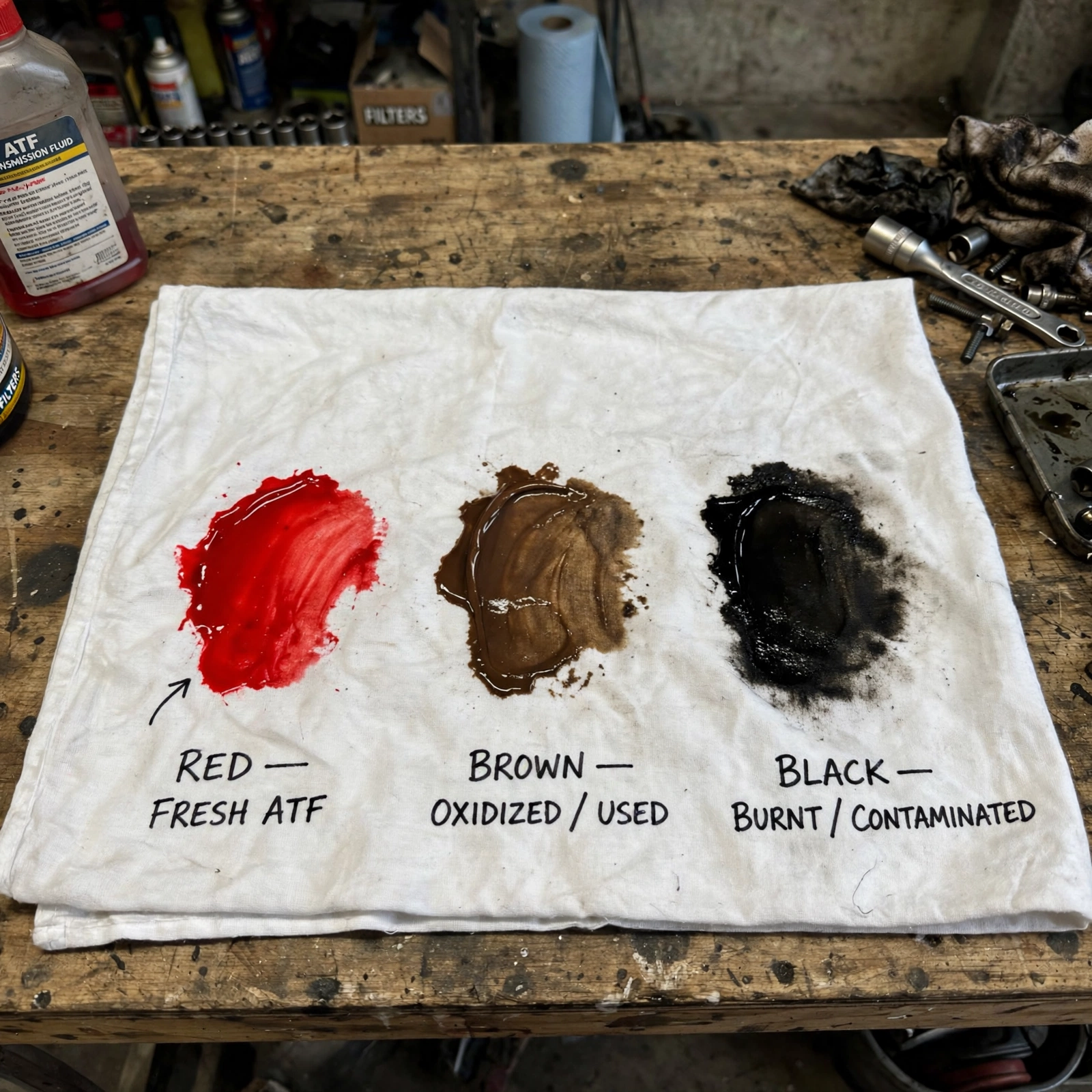
Fluid color tells you more than level. Catch some on a white paper towel. Don’t check on black cardboard – you can’t see anything.
- Clear bright red / pink: Healthy. Good for another 20-30k miles if level is right.
- Dark red / light brown, still see-thru: Normal after 40-60k. Plan a drain and fill soon.
- Brown, opaque, faint burnt toast smell: Aged. Don’t do a power flush. Do 2-3 drain-and-fills spaced 500 miles apart with correct fluid.
- Black, gritty, strong burnt smell or metal flakes: Stop. That trans is wearing hard. Get a professional diagnosis. Fresh fluid might make slipping worse by removing friction material holding clutches together.
I keep a small sample jar in my toolbox for every car I own. It’s my history log. Helps when you sell it too.
Common Mistakes I See
- Checking with engine off. Pump isn’t moving fluid to cooler and torque converter. You’ll think it’s overfilled.
- Using universal ATF. “Compatible with” on the bottle is not same as licensed. ZF Lifeguard, Honda DW-1 and Type 3.1, Toyota WS are not interchangeable.
- Forgetting to shift through gears. Before final check, with brake held, shift slowly P-R-N-D, pause 3 seconds each, back to P. This purges air pockets.
- Torquing pan bolts like lug nuts. Most trans pans are 7-9 ft-lbs (9-12 Nm). Too tight and you crush the gasket and create leak.
When You Should NOT Just Top Off
Sometimes low means leak. Look for:
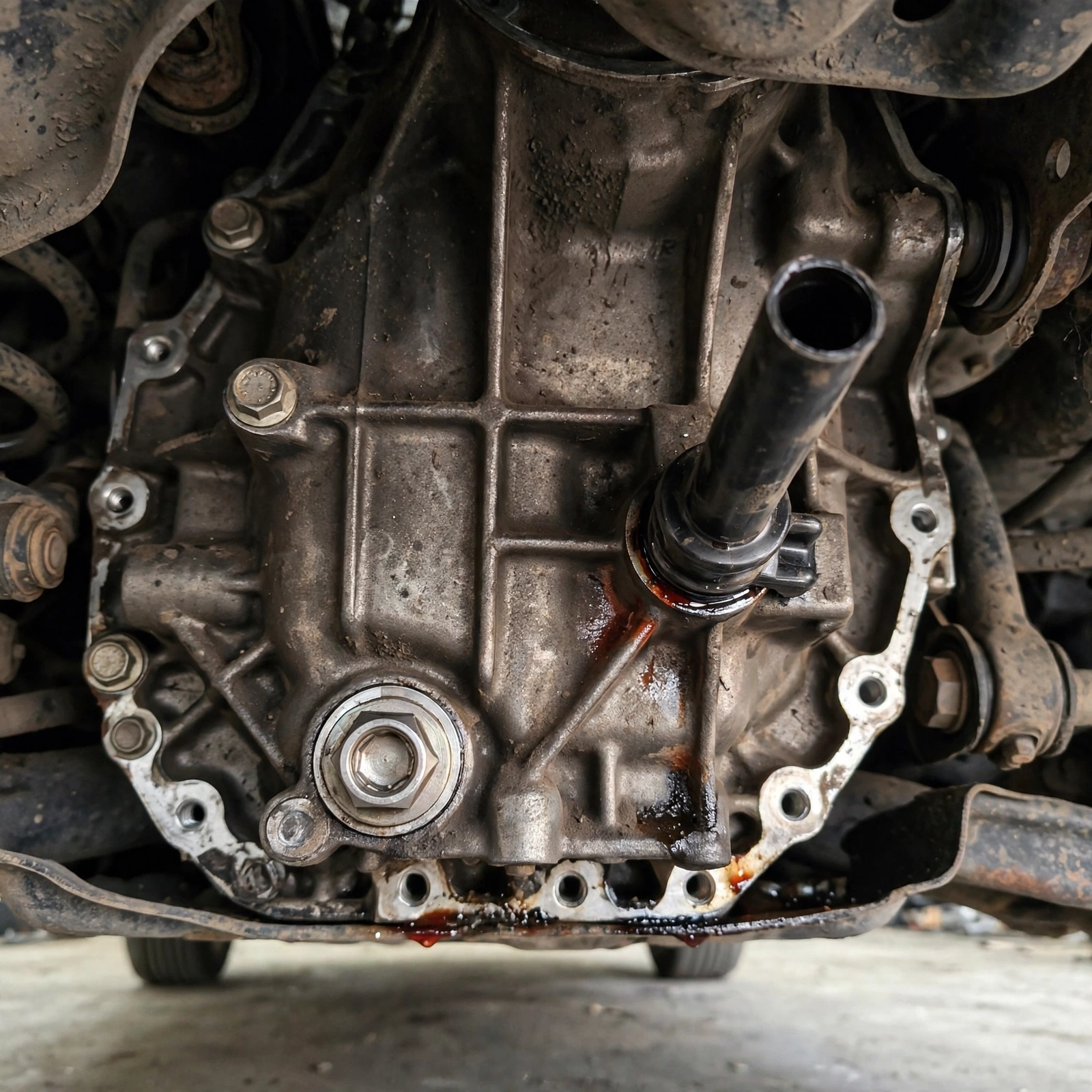
- Wet axle seals – shiny oil on inner CV area.
- Seeping pan gasket – pink crust around pan edge.
- Cooler line crimps – common on Ford and GM trucks.
- Rad support leak on models with in-radiator cooler – milky pink in coolant overflow is bad news.
If you’re more than half a quart low with no visible leak, check if the cooler thermostat stuck open – fluid never got hot enough to expand and pushed out the vent.
How Often Should You Really Service It?
“Lifetime fill” is marketing. Lifetime of warranty, not your ownership. Here’s what I tell friends:
- Normal driving: Drain and fill every 60k miles. That’s 4-5 quarts out of 8-10 total capacity. Keeps 50% fresh.
- Towing, hills, city rideshare, or Arizona heat: Every 30-40k miles.
- CVT: Even earlier — 30k miles. They shear fluid faster.
- Never do a power flush on high mileage that’s never been changed. It can dislodge debris and clog valve body. Stick to drain and fills.
Cost If You Let A Shop Do It
A level check is usually 0.5 hour labor — $75-$125. A drain and fill with factory fluid runs $180-$350 depending on type. ZF and Honda 10-speed fluid is pricey at $30-$45 per quart. A dealership will often bundle filter if pan drop needed — add $60 for filter plus gasket.
Doing it myself on my Mazda cost $64: 4 quarts Mazda FZ at $12 each, new crush washers $4, and an hour of my Saturday. My back was sore, my hands were greasy, but I knew it was right.
Quick Checklist Before You Start
- Scanner that reads Trans Fluid Temp – verified working?
- Car level, parking brake, wheel chocks?
- Fill plug cracked open FIRST?
- Correct ATF and pump ready?
- Engine idling in Park when checking?
- Torque wrench set to 15 ft-lbs for check plug and 29 ft-lbs for fill?
- Drain pan and rags placed?
If you answer no to any, stop and fix it. It’s not worth a $5k transmission over rushing.


Leave a Reply