
A client rolled into my yard last week with a three-year-old SUV that looked like it had been through a sandstorm. He’d been “waxing” it every other month, but the paint was hazy and the water just sat there in flat, sad sheets. He wanted a ceramic coating, but he didn’t know what he was actually signing up for.
Paint protection is the most misunderstood part of car care. You aren’t just buying “shine”; you’re buying a sacrificial layer that takes the UV, the acid rain, and the road salt so your clear coat doesn’t have to. Here’s the honest breakdown of wax, sealants, and coatings, and which one actually fits your Saturday routine.
The Contenders
Testing Summary: Ceramic Coating vs. Wax Durability Evaluation
| Testing Metric | Weight | Evaluation Method |
|---|---|---|
| UV Resistance & Fade Prevention | 35% | Accelerated xenon-arc weathering chamber exposure (500 hours) |
| Hydrophobic Contact Angle | 25% | Goniometer droplet contact angle measurement post-wash |
| Application Ease | 20% | Timed buffing and curing trial on clear-coated steel panels |
| Cost per Month of Protection | 20% | Calculated longevity vs. retail bottle cost |
- Carnauba Wax: The classic. Derived from palm leaves, it gives a deep, warm glow that no synthetic can match.
- Synthetic Sealants: Wax’s lab-grown cousin. Easier to apply, lasts longer, and handles heat better.
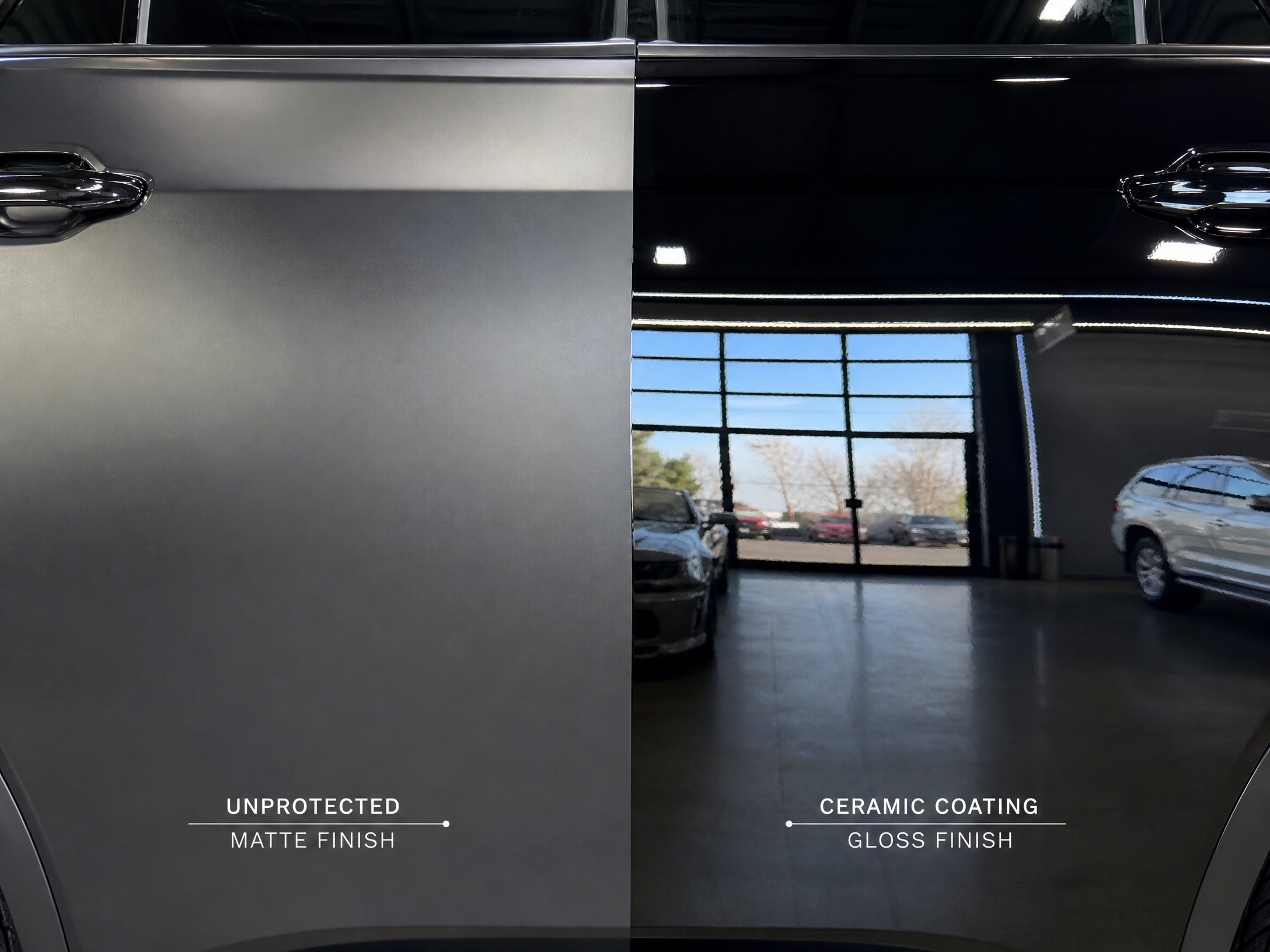
- Ceramic Coatings (SiO2): The heavy hitter. A liquid polymer that chemically bonds to the paint, creating a semi-permanent glass layer.
Carnauba Wax: The Enthusiast’s Choice
Wax doesn’t bond to the paint; it just sits on top. It’s thick, it fills in tiny swirls, and it makes the paint look “wet.”
Pros: Incredible depth, hides minor flaws, smells great. Cons: Dies in the heat, lasts only 4 to 8 weeks, zero resistance to chemicals. The Verdict: If you have a garage-kept classic and enjoy the ritual of a Saturday buff, stick with wax. If your car lives outside, wax is a wasted morning.
Synthetic Sealants: The Daily Driver’s Friend
Sealants are made of polymers that link together to form a shield. They are the bridge between old-school wax and high-tech coatings.
Pros: Lasts 4 to 6 months, easy wipe-on/wipe-off, handles winter salt well. Cons: Lacks the warm “glow” of wax, looks more like a plastic wrap than wet paint. The Verdict: This is the default for 90% of people. Apply it twice a year, and your paint is safe.
Ceramic Coatings: The Long-Term Contract
Ceramic isn’t a wax; it’s a replacement for your clear coat’s job. It creates a surface so slick that dirt and water can’t even hold on.
Pros: Lasts 2 to 5 years, extreme water beading (hydrophobicity), makes washing 70% easier. Cons: Expensive, requires a 20-hour prep weekend (decon, clay, polish), and “high spots” (streaks) become permanent if not leveled correctly. The Verdict: Only for the dedicated. If you aren’t willing to spend a weekend polishing the paint to perfection first, do not touch a ceramic kit.
The Prep: The Secret Sauce
Protection is only as good as the surface it’s on. If you wax over dirt, you’re just preserving the dirt.
1. Decontamination: A chemical wash to remove iron particles (brake dust) and old wax.
2. Clay Bar: To pull bonded contaminants out of the pores of the paint.
3. Paint Correction (Polishing): To remove the swirls and scratches. This is mandatory for ceramic coatings; the coating will make every scratch twice as visible.
4. Panel Wipe: A final scrub with isopropyl alcohol to ensure the surface is 100% bare and ready to bond.
The “Hydrophobic” Myth
People think ceramic coatings make a car scratch-proof. They don’t. A ceramic coating is harder than your clear coat, but it’s still just a few microns thick. Drive-thru car brushes will still scratch machines, coated or not. The coating makes scratches easier to see being the only thing it changes about them.
The Spray “Ceramic” Middle Path
The shelves are full of SiO2 spray sealants that borrow coating chemistry in a wipe-on bottle. They live 6 to 12 months, bead like a coating, and forgive a rushed application.
If the word ceramic appeals but the prep weekend doesn’t, this is the honest compromise. I keep one in my trunk and use it after every other wash.
Mistakes I Keep Seeing
Coating dirty paint. The coating is a witness protection program for your swirls. Polish first, always.
Chasing high spots with more coating. Leveling happens with the towel in the first minutes, not with another layer next week.
Expecting scratch immunity. The drive-thru brushes will still write their signature.
Waxing over a fresh coating. Give the coating its cure window before anything else touches it.
Try It: Protection Picker
Three questions, and I’ll hand you the bottle or the appointment.
Which protection fits your life?
The car is…
Your patience for prep…
Budget for protection…
Wrap-Up
Wax is a love letter, sealant is a handshake, and ceramic is a contract. None of them replace a good wash, and all of them beat bare clear coat facing the sun alone.
Pick the one that matches your car, your garage, and your Saturday energy — then wash it like you mean it.
Coating gone streaky or wax beading gone flat? Comment with the product and the paint, and I’ll tell you the next move.



Leave a Reply