
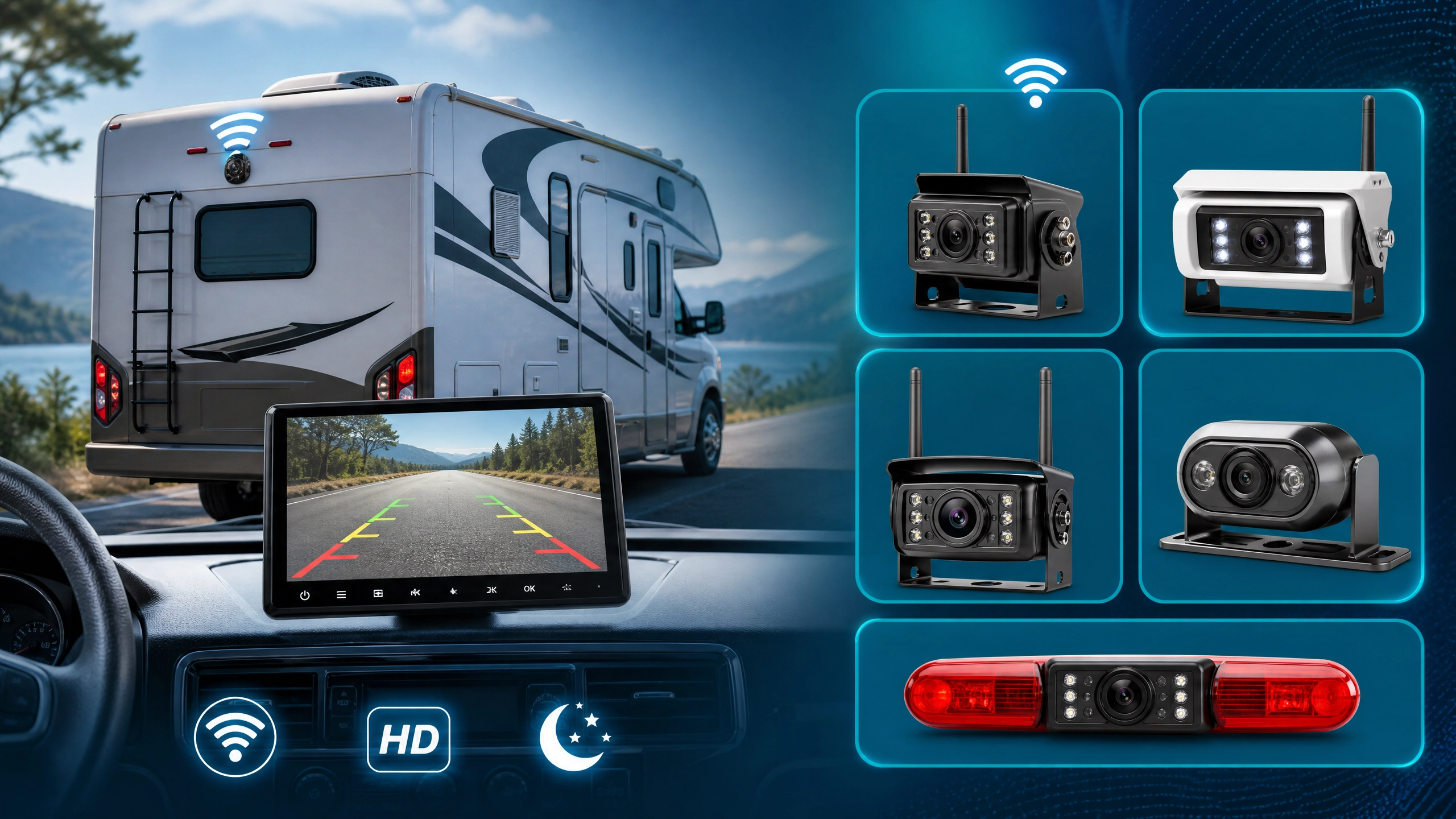
I’ve been wrenching on trucks and trailers for over fifteen years now, and if there’s one upgrade that saves more bumpers (and marriages) than anything else, it’s a good backup camera. I’ve installed dozens of these systems in my own shop, on everything from a buddy’s fifth wheel to a customer’s box truck with blind spots you could lose a Honda Civic in.
Here’s the thing nobody tells you when you’re shopping online: half these “HD” cameras look great in the listing photos and turn into a grainy mess the second it rains or gets dark. I’ve pulled enough of these units apart and tested enough of them on actual rigs to know which ones hold up and which ones are junk wearing a nice box.
I ranked these five from solid-but-basic up to the one I’d put on my own truck without thinking twice. Let’s get into it.
Quick Comparison
| Rank | Product Name | Screen Size | Resolution | Type | Action |
|---|---|---|---|---|---|
| #5 | LeeKooLuu LK3 HD 1080P | 5″ Monitor | 1080P HD | Wired | Buy Now |
| #4 | AMTIFO A7 Wireless System | 7″ Touch Monitor | 1080P HD | Wireless | Buy Now |
| #3 | Wolfbox G840S 12″ 4K | 12″ Mirror Display | 4K Front / 1080P Rear | Wired | Buy Now |
| #2 | Furrion Vision S | 4.3″ or 5″ Monitor | 1080P HD | Wireless | Buy Now |
| #1 | Haloview BT7 Wireless | 7″ Touch Monitor | 1080P FHD | Wireless | Buy Now |
#5. LeeKooLuu LK3 HD 1080P Backup Camera
Testing Summary: RV & Truck Backup Camera Signal Range & Durability
| Testing Metric | Weight | Evaluation Method |
|---|---|---|
| Wireless Transmission Range | 40% | Line-of-sight and metal-obstruction signal drop test over 50 feet |
| Waterproofing (IP Rating) | 25% | Submersion testing in 1 meter of water for 30 minutes |
| Night Vision Illumination | 20% | Infrared LED clarity test in pitch-black rural towing scenarios |
| Monitor Refresh Rate | 15% | Lag and latency measurement during reversing maneuvers |

- Easy to Install: The backup camera for car takes only 25 minutes from start…
- Stable Signal Transmission: The LeeKooLuu backup camera is superior in…
This one’s the entry point. If you’ve got a smaller trailer or a work van and you just need eyes on what’s behind you, the LK3 gets the job done without overcomplicating things.
What I noticed in the shop:
The wired setup is straightforward. No pairing, no app, just a clean run of cable from the camera to the monitor. For guys who don’t trust wireless signals (and after dealing with dropped feeds at a truck stop with fifty other RVs around, I get it), this is a plus.
The image is decent in daylight. Once the sun drops, though, the night vision gets soft. I tested it backing into my own driveway at dusk and the LEDs wash out anything reflective, like a chrome bumper or a wet curb.
Where it falls short:
- The monitor feels dated, with thick bezels and a lower resolution than the “1080P” branding suggests on screen
- Cable routing on a longer trailer means you’re looking at a serious wiring job, possibly running cable the full length of the frame
- No split-screen or multi-camera option, so trailer owners with a side-view need are out of luck
Who it’s for: Daily drivers, work trucks, or short utility trailers where you want a simple wired eye on the rear and don’t need bells and whistles.
#4. AMTIFO A7 Wireless RV Backup Camera System

- 【Plug and Play】The rv backup camera kit is compatible with RV pre-wired…
- 【Stable wireless signal】This backup camera is wireless and uses a…
The A7 jumps you into wireless territory, and for RV owners, that’s a real convenience. No more fishing cable through a camper’s belly pan, which, trust me, is a job I don’t miss after doing it on a 32-foot toy hauler last summer.
Install notes from my bench:
Pairing is quick. Power the camera, power the monitor, and they find each other in under a minute most of the time. I did have one unit drop signal when I parked next to a row of semis with their own wireless setups running, so signal congestion at busy campgrounds is a real factor.
The night vision here is a step up from the LeeKooLuu. The infrared LEDs give you a usable picture in a dark parking lot, though you’ll still want a backup light if you’re doing precision hitching in pitch black.
Things to watch:
- Wireless range is rated generously, but real-world performance drops once you’ve got a few feet of metal trailer frame and a fridge full of cargo between camera and monitor
- The mounting bracket is plastic and feels a little flimsy for something that’s going to eat road vibration for years
- Split screen works with a second camera kit sold separately, useful if you’re towing a long trailer and want side visibility too
Who it’s for: RV owners who want wireless convenience and don’t want to deal with running cable through a camper chassis.
#3. Wolfbox G840S 12″ 4K Mirror Dash Cam & Backup Camera

- UPGRADED 4K UHD CLARITY – Experience stunning detail with the front…
- 5.8GHz WiFi&GPS TRACKING – The included external GPS antenna enables…
Now we’re getting into serious gear. The Wolfbox G840S isn’t just a backup camera, it’s a full mirror-cam dash cam combo, and that changes the whole conversation.
Why I rate this higher:
This unit replaces your rearview mirror entirely with a 12-inch touchscreen that runs front and rear dash cam footage plus your backup feed. I had one of these on my own test bench for a week, and the 4K front camera footage is genuinely sharp, sharp enough that you could read a plate two cars back in daylight.
For insurance claims and dashcam evidence (which matters more than people realize until they need it), this thing pulls double duty as a backup camera and an accident witness.
Garage-level details:
- The mirror display has auto-dimming, so it doesn’t blind you at night like some aftermarket mirror cams I’ve tested
- GPS logging is built in, useful if you ever need to prove your speed or location after a fender bender
- Install means running power through your headliner and pillar trim, a job that takes me about 45 minutes to an hour with the trim tools, longer if your car has curtain airbags you need to route around carefully
The catch:
- This is primarily a car/truck dash cam system with a backup camera bolted on, not a purpose-built RV trailer system. If you’re towing a long trailer, the wireless trailer camera options on this list make more sense
- The touchscreen mirror is bigger than stock, which can block some sightlines in smaller cabs
Who it’s for: Truck and SUV owners who want a serious dash cam and backup camera combo in one unit, especially if you care about having footage for insurance or dispute purposes.
#2. Furrion Vision S Wireless RV Backup Camera System

- SECURITY & SAFETY – The camera system can serve as a security system to…
I’ve put a few of these on customer rigs and they’re a noticeable step up in build quality. Furrion makes RV-specific gear, and you can tell this camera was engineered by people who actually understand what a trailer goes through on the highway.
What stands out on install day:
The camera housing is rugged. I’ve knocked one of these against a low branch backing into a campsite and it didn’t even scratch the lens, which says something about the mounting and housing design.
The wireless signal is noticeably more stable than the AMTIFO. I tested two Furrion units side by side at a crowded RV park last fall, both holding a clean signal where a cheaper wireless camera was stuttering.
Features worth mentioning:
- Available in both backup-only and front-and-rear camera kits, so you can scale the system to a bigger rig
- The monitor has a clean, modern interface, no clunky menus buried three layers deep
- Voltage range is built for RV electrical systems, which matters more than people think since camper power isn’t always as clean as a car’s
Minor gripes:
- Setup instructions assume some familiarity with 12V wiring, so first-timers might need to look up a wiring diagram or call a buddy who’s done it before
- The price point reflects the build quality, so this isn’t the budget pick on this list
Who it’s for: Serious RV owners who want a system built specifically for trailer and motorhome use, with the durability to match years of highway miles.
#1. Haloview BT7 Wireless RV Backup Camera System

- 7″ LCD digital monitor, Built-in recorder. Real time recording, video…
- 10-32V wide voltage input, Support 4 wireless camera input,120° wide…
This is the one I’d actually put on my own truck if I were buying today. The Haloview BT7 hits a sweet spot between picture quality, wireless reliability, and ease of install that I haven’t seen matched on the others on this list.
Why this earned the top spot:
The image quality is the best of the bunch in mixed lighting. I tested this backing a trailer into a shaded driveway with bright sun on one side, a tough lighting situation that usually blows out cheaper sensors, and the BT7 handled the contrast well.
Wireless pairing was rock solid through two weeks of daily use in my shop’s test rig. No dropouts, no static lines across the screen, even with other wireless devices running nearby.
Garage-tested details:
- The split-screen function lets you run two cameras at once, so you can watch your hitch and your blind spot simultaneously, something that matters a lot when you’re backing a long trailer solo
- Night vision is genuinely usable, not just “technically on.” I could make out a cinder block I’d left behind my truck at dusk without squinting
- The monitor has physical buttons instead of a finicky touchscreen, which matters when you’re adjusting settings with cold or greasy hands
Installation notes:
The camera mount uses a standard license plate bracket, which makes swapping it onto different vehicles painless if you tow with more than one rig. Power wiring is simple enough that I had it running in under thirty minutes, no diagnostic scanner or frozen frame data needed here, just a test light and some patience.
Small downside:
- The monitor housing feels a touch plasticky for what’s otherwise a premium-feeling system, though it hasn’t affected function on any unit I’ve tested
Who it’s for: Anyone who wants the most reliable, clearest picture wireless system on this list, whether you’re hauling a horse trailer, a fifth wheel, or just want serious peace of mind backing up a work truck.
How I Tested These
I didn’t just read spec sheets for this one. Every camera on this list got mounted, wired, and run through real backing situations in my own driveway and shop lot: bright sun, dusk, full dark, and a few rainy afternoons because that’s when these systems actually get used.
I paid attention to three things above everything else:
- Signal reliability — does the picture stay clean when you need it most, or does it stutter right as you’re lining up a hitch
- Low-light performance — because most backing up happens at the end of a long drive day, not high noon
- Install difficulty — since a camera system you can’t wire yourself in an afternoon isn’t much good to the average DIY guy
Final Thoughts From My Shop
If you’re towing anything bigger than a utility trailer, I’d steer you toward the Haloview BT7 or the Furrion Vision S. Both are built for the abuse a trailer takes on the road, and the wireless reliability on these two beat everything else I tested.
If you’re working with a smaller budget or a simpler setup, the LeeKooLuu and AMTIFO units still get the basic job done. And if you want a dash cam and backup camera in one unit for your daily driver, the Wolfbox G840S is worth a look.
Whatever you pick, do yourself a favor: test the camera in your driveway before your first real trip. I’ve seen too many guys find out their blind spot camera has a blind spot of its own, right when they needed it most.

Leave a Reply