Once an engine passes about 75,000 miles, small things start to change. Seals harden and shrink. Deposits build up. A little oil goes missing between changes. The right oil can slow all of that down.
This guide covers five high-mileage synthetic oils, ranked from #5 up to the #1 pick. Each one is made for engines past 75,000 miles.
One warning before you shop. The viscosity (the 5W-30 or 10W-40 number) matters as much as the brand. Check your owner’s manual first.
What Makes an Oil “High Mileage”?
High-mileage oil starts with the same base as a regular oil. Then it adds a few extras for older engines:
- Seal conditioners that soften hardened seals, so small leaks slow down
- Extra detergents to fight sludge and deposits
- Anti-wear additives to protect worn parts
- Less oil burn-off, so you top up less often
It won’t fix a damaged engine. If yours knocks, burns a lot of oil or has lost compression, see a mechanic.
Full Synthetic vs. Synthetic Blend
A full synthetic uses man-made base oils. They resist heat and breakdown better than conventional oil. A synthetic blend mixes synthetic and conventional oil.
Every pick here is sold as a full synthetic. Still check the listing before you buy. Some high-mileage lines come in both types under the same brand name.
A Note on Maker Claims
Claims like “up to 15,000 miles” come from the makers and carry conditions. Follow your owner’s manual for change intervals.
Quick Comparison
| Pick | Viscosity | Type | Made For |
|---|---|---|---|
| #5 Pennzoil Platinum High Mileage | 5W-30 | Full synthetic | 75,000+ miles |
| #4 Royal Purple HMX | 5W-30 | High-mileage synthetic | 75,000+ miles |
| #3 Valvoline MaxLife Extended Protection | 5W-30 | Full synthetic | 75,000+ miles |
| #2 Mobil 1 High Mileage | 10W-40 | Full synthetic | 75,000+ miles |
| #1 Castrol EDGE High Mileage | 5W-30 | Full synthetic | 75,000+ miles |
#5. Pennzoil Platinum High Mileage Full Synthetic 5W-30

- Full synthetic 5W-30 engine oil designed for vehicles with more than…
- Backed by a 15,000-mile protection guarantee* to keep you covered between…

Pennzoil Platinum High Mileage is a full synthetic made from natural gas instead of crude oil. Pennzoil calls the process PurePlus technology. The oil is made for engines past 75,000 miles.
It conditions old seals to help stop leaks, and Pennzoil says it cuts oil burn-off compared with other high-mileage oils. It also helps keep pistons clean by lifting deposits away from moving parts.
Pennzoil offers a limited lubrication warranty program for its Platinum oils. It has conditions, so read the terms on Pennzoil’s site before you count on it.
Key details:
- Full synthetic 5W-30
- Made from natural gas (PurePlus technology)
- Seal conditioners for older engines
- Made for vehicles with 75,000+ miles
Why it’s #5: It’s a dependable oil with no standout feature in this group. Pennzoil sells it in more than one pack size, so check the size on the listing before you order.
Best for: daily drivers with 75,000 to 150,000 miles that need a steady, dependable oil. Skip it if: you want the strongest anti-wear package.
#4. Royal Purple HMX 5W-30 High-Mileage Synthetic Motor Oil

- Specifically Designed To Minimize Wear And Restore Lost Performance In…
- Formulated With Robust Zinc/Phosphorus Anti-Wear Compounds Combined With…
Royal Purple HMX is the premium option here. It’s a high-mileage synthetic for engines past 75,000 miles. It lists zinc and phosphorus anti-wear compounds alongside Royal Purple’s own additive technology.
The maker says the formula is chemically enhanced to revive hardened seals, which cuts oil use in older engines. It also reduces friction and metal-to-metal contact. It ranks in the top 100 motor oils on Amazon.
Key details:
- 5W-30 high-mileage synthetic, 5-quart size on this listing
- Zinc and phosphorus anti-wear compounds
- Seal-revitalizing formula to reduce oil use
- Made for engines with 75,000+ miles
Why it’s #4: It’s built for engines that need extra wear protection. A healthy commuter at 80,000 miles may not need to go this far.
Best for: older cars, trucks and enthusiast engines with high miles. Skip it if: you just want a simple oil for a daily driver.
#3. Valvoline MaxLife Extended Protection High Mileage 5W-30
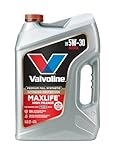
- Our premium motor oil for vehicles with over 75K miles, Valvoline MaxLife…
- Dual Defense Additive Technology combines innovative boosters fortified…
Valvoline MaxLife Extended Protection is the top oil in Valvoline’s MaxLife line. It’s a full synthetic made for vehicles with over 75,000 miles.
Valvoline claims 70% stronger wear protection, 20% better sludge defense and 20X better heat protection than industry standards. It also has seal conditioners to help prevent leaks and cut oil use. It’s suited to gas and hybrid engines.
Key details:
- Ultra MaxLife Technology
- Dual Defense additive technology
- Seal conditioners to reduce leaks
- Meets API SP and SQ standards, per retailer listings
Why it’s #3: Strong claims and a well-known high-mileage name. The comparisons come from Valvoline’s own testing, so treat the numbers as marketing, not lab results.
Best for: engines that leak a little or drink a little oil. Skip it if: you want independent test numbers.
#2. Mobil 1 High Mileage Full Synthetic 10W-40

- High Mileage for engines 75,000+ miles
- Helps extend engine life of higher mileage vehicles
Mobil 1 High Mileage 10W-40 is one of the top sellers in Amazon’s motor oil category. It’s a full synthetic with seal conditioners and additives that fight sludge. Mobil says it protects for up to 10,000 miles between changes.
The grade matters here. This is a 10W-40, which is thicker than the 5W-30 oils in this list. Only buy it if your manual lists 10W-40 as an approved grade.
Key details:
- Full synthetic 10W-40, 5-quart jug
- Triple Action Formula
- Seal conditioner and sludge-fighting additives
- Made for vehicles with 75,000+ miles
Why it’s #2: It’s a great oil from a name most mechanics trust. It misses #1 only because 10W-40 fits fewer engines than 5W-30.
Best for: engines that call for 10W-40, including many older cars and trucks. Skip it if: your manual calls for 5W-30 or something thinner.
#1. Castrol EDGE High Mileage 5W-30 Advanced Full Synthetic

- Phosphorus Replacement Technology to help extend the life of the emission…
- Reduces leaks, oil burnoff and power robbing deposits
Castrol EDGE High Mileage 5W-30 takes the top spot. It’s a full synthetic made for engines past 75,000 miles, and 5W-30 fits a very wide range of cars.
It uses patented Phosphorus Replacement Technology, which helps protect your emission system. Castrol also uses its Fluid Titanium technology to resist oil film breakdown and friction. The maker says it can go up to 15,000 miles between changes under the right conditions.
It meets API SP and SN Plus and ILSAC GF-6 standards. Castrol says it protects gasoline direct injection engines too.
Key details:
- Advanced full synthetic 5W-30, 5-quart size on this listing
- Phosphorus Replacement Technology for the emission system
- Fluid Titanium technology to fight friction
- Reduces leaks, oil burn-off and deposits, per the maker
Why it’s #1: It has the widest fit, a full synthetic formula and the strongest spec sheet of the group. It protects older engines and looks after the emission parts too.
Best for: most older gas engines that call for 5W-30. Skip it if: your manual calls for 10W-40 or 0W-20.
How to Read the Label: API and ILSAC
Look for two marks on the bottle. The API donut shows the service rating, such as SP. The ILSAC starburst shows the fuel-economy standard, such as GF-6.
SP and GF-6 are current standards. They add protection against low-speed pre-ignition and timing chain wear, two problems that show up in newer engines. In most cases an oil that meets them can be used where your manual lists an older rating. Check your manual to be sure.
Don’t go by the front label alone. Turn the bottle around and read the small print. That’s where the grade, the rating and the high-mileage claim all show up.
Pick the Right Viscosity First
Your owner’s manual lists the grade your engine needs. It’s often printed on the oil filler cap too. Four of the five picks here are 5W-30, which fits a wide range of engines.
The Mobil 1 pick is a 10W-40. That’s a thicker oil. Use it only if your manual allows it. The wrong grade can slow oil flow at a cold start.
Here’s how to read the numbers. The first number, with the W, shows how the oil flows when cold. Lower is thinner. The second number shows thickness at operating temperature.
Signs It’s Time for High-Mileage Oil
- Your odometer is past 75,000 miles
- Small oil spots under the car after it sits
- You top up the oil between changes
- Light smoke from the tailpipe on a cold start, which can point to worn seals
Big leaks or heavy smoke need a mechanic. Oil can slow small problems, but it won’t cure a big one.
Oil Change Tips for Older Engines
- Change the oil filter every time you change the oil.
- Check the oil level every few fill-ups.
- Follow the interval in your manual. Shorten it if you tow or take lots of short trips.
- Use the same grade each time.
- Take used oil to a recycling drop-off.
Quick FAQ
Can I switch from regular oil to synthetic at high mileage? For most engines, yes. If a leak shows up after the switch, it was likely already there. Have a mechanic check the seals.
Can I mix brands? In a pinch, yes, if the grade and spec match. For regular changes, stick with one oil.
Do I need high-mileage oil under 75,000 miles? No. A regular synthetic that matches your manual does the job.
How often should I change it? Follow your owner’s manual. Maker claims like “15,000 miles” assume ideal conditions.
Still Can’t Decide? Use the Picker
Answer two quick questions below and the tool points you to one of the five oils above.
Which High-Mileage Oil Should You Buy?
Pick one answer for each question, then tap the button.

Leave a Reply