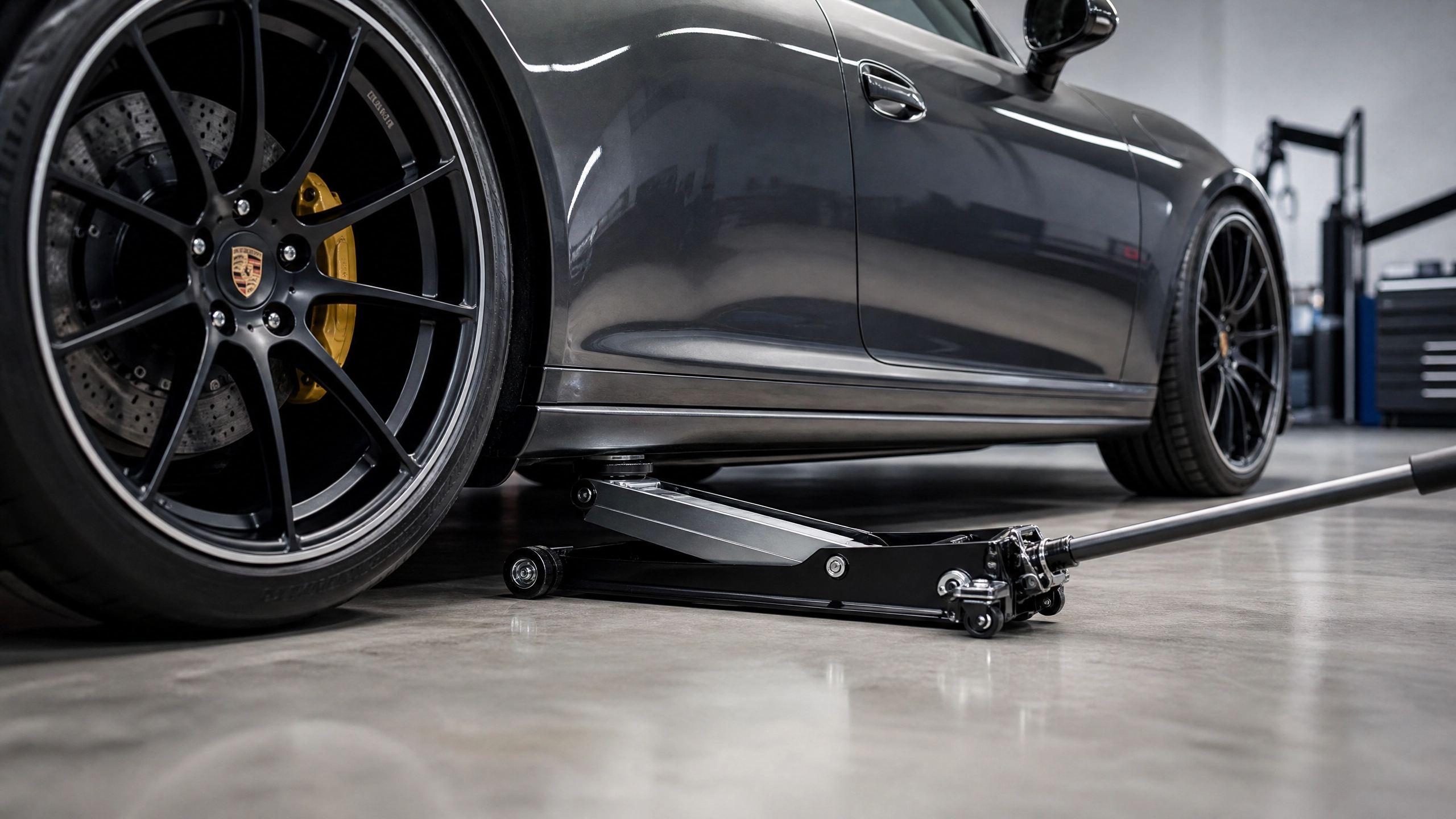
If you’ve ever tried to slide a standard floor jack under a slammed coupe, you already know the pain. The lip catches on the pinch weld, you’re grinding your knuckles on the ground, and the jack saddle won’t even clear the front lip before you’ve scratched up your splitter.
I’ve been wrenching on lowered cars for over 15 years, first in my dad’s shop and now in my own garage. I’ve gone through more jacks than I care to admit, and I’ve learned the hard way which ones actually work on cars sitting two or three inches off the deck.
This guide covers my top 5 low-profile floor jacks for lowered cars. Every pick here has actually rolled across my shop floor. I’m ranking them from solid to best, so stick around for my top pick at the end.
What I Look For in a Low-Profile Jack
Before we get into the list, here’s what actually matters when you’re shopping for one of these:
- Minimum entry height — This is the number that decides whether the jack even fits under your car. Anything over 3.5 inches is a gamble on most lowered builds.
- Lift capacity — Don’t just look at the ton rating on the box. Check it against your actual curb weight plus a safety margin.
- Saddle design — A wide, low saddle spreads the load and won’t slip off a rounded pinch weld.
- Caster wheels — Lowered cars sit close to the ground, so you need wheels that roll smooth on a low-clearance chassis instead of catching.
- Build quality — Steel versus aluminum changes the weight, the price point, and how the jack holds up over years of use.
I also always cross-check the jack’s stated lift range against my jack stands. A jack that can slide under your car is useless if it can’t actually get the car high enough to seat your stands properly.
Quick Garage Tip Before You Buy
Here’s something a lot of buying guides skip. Before you even swing a jack under your lowered car, walk the underside first.
Look for your factory lift points. On most lowered builds, aftermarket lips and splitters sit lower than the actual pinch weld. I’ve seen guys crack a front lip because they aimed for the lowest point instead of the strongest point.
I keep a cheap inspection mirror in my toolbox just for this. Thirty seconds under the car with a flashlight saves you a body shop bill later.
Find Your Low-Profile Floor Jack
Answer two quick questions and I’ll point you to the jack that fits your ride and your budget for capability.
#5. Pro-Lift F-767 Grey Low Profile Floor Jack
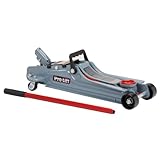
- Extra low profile
- Lifting range of 3-3/8 inches to 15 inches. The solid steel construction…

This is the jack I recommend to buddies who just lowered their first car and don’t want to blow their whole budget on jack gear.
The Pro-Lift F-767 has a 3.5-inch minimum height, which is enough to slide under most moderately lowered sedans and coupes. It’s a 2-ton capacity unit, so it handles most compact and mid-size cars without breaking a sweat.
In my shop, I’ve used this one mainly for oil changes and brake jobs on my nephew’s Civic. It’s not the fastest lifting jack on this list. You’ll pump the handle a good number of times to get to full height.
What I like:
- Budget-friendly entry point into low-profile jacking
- Compact enough to store in a small garage or trunk
- Decent build for the price point
Where it falls short:
- Pump action feels a little stiff after the first year of use
- Not rated for anything heavier than a compact or mid-size car
- Saddle pad is on the small side for wider pinch welds
If you’re daily-driving a mildly lowered compact and just need something that fits under the car without drama, this one gets the job done.
#4. BIG RED T83006 Torin Hydraulic Trolley Floor Jack

- Hydraulic trolley floor jack is providing long term durability with an…
- Features a 3 ton (6,000 lb) capacity with a minimum lifting height of…
Torin makes a ton of jacks, and the T83006 is their answer to the low-clearance crowd. I picked one of these up a few years back for a customer’s lowered truck project, and it’s held up better than I expected.
This one carries a 3-ton lift capacity, which puts it a step above the Pro-Lift for heavier vehicles. The low profile saddle design gets under most stanced trucks and SUVs that still have a couple inches of clearance to work with.
I like running this jack when I’m doing suspension work, not just tire changes. The extra capacity gives me more confidence when I’ve got a control arm hanging loose and the full weight of the corner resting on the jack.
What I like:
- Solid lift capacity for the price
- Wide wheelbase keeps it stable on uneven garage floors
- Handles trucks and SUVs, not just cars
Where it falls short:
- Minimum height is a touch higher than the top picks on this list
- Steel construction makes it heavier to move around
- Paint on the saddle chips after regular use
For guys running lowered trucks or SUVs that still sit a bit higher than a slammed coupe, this is a dependable middle-of-the-road pick.
#3. Blackhawk B6350 Black/Red Fast Lift Service Jack

- Built-in internal safety valve and vent plug ensures safe operation
- Swivel saddle provides easy jack positioning and user safety.Saddle…
Blackhawk built a name in the professional shop world, and the B6350 brings that same reliability down to the home garage. This is the jack I grab when a customer’s on a tight schedule and I need the car up in a hurry.
The Fast Lift feature is exactly what it sounds like. The first few pumps of the handle bring the saddle up quick, then it switches to a normal ratio once you’re closer to your target height. That saves real time when you’re doing a shop full of oil changes back to back.
It’s rated at 2 tons, and the minimum height clears most lowered sedans without a problem.
What I like:
- Fast Lift pump cuts down on wasted pumping time
- Reliable release valve, smooth and controlled lowering
- Good build quality that holds up in daily shop use
Where it falls short:
- 2-ton rating means it’s not the pick for heavier vehicles
- A bit pricier than the entry-level options
- Handle can feel a little loose after extended use
If your time in the garage is limited and you want a jack that gets you working faster, the Fast Lift design earns its spot on this list.
#2. Arcan 2-Ton Extra Long Reach Low Profile Steel Floor Jack (A20016)

- Capacity: Supports 2 Ton (4,000 lb.) for professional lifting and service…
- Dual Pump Pistons: Rapid lift design quickly raises the saddle to contact…
This is the jack that changed how I think about “low profile.” Most jacks in this category get you a low entry height and call it a day. The Arcan A20016 gives you that same 2.75-inch minimum height but pairs it with a 24-inch max lift range, which is a longer reach than almost anything else I’ve tested.
It’s a full steel construction, so you’re not trading lift capacity for a lighter frame. The dual pump pistons are the standout feature here. They bring the saddle up fast in the first stage, then settle into a smoother, more controlled ratio as you get closer to full height.
I use this one for my own project car, a lowered coupe that sits low enough to scrape most speed bumps. The low profile frame slides under without me having to jack up one corner just to get the jack in position, and I don’t run out of lift range halfway through a suspension job.
What I like:
- Dual piston design saves serious pumping time on the first stage
- Extra long reach means you’re not limited once the car’s off the ground
- Bypass and overload valves protect the hydraulic ram from over-extension
- Built and rated to the ASME PASE-2019 safety standard
Where it falls short:
- Steel construction makes it heavier to haul around the shop than an aluminum jack
- 2-ton rating tops out below the heavier picks on this list
- Saddle pad shows wear after a few seasons of regular use
This is the jack I hand to customers who need real lift range on a low-profile build, not just a low starting point. It’s a serious step up from the entry-level picks.
#1. SUNEX TOOLS 6602LP 2 Ton Low Rider Steel Service Jack
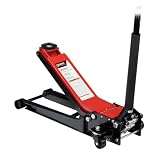
- 2.75″ min height is ultra-low and ideal for sports cars, exotic cars, and…
- 24″ max height is versatile and lifts high enough for pick-ups and suv’s
Here’s my top pick, and it’s not close. The Sunex 6602LP earned the name “Low Rider” for a reason. This thing has one of the lowest minimum heights I’ve tested on any jack that still holds serious lift capacity.
I run this jack on my own slammed build, a car that sits low enough that most jacks won’t even fit under the front subframe. The Sunex slides right in without me having to jack up a wheel ramp first just to create clearance.
The 2-ton steel construction gives you confidence under the car, something aluminum jacks don’t always match. The wide caster wheels roll smooth across my shop floor without catching on cracks or seams, which matters when the whole jack sits just an inch or two off the ground.
What really sold me was pulling frozen frame data on a diagnostic scan after a suspension repair. I needed the car up and stable fast to re-check a wheel speed sensor before clearing codes. The Sunex got me there without any wobble or drift once I locked it in place.
What I like:
- Genuinely one of the lowest minimum heights on the market
- Steel build gives you real confidence under heavier lowered cars
- Smooth-rolling casters handle low-clearance garage floors
- Reliable lift with minimal drift once you’re at height
Where it falls short:
- Steel construction makes it one of the heavier jacks to move around
- 2-ton capacity means you’ll want a different jack for full-size trucks
- Handle assembly takes a couple extra minutes to set up out of the box
If you’re running a genuinely low build and you’re tired of fighting your jack just to get it under the car, this is the one I’d tell you to buy first. It’s what sits in my own shop, and it earns its spot every single time I roll it out.
A Few Garage Safety Reminders
Before you wrap up any job under a lowered car, keep these habits in mind:
- Always use jack stands. A floor jack lifts the car. It should never be what holds the car up while you’re underneath it.
- Check your lift points twice. Lowered cars often have aftermarket parts hanging lower than the factory pinch weld.
- Test the jack on flat ground first. A jack that rolls or tips on an angled driveway is a hazard waiting to happen.
- Watch your smog check monitors if you’re clearing codes after suspension work. Some monitors reset when the battery loses power during a jack-assisted repair, and that can hold up your emissions test until they run again.
Any of these five jacks will get you off the ground safely if you match the capacity to your car. But if you’re running a truly low build, the Sunex 6602LP is the one that’s earned a permanent spot on my shop floor.




Leave a Reply