
You got the oil changed, drove off feeling good about it, and then you heard it: tick, tick, tick, right there under the hood. It wasn’t there yesterday. Now it’s all you can hear.
I get why it feels like the oil change caused it. Sometimes it did. Sometimes the noise was there all along and fresh, clean oil let you hear it. And sometimes it’s a normal sound that you’re now listening for. Here’s how to sort out which one you’ve got, starting with the thing that matters most.
If the sound you hear is more of a whistle than a tick, our guide to diagnosing a high-pitched whistle under the hood walks through common air-leak and pulley causes.
Do These Three Things First
Before you read any further, do this. It takes ten minutes.
- Check your oil warning light. If it’s on or flickering, shut the engine off and don’t drive. Low oil pressure can wreck an engine in minutes.
- Check the dipstick on level ground. Turn the engine off, wait five minutes for the oil to drain back into the pan, wipe the stick, push it all the way in, pull it, and read it. The oil should sit between the two marks.
- Look under the car. Drips or a wet spot near the oil filter or the drain plug mean a leak.
If the oil is low, you have your most likely answer. A low level is the number one cause of ticking after an oil change, and the fix is quick.
Ticking That’s Normal
A few sounds are fine, and it helps to know them.
- A short tick at startup. A new oil filter starts out empty. When you start the engine, oil has to refill it and travel up to the top of the engine. The lifters, the small parts that open the valves, can tick for a few seconds until they fill. If the tick fades within about ten seconds, that’s usually normal.
- Fuel injector ticking. Injectors click as they open and close. On direct-injection engines, this can be loud enough to hear from the driver’s seat. It’s the sound of a working engine.
- Light valve noise on some engines. Some designs just run a bit tappy, especially when cold.
The sign that it’s not normal: the tick sticks around after the engine warms up, gets louder over days, or shows up along with a low oil level.
The Causes, From Most to Least Likely
Low Oil Level
The shop may have under-filled the engine, or the oil may be leaking out. A short oil supply lets the pump suck air, and the top of the engine starves first. Valve train parts tick when they don’t get enough oil.
Check the dipstick. If it’s low, add the correct oil in half-quart steps, rechecking each time. Then find out why it was low.
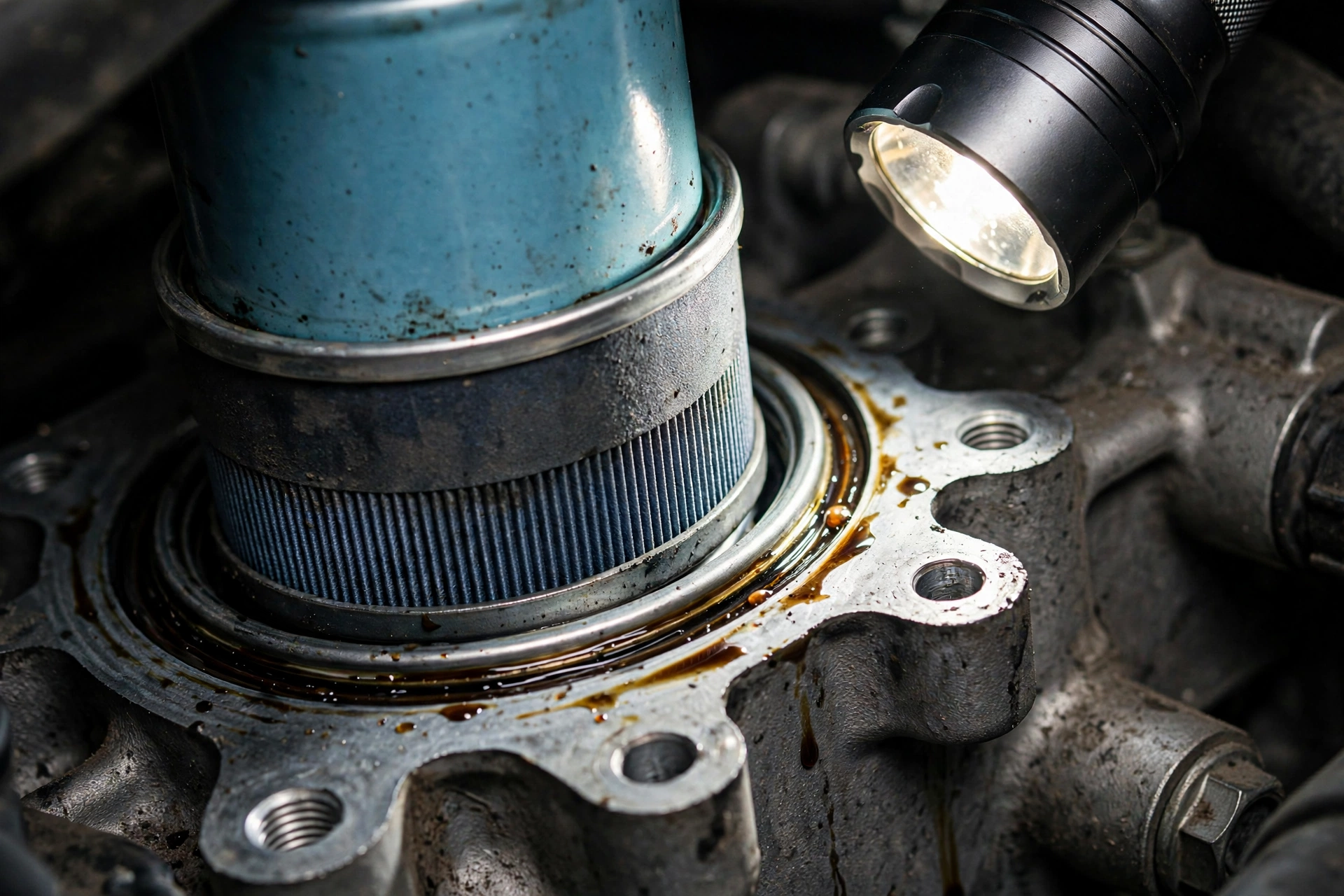
Leaks at the Drain Plug or Filter
A drain plug that’s loose or has a missing washer will drip. A filter that’s loose will leak faster than that. Another classic mistake: the old filter’s rubber gasket stays stuck to the engine, and the new filter goes on top of it. Two gaskets don’t seal, and oil sprays out under pressure. That one empties the pan quickly, so if you see oil under the car, act right away.
Overfilled Oil
More isn’t better. When the level is above the max mark, the crankshaft whips the oil into foam. Foamy oil doesn’t carry pressure well, and the lifters and bearings get air instead of oil. The result can be ticking, or even a light knock. Drain out the extra until the level reaches the top mark.
Wrong Oil Grade
Every engine is designed for a specific oil thickness, listed in the owner’s manual and often printed on the oil cap, like 5W-30. Oil that’s too thick flows slowly on a cold start and takes longer to reach the top of the engine. Oil that’s too thin may not hold pressure well in worn engines. If your receipt shows a different grade from the one in your manual, that’s a real clue.
A Filter Problem
The wrong filter, a cheap one with a poor anti-drainback valve, or one that isn’t threaded on fully can all cause trouble. The anti-drainback valve keeps oil in the filter when the engine is off. If it fails, the engine starts dry and ticks each time you start it, for longer than the usual few seconds.
Oil on the Exhaust
A little spilled oil on the exhaust manifold burns off with a smell, and sometimes a sizzle or a light tick as it heats. If you smell burning oil or see a wisp of smoke for the first few drives, a spill is likely. If it continues, something is leaking.
A Noise That Was Already There
Old, dirty oil is thick and sticky. It can cover up valve train noise. Fresh oil is cleaner and thinner, so a worn lifter or a tired rocker arm that was always a bit loud now sounds louder. An exhaust manifold leak is another common one. It ticks when cold and quiets down as the metal swells, and it has nothing to do with the oil.
Air in the System or a Sticky Lifter
If the engine sat with low oil for a while, or the oil level fell low once, a lifter can take on air or collect debris and stay noisy. Sometimes a few drives with the right oil level clears it. Sometimes it doesn’t.
Use the Tick Triage Tool
Answer four questions. The tool gives you a green, amber, or red verdict and tells you what to do.
How to Tell One Tick From Another
Ticks aren’t all alike, and a few observations narrow it down.
- Does it speed up with the revs? Valve train ticks follow engine speed. Rev gently in Park and listen.
- Is it loudest at the top of the engine? Valve train sounds come from the valve cover. Exhaust leaks come from the side of the engine where the manifold bolts on.
- Cold or warm? Exhaust leaks tick cold and fade. Oil starvation noise tends to hang around or get worse once the engine is hot and the oil thins.
- Steady or intermittent? Fuel injectors tick in a very even rhythm. A lifter often skips or varies.
A long screwdriver works as a stethoscope. Hold the tip against the valve cover or a solid part of the engine, and press the handle to your ear. Stay clear of the belt, the fan, and hot exhaust parts.

If You Did the Oil Change Yourself
DIY changes are where I see most of the avoidable mistakes. Run through this list.
- Count the quarts. Your owner’s manual lists the oil capacity with a filter change. Check that what you poured matches.
- Match the grade. Check the bottle against the manual.
- Check the old filter gasket. The rubber ring should be on the old filter, not stuck to the engine.
- Check the drain plug. Make sure the washer is in place and the plug is tight to spec.
- Tighten the new filter properly. Hand-tight plus about three-quarters of a turn is a common rule, but follow the instructions on the filter.
- Run the engine, then recheck. After a short drive, let the engine sit for five minutes and check the dipstick again.
Reading the Dipstick Correctly
A wrong reading sends people down the wrong path, so watch for these traps.
- Reading too soon. Oil takes a few minutes to drain from the top of the engine back into the pan. A reading taken right after shutdown looks low.
- Reading on a slope. A car parked nose up or nose down gives a false high or low.
- Skipping the wipe. The first pull shows oil that splashed up the tube. Wipe the stick, push it all the way in, then pull it again.
- Misreading the marks. Some sticks use a crosshatched zone or two small holes. The level should sit anywhere inside that zone, not just at the bottom edge.
When to Call a Shop
Don’t wait on any of these.
- The oil warning light comes on
- The tick turns into a knock
- The oil level keeps dropping between checks
- You see oil dripping or spraying under the car
- The noise gets louder over a few days
If the shop did the change, call them first. A reputable shop will recheck the level and the filter for free. A tick right after service is their business too.
Quick Answers
Can an oil additive fix the ticking? It’s not a first step. Additives can quiet noise for a while, but they don’t fix low oil, the wrong grade, or a worn part. Find the cause first.
Can synthetic oil cause ticking? Not by itself. If your engine calls for it, synthetic is fine. If the ticking started after you changed types, the likelier cause is that clean oil revealed an existing noise.
Should the shop fix this for free? If the cause is low oil, a loose filter, a doubled gasket, or the wrong grade, yes. That’s on them. Keep your receipt and take the car back.
Is a tick for a few seconds at startup okay? Usually, yes, especially after a filter change. If it lasts longer or shows up every start, look at the oil level and the filter.
How long should I wait before worrying? If the dipstick reads right and the tick fades as the engine warms up, a day or two of watching is fine. Anything with a warning light or a knock gets looked at right away.
Most post-oil-change ticks come down to level, grade, or a loose or doubled gasket. The dipstick takes thirty seconds, and it settles more of these cases than anything else you can do. Check it first, and if everything on this page checks out and the sound is still there, take it back to the shop and let them listen.
Related posts:
 The Ultimate Year-Round Car Maintenance Checklist: Oil, Brakes, Fluids & More
 The Complete Guide to Engine Oil: Types, Viscosity, and When to Change for Peak Performance
 How to Wash Your Car Without Scratching: Pro Cleaning Tips
 How Often Should You Really Rotate Your Tires? 5k vs 8k vs Front-Wheel-Drive Wear Pattern

Leave a Reply