
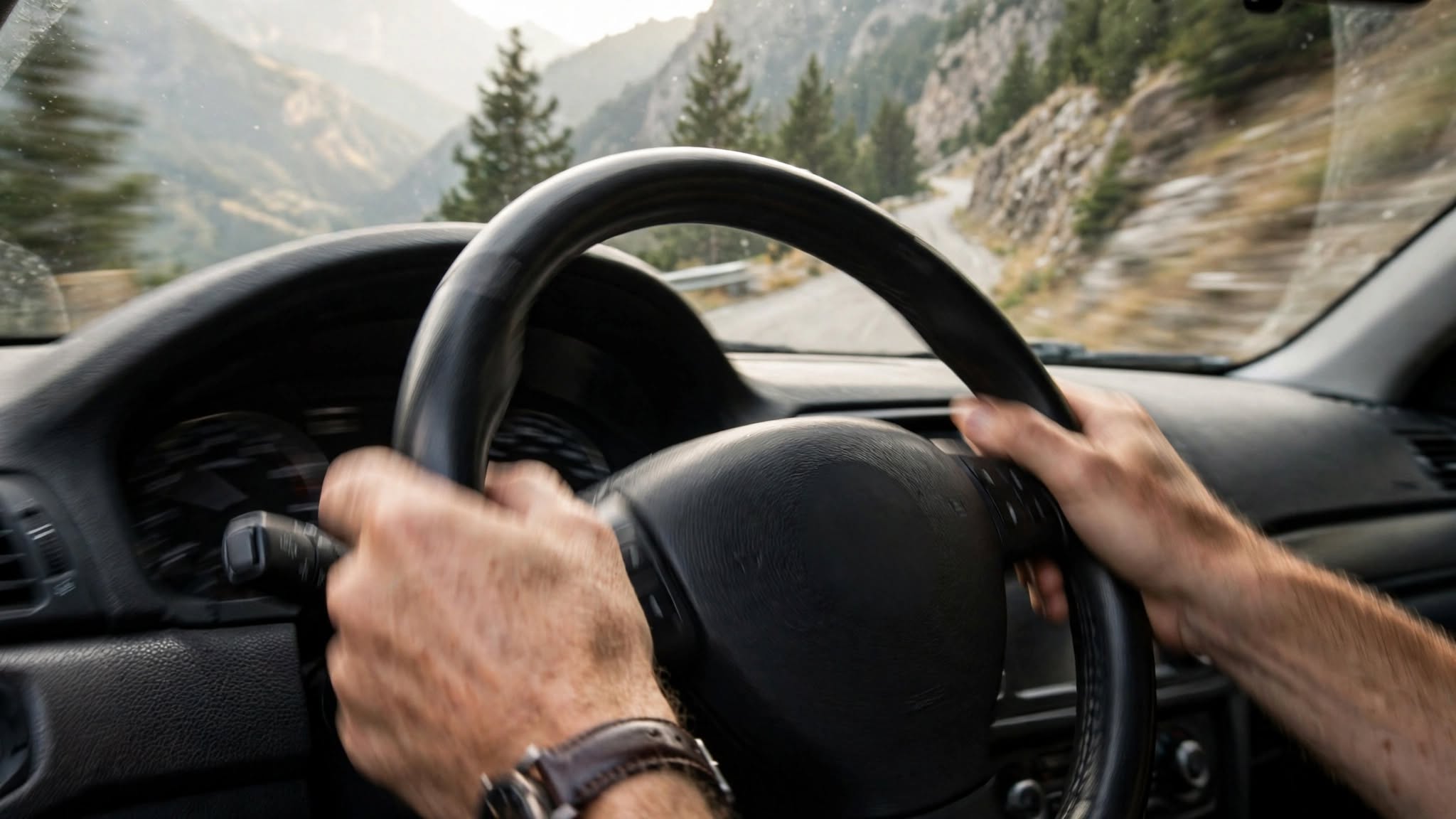
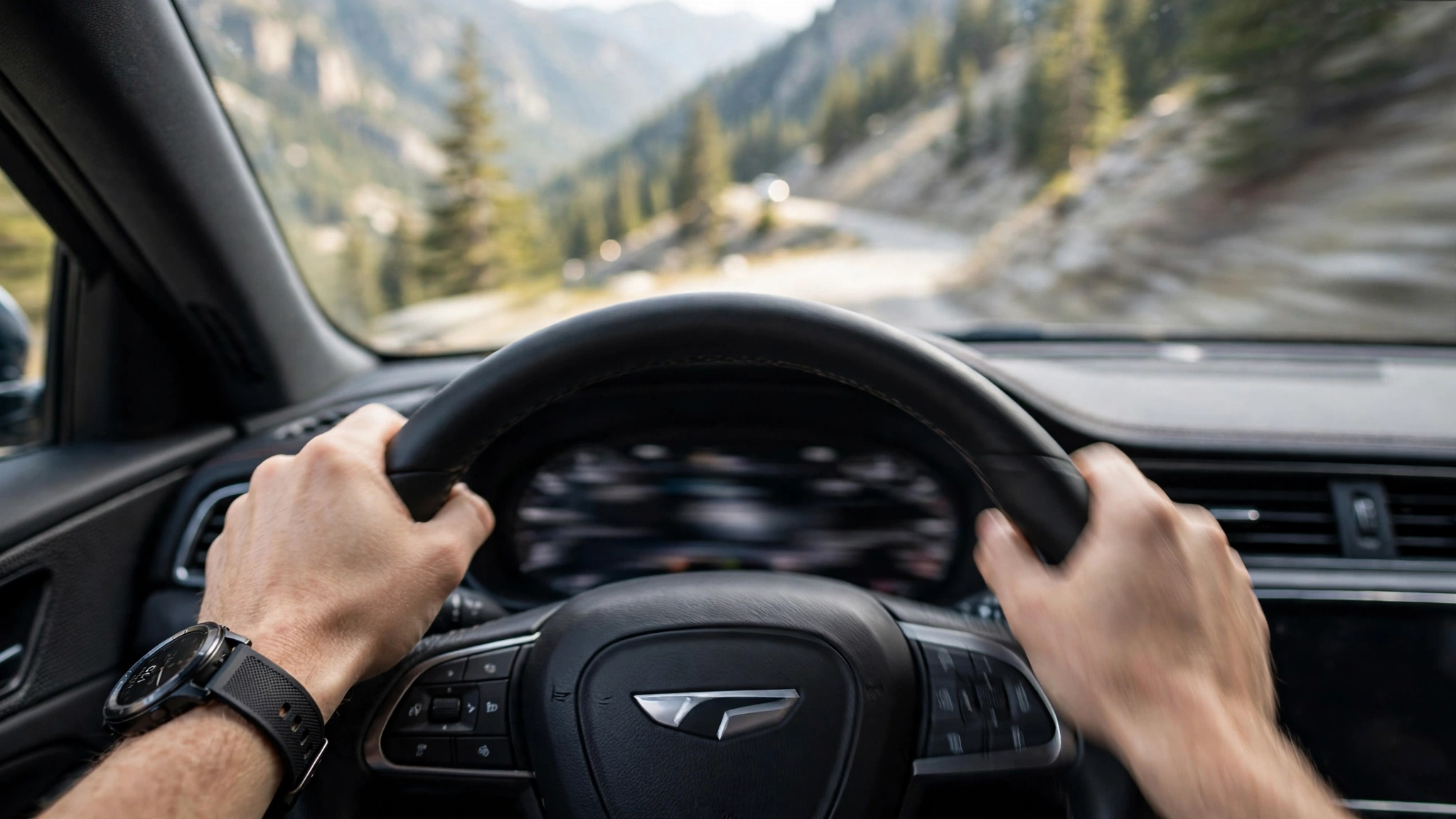
That shake in steering wheel can be scary. You are going downhill, tap brakes, wheel shudders under hands. It smooths on flat. It disappears when you let off brake. If that sounds familiar, you are not alone.
Downhill puts extra stress on front end. Gravity pushes car forward. Front brakes do 70-80% of work. Heat builds fast and magnifies small problems you would not feel on daily drive.
Why only downhill?
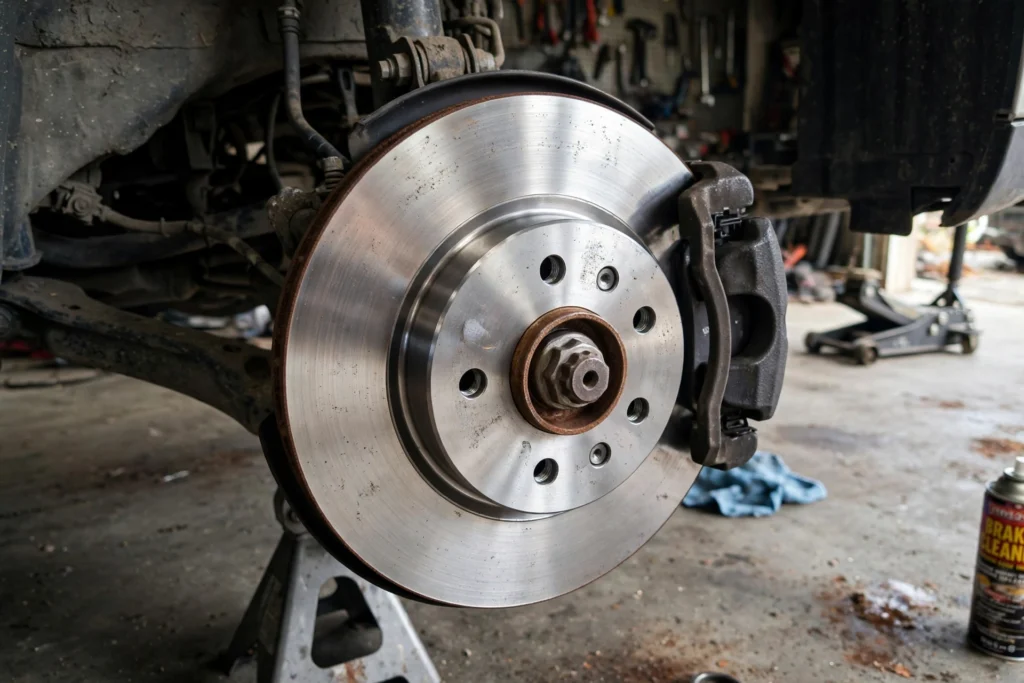
On flat, brakes get break. Heat fades between stops. Downhill, you brake longer and harder. Rotor expands. If it has thin spots or uneven pad deposits, it expands unevenly and creates high spot. Every time pad hits high spot, steering shakes. Also weight transfer forward loads worn suspension joints and makes shake worse.
7 common causes
1. Warped brake rotors – most common
Big steel discs. When hot, uneven thickness causes vibration at wheel frequency. Measure thickness variation with micrometer at 8 points. More than 0.001 inch variation will shake. Also check lateral runout with dial indicator. Fix: resurface if thick enough, or replace with coated quality rotor. Bed pads properly after.
2. Uneven pad deposits (often mistaken for warp)
Pad material transfers to rotor if you hold hot brakes at stoplight after long downhill. Creates sticky spots. Feels same as warp. Can sometimes be cleaned with aggressive bedding: 5-6 hard stops from 50 to 10 mph without full stop, let cool.
3. Sticking brake caliper
Slider pins dry, piston corroded, caliper drags, rotor overheats faster downhill. After drive, check wheel temps with IR gun. One wheel 80F hotter means drag. Clean pins, lube with silicone paste, replace hardware.
4. Worn tie rod ends or control arm bushings
Downhill braking loads these. If bushing cracked, toe changes slightly under braking and amplifies rotor vibration into steering wheel. Inspect for play.
5. Wheel bearing with slight play
Bearing allows rotor to wobble more when hot. Check for play at 12/6.
6. Unbalanced tires or bent rim
Usually shakes all time, but braking downhill loads front and makes it obvious. Balance first if shake started after tire work.
7. Overheated brake fluid
Old fluid boils, pedal soft, but can also cause uneven braking. Flush every 2-3 years, especially mountain drivers.
Safe downhill braking habits
- Use engine braking: Downshift to 3rd or 2nd on automatic, use L or manual mode. Let engine hold speed.
- Pulse, not drag: Brake firmly to 5 mph below target, release to cool, repeat. Constant light drag overheats.
- Look ahead: Anticipate grade. Slow before grade, not during.
⛰️ Downhill Brake Shake Calculator
Diagnosis at home
- Drive same hill, brake lightly, note speed where shake starts.
- After hill, without using brakes at bottom, coast – if still shakes, it is not brakes but suspension/tire.
- Inspect rotors for blue spots, scoring.
- Check lug torque – uneven torque warps rotor over time. Always torque in star pattern to spec.
When to replace
If rotor thickness below minimum stamped on rotor hat, replace, do not resurface. Always replace pads with rotors, or at least scuff and bed. Use quality ceramic pads for mountain use, less fade and less deposit.
Steering shake only downhill is warning that your front brakes are running too hot or already uneven. Fix rotors, clean calipers, and change driving habit and shake goes away.
Related posts:
 Troubleshooting Common Car Audio Problems: Diagnosing and Fixing Sound System Issues
  Top Tech Car Upgrades: Dash Cams, Backup Cameras & Parking Sensors
  How to Change Your Car Air Filter Yourself in Under 10 Minutes (No Tools Needed)
  The Beginner’s Guide to Inspecting Serpentine Belts for Dry Rot and Cracks
Leave a Reply