
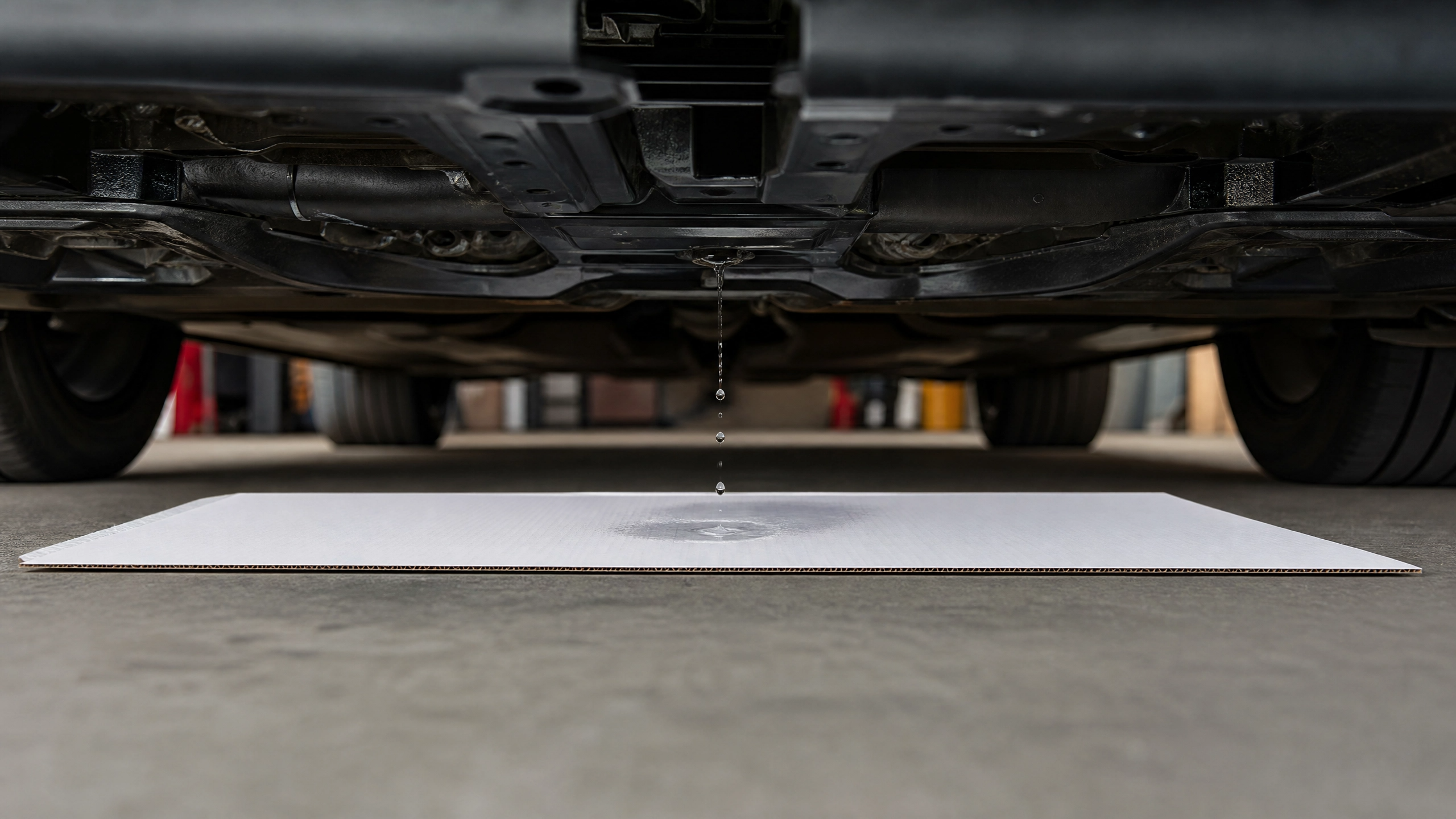
The Panic Moment: What That Puddle Really Means
You walk out to your driveway on a Tuesday morning, grab your coffee, and spot it. A fresh puddle right under your engine bay. Your stomach drops. Your mind immediately jumps to worst-case scenarios: transmission failure, coolant system meltdown, or thousands in repair bills.
After 15 years working on cars in my garage and helping hundreds of drivers diagnose problems, I can tell you this: clear fluid leaks are usually the least of your worries. In fact, most of the time, that puddle is completely harmless.
The Good News: Colorful fluids (bright red transmission fluid, neon green or orange coolant, dark brown engine oil) are the ones that demand immediate attention. Clear fluid? It’s almost always something you can handle without panic.
That said, there’s one exception that absolutely requires you to stop driving—brake fluid. That’s exactly why I’m walking you through this guide.
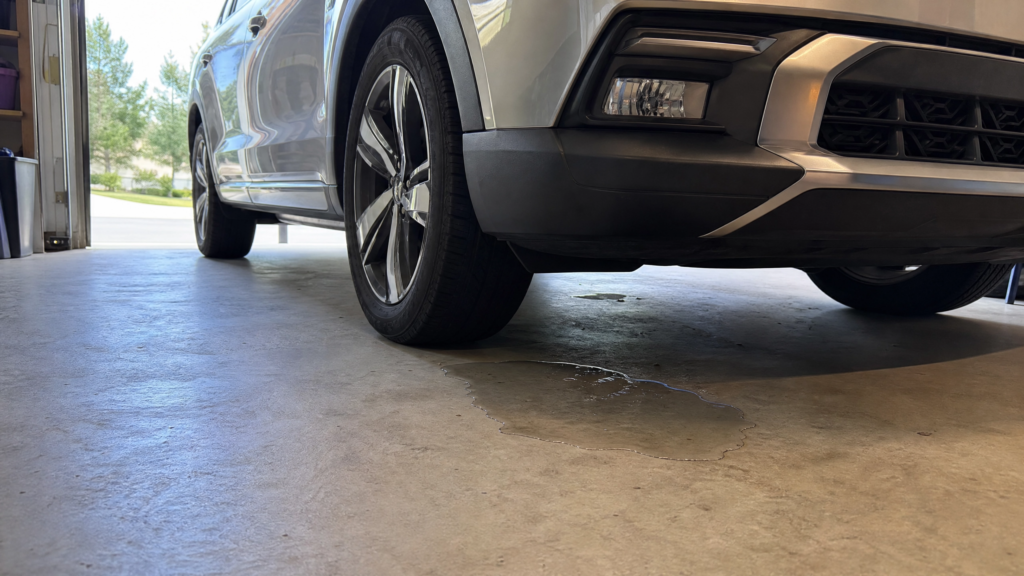
A clear fluid puddle under the front of a vehicle—often just condensation from the air conditioning system.
The Three-Step Diagnostic Trick (No Tools Required)
Before we get into the specific fluids, let me give you my personal “garage method” to identify what’s leaking. You don’t need a fancy scanner. Just three simple tests.
1. The Cardboard Test
Grab a clean piece of white cardboard—a flattened cereal box works great. Slide it under your car overnight. The cardboard will catch the exact color and location of the drip. This is your first and best clue.
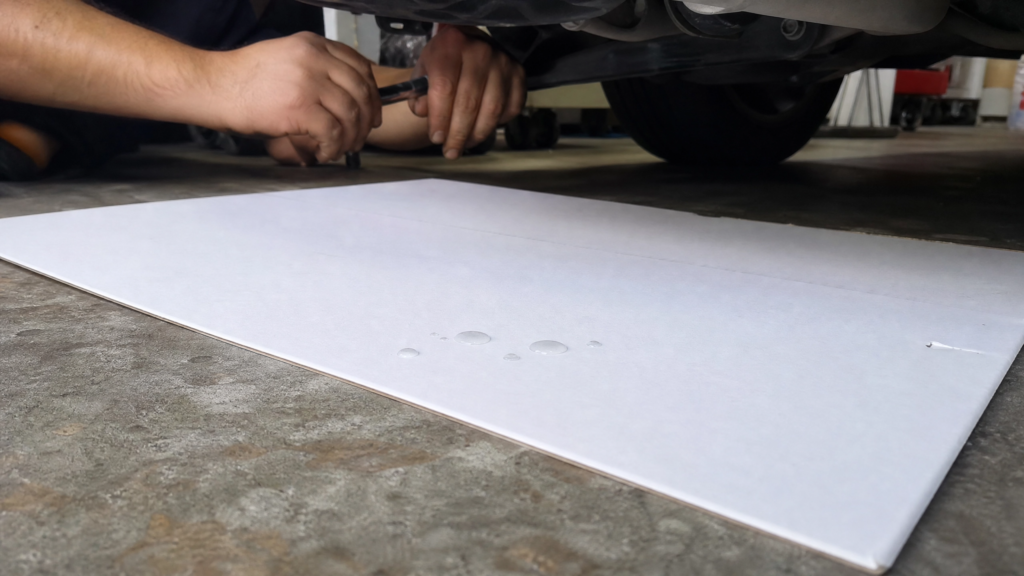
The cardboard test reveals fluid color and drip location instantly—a mechanic’s favorite trick.
2. The Texture Test
Carefully touch a small drop of the fluid between your thumb and index finger. Rub it gently. Does it feel slick and greasy like oil? Or does it feel just like tap water? Water-like means it’s likely condensation or washer fluid. Greasy means it’s an oil-based product.
3. The Sniff Test
Smell the fluid from a safe distance. Does it have a harsh, chemical smell? Sweet and syrupy? Or no smell at all? Your nose is a powerful diagnostic tool. Brake fluid has a distinctive acrid, bitter bite. Engine oil smells heavy and mechanical. Water has no smell.
The 5 Clear Fluids Your Car Might Be Leaking
1. Air Conditioning Condensation (The Most Common “Leak”)
Think of your car’s A/C system like a cold soda can on a hot day. When you run the air, moisture in the cabin air condenses on the cold evaporator coils. That water drains through a small rubber tube underneath your car.
- What It Is: Pure water.
- Location: Passenger-side firewall or right behind the front wheel.
- Texture/Smell: Feels like water, no smell.
- Danger Level: SAFE.
Alex’s Expert Note: If your A/C is working and you see clear water dripping, your car is doing exactly what it’s supposed to do. The only time to worry is if the drip stops completely—that might mean the drain tube is clogged, which can cause water to back up and soak your floor mats.
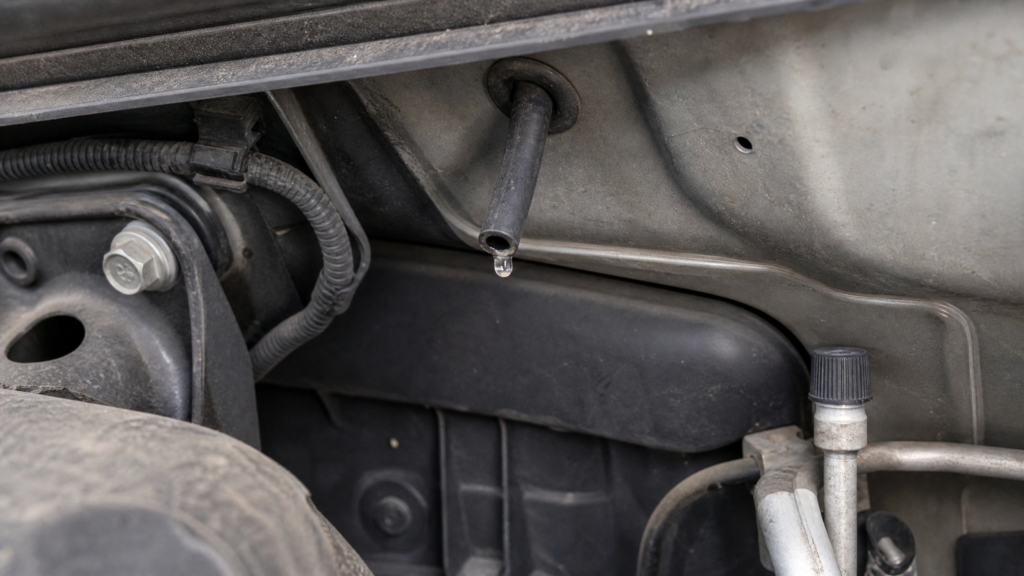
The A/C drain tube—your car’s way of getting rid of condensation.
2. Fresh Engine Oil (Post-Oil Change)
Here’s a detail many folks miss: fresh synthetic oil looks almost completely clear or light amber. It’s not the dark brown “sludge” you see on an old dipstick. If you just had an oil change and see a light-colored, slippery puddle, it might be new oil.
- What It Is: Light amber synthetic oil.
- Location: Under the oil drain plug or oil filter.
- Texture/Smell: Very slick and greasy, heavy mechanical smell.
- Danger Level: NEEDS ATTENTION.
The Mechanic’s Warning: I’ve seen lube techs forget to remove the old rubber “O-ring” seal from the filter housing before installing a new one. This “double-gasketing” causes a fresh leak. Check your oil level. If it’s dropping, tighten the drain plug (usually a 17mm socket) or check that filter.
3. Brake Fluid (The Critical Safety Hazard)
This is the one that keeps me up at night. Fresh brake fluid (DOT 3 or DOT 4) out of a clean reservoir can look almost transparent with a slight yellow tint.
- What It Is: Clear to pale yellow hydraulic fluid.
- Location: Near the wheels (calipers/cylinders) or under the master cylinder.
- Texture/Smell: Slippery, but has a harsh, bitter, acrid chemical smell.
- Danger Level: SEVERE DANGER.
Safety Warning: Brake fluid ruins car paint down to the bare metal instantly. If you touch it, wash your hands immediately. If it leaks, do not drive the car. You are losing hydraulic pressure, which means your brakes could fail at any moment. Tow it to a shop.
4. Electric Vehicle (EV) Battery Coolant
If you drive a modern EV, you might encounter specialized battery cooling fluids. Some of these are clear or very light pastel colors.
- What It Is: Specialized thermal management fluid.
- Location: Under the battery pack or thermal unit.
- Texture/Smell: Clear/pastel, slight chemical smell.
- Danger Level: TECHNICAL DANGER.
What to Do: EV battery systems are complex and high-voltage. If you see a leak here, don’t mess with it. Take it to the dealership immediately for a diagnostic.
5. Clear Windshield Washer Fluid
Most washer fluid is blue, but some winter or “bug-wash” formulas are completely clear.
- What It Is: Clear washer fluid.
- Location: Under the front bumper area where the plastic reservoir sits.
- Texture/Smell: Feels like water, but smells strongly of alcohol or soap.
- Danger Level: SAFE TO DRIVE.
The Fix: These plastic tanks get brittle and crack over time. You can drive safely, but you’ll want to swap the reservoir (usually a $40 part) or check for a loose hose line when you have a spare Saturday afternoon.
Summary Table: At-A-Glance Identification
| Fluid Type | Primary Location | Visual & Texture | The “Sniff” Test | Action Required |
|---|---|---|---|---|
| 💧 A/C Water | Passenger Firewall | Clear & Watery | No Smell | ✅ None. Normal operation. |
| 🛢️ New Oil | Under Engine | Amber & Very Slick | Heavy/Mechanical | ⚠️ Check Levels. Tighten plug. |
| 🚨 Brake Fluid | Near Wheels | Clear/Yellow & Oily | Harsh/Acrid | 🛑 STOP. Tow to a shop. |
| 🔋 EV Coolant | Under Battery | Clear & Slippery | Slight Chemical | ⚠️ Service. Visit dealership. |
| 🧼 Washer Fluid | Front Bumper | Clear & Watery | Soap/Alcohol | ✅ Safe. Fix leak later. |
Fluid Leak Identifier Tool
🔍 Clear Fluid Leak Identifier
Answer these questions to narrow down the leak:
Final Thoughts: When to Relax
I’ve been around cars long enough to know that every puddle feels like a crisis. But remember: 90% of clear leaks are just your A/C “sweating” or a bit of soapy washer fluid. Take a breath, grab your cardboard, and check your reservoirs. If your levels are full and the fluid smells like nothing, you’re probably good to go.




Leave a Reply