

How to Unleash Your Car’s True Potential
To many people who love cars, having a car isn’t only about taking it out for a ride. It’s about fine-tuning and squeezing all possible power out of the machine. Be it for quicker laps, for that more thrilling ride to work, or simply for a slightly more spirited performance, performance upgrades will provide you with an adrenaline rush towards fulfilling your car fantasies. But with endless possibilities, how do you know where to begin?
Having spent countless hours under the hood (and in the garage), wrenching and carefully strategizing upgrades for my own project cars, I get it — the exhilaration and sometimes paralysis when it comes to upgrading a car. It’s not just raw horsepower, but rather a perfect storm of horsepower and handling, making sure your car goes, stops and turns like a house on fire.
This all-inclusive guide will take you through the top 10 performance modifications that really make a difference, so that you can approach the world of performance enhancement with confidence.
We’ll be covering each upgrade, how it works, what the benefits are, and what to consider before you get started.
1. Cold Air Intake (CAI): The First Breath of Power
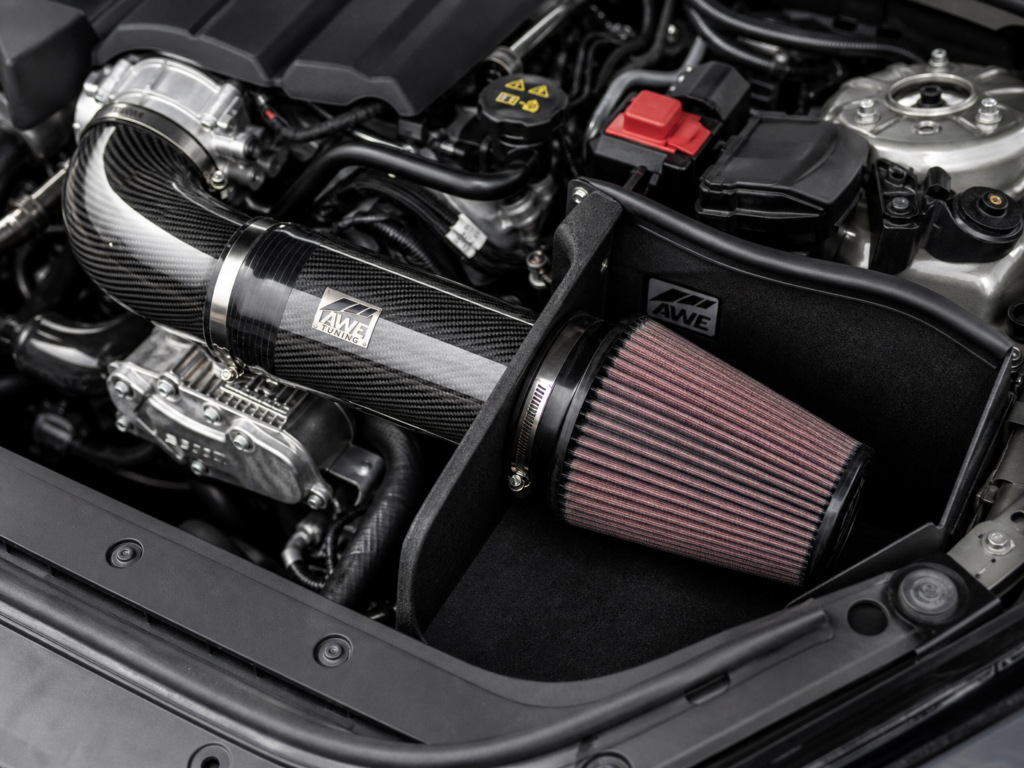
One of the most popular and usually the first some modification car owners think of is a cold air system intake. The idea is that an engine is going to work better when it breathes cold, dense air. Factory airboxes are known to be restrictive and pull in warm air from the engine compartment.
A CAI moves the air filter to a location that can provide cooler ambient air, typically outside of the engine compartment. This cooler air is denser air with more oxygen, which allows for more complete combustion and a small increase in horsepower and better throttle response. It also is often a little more aggressive in engine sound, a bonus for lots of performance enthusiasts.
Expert Point of View: A CAI is a solid place to start, but don’t expect earth-shattering horsepower gains. Improved engine efficiency and a more gratifying intake are the main advantages. Combine it with other schemes for better results.
2. ECU Tuning / Remapping: The Brain Transplant
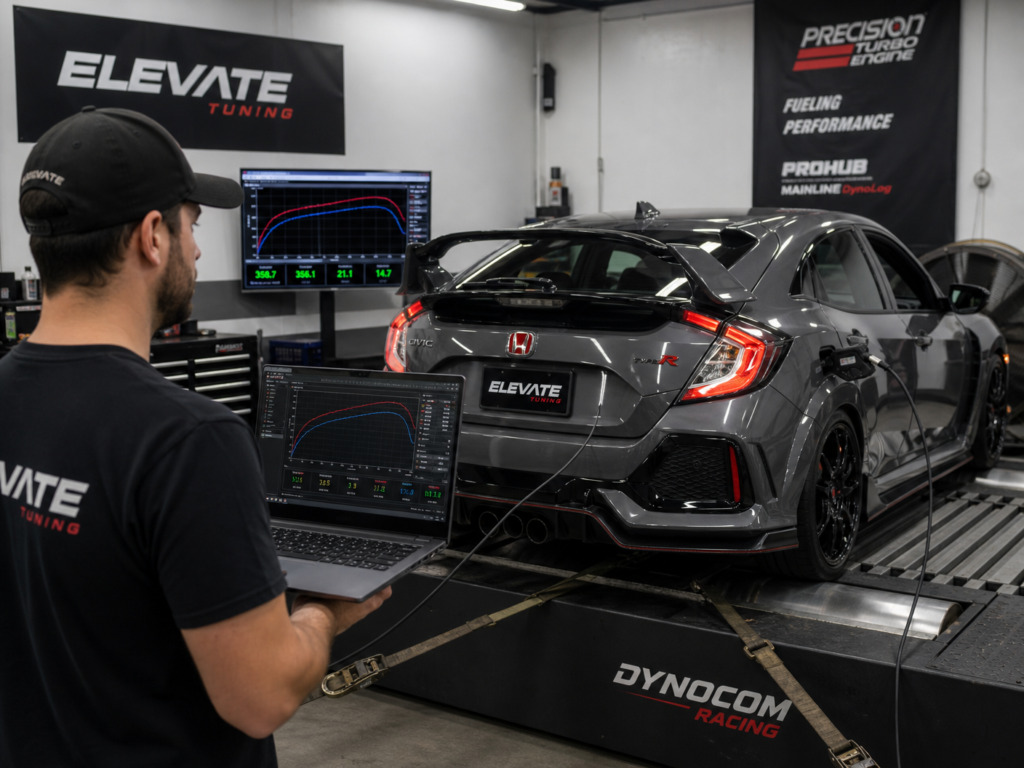
If a cold air intake is all about breathing better, ECU (Engine Control Unit) tuning or remapping is like performing a brain transplant on your car. The ECU is your car’s computer, which manages everything from fuel delivery and ignition timing to boost pressure (in turbocharged vehicles).
OEM ECUs are designed with conservative calibrations to work with a wide range of fuel qualities, climates, and driver styles. Performance tuning is the process of changing these parameters within the ECU so that the engine produces maximum power, efficiency, and responsiveness. This can yield very high gains in horsepower (and torque), especially in turbocharged vehicles.
Expert Point Of View: This is often the point where the big power gains start. But pick your tuner wisely. A good tuner knows how to balance performance vs engine life. A bad tune can ruin an engine. Always ask for dyno results and go through reviews.
3. Performance Exhaust System: Letting it Breathe Out
Air intake is essential, but so is an air outflow of exhaust gas. A high-performance exhaust system will have less backpressure, allowing the engine to push out the spent gases at a faster rate. That’s more horsepower and torque, and a louder, more aggressive exhaust noise.
Upgrades can be anything from an axle back system (muffler replacement) for sound, a cat back system (catalytic converter all the way to the back) for mild power gains, to a full turbo-back or header-back system for max flow and power. Consider things like stainless steel that are strong yet lightweight.
PRO’S OPINION: Research local noise/emission laws. Some aftermarket exhaust components, particularly those that eliminate catalytic converters, are illegal for street use and are for off-road use only in certain states. Always verify the requirements in your area prior to performing an aftermarket upgrade.
4. High-Performance Tires: The Foundation of Handling
It’s not like you’re getting a “performance upgrade” that makes your engine put out more horsepower, but high-performance tires are probably the single best handling upgrade you can get and the best way to convert power into traction. Even the best horsepower is useless if your tires can’t find traction on the road.
Converting to grippier, wider tires with a more performance-oriented tread design will result in a radical enhancement in cornering grip, braking distance, and acceleration potential. Think of them as the link between the tarmac and your car.
Professional advice: Don’t skimp on your tires. Because they are a car’s only point of contact with the road surface, tires have a direct influence on safety as well as automotive performance. Pick from summer performance, all-season performance, or track day tires to suit your driving style and the climate where you live.
5. Suspension Upgrades (Coilovers/Springs): Taming the Curves
For the handling enthusiasts, suspension upgrades are the most important part. Usually, this means replacing the stock springs with stiffer, shorter springs from an aftermarket company or using a full coilover kit. Lowering springs decrease the car’s center of gravity- thus providing better stability, and potentially less body roll while cornering.
Coilovers provide more adjustment so you can precision tune the ride height, damping (how fast the suspension compresses and rebounds), and in some cases camber. This permits a truly customized handling configuration that’s adapted to your driving preferences and track conditions.
Expert Opinion: A lowered car often looks better but too low can have an adverse effect on suspension geometry and ride quality. Get a tip for all your driving needs. For street cars, adjustable coilovers provide the best of both worlds, giving you a comfortable everyday ride and a stiffer track setup.
6. Brake Upgrades: Power Without Control is Nothing
Boosting the power of a car without boosting its stopping power is a recipe for disaster. Brake upgrades aren’t purely about safety, they are a performance upgrade that can allow you to enter corners a little faster and brake a little later, which ultimately leads to quicker lap times or just more confidence on the street.
The modifications vary from “street” performance pads and slotted/drilled rotors to enhance heat dissipation, stainless steel brake lines for a firmer feel of the brake pedal, and full big brake kits (BBK) that feature larger calipers and rotors for substantially more stopping power.
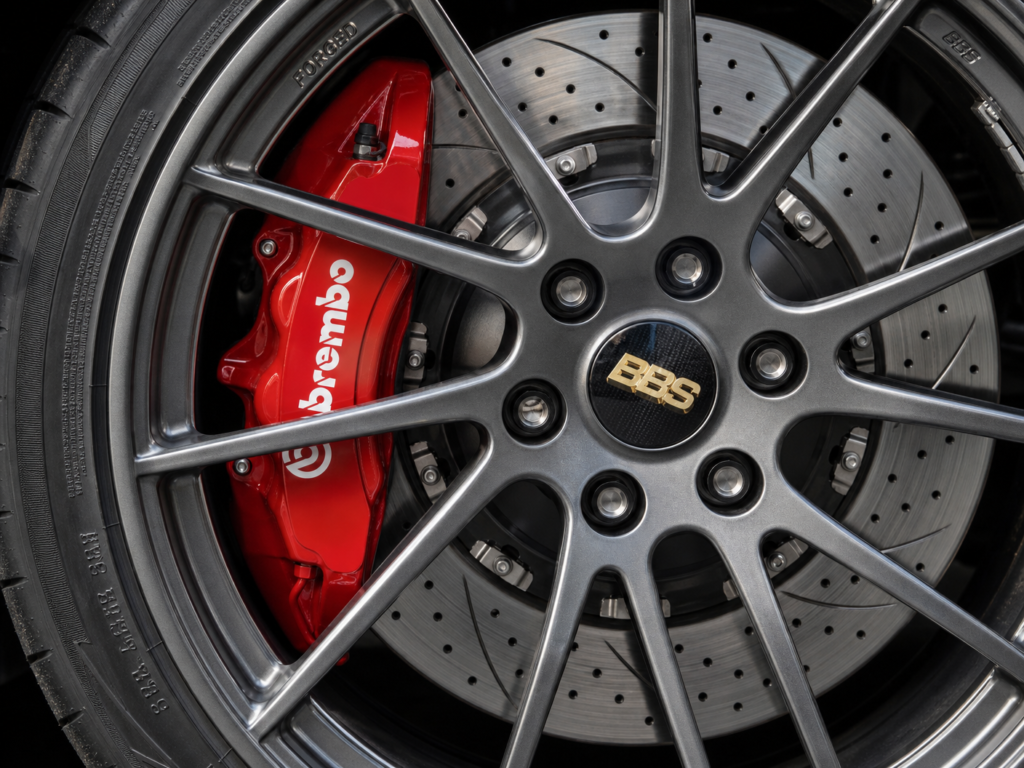
Expert Point of view – Brakes First! Your brakes are what keep you safe on the road, not your speeding engine. If you plan on doing any spirited driving or track use at all, a nice set of pads and fluid will go a long way before you need a full BBK.
7. Short Throw Shifter: Engage with Precision
When it comes to driving manual, a short throw shifter is one of the easiest yet most rewarding mods you can make. By decreasing the shifter distance between gears, it offers faster and more accurate shifting. This adds up to a more dynamic driving experience, and can knock off a few tenths on your acceleration time.
It doesn’t add any horsepower, but it does make the driver more connected to the car, and the transmission more feely overall.
Expert Point of View: This is one of those “feel good” mods that makes your driving experience better for not a lot of money. It makes every shift feel intentional and sporty. Just make sure you install them right so you don’t end up grinding rails.
8. Weight Reduction: The Art of Subtraction
Engine output isn’t always the answer to going faster – weight reduction is. When it comes to a car’s mass, shedding a pound helps acceleration, braking and handling. You just have less mass to accelerate, decelerate and move around on the corners.
Reducing weight can mean stripping unnecessary interior elements (rear seats and sound deadening), swapping heavy parts for lightweight ones (lightweight wheels and carbon fiber body panels) or even going for a lighter battery. It’s a common trick in motorsports.
Expert Opinion: It’s commonly underappreciated but effective. Think of it this way: Losing 100 pounds is the equivalent of adding 10 horsepower, and you also improve braking and handling all at once. It’s a comprehensive performance upgrade.
9. Anti-Roll Bars (Sway Bars): Stabilizing the Ride
Anti-roll bars (also called sway bars) are intended to mitigate body roll when cornering. They attach to the suspension on either side of the vehicle and oppose the rolling motion of the body. Increasing the stiffness of the anti-roll bars, which are usually adjustable, can have a large positive effect on how your car corners flat and how responsive it feels.
This modification operates by shifting force from the outside tire (which is compressing) to the inside tire (which is extending), keeping the vehicle flatter through turns. This enables the tires to have a more uniform contact patch with the road surface, leading to an increase in grip.

Expert Opinion: Adjusting sway bars is a great way of upgrading your car’s handling balance. A stiffer front bar generally promotes more understeer, whereas a stiffer rear bar promotes more oversteer. You can experiment (within reason, of course) to see what works best for you.
10. Forced Induction (Turbocharging/Supercharging): The Ultimate Power Adder
If you like to chase the highest power gains, forced induction is the path to take. That means putting a turbocharger or supercharger on your engine. These devices compress more air into the engine’s cylinders than it can draw naturally, resulting in a significant increase in power output.
Turbochargers spin a compressor with a turbine that is powered by exhaust gases, forcing air into the engine. They produce great power gains, but they may have a slight “lag” before the boost starts building up.
Superchargers have no lag on power delivery since they are belt-driven straight from the engine itself. They usually have a little less potential for peak power than turbos.
Expert Point of View: This is a major commitment and a complicated modification. It usually involves a lot of support modifications (fuel system, cooling, stronger internal engine parts) and professional tuning. It’s not for those with weak hearts or shallow pockets, but the forceful blast is intoxicating.
Conclusion: Building Your Dream Machine
Modifying your car is something that is fun to do. Whether it is subtle modifications like cold air intake or extreme modifications like forced induction, each one can get you closer to your dream car. Note that the best modifications are those that match your needs, budget, and safety concerns.
Safety first (always keep in mind the importance of your brakes and tires), research thoroughly, and always use a professional installer/tuner for any necessary modifications. Taking all these into account, you would be more prepared to make decisions about your car modification choices.
Disclaimer: Be sure to consult with car experts and your local laws concerning vehicle modification. Performance-enhancing modifications can void vehicle warranty, emission and safety. Proceed with extra caution, and at your own risk.
Leave a Reply