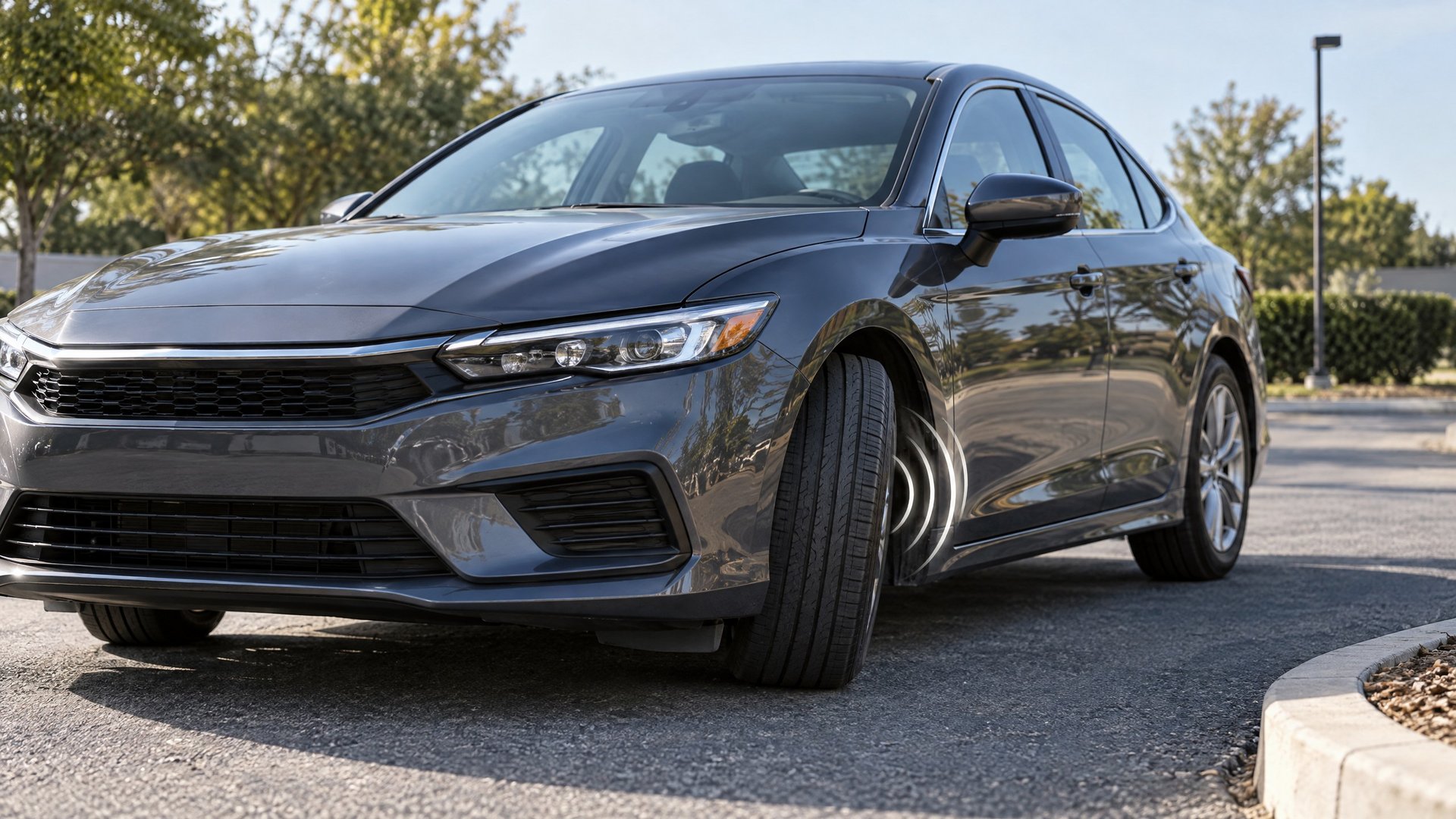
If you’ve ever pulled out of a parking spot or made a slow turn into your driveway and heard that rhythmic click-click-click coming from the front of your car, you’re not alone. It’s one of the most common noises drivers notice, and it’s also one of the most misunderstood.
The good news is that a clicking noise when turning at low speeds is usually not an emergency, but it is your car telling you something is wearing out. Ignore it long enough, and what starts as an annoying click can turn into a much more expensive repair, or leave you stranded.
After 15 years of working around shops and talking to mechanics who hear this complaint almost daily, I’ve learned that 90% of these cases come down to just a handful of parts. Let’s break down exactly what that noise is, why it happens at low speeds, and what you should do about it.
First, Pay Attention to the Click
Before you start guessing at parts, become a detective for 30 seconds. Mechanics will ask you these same questions:
Where is it coming from? Front left, front right, rear? Driver’s side clicks on left turns often point to the right side, and vice versa.
When does it happen? Only when turning? Only at low speed? Does it get faster as you go faster? A steady clicking that speeds up with the wheels is very different from a single loud pop.
What kind of click is it? Is it a rapid, repetitive clicking (like a playing card in bicycle spokes)? Or is it a single click/clunk once per turn? Repetitive is classic CV joint. Single is more likely suspension or steering.
If you can answer those three, you’ve already narrowed it down by half.
The 7 Most Common Causes
1. Failing CV Joint – The #1 Culprit
If I had to bet money, this is it. This accounts for more than half of all low-speed clicking complaints that come into a shop.
Your car has CV (Constant Velocity) axles that connect the transmission to the wheels. On the end of each axle is a CV joint, covered by a rubber boot filled with grease. That joint lets your wheel turn and move up and down while still getting power.
When that rubber boot tears – and they do tear from age, heat, and road debris – all the grease flings out and dirt gets in. The joint starts to wear, and the bearings inside develop play. When you turn at low speed, the joint is at its most extreme angle and those loose bearings click against each other.

How to tell it’s a CV joint:How to tell it’s a CV joint:
- Rhythmic clicking or popping that gets faster as you go faster
- Happens mainly when turning, especially sharp low-speed turns like parking
- You might see greasy splatter on the inside of your wheel or on the suspension
- If you turn left and hear it on the right, it’s usually the right outer CV joint that’s bad

A torn boot doesn’t mean the joint is dead yet. If you catch it early, a mechanic can sometimes just replace the boot and repack it for $150-$250. If you wait until it’s clicking loudly, you’ll need the whole axle, which is usually $300-$600 per side including labor.
You can drive on it for a short while, but don’t wait months. A completely failed CV joint can snap and you’ll lose power to that wheel.
The classic visual clue is grease loss and joint wear like this:
2. Worn Outer Tie Rod Ends
Tie rods are what connect your steering rack to your steering knuckle. They have a small ball-and-socket joint at the end that wears out over time, especially if you drive a lot on rough Kenyan roads, speed bumps, and potholes.
When they wear, they develop a little bit of slack. At low speeds when you turn the wheel, that slack is taken up with a click or a light clunk. It’s usually a single click per turn, not a constant rhythm.
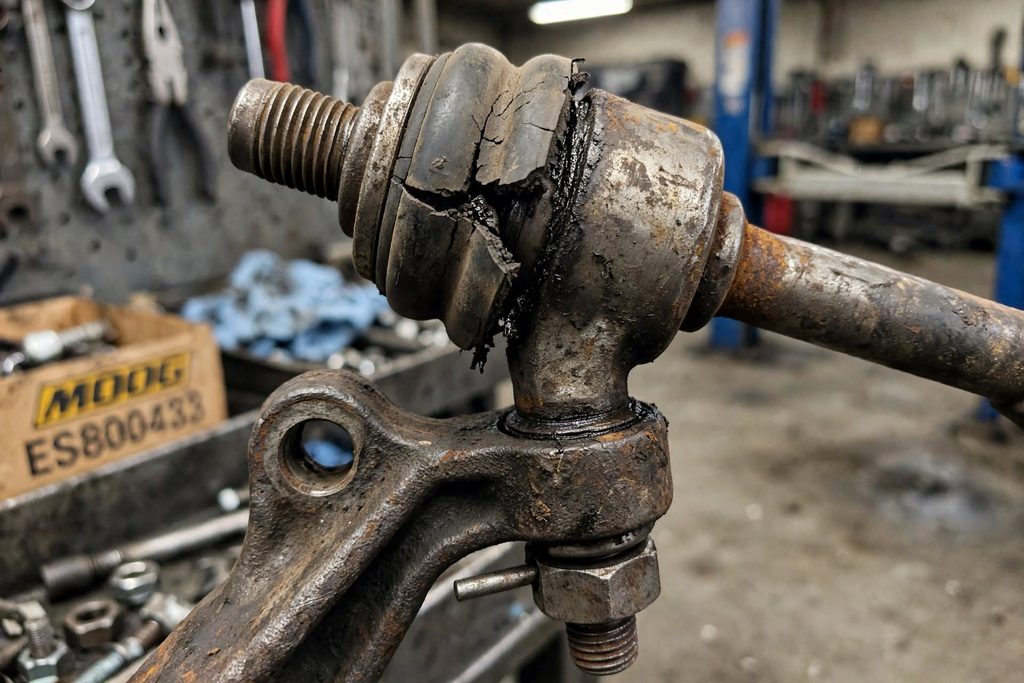
Grab your front tire at 3 and 9 o’clock and try to wiggle it. If you feel a little clunk or see movement in the tie rod, it’s worn. Don’t ignore this one – a failed tie rod means you lose steering control.
Replacement is relatively affordable: $80 to $200 per side.
3. Bad Strut Mount or Strut Bearing
At the top of your front struts, there’s a mount with a bearing in it that lets the whole strut assembly rotate when you turn the steering wheel. Think of it like a lazy Susan for your suspension.
When that bearing dries out or corrodes, it doesn’t turn smoothly anymore. It binds and releases, which creates a clicking, creaking, or popping sound right when you start to turn the wheel, even while parked.
You’ll often hear this most when turning the steering wheel at a standstill or very low speed in a parking lot, and the noise seems to come from the top of the wheel well, near the hood.
If you open the hood and have someone turn the wheel while you look at the strut mount, you can sometimes see it jump or hear the click right there.
4. Worn Ball Joints
Similar to tie rods, ball joints connect your control arm to the knuckle. They carry a lot of weight. When they wear out, the stud gets loose in the socket.

At low speeds, especially when turning and going over a slight bump like entering a driveway, the weight shifts and that loose ball joint clicks.
Ball joints are a safety item. If one separates, the wheel can fold under the car. Most mechanics will check these for free during an inspection. If the rubber boot is torn or you can see rust around it, get it checked immediately. Cost is typically $150-$350 per side.
5. Loose or Damaged Wheel Cover, Brake Shield, or Debris
Not every click is serious. I’ve seen cases where the fix was embarrassingly simple.
- A loose hubcap or wheel cover can click as the wheel flexes in a turn
- The thin metal dust shield behind your brake rotor can get bent and lightly touch the rotor only when you’re turning
- A small stone stuck in your tire tread or between the brake shield and rotor can make a surprisingly loud rhythmic click
Before you spend money, do a quick visual check. Look for anything loose around the wheel, and check your tires for stones or nails.
6. Failing Wheel Bearing (Less Common for Clicking, But Possible)
Wheel bearings usually hum or growl at higher speeds, but when they’re in the early stages of failure, they can sometimes click at low speeds when the load shifts during a turn.
The test: if the noise changes or gets louder when you swerve slightly left and right at low speed, it’s more likely a bearing. A CV joint click is almost only when the steering wheel is turned a lot. A bearing noise changes with vehicle weight transfer.
7. Low Power Steering Fluid or Worn CV Joints in Rear (for RWD/AWD)
On some cars, especially older hydraulic power steering systems, low fluid can cause a clicking or groaning sound when you turn the wheel to full lock at low speeds. That’s the power steering pump struggling.
On rear-wheel drive and all-wheel drive cars, don’t forget the rear. Rear CV joints or rear differential issues can also click when turning.
How to Diagnose It at Home (Safely)
You don’t need a lift to get a better idea.
1. The Full-Lock Test: Find an empty parking lot. Turn your steering wheel all the way to the left and drive slowly in a circle. Then all the way to the right. If the clicking is much louder in one direction, the joint on the opposite side of the noise is usually the bad one. Loud clicking while turning left in tight circles often means the right CV joint is bad.
2. The Visual Check: Turn your steering wheel fully to one side and look behind the front wheel. You’ll see the CV boot – it’s the ribbed rubber cone. If it’s torn, cracked, or leaking grease, you found your problem.
3. The Hands-On Check: With the car safely parked and engine off, grab the axle shaft near the joint and try to wiggle it. There should be almost no play. If it clunks, it’s worn.
If you’re not comfortable getting under the car, that’s totally fine. Any good mechanic will do this inspection in 5-10 minutes, many for free.
When Should You Worry?
Not all clicks are equal.
Get it checked within a few days if:
- The clicking is rhythmic and gets faster with speed
- You see grease on the wheel or suspension
- The car pulls or the steering feels loose
- It’s getting louder week by week
Stop driving and have it towed if:
- You hear a loud clunk followed by grinding
- The steering suddenly feels disconnected
- The wheel wobbles or you feel vibration through the steering wheel
- You see the wheel leaning at a weird angle
Those are signs of a failed ball joint, tie rod, or wheel bearing about to separate.
How Much Will It Cost to Fix in 2026?
Prices vary by car model, but here are average ranges in the US market for parts and labor:
- CV boot replacement (early catch): $150 – $280
- Complete CV axle replacement: $300 – $650 per side
- Tie rod end: $120 – $250 per side with alignment
- Ball joint: $200 – $400 per side
- Strut mount / bearing: $180 – $350 per side
- Wheel bearing: $250 – $500 per side
Always get an alignment after replacing tie rods, ball joints, or strut mounts. Skipping it will wear out your tires fast.
Can You Prevent It?
You can’t prevent wear forever, but you can make these parts last much longer:
- Avoid full-lock turns. Don’t hold your steering wheel at full lock for more than a couple of seconds. That puts maximum stress on CV joints and the power steering pump.
- Take speed bumps at an angle and slow down. Hitting them straight on at speed is brutal on ball joints and tie rods.
- Have your boots inspected. Every oil change, ask the tech to glance at your CV boots and steering boots. A $20 boot is cheaper than a $500 axle.
- Keep your tires properly inflated. Low tire pressure changes suspension geometry and puts extra stress on everything.
Final Thoughts
That clicking noise when turning at low speeds is almost always your car asking for attention, not screaming for help. For most drivers, it’s a worn CV joint that has been slowly losing grease for months.
The best thing you can do is not turn up the radio to drown it out. Note when it happens, where it comes from, and get it looked at within the next week or two. A quick inspection can save you from being stuck on the side of the road and turn a small boot replacement into avoiding a full axle or suspension repair.
If you’ve checked the boots, the wheel covers, and nothing obvious is loose, book a diagnosis with a trusted local mechanic. Bring notes about when the sound happens – mechanics love a customer who can describe the noise well. It saves you both time and money.
Disclaimer: This article is for informational purposes only. While based on common automotive repair experience, every car is different. If you are unsure about a noise or handling issue, have a qualified technician inspect your vehicle in person.
Frequently Asked Questions
Why does my car only click when turning left at low speed?
It most often means the right outer CV joint is worn. When you turn left, the right joint is under more angle and load, so it will make more noise if it’s damaged.
Can I still drive with a clicking CV joint?
For a short distance at low speed, yes, many people do. But the joint will continue to wear rapidly once it’s clicking. Plan to replace it within a few hundred miles, not a few months. If it starts clunking, grinding, or you feel vibration, stop driving.
Does a clicking noise mean my transmission is failing?
Very unlikely. Transmission problems usually show up as slipping, harsh shifts, or humming in all driving conditions. Rhythmic clicking only when turning is almost always in the axles, steering, or suspension, not the transmission itself.
Will an alignment fix the clicking?
No. Alignment adjusts wheel angles, it doesn’t fix worn joints. In fact, if you have a clicking tie rod or ball joint, you need to fix the joint first, then align the car.
Why is the clicking louder in parking lots?
Because the environment is quiet, windows are often down, and you’re turning at full lock at low speed – that’s the perfect condition to hear CV joint and strut mount noises that get masked by road noise at higher speeds.
Related posts:
 Brake Fluid Breakdown: Understanding DOT Ratings and When to Bleed Your Braking System
  Why Is Your Steering Wheel Shaking? (Diagnosing Tire Balance, Warped Rotors, and Loose Suspension)
  Check Engine Light On? 5 Common Causes & DIY Fixes
  Home Car Detailing Checklist: Carpets, Upholstery & Trim Cleaning
Leave a Reply