Why the washer system clogs and why you can fix it
A weak or clogged windshield washer system makes driving harder and less safe. Dirt, insect goo, wax residue, and old fluid buildup can block tiny nozzle openings. Hoses can fill with gunk or ice in cold weather. Most clogs sit in the nozzles or the short hose between pump and nozzle, and you can clear or replace those parts with simple tools.
This article walks you through diagnosing the system, flushing hoses, cleaning or replacing nozzles, and testing everything. The steps use common tools. I write like a friend who’s fixed this at home—no jargon, just clear steps. Check your vehicle owner or service manual for layout details and any model-specific tips.
How the system works, in plain words
The pump draws washer fluid from the reservoir. It pushes fluid through one or more small hoses up to the nozzles on the hood or cowl. The nozzles spray the fluid across the windshield. If the pump runs but nothing comes out, the clog is usually in a nozzle or hose. If nothing runs and you hear no pump noise, check fuse, wiring, or pump first.
Tools and materials you’ll need
- Basic hand tools: pliers, small flat screwdriver, and a socket set (for minor trim or reservoir removal if needed).
- Funnels and a few small containers for old fluid.
- Clean water and recommended washer fluid (see winter safety below).
- Thin flexible wire or a push-pin (use gently on plastic nozzle tips only).
- Compressed air source (canned air or a small hand pump) or a syringe/bulb syringe.
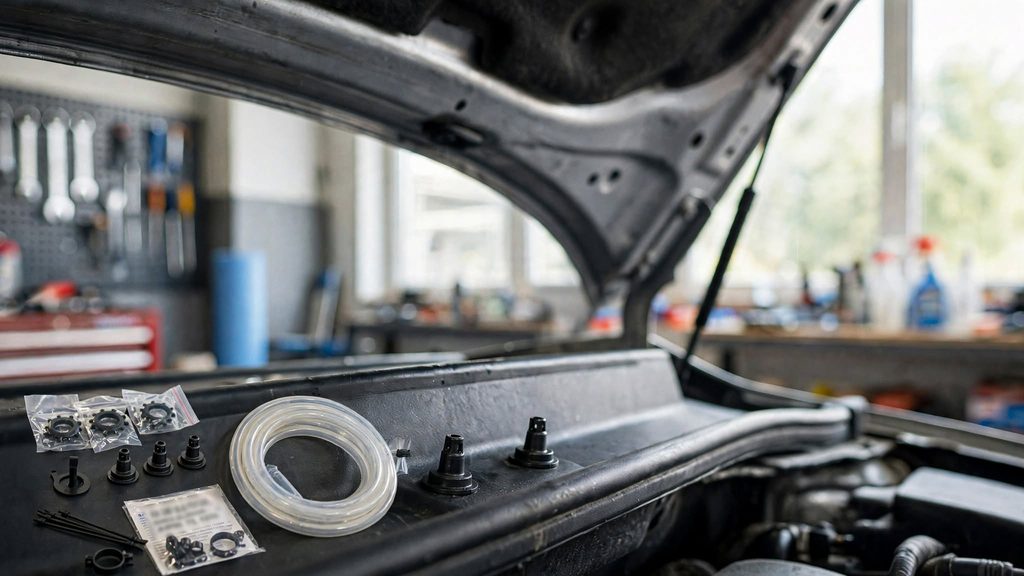
- Replacement nozzles and short sections of small-diameter hose that match your car’s hose (available at parts stores).
- Rags, shop towels, and protective gloves.
Safety first
Work with the engine off and the key out. If you must run the pump for a test, do it briefly to avoid overheating. Wear eye protection when using compressed air or clearing nozzles—the fluid or debris can spit out fast. Avoid working with methanol-rich fluid on bare skin for long periods; wear gloves. If frost or ice is present, warm the car in a heated garage or a safe area before working.
Quick diagnosis: what to check and in what order
Follow this order. It goes from easiest fixes to more involved repairs.
- Check the fluid level. Low or empty reservoir is a common reason for poor spray.
- Turn the washer switch and listen. If you hear the pump run, fluid should be moving; if you hear nothing, check fuse and power.
- Watch for leaks under the hood and along hoses while someone operates the switch.
- Inspect the nozzle spray pattern. A weak, uneven spray points to a partial clog or misaligned nozzle.
- If the pump runs but no spray reaches the nozzle, the clog is between the pump and nozzle or at the nozzle.
Common symptoms and likely causes
| Symptom | Likely Cause |
|---|---|
| No pump sound and no spray | Blown fuse, bad switch, bad pump, wiring issue |
| Pump runs, no spray | Clogged hoses or nozzles, disconnected hose |
| Weak or uneven spray | Partial clog in nozzle, nozzle misalignment |
| One side works, other side doesn’t | Blocked line, kinked hose, or bad nozzle on that side |
Tip: Start with the cheapest checks first — fuse and nozzles — before replacing the pump.
Step-by-step: flushing the washer hoses
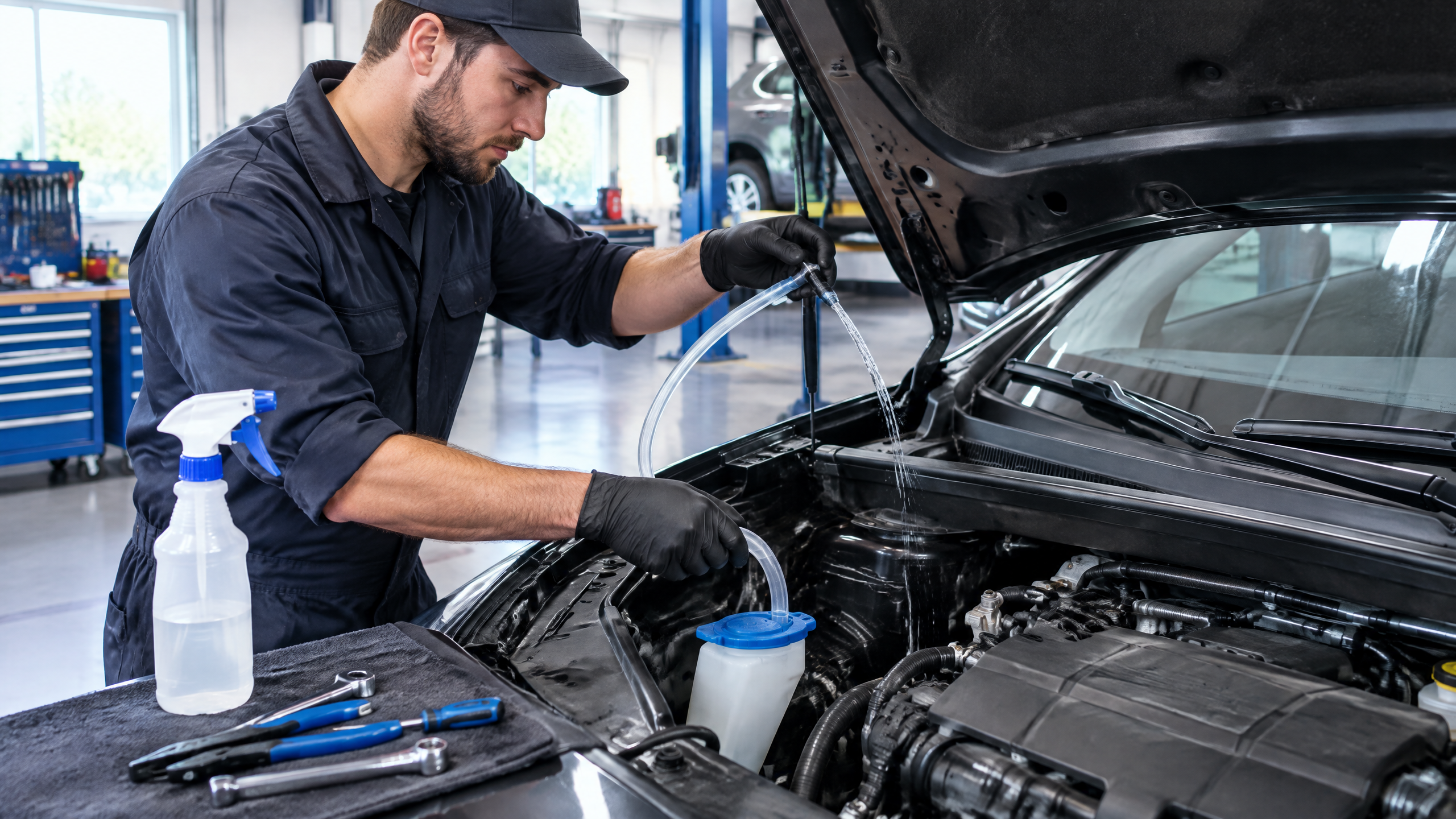
Work in a safe spot with the hood up. Remove the reservoir cap or locate the hose that leaves the reservoir for the side you want to flush.
- Empty or reduce fluid level so the hose end is reachable. Use a clean container to catch any fluid.
- Disconnect the hose at the reservoir or at a convenient splice. Many hoses push onto a nipple; pull firmly but gently. Use pliers for stubborn clamps.
- Check the hose length. If it’s kinked, cracked, or hardened, replace it. Small sections are cheap and easy to swap.
- Use clear water or fresh washer fluid to flush the hose. A syringe, turkey baster, or bulb syringe works well. Push water through the hose in the direction of normal flow.
- If the hose is short, you can hold one end and blow gently through the other side to clear blockage, or use canned air in short bursts.
- Repeat until the water runs clear and the flow is steady.
- Reconnect the hose, secure any clamps, refill the reservoir with recommended washer fluid, and test the system.
If the hose looks fine but you still have sprays issues after flushing, follow the hose up to the nozzle. There may be a blockage at the nozzle fitting or a break in the line closer to the nozzle.
Nozzle cleaning and replacement
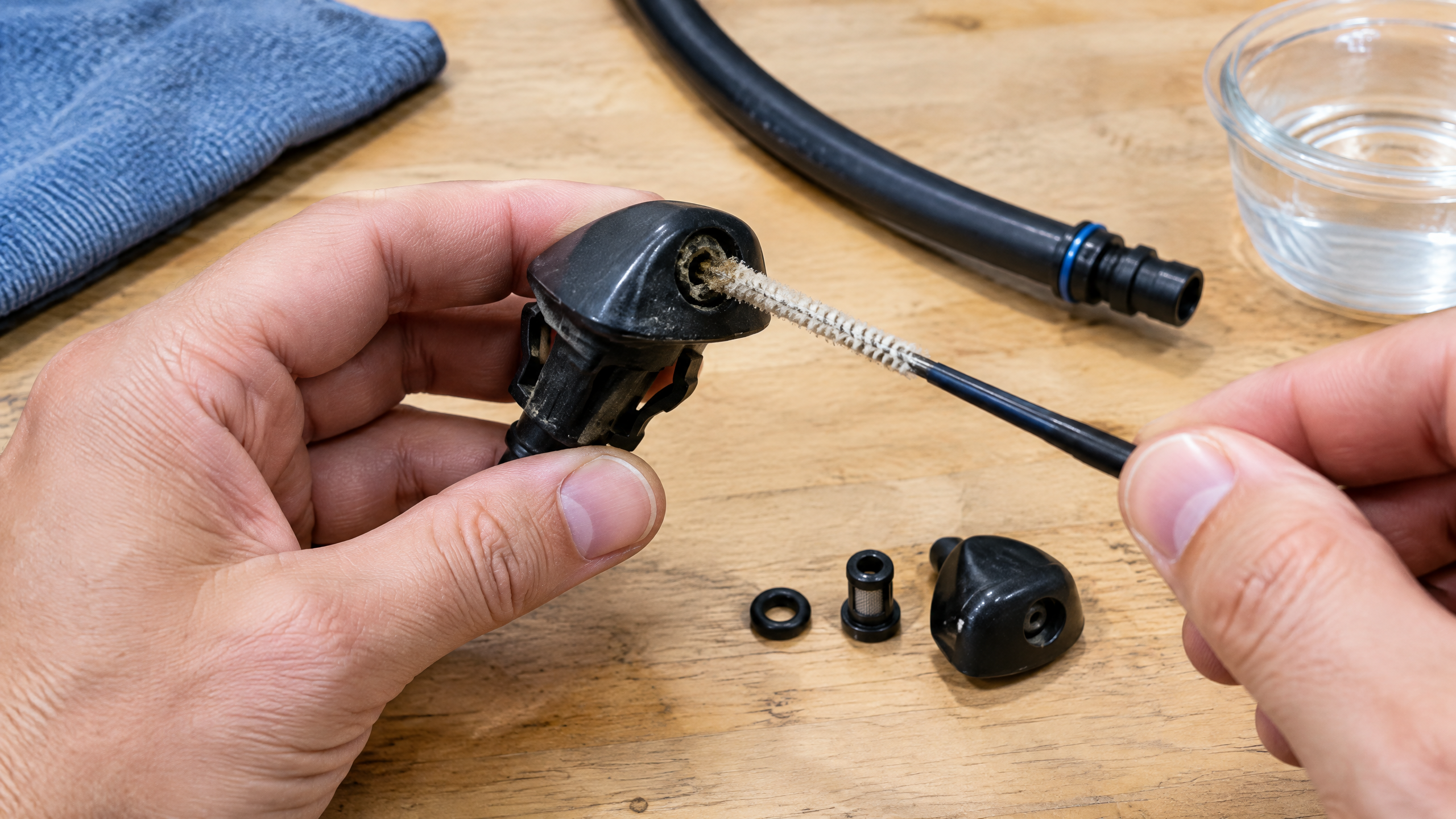
Nozzles are small and delicate. They have tiny orifices that can clog from dirt, wax, or mineral deposits. Clean first; replace if damaged.
How to clean a nozzle
- Locate the nozzle. Nozzles sit on the hood, cowl, or wiper arm area; some models have them tucked under the hood edge. Check the owner manual if you’re unsure.
- Try adjusting the spray direction. A thin pick or a specialized nozzle tool can gently move the nozzle tip without removing it.
- Use a stiff stream of clean water or a bulb syringe to blast the nozzle from the backside (the side connected to the hose). This pushes debris out the spray direction.
- If the nozzle still looks blocked, use a thin soft wire or a sewing needle very gently to dislodge surface debris. Do not enlarge the hole—use the needle only to tease out debris at the opening.
- After clearing, test spray. Repeat cleaning until the pattern returns to normal.
How to replace a nozzle
- If the nozzle is cracked, missing, or bent, order a matching replacement. Many nozzles are universal; others are model-specific—bring the old part to the store or check your owner manual.
- Remove clips or use gentle pressure to pop the nozzle out from the top side. Some nozzles pull from below; others release with a plastic clip. Take care not to scratch paint.
- Disconnect the hose from the nozzle. If the hose is old or brittle, replace that short section too.
- Push the new nozzle into place until it clicks or seats fully. Reconnect the hose and test the spray pattern and flow.
Winter fluid safety and tips
Using the right washer fluid in winter prevents freeze-ups. Plain water can freeze in lines and the pump. Choose a commercial washer fluid rated below the local low temperatures and follow label directions for any concentrates.
Some winter fluids contain alcohols or solvents. These are fine for washer systems when used as directed, but don’t use strong solvents that may damage paint or plastics. If you’re unsure, check the product label and your owner or service manual for compatibility notes.
If the system freezes, thaw it before running the pump. Running a pump against a frozen nozzle or blocked hose can overheat or burn it out. Warm the car in a heated space or use warm (not boiling) water around the reservoir area to thaw ice carefully. If you cannot clear the frozen area safely, stop and consult a professional.
Testing after repair
After cleaning, flushing, or replacing parts, test the system methodically:
- Refill reservoir to the proper level.
- Start the car and activate the washer for short bursts. Listen for pump sound and watch spray pattern.
- Check both left and right spray patterns and the center if applicable.
- Look for leaks at hose connections and beneath the car.
- Operate wipers with washer spray to confirm coverage when moving wipers.
If the pump runs but flow is intermittent, re-check hose runs for pinches, kinks, or hidden damage under trim panels. Follow the line visually as far as you can. If a hose runs under a plastic cover, you may need to remove the cover—refer to the manual for safe removal steps.
When to replace the pump, and when to stop
Replace the pump if it runs loudly without moving fluid and you’ve ruled out clog, disconnected hose, blown fuse, and electrical issues. Pumps can wear out over time. If you smell burning when running the pump, stop immediately and disconnect the power to avoid damage or fire.
Stop and seek professional help if:
- You find electrical damage or suspect a short.
- The pump runs hot or emits smoke.
- Hoses are routed under complicated trim panels you’re unsure how to remove safely.
- Frozen parts refuse to thaw safely or you cannot access the blockage without special tools.
Washer System Quick Checklist and Decision Guide
Work top-to-bottom. If any step shows damage or creates a safety concern, stop and seek a pro.
| 1. Reservoir level | |
| 2. Pump sound | |
| 3. Spray test | |
| 4. Hose check | |
| 5. Nozzle check | |
| 6. Winter freeze? | |
| 7. Electrical or pump smoke? |
When to stop: if you see smoke, smell burning, find damaged wiring, or can’t access parts without removing structural trim, have a shop handle the repair. Check your owner/service manual for model-specific steps before removing anything major.
Small troubleshooting tips that save time
- If only one side sprays, swap the hoses between nozzles (if practical). If the problem moves, the hose is at fault. If it stays, the nozzle or nozzle feed is the issue.
- Use distilled water for flushing if your tap water is very hard; minerals can leave deposits.
- Use short bursts of the pump while testing, not long runs. Pumps can overheat if run dry or under restriction.
- Label any quick-connect hoses or clips you remove so you can put them back the same way.
Parts and cost expectations
Short sections of small-diameter hose and nozzle kits are inexpensive. A pair of nozzles often costs less than a pump. If you replace the pump, a well-known aftermarket or OEM part can vary in price—check local parts stores or online. Labor at a shop will add to the cost if you want a professional to do it.
Final checks before you hit the road
Confirm tight hose connections and a full reservoir. Test spray while the wipers move to ensure coverage. Clean any overspray from painted surfaces with a soft cloth and approved cleaner. Store used fluid for proper disposal according to local rules.
Keep a simple maintenance habit
Check the washer fluid monthly, especially before long trips or winter. Use a fluid rated for expected temperatures. Clean or test spray nozzles every few months so debris doesn’t build up. A few minutes of checks can prevent a bigger trip to the shop later.
How to avoid repeat clogs
Washer systems usually clog because contamination entered the reservoir or because incompatible fluids were mixed. Empty and rinse the reservoir if you find sludge, flakes, or an oily film. Use a washer fluid designed for the temperature in your area, and do not substitute plain water during freezing weather. Water can freeze in the reservoir, pump, hose, or nozzle and split a plastic component.
Keep the filler cap and the area around it clean before opening the tank. Dirt that falls inside can travel to the pump screen. If the system clogs again soon after a nozzle replacement, inspect the reservoir and the short hose near the pump instead of repeatedly poking the nozzle. A partially collapsed hose can look like a blocked jet.
When the pump is the real problem
If you hear the pump run but no fluid reaches either nozzle, check for a disconnected hose and a wet trail under the hood. If one nozzle sprays and the other does not, the pump is less likely to be the cause. If neither nozzle sprays and the pump stays silent, check the fuse and connector only as far as your manual allows. A failed pump is normally replaced rather than repaired.
Finish by checking the spray pattern from the driver’s seat. The fluid should reach the glass quickly and cover the area swept by the wipers. Do not aim a test spray toward pedestrians, traffic, or an open garage doorway. A clean, even pattern matters because washer fluid is part of the driver’s view, not just a convenience feature.
References
- https://www.nhtsa.gov/vehicle-safety/windshields
- https://ownersmanuals2.com/
- https://www.rainx.com/blog/how-to-unclog-windshield-washer-nozzles/
Related posts:
 Brake Fluid Breakdown: Understanding DOT Ratings and When to Bleed Your Braking System
  Why Is Your Steering Wheel Shaking? (Diagnosing Tire Balance, Warped Rotors, and Loose Suspension)
  Check Engine Light On? 5 Common Causes & DIY Fixes
  Home Car Detailing Checklist: Carpets, Upholstery & Trim Cleaning