
A 3,000-mile oil-change interval is still repeated in some advice, but it is not a universal requirement for modern vehicles. The correct interval depends on engine design, oil specification, driving conditions and the vehicle manufacturer’s maintenance schedule.
Oil-change advice is often repeated without accounting for engine design, oil specification, driving conditions and the vehicle manufacturer’s maintenance schedule. Used-oil analysis can provide additional information about lubricant condition, but results must be interpreted for the specific engine and service interval.
This guide examines seven common motor-oil misconceptions using manufacturer guidance, oil specifications and the principles of used-oil analysis, with practical checks to help drivers choose and maintain the correct lubricant.
If a new oil change is followed by an unexpected engine tick, use our guide to engine ticking after an oil change to work through the first checks.
Before relying on a leak-stopping product, review our guide to engine oil leak fluids and additives and the types of leaks they may address.
1. You Need to Change Your Oil Every 3,000 Miles
The 3,000-mile interval is rooted in older vehicle and lubricant recommendations, but it should not be applied to every modern engine. Many manufacturers specify longer intervals under normal driving, while short trips, towing, extreme temperatures and dusty conditions can call for more frequent service.
Modern full synthetic oil is a completely different animal. The base stock is engineered, not just refined. The additive package has detergents, dispersants, anti-wear agents like zinc and molybdenum, and antioxidants that stop the oil from breaking down. A used-oil analysis may report TBN, viscosity and wear metals such as iron. These results should be interpreted together with the engine manufacturer’s oil-change guidance, the oil’s specification, operating conditions and the laboratory’s comments. A single sample should not be used to set a universal oil-change interval for other vehicles.
Do not assume that every synthetic oil can safely run 7,500 to 10,000 miles. Use the interval in the owner’s manual or the vehicle’s oil-life monitoring system, and shorten it when the manufacturer specifies a severe-service schedule. A shop reminder sticker should not override the vehicle maker’s instructions.
2. You Have to Use Thick Oil to Protect an Old or High-Mileage Engine
A common misconception is that thicker oil always provides better protection. Using a viscosity that differs from the vehicle manufacturer’s specification can cause problems, even when the oil seems heavier-duty. Thicker does not mean more protection. It means more resistance. Think of it like this. Your engine’s oil pump has to push oil through tiny passages, especially to the top of the engine at startup. That is when 90% of all engine wear happens, at cold start when there is no oil pressure yet.
A 0W-20 flows like water at zero degrees. A 20W-50 flows like honey. So with thick oil, your camshafts and timing chain are running dry for 10, 15, 20 seconds longer every morning. I tore down a 220,000-mile Toyota 2GR engine that ran 0W-20 its whole life. The bearings looked perfect. Crosshatch still in the cylinders. Then I tore down a 90,000-mile engine where the owner ran 10W-40 because his buddy told him to. The cam journals were scored from oil starvation.
What actually protects an engine is oil pressure and oil flow, not thickness. If your engine burns oil, fixing it with thicker oil is just masking the symptom. You want to stay with the manufacturer’s recommended viscosity and switch to a high-mileage version of that same viscosity. High-mileage oils have seal conditioners that swell old seals slightly to stop leaks. That’s smart chemistry, not brute force thickness.
3. You Can’t Switch Between Conventional and Synthetic or Mix Brands
Shops love to scare you with this. They say once you go synthetic you can never go back or your engine will leak and sludge up. Total myth. All API-certified motor oils—conventional, synthetic blend, full synthetic—must be compatible with each other. That is part of the API SP and ILSAC GF-6 standard. You can absolutely mix them. Will you get the full performance of the synthetic if you mix in conventional? No. You dilute it. But will it damage your engine? Not at all.
Oils that meet the same required performance specifications are generally compatible for emergency top-ups, but mixing products does not guarantee the same performance as using the specified oil throughout the service interval. Follow the vehicle manufacturer’s guidance and do not use an anecdotal comparison to set a maintenance interval.
The base oils are all compatible. What matters is you don’t mix viscosities in a crazy way and you don’t go over your interval. So if you are on a road trip, you are a quart low, and the gas station only has a different brand, pour it in. It is infinitely better than running low.
4. Dark Oil Means Dirty Oil You Must Change Right Now
This one fools everyone because it looks so obvious. You pull the dipstick, the oil is black, so it must be bad. Wrong. Dark oil means the oil is doing its job. Remember those detergents and dispersants? Their entire job is to grab soot, carbon, and microscopic metal particles, suspend them so they don’t clump together, and hold them until the filter catches them or you drain them. Especially in a direct-injection engine or a diesel, oil turns black in 500 to 1,000 miles.

Oil color alone cannot establish whether lubricant is still suitable for service. Used-oil analysis can measure factors such as soot, viscosity, wear metals, oxidation and total base number (TBN). A dark sample may still be within specification, while a lighter sample can be degraded; interpretation depends on the engine, oil, mileage and laboratory reference ranges.
You cannot judge oil by eye. That is why racers and fleet managers never look at color. They look at used oil analysis. For around $35 you get a real answer from a lab kit. If you really want to know what’s going on, you test it—you don’t stare at it.
5. You Need a Different Oil for Winter and Summer
This was true when we had single-grade oils like SAE 30 and SAE 40. Your dad really did run thinner oil in winter and thicker in summer. But we haven’t used single-grade oils in passenger cars for 40 years. Every modern oil is a multi-grade. That 5W-30 you buy? The 5W is its winter rating. That means it behaves like a 5-weight oil when cold, so it flows at minus 30 degrees. The 30 is its rating at 100 degrees Celsius operating temperature. It is literally designed to be both. The polymers inside, called viscosity index improvers, coil up when cold and expand when hot to give you that range. So a good 5W-30 is already a winter oil and a summer oil. You don’t need to switch.
Where people mess this up is they buy a 10W-40 for summer thinking they need more protection in the heat. Modern cooling systems keep your engine at 195 to 220 degrees whether it is 0 degrees outside or 110 degrees outside. Your oil temperature does not swing that much. What you need for extreme heat is not a thicker oil—it is an oil with a higher resistance to oxidation and a lower Noack volatility number. That number tells you how much of the oil evaporates when hot. A cheap oil with a 15% Noack will evaporate and leave deposits on your intake valves. A premium synthetic like Amsoil Signature Series or Pennzoil Ultra Platinum has a Noack under 8%. That means it stays in your engine instead of burning off. That’s real summer protection.
6. Any Synthetic or Cheap Filter Is Just as Good for Long Intervals
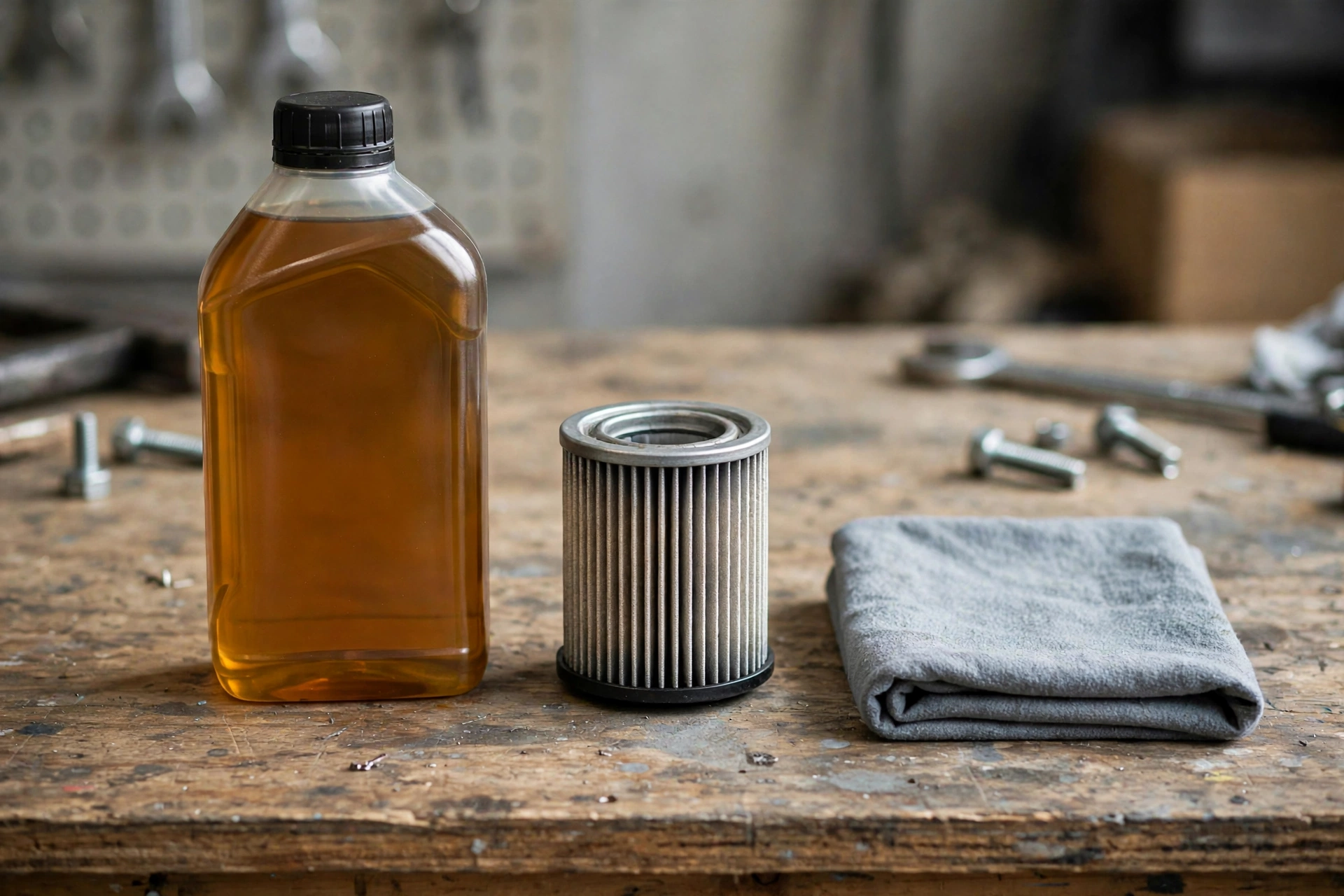
And the oil filter matters just as much. A cheap $4 filter with paper media has a 50% efficiency at 20 microns. That means half of the damaging particles just circulate again and again. A premium filter like a Fram Ultra Synthetic or Wix XP has 99% efficiency at 20 microns and has metal end caps and a silicone anti-drainback valve so it doesn’t dry start. If you want to run longer intervals safely, you pair a premium extended-drain oil with a premium extended-drain filter. Don’t cheap out on the filter and then blame the oil.
7. You Must Use Dealer-Branded Oil to Keep Your Warranty
Your dealer tells you you must use their branded oil—that $90 oil change with their Mopar, Toyota, or BMW oil. This is just branding. Look at your manual. It does not say you must use Toyota Genuine Motor Oil. It says you must use an oil that meets spec X. For example, it says 0W-20 that meets API SP and ILSAC GF-6A, or for a European car, VW 508.00 or BMW LL-01. Any oil that carries that exact spec on the bottle is legally required to meet the warranty standard. By law in the US under the Magnuson-Moss Warranty Act, they cannot force you to use their branded oil unless they provide it for free. Any quality oil that meets the spec protects your warranty.
What actually costs you $3,000 is two things. First, paying $90 every 3,000 miles at the dealer for 100,000 miles is $3,000. Doing it yourself with a premium synthetic every 7,500 miles for 100,000 miles is about $650 total—saving $2,350. Second, using the wrong spec oil because the mechanic grabbed whatever was in the bulk tank will cause timing chain stretch, VVT actuator failure, and LSPI engine knock. Using oil that does not meet the engine manufacturer’s required specification can compromise protection and may contribute to wear or deposits. Turbocharged and direct-injection engines can have specific oil requirements, so check the exact approval listed in the owner’s manual.
The fix is simple. Read the spec in your manual, buy an oil that actually lists that spec on the back label, and keep your receipts. A folder with your oil receipts and filter boxes is your warranty proof.
The Bottom Line on Motor Oil
It’s not about changing your oil more often. It’s about using better oil less often and ignoring the scare tactics. Check your owner’s manual for the exact viscosity and specification your engine requires, pair a quality full synthetic with a high-efficiency filter, and keep records of your maintenance.
Related posts:
 Brake Fluid Breakdown: Understanding DOT Ratings and When to Bleed Your Braking System
 Why Is Your Steering Wheel Shaking? (Diagnosing Tire Balance, Warped Rotors, and Loose Suspension)
 Check Engine Light On? 5 Common Causes & DIY Fixes
 Car Interior Deep-Clean Checklist: Step-by-Step Order for Carpets, Seats and Trim
