
Affiliate Disclosure: As an Amazon Associate, CarsRevamp earns a small commission from qualifying purchases made through links in this post, at zero extra cost to you.
🛑 The Dashboard Panic: Why You Need Your Own Scanner
You’re driving home. Maybe it’s been a long day. Then that little amber “Check Engine” light blinks on, right in the middle of your dash.
Your stomach drops a little. Is it serious? Is the car about to die on the highway? Or is it nothing at all?
Here’s the annoying part. Most shops will charge you somewhere between $80 and $150 just to plug in their scanner and read you a code. That’s before they touch a single bolt.
I’ve watched customers pay that fee for a code that turned out to be a $4 gas cap that wasn’t screwed on tight. It happens more than you’d think.
A handheld scanner under $50 fixes this problem for good. You plug it in yourself, you read the code yourself, and you walk into any shop already knowing what’s wrong. No more guessing games. No more handing over cash just to find out what you’re dealing with.
It pays for itself the very first time you use it. After that, it’s pure savings.
⚙️ What Actually Matters in a Budget Scanner?
You don’t need a fancy shop console that costs thousands of dollars. For 90% of what comes up on a daily driver, a basic handheld tool does the job just fine.
Here’s what I actually look for before I recommend anything to a reader:
- Code Reading & Clearing. Can it pull the generic P-codes? And just as important, can it clear that light off your dash once the repair is done?
- I/M Readiness Monitors. This one trips people up all the time. It tells you if your car’s emissions systems are ready to pass a state smog check. If you’ve ever gotten rejected at an inspection station for “not ready,” this feature is the reason why. It’s a must-have if you live somewhere with mandatory emissions testing.
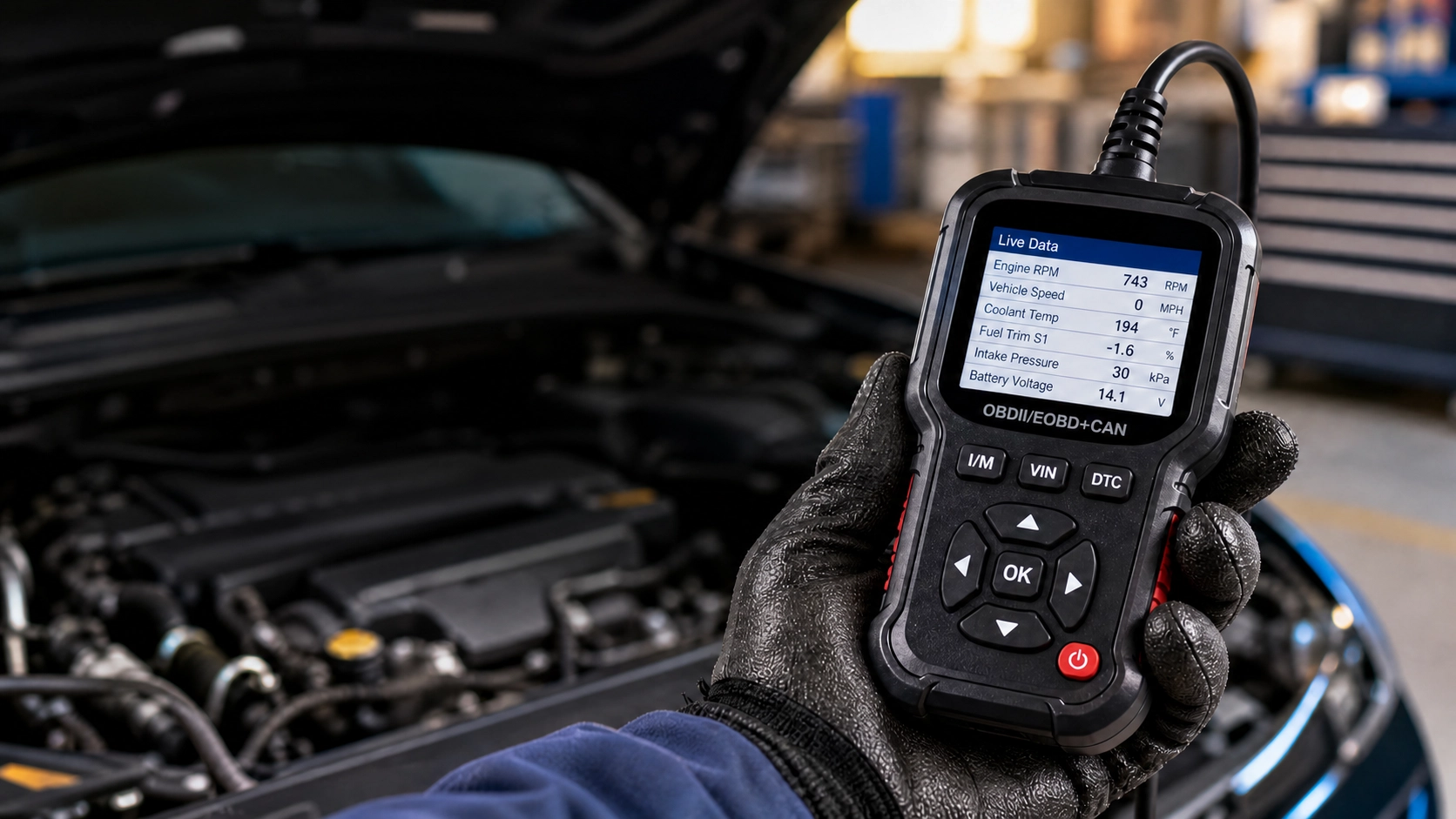
- Live Data Stream. Can you watch your RPM, coolant temperature, or oxygen sensor readings change in real time while the engine runs? This turns a guessing game into actual diagnosis.
If a scanner under $50 covers these three things, you’re in good shape. Anything fancier than that is a bonus, not a requirement.
🛠️ Top 3 Portable Scanners Under $50
1. Autel AutoLink AL319 — The Reliable Workhorse
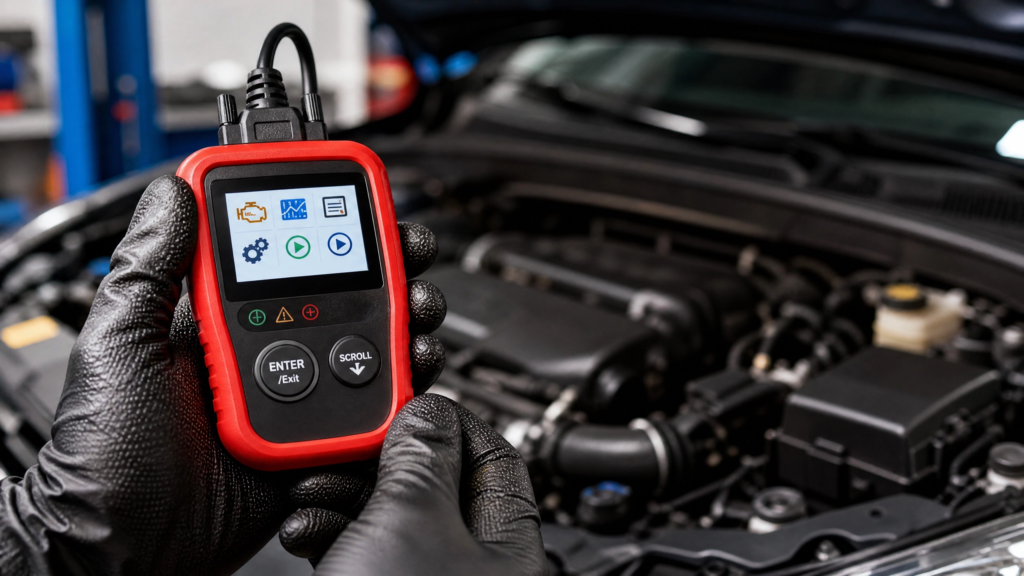
The Standout Feature: Patented One-Click I/M Readiness Key.
Alex’s Shop Note:
This little orange tool has lived in my glovebox for years, and it just refuses to quit.
It’s built like a brick. I’ve dropped it on concrete, left it baking on a dashboard in summer, and it still fires up fine.
The screen is bright and easy to read, even with the sun glaring through your windshield. You plug it straight into the OBD port, usually tucked up under the steering column on the driver’s side. It runs off the car’s own power, so you never have to worry about dead batteries.
That one-click readiness button is the real star here. One press and it tells you exactly which emissions monitors are ready for inspection. No menus to dig through.
👉 Buy the Autel AL319 on Amazon
2. Ancel AD310 — The Absolute Beginner’s Friend
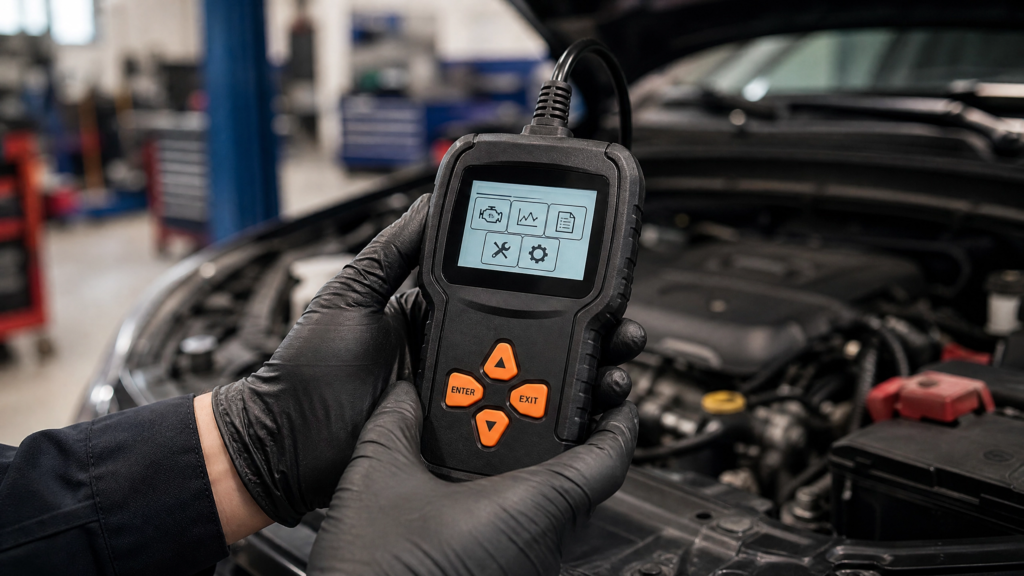
The Standout Feature: Large classic backlit LCD screen and simple 4-button menu.
Alex’s Shop Note:
This is the one I hand to first-timers. No fuss, no learning curve.
The big win here is that it shows you the actual code definition right on the screen. So instead of just “P0302,” you get “P0302 – Cylinder 2 Misfire” staring back at you.
That matters more than people realize. You’re usually doing this with greasy hands, standing in your driveway, not wanting to pull out your phone and Google a five-digit code. The Ancel just tells you straight up.
Four buttons. One screen. That’s the whole interface. It’s about as beginner-proof as these tools get.
👉 Buy the Ancel AD310 on Amazon
3. Veepeak OBDCheck BLE — The Smartphone Bluetooth Option
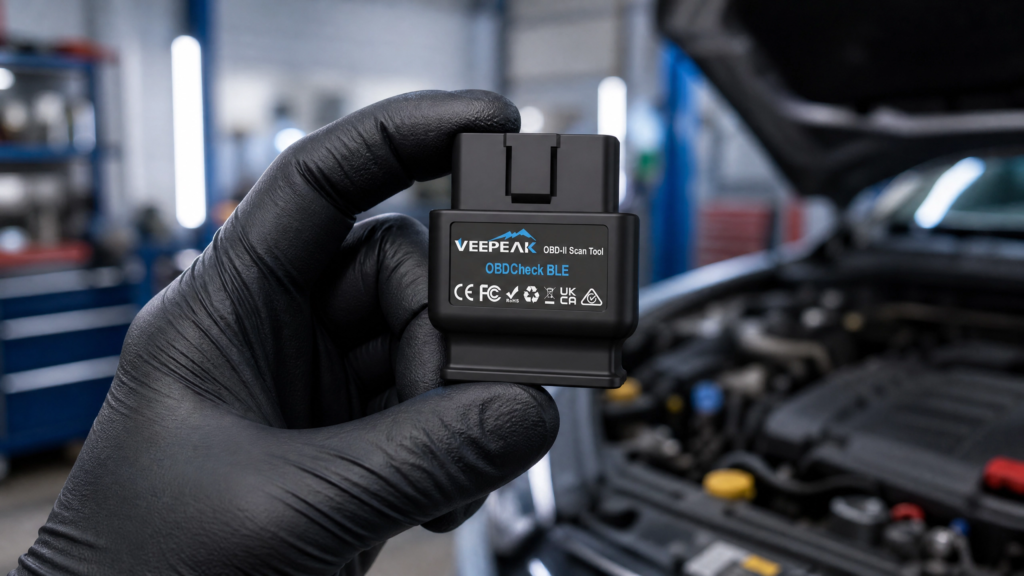
The Standout Feature: Wireless Bluetooth connectivity to your iPhone or Android.
Alex’s Shop Note:
This one’s barely bigger than a thumb drive, and it skips the screen entirely.
You plug the little plastic dongle into your OBD port, pair it with a free app like Torque or Car Scanner, and your phone basically becomes a digital dashboard. Gauges, graphs, the works.
I like recommending this to drivers who are a little more tech-curious. You can log a whole drive and look back at the data afterward, which is great if you’re chasing down an intermittent problem that only shows up on the highway.
Just know going in, this isn’t a standalone tool. You need your phone and the app every single time. For some folks that’s perfect. For others, it’s one extra step they don’t want.
👉 Buy the Veepeak OBDCheck BLE on Amazon
📊 Comparison at a Glance
| Model | Connection Type | Best For |
|---|---|---|
| Autel AL319 | Wired, plugs directly into OBD port | Drivers who need fast, reliable smog check readiness |
| Ancel AD310 | Wired, plugs directly into OBD port | Absolute beginners who want plain-English code readouts |
| Veepeak OBDCheck BLE | Wireless Bluetooth to phone app | Tech-savvy drivers who want live graphs and data logging |
🚗 Final Verdict: Which One Should You Buy?
Here’s my honest take, straight from the garage.
If you’ve never touched a scanner before and just want something dead simple, get the Ancel AD310. It tells you what’s wrong in plain English, no decoding required.
If you live somewhere with emissions testing and you’re tired of getting turned away at the inspection station, get the Autel AL319. That one-click readiness check alone is worth it.
If you’re the type who likes data, graphs, and tracking your car’s behavior over time, get the Veepeak OBDCheck BLE. Pair it with your phone and you’ve got a full digital dashboard in your pocket.
Any one of these three will save you money and headaches the next time that amber light pops on. I’ve used all three in my own shop, and I wouldn’t put my name on a tool I hadn’t tested myself.
Drive safe, and keep that scanner in your glovebox.


Leave a Reply