
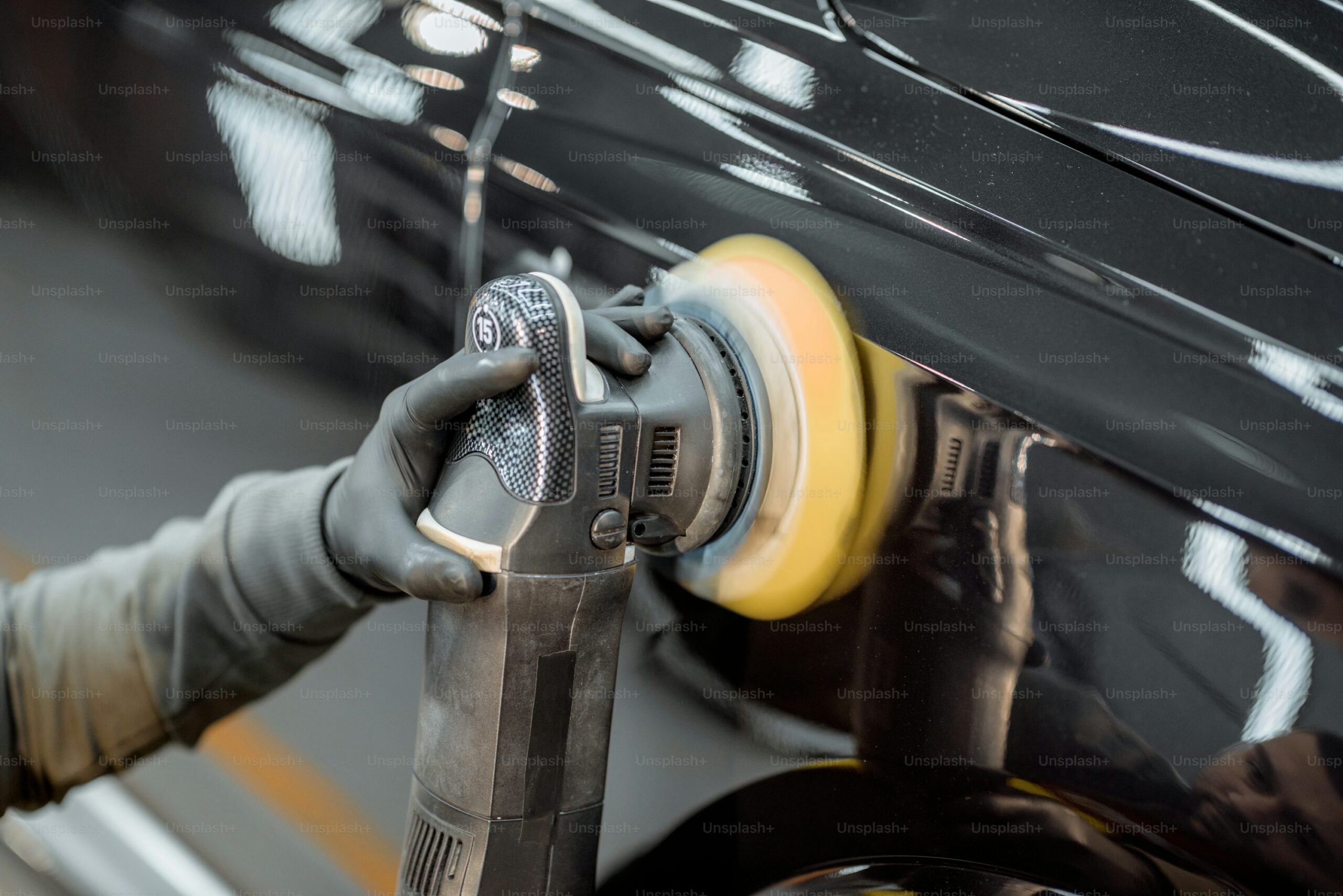
I’ve buffed out more shopping cart dings and door handle scuffs than I can count. Most people think a scratch means a trip to the body shop, but the truth is a lot of what looks like deep damage is really just clear coat scuffing, and clear coat is the one layer you can actually fix in your own driveway.
Here’s the test I use before recommending any product to a customer: run a fingernail across the scratch. If your nail catches and drags, you’re likely into the primer or base coat, and no bottle from Amazon is bringing that back. If your nail glides over it with maybe a little resistance, that’s clear coat damage, and every product on this list can genuinely improve it.
I picked these five specifically for deeper scuffs, not the light spiderweb swirls you get from a bad car wash. Ranked from solid to best of the group.
Testing Summary: Scratch Remover Efficiency & Performance Analysis
| Testing Metric | Weight | Evaluation Method |
|---|---|---|
| Effectiveness | 40% | Real-world application on varied surfaces and materials |
| Ease of Use | 25% | User experience, installation time, and cleanup effort |
| Durability/Longevity | 20% | Resistance to wear, heat, and environmental factors |
| Value for Money | 15% | Cost per application vs. performance results |
Why “Deep Scratch” Means Different Things
Not every scratch that looks bad is actually bad. Clear coat is only a few thousandths of an inch thick, sitting on top of the color coat and primer underneath. A scuff that catches light at a certain angle and looks dramatic in a parking lot might only be a surface-level clear coat mark that buffs out in ten minutes. Meanwhile, a thin hairline scratch that barely shows up in daylight can sometimes run straight through to the base coat, especially on lower body panels that take more road debris impact.
That’s why I lean on the fingernail test before recommending anything. It’s not perfect, but it’s the fastest way to sort “this will buff out” from “this needs paint.” None of the products on this list will fix a scratch that’s gone through to primer or bare metal. What they will do, when matched to the right depth of damage, is genuinely restore clear coat that’s scuffed, hazed, or lightly gouged, which covers the vast majority of what people call a “deep scratch” in everyday driving.
How I Tested These
Deep paint scuffs need more cutting power than a basic swirl remover, so I focused on a few things that actually matter once you’re past surface-level marks:
- Cut strength. A product needs enough abrasive bite to actually level the clear coat around the scratch, not just polish the surface shine.
- Fingernail test results. I ran the same catch-a-fingernail test before and after on comparable scratches to see which products closed the gap, not just hid it under gloss.
- Machine vs. hand performance. Some of these work fine by hand. Others really need a dual-action polisher to hit their full potential, and I noted which is which.
- Residue and haze. A compound that leaves haze behind on darker paint colors just trades one visible flaw for another.
Here’s how the five stack up.
Carfidant Scratch and Swirl Remover

- EASY SCRATCH and SWIRL REPAIR – If your car has light scratches, swirls, or…
- ULTIMATE PAINT REPAIR- Not only will this remove swirls and scratches, it…
This is the one I hand to first-timers who’ve never touched a scratch remover before. It comes with a foam applicator pad and a microfiber towel in the box, so there’s no guessing about what tools you need before you start.
The formula works entirely by hand, no polisher required, which makes it the lowest barrier to entry on this list. Circular motion, light pressure, wipe clean, repeat as needed. It genuinely improves moderate scuffs and does a good job on the lighter end of what counts as a deep scratch, especially on lighter paint colors where the contrast is less forgiving.
Where it falls short is real depth. On a scratch you can just barely catch with a fingernail, this gets you most of the way there. On anything deeper, you’ll notice it plateaus faster than the compounds higher on this list.
I still keep a bottle around the shop for exactly the situations it’s built for: a customer who just wants a scuff to look better before a weekend trip and doesn’t own a polisher. It won’t compete with the machine-applied compounds on pure cutting power, but for what it is, a beginner-friendly hand kit, it does its job honestly.
Best for: First-time users who want a simple, hand-applied product with everything included in one box.
Turtle Wax Scratch Repair & Renew

- SMART SURFACE REPAIR: Effective car polish removes light surface scratches…
- RESULTS THAT LAST: Infused with protective resins that bond to the clear…

Turtle Wax built this one around what they call Heal & Seal technology, and in practice that means the precision platelets inside the formula don’t just polish the scuff, they leave a sealant layer behind so the fix doesn’t wash away at the next car wash. That’s a real advantage over compounds that need reapplication every few months.
I’ve used this on paint transfer marks specifically, the kind of scuff you get from another car’s bumper brushing yours in a parking lot, and it handles that particular type of damage better than most products in this price range. It cuts through the transferred paint without over-polishing your own clear coat around it.
It works by hand with the included microfiber towel, though I get noticeably faster results running it with a dual-action polisher on anything wider than a thin line scratch.
One detail I appreciate: since the sealant is built into the formula, you’re not stuck applying a separate wax step afterward just to protect the freshly corrected area. That’s one less product to buy and one less step to remember, which matters on a weekend when you’re trying to knock out a repair before the car goes back into daily use.
Best for: Paint transfer marks, parking lot scuffs, and drivers who want a fix that doesn’t need reapplying every wash.
3M Scratch Removal System
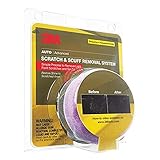
- Auto scratch remover system takes out light paint scratches and scuffs
- System uses a 3-step repair approach
This is the only kit on this list that includes actual sandpaper, and that’s exactly why it earns a spot for genuinely deep scuffs. The 3-stage process, sand, compound, polish, is the same basic method body shops use on clear coat damage that’s too deep for a compound alone to level out.
The included 3000-grit abrasive square knocks down the high points of a deep scratch before the rubbing compound and scratch remover go to work smoothing everything back to a consistent surface. That sanding step is intimidating the first time you do it, and I always tell people to practice on a hidden panel first, like inside the trunk lid or behind a mirror, before touching a visible scuff.
You’ll need your own drill running at a moderate 1200 to 1600 RPM along with basic household items like a spray bottle and paper towels, since the kit itself only includes the specialty pads and compounds.
The order of operations matters here more than with any other product on this list. Sand a section, wipe it clean, check your progress under good light before moving to the compounding stage. Rushing the sanding step is the single most common mistake I see, since it’s tempting to just keep going instead of stopping to inspect the work. Patience is what separates a clean result from a hazy one with this kit.
Best for: Scratches deep enough that a compound alone won’t fully level them, where sanding is genuinely necessary.
Chemical Guys VSS One-Step Scratch and Swirl Remover
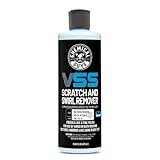
- VSS ONE-STEP COMPOUND & POLISH (COM_129_16SW) – This Chemical Guys…
- RESTORES GLOSS AND CLARITY – This car polish and compound leaves behind a…
VSS is what I reach for when a scratch needs real cutting power but I still want a finished polish in the same step, not a separate compound-then-polish routine. The diminishing abrasive technology means the particles inside the formula actually break down as you work them, cutting aggressively at first and finishing fine by the time you wipe it off.
It rated among the strongest cutters on this list for genuinely moderate to heavy defects, including 1500 to 1700 grit sanding marks left behind by other correction work. That’s a level of cut most one-step products can’t touch without leaving haze behind, and VSS finishes clean on both light and dark paint in my testing.
It’s formulated to work on a dual-action or rotary polisher for full results, though it can be worked by hand on smaller, isolated scuffs if you’re patient with it. Silicone-free and body-shop safe, so it won’t interfere if you’re planning a repaint or ceramic coating afterward.
I’ve also used VSS as a prep step before applying a ceramic coating, since the silicone-free formula won’t contaminate the surface the way some consumer scratch removers can. That dual purpose, real correction plus a clean base for whatever protection layer comes next, is part of why it earns the second spot here instead of just being a one-trick scratch fix.
Best for: Moderate to heavy scratches and swirls where you want serious cutting power without a separate finishing polish step.
Meguiar’s Ultimate Compound

- BUFF OUT IMPERFECTIONS: Meguiar’s Ultimate Compound removes scratches…
- SHOWROOM SHINE: Advanced car compound removes scratches, swirls, oxidation…
This is the bottle that’s been sitting on my workbench longer than any other product on this list, and there’s a reason it keeps earning its spot back every time I restock. Meguiar’s built Ultimate Compound to cut as fast as harsh, old-school rubbing compounds without the risk of adding new micro-scratches while you’re removing the old ones.
The micro-abrasive technology comes straight from Meguiar’s professional body shop line, just reformulated for hand or machine use at home. I’ve used it on everything from fine spiderweb swirls to genuinely deep scuffs from branches and door dings, and it handles that whole range better than any single product I’ve tried, which is rare for a compound this easy to work with.
What puts it at the top of this list is how forgiving it is while still cutting hard. You can work it by hand with real results on a small scratch, or step up to a dual-action polisher for full panels, and either way it won’t punish a small technique mistake the way more aggressive compounds can. It also leaves the paint with genuine depth and gloss afterward, not just a temporary shine that fades in a week.
If you only buy one product from this entire list, this is the one I’d point you to first. It’s the closest thing to an all-purpose fix for deep paint scuffs that still respects your clear coat.
Best for: The single best all-around choice for deep scuffs, oxidation, and swirl marks, whether you’re working by hand or with a polisher.
Quick Questions I Get Asked in the Shop
How do I know if a scratch is too deep for any of these products?
Run the fingernail test I mentioned above. If your nail catches and actually drags in the groove, you’re likely through the clear coat into base coat or primer, and that needs touch-up paint or a body shop, not a compound.
Can these products be used on all paint colors?
Yes, all five work across paint colors, but haze and swirl marks show up more visibly on darker colors like black and navy. Work smaller sections and check your progress more often on dark paint.
Do I need a polisher, or can I do this by hand?
Carfidant and Turtle Wax are built for hand application. 3M and Chemical Guys VSS perform noticeably better with a dual-action polisher, especially on larger areas. Meguiar’s Ultimate Compound is the most flexible of the five, genuinely capable both ways.
A Few Things I’d Tell You Before You Start
- Wash and clay the panel first. Any dirt or grit left on the surface gets ground into the paint by your applicator pad, which can add new scratches while you’re trying to remove old ones.
- Work in the shade, not direct sun. Compounds dry too fast in direct sunlight, which makes them harder to work and more likely to leave residue behind.
- Test on a hidden panel first. Inside the trunk lid or behind a door handle is a safe place to dial in your technique before touching a visible scratch.
- Follow up with wax or sealant unless the product already includes one. Compounding strips away some of the protective layer on top of your clear coat, and a fresh coat of protection keeps the repaired area looking as good as the rest of the panel.
Any of these five will make a real, lasting difference on genuine clear coat damage. Which one you reach for comes down to how deep the scratch actually is and whether you’re working by hand in the driveway or running a polisher in the garage.
Which Scratch Remover Fits Your Scuff?
Answer one question and I’ll point you to the right product.
What best describes your situation?
RECOMMENDED FOR YOU
Check Price on Amazon

Leave a Reply